Six frame styles bring Gemini to everyday eyewear
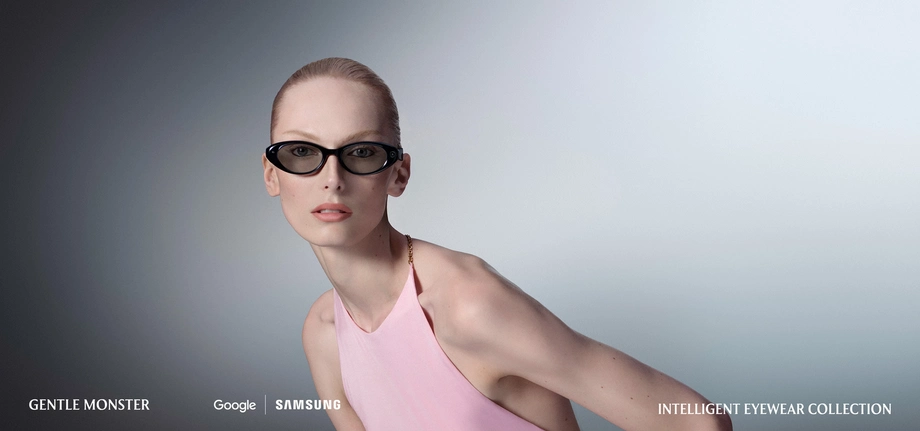
Gentle Monster is opening orders for 16 variations of its first Intelligent Eyewear collection, combining Samsung hardware and Google's Gemini assistant in glasses weighing about 41 grams. Preorders begin on November 12, 2026, ahead of a December 10 release in South Korea and the United States.
Contents
- Six frame styles bring Gemini to everyday eyewear
- What buyers can order, and when
- Thirty variations, two different fashion approaches
- How Gemini turns a glance into an action
- Translation impressed, but pauses interrupted conversation
- A pantry, giant faces and nine spaces at Wall Street
- What the weight and battery figures mean
- Phone support and accessibility need a closer look
- Privacy protections cover the wearer and nearby people
- Key Points
The collection costs $449 to $489 in the United States and 650,000 to 700,000 won, including value added tax, in South Korea. Its six frame styles include two optical designs and four sunglasses designs, with different colors and lenses producing the 16 variations.
Samsung's November 12 announcement gives the hardware behind the fashion: a 12 megapixel camera, four microphones, two speakers, 64GB of storage and a battery rated for up to nine hours. A fully charged case brings the advertised total to as much as 72 hours through repeated charging.
The glasses have no screens in their lenses. Instead, they use a camera to give Gemini visual information and speakers to deliver answers, translations and directions. A wearer can ask about ingredients on a shelf, hear a foreign language translated or request a summary of a meeting whiteboard without holding up a phone.
Gentle Monster presented the collection in New York through an exhibition built around those activities. The demonstrations showed the appeal of putting an assistant within speaking distance, while also exposing practical limits: translations sometimes arrived late, surrounding noise entered conversations, and Gemini occasionally struggled with text or gave an unsuitable answer.
What buyers can order, and when
Gentle Monster's official collection page identifies November 12 to 15 as its first batch preorder period in the United States. Listed starting prices run from $449 for several GGS001 and GGS002 variations to $489 for selected colored frames.
Most Gentle Monster frame designs support prescription lenses, according to Google. Buyers can choose among clear, tinted, blue and brown lenses, with frame colors including dark red, pink, gray and yellow. Samsung's weight figures include standard lenses; prescription lenses can change the finished weight.
The launch schedule separates the New York exhibition from the start of general sales:
- November 12, 2026: Preorders open, according to Google and Samsung.
- November 12 to 15: Gentle Monster's first United States preorder batch.
- November 13 to 23: The New York exhibition opens to the public.
- December 10: General sales begin in South Korea and the United States, with demonstrations also coming to selected Samsung retail locations.
A translated launch account placed the start of reservations on December 10, while both companies' announcements put preorders on November 12 and general availability on December 10. Gentle Monster also warns that availability, compatibility and age restrictions vary, and some features require setup or a subscription.
Thirty variations, two different fashion approaches
Samsung's broader launch includes Warby Parker as well as Gentle Monster. Together, the brands offer 30 variations across nine frame designs: 16 Gentle Monster variations based on six styles and 14 Warby Parker variations based on three.
Warby Parker's designs are named Alden, Reid and Wren. They start at $395, come in colors including Pine, Saddle and Jet Black, and offer optical and sunglasses options with different widths and lenses. Both collections launch in the United States; only Gentle Monster's collection is scheduled for South Korea.
Gentle Monster's $449 entry price is $54 above Warby Parker's $395 starting point. Within Gentle Monster's collection, the difference between the lowest and highest listed United States starting prices is $40. The core technology is shared, so the choice largely concerns frame shape, fit, lens options and design.
Samsung supplies the hardware engineering, Google supplies Gemini and the Android XR software platform, and the eyewear brands shape the frames. Qualcomm's Snapdragon AR1 Gen 1 processor powers the glasses. This division puts familiar eyewear design around a connected camera and audio system rather than asking buyers to wear a headset.
How Gemini turns a glance into an action
Google's eyewear launch announcement describes an assistant that connects what the camera sees with apps and services. A wearer can look at an event poster and ask whether their calendar is free, or ask Gemini to add a visible item to a grocery list.
Samsung gives a workplace example: photograph a whiteboard, ask Gemini to summarize the main points and save the result to Samsung Notes. Google Keep can also hold notes and summaries. On an iPhone, access to services such as Gmail and Google Calendar works through connected Google apps and the cloud.
Users can summon the assistant by saying "Hey Gemini" or touching the frame. During demonstrations, holding the temple started a conversation that continued until a pause of roughly 15 seconds. A backward swipe ended the session. Other taps and swipes controlled music and volume.
Google Maps supplies spoken directions, while the glasses can read notifications, support spoken message replies and handle phone calls. Music and audiobook services include YouTube Music, Spotify, Apple Music and Audible. The speakers sit near the ears without sealing them, allowing outside sounds to remain audible.
Samsung calls the processing arrangement split computing. In simple terms, the glasses and connected phone share the work instead of placing every task inside the frame. Samsung describes this arrangement with Galaxy phones as a way to manage performance, heat and battery use in a small device.
Translation impressed, but pauses interrupted conversation
Google says speech translation supports automatic language detection across more than 70 languages. The wearer hears a translation through the speakers, while the camera can help with written material such as a restaurant menu.
Gentle Monster's New York demonstration placed visitors among installations featuring speakers using different languages. Translation sometimes followed with a short delay or a hiccup. In other demonstrations, the delay interrupted the exchange, and nearby sounds or voices entered the translated conversation.
Samsung says translation and navigation vary with language, region, app, service provider and network conditions. For someone speaking across a restaurant table or asking for directions on a busy street, those conditions affect how smoothly the feature can work. Demonstrations also indicated that distance and the direction the wearer faces matter.
Gemini's visual answers had uneven moments too. It sometimes said text was too distant to read even when a person could read it, and sometimes returned an odd answer. Buyers therefore face two practical tests: whether the glasses correctly capture what is in front of them, and whether the assistant gives a useful response.
A pantry, giant faces and nine spaces at Wall Street
Gentle Monster's exhibition at 23 Wall Street was created with artist Jean Jacques Balzac, who is based in France. Its nine themed spaces included The Pantry, The Village, The Mystery Ship, Silence Music and Blue Bear, alongside large face sculptures and other surreal installations.
The Pantry made visual assistance concrete. Visitors could look at ingredients and ask what meals they could make or request a recipe. Another demonstration compared food products on display. Other spaces explored translation, navigation, calls, messages, access to apps and recognition of objects.
The exhibition puts a fitting and demonstration opportunity before the December release. Visitors can encounter the frames as objects to wear and then try the functions that depend on their camera, microphones and speakers. Some showroom demonstrations were available by appointment.
Gentle Monster's campaign takes a different approach. Models Alex Consani and Anok Yai front the eyewear campaign, while Joaquin Phoenix appears in a short film directed by Jonathan Glazer. Its teaser follows a salesman through a surreal hotel, using the glasses to communicate with mysterious figures. The full film was scheduled for later in November.
The partnership also has a financial connection: Google has reportedly invested $100 million for a 4 percent stake in Gentle Monster's parent company, iiCombined. The launch therefore combines a technology collaboration with an investment in the business behind the frames.
What the weight and battery figures mean
Samsung's approximately 41 gram headline weight is based on the Gentle Monster GGS002 configuration. Across the collection, its specifications give a range of 39.6 to 43.9 grams with standard lenses. Gentle Monster's charging case weighs 194.5 grams.
The nine hour battery estimate comes from a mixture of activities, including Gemini conversations, music, video capture, messages and notifications. Samsung says actual endurance varies with settings, network conditions, apps and use. Google says the case can recharge the glasses up to seven times, explaining how the combined advertised total reaches 72 hours.
The camera supports 12 megapixel photographs and video at up to 3K resolution at 30 frames per second. HDR, a process that helps retain detail in bright and dark areas, is supported for video up to 2K. Google also lists image stabilization and spatial audio capture, which records sound with a sense of direction.
Samsung specifies 2GB of memory, 64GB of storage, Bluetooth 5.4 and Wi-Fi 6E. Preinstalled software uses some storage. The glasses carry an IPX4 rating for resistance to splashing water, and the rating applies to the glasses rather than the charging case.
Phone support and accessibility need a closer look
Samsung's compatibility list covers Galaxy S, Galaxy S FE, Galaxy Z Fold, Flip and Fold Ultra series devices running One UI 9.0 or later. Pixel support starts with the Pixel 7 series running Android 17 with the September 2026 update or later.
For Apple devices, Samsung specifies iPhone 13 and later with at least 6GB of memory and iOS 26.6 or later. Several launch descriptions use iPhone 13 Pro as the starting point. Buyers need to check their particular model against the memory and software requirements before ordering.
Samsung requires users to be at least 18, with age verification for device activation and app downloads. Bixby support is limited to Galaxy phones. Broader support for phones from other Android manufacturers has not been given a firm date.
Google also announced Guided Vision, which provides conversational descriptions for people who are blind, have low vision or want help reading small print and finding objects. A separate Aira Explorer connection lets a user send the camera feed to a trained human visual interpreter.
These are two different forms of assistance: Guided Vision uses Gemini to describe visual information, while Aira connects the wearer with a person. Google has restricted social livestreaming from the glasses at launch, while allowing the Aira connection for visual support.
Privacy protections cover the wearer and nearby people
Google says camera visuals used by Gemini are excluded from Gemini History and are not used to train AI models or target advertisements. Bystanders' faces are automatically obscured before Gemini processes those visuals. Samsung also describes filtering surrounding voices during Gemini Live conversations.
Photos and videos saved to the gallery have visible recording safeguards. An external LED alerts nearby people, while an internal light and sound notify the wearer. Camera capture is designed to stop if the external indicator is covered or malfunctioning. The frames also have a physical off switch.
Google says information stored on the glasses is encrypted, as is data in transit. Users can control which apps access the camera and microphone, review or delete Gemini chats, and change activity settings. Voice conversations have their own history controls alongside the protections Google describes for camera visuals.
Google's platform rules prohibit apps from enabling social livestreaming, real time facial identification or changes to the external recording indicator. Users must agree not to record people without permission or record in sensitive places; violations can lead to the glasses being disabled.
Shahram Izadi, Google's vice president and general manager of XR, described the company's responsibility to both groups affected by a wearable camera:
As glasses become more capable, our focus is on creating helpful experiences that make both wearers and bystanders feel protected.
The December launch will bring those safeguards, alongside Gemini's assistance, into ordinary settings beyond the exhibition. For buyers, the immediate decisions are concrete: whether the frames fit, whether their phone qualifies and whether spoken assistance justifies the price.
Key Points
- Gentle Monster offers 16 variations across six frame styles, priced at $449 to $489 in the United States and 650,000 to 700,000 won in South Korea.
- Preorders begin November 12, 2026, with general sales scheduled for December 10.
- The glasses have no lens displays. Gemini delivers assistance through a camera, microphones and speakers.
- Advertised battery life reaches nine hours per charge and 72 hours with repeated charging from the case.
- Translation covers more than 70 spoken languages, although demonstrations showed delays and occasional errors.
- Selected Galaxy, Pixel and iPhone models are supported, and activation requires users to be at least 18.
- Google says Gemini camera visuals are excluded from AI training and ad targeting, with nearby faces obscured before processing.