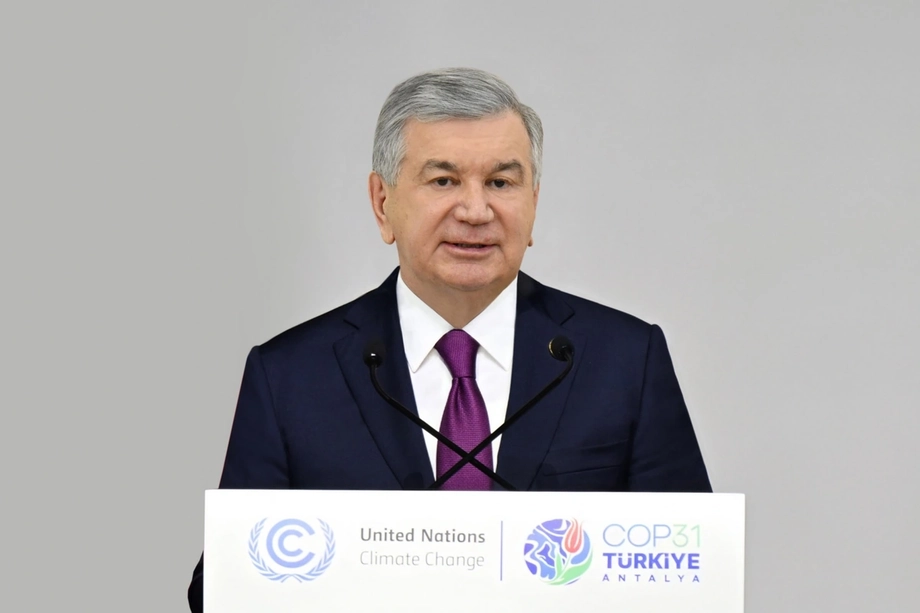
A regional plan built around shared water and climate risks
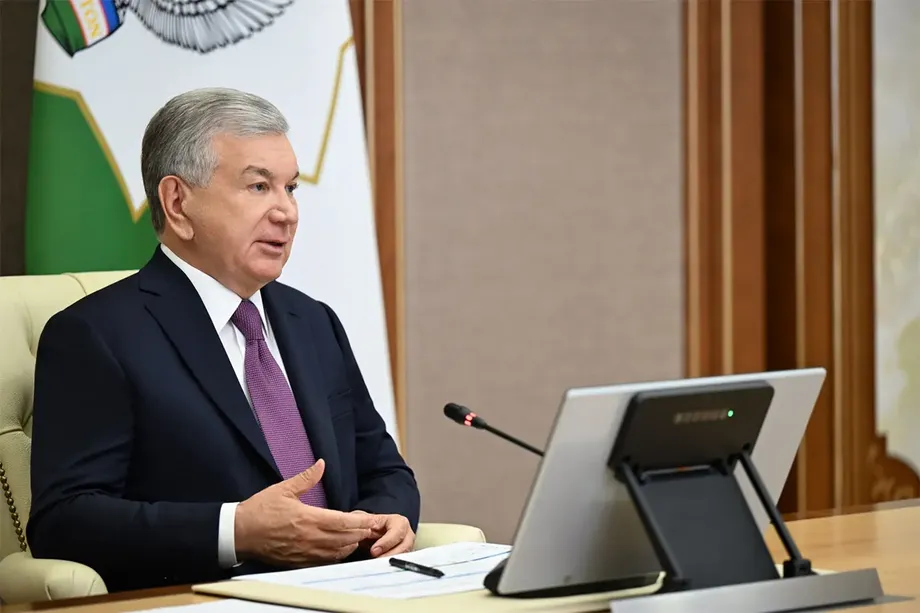
Uzbekistan's President Shavkat Mirziyoyev proposed a Central Asian Climate Integration Model on November 11, 2026, linking a regional disaster warning system with environmental technology and new financing mechanisms. Speaking at the COP31 leaders' summit in Antalya, Türkiye, he called for cooperation on threats including melting glaciers, water scarcity and extreme drought.
Contents
- A regional plan built around shared water and climate risks
- Why forecasts matter across national borders
- Warnings first, common climate measurements next
- Land restoration would connect technology with investment
- Financing tailored to water and dry landscapes
- CLiCA provides a more detailed project framework
- What Uzbekistan's emissions and energy targets mean
- Water savings and the Aral Sea region
- The dates and commitments to watch
- Key Points
The proposal comes alongside a more concrete package of potential investments. On November 9, Mirziyoyev was presented with 133 projects worth a combined $3.3 billion, including a regional platform for forecasting floods and droughts and a shared database for the Amu Darya and Syr Darya river basins. Uzbekistan intends to pursue implementation during its 2027–2029 chairmanship of the International Fund for Saving the Aral Sea.
Mirziyoyev, explaining why he wanted governments to coordinate their response, told the summit:
No country can address the challenges of climate change on its own.
His model has three pillars: sharing information, developing technology suited to Central Asia and securing dependable financing. Together, they would connect warnings about approaching hazards with projects intended to reduce damage and institutions able to pay for them.
For farmers, the practical issue is when irrigation water will arrive. For reservoir operators, it is how much water to store or release. For communities exposed to floods or dust storms, it is receiving useful information early enough to act.
Mirziyoyev asked participating countries and international organizations to help put the model into practice and proposed extending it to other interested regions. The model's launch date, budget and governance arrangements were not specified in his address.
Why forecasts matter across national borders
Central Asia's rivers connect mountain areas in Kyrgyzstan and Tajikistan with major agricultural areas in Uzbekistan, Turkmenistan and southern Kazakhstan. The World Bank estimates that agriculture accounts for approximately 90% of freshwater withdrawals across the region, making reliable forecasts central to food production and rural livelihoods.
Snow cover, rainfall and glacier conditions influence how much water reaches rivers and when it arrives. Reservoirs upstream are used for electricity generation, while farms downstream need large quantities of water during summer. Shared forecasts can help governments plan storage, power generation and irrigation around the same expected river flows. Agreements between countries determine how that water is allocated.
Vadim Sokolov, an expert adviser at the Scientific Information Center of the Interstate Commission for Water Coordination, cited a 32% decline in glacier volume across four Uzbek river basins between 1957 and 2020. The World Meteorological Organization also recorded substantial mass loss at most monitored glaciers in the Tian Shan and Pamir mountains during the 2025 glaciological year, which ran from October 2024 through September 2025.
The WMO attributed those recent losses to insufficient winter precipitation and elevated temperatures between May and September. Changes in mountain ice affect the seasonal supply of water used for agriculture, hydropower and households.
The proposal follows October's agreement on water limits for the Amu Darya and Syr Darya during the 2026–2027 season outside the main crop growing period. Those talks also addressed inconsistent flow measurements at the Kerki gauging station, showing why countries need dependable measurements alongside agreed withdrawal limits.
Warnings first, common climate measurements next
Mirziyoyev proposed establishing infrastructure for sharing climate risk information with WMO support. The first task would be an early warning system allowing authorities to respond more quickly to natural disasters. The next would be common indicators and coordinated monitoring of changes that develop gradually, such as glacier retreat and prolonged drying.
An early warning system combines observations, forecasts and communication. Its value depends on whether national agencies can turn shared information into timely instructions for the people and services facing danger.
Central Asian countries already exchange some weather and water information. With World Bank support, Kyrgyzstan and Tajikistan have modernized monitoring networks and expanded exchanges with regional centers, including the WMO designated regional meteorological center operated by Uzhydromet in Tashkent.
On November 10, WMO Secretary-General Celeste Saulo outlined possible functions for a new regional climate center serving Central Asia and the Turkic states. These included seasonal forecasting, drought assessment and support for glacier monitoring.
Such a center would need agreed rules on data exchange, a division of responsibilities and sustained funding. National meteorological services would retain responsibility for issuing forecasts and warnings within their own countries. Common measurements would give those agencies a more consistent picture of conditions beyond their borders.
Land restoration would connect technology with investment
Mirziyoyev's second pillar focuses on restoring degraded soils, storing carbon in dry landscapes and combating dust and sandstorms. These are connected concerns: damaged land supports less vegetation, holds less carbon and can leave soil exposed to wind.
Nature based approaches use vegetation and ecological processes to help land recover. In practical terms, the president's priorities link land restoration with the condition of pastures, forests and agricultural soils, rather than treating environmental technology solely as machinery or energy equipment.
Uzbekistan wants to turn the annual Central Asia ECO-EXPO into a permanent investment and technology platform. The exhibition currently provides a place to exchange practices and present innovations; the proposed platform would bring environmental solutions suited to regional conditions into more regular contact with investors.
Earlier proposals at an environmental summit in Astana in April included a regional atlas covering desertification, land degradation and water resources, regional status for the desertification research center at Tashkent's Green University, and a shared portfolio of climate projects. The Antalya proposal brings those interests together around information, technology and funding.
Financing tailored to water and dry landscapes
Mirziyoyev called for development banks and specialized funds to help design financing instruments that reflect Central Asia's conditions. He identified concessional support, grants, blue finance and financing intended for arid regions.
Blue finance supports projects connected with water. Financing for arid regions would target the needs of dry landscapes, including land restoration and drought adaptation. Concessional financing offers more favorable conditions than ordinary commercial borrowing, while grants provide support without requiring repayment.
The financing discussions also included access to existing institutions. On November 10, Mirziyoyev met Green Climate Fund Executive Director Mafalda Duarte to discuss allowing Uzbek financial institutions to seek direct access to the fund. Accredited institutions could then submit proposals and manage approved projects themselves.
Uzbekistan's presidential administration put the country's joint project portfolio with the fund at more than $200 million. Discussions covered ecosystem restoration in the Aral Sea region and environmentally sustainable cities.
A Climate BRIDGE pilot with the United Nations Development Programme is intended to turn climate targets into investment projects and support access to the Fund for Responding to Loss and Damage. Uzbekistan also plans to approach the World Bank, Asian Development Bank, European Bank for Reconstruction and Development and international environmental funds for its wider project package.
CLiCA provides a more detailed project framework
Alongside the new integration proposal, Uzbekistan, Kyrgyzstan and Tajikistan have secured approval for Climate-Resilient Landscapes in Central Asia, known as CLiCA. The Green Climate Fund board approved the program on October 28, 2026, and it was presented at COP31 on November 9.
Developed by the German Agency for International Cooperation with the three countries, CLiCA has a planned duration of seven years and a total value of approximately $296 million. Its financing structure includes a $133.9 million Green Climate Fund grant and $162.1 million in expected contributions from other sources, including loans, additional grants and contributions in kind.
The grant represents about 45% of the program's total value, calculated from $133.9 million out of $296 million. The estimated loan component is approximately $134.4 million. Proposed European Investment Bank participation depends on decisions by borrowing countries and agreement on financing terms; implementation had not yet begun.
CLiCA is expected to cover 180 municipalities, improve land management or restoration across about 940,000 hectares and provide climate resilience benefits for 2.5 million people. Local communities would help select forests and pastures for restoration and prepare drought adaptation plans.
Uzbekistan's component is expected to receive €103.7 million, covering 15 districts and targeting restoration of 18,000 hectares of forest and 123,000 hectares of pasture. Those targets give communities and funders specific measures against which to track delivery.
What Uzbekistan's emissions and energy targets mean
Mirziyoyev said Uzbekistan had achieved its previous target of reducing greenhouse gas emissions per unit of gross domestic product by 35% ahead of schedule. The updated national commitment calls for a 50% reduction in emissions per unit of GDP by 2035 against 2010 levels, alongside a goal of carbon neutrality by 2055.
Emissions per unit of GDP measure how much greenhouse gas is released for each unit of economic output. Total emissions depend on both that rate and the size of the economy. A growing economy can produce goods and services more efficiently while its total emissions follow a different course.
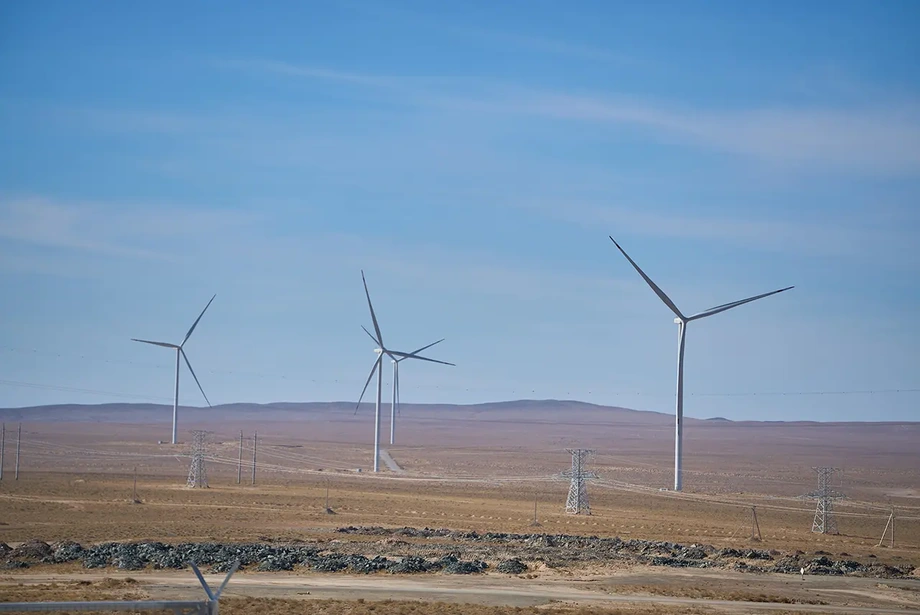
Mirziyoyev also said renewable energy sources would reach a 54% share over the following four years. That would put renewables above half of the stated energy mix, making changes in energy supply a major part of the country's climate plans.
Uzbekistan has launched a Waste Management Strategy under which more than $3 billion is planned for investment. Cooperation with Türkiye also expanded through an environmental memorandum covering climate action, prevention of air and water pollution, waste management and the circular economy. A circular economy seeks to keep materials in use through reuse and recycling, reducing the amount discarded.
Water savings and the Aral Sea region
Mirziyoyev said water consumption across Uzbekistan's economy had nearly halved over the past decade, while withdrawals from river basins had fallen by one fifth. Water saving technologies now cover 60% of irrigated land, according to his address.
Water consumption and withdrawals describe different parts of water use. Withdrawals measure water taken from rivers or other sources; consumption concerns water used rather than returned for further use. The two figures describe separate changes in Uzbekistan's management of water.
The president also said forested areas had expanded by six million hectares, with one third in the Aral Sea region. That amounts to approximately two million hectares in that region, calculated from the figures in his speech.
Uzbekistan's forthcoming leadership of the International Fund for Saving the Aral Sea gives it a regional forum for advancing water and restoration projects. The fund was established by the five Central Asian countries in 1993. A month by month implementation plan for 2027 is being prepared for Uzbekistan's proposed work.
Uzbekistan has also proposed declaring 2026–2036 the Central Asian Decade of Practical Action for the Rational Use of Water. The initiative connects the longer climate agenda with immediate decisions about irrigation, river monitoring and shared infrastructure.
The dates and commitments to watch
Several steps preceded Mirziyoyev's speech, while the larger implementation agenda stretches into the next decade. The main dates connect approved financing, proposed infrastructure and national targets:
- October 28, 2026: The Green Climate Fund board approved CLiCA.
- November 9, 2026: CLiCA was presented at COP31, and Mirziyoyev reviewed 133 proposed projects worth $3.3 billion.
- November 10, 2026: Saulo outlined possible functions for a regional climate center, while Mirziyoyev discussed financing with Duarte.
- November 11, 2026: Mirziyoyev proposed the Central Asian Climate Integration Model in Antalya.
- 2027–2029: Uzbekistan is scheduled to chair the International Fund for Saving the Aral Sea.
- 2035: Uzbekistan targets a 50% reduction in emissions per unit of GDP against 2010 levels.
Environmental education forms another part of Uzbekistan's plans. Mirziyoyev said one in five citizens is a schoolchild or university student. Children learn water conservation, tree care and environmental protection through families, neighborhood communities known as mahallas, and schools, beginning in kindergarten.
He projected that three quarters of the population would have comprehensive environmental protection knowledge by 2050. For the regional cooperation model, the nearer tasks are operational: agreeing how to exchange data, assigning responsibilities, securing financing and moving approved projects into implementation.
Key Points
- Mirziyoyev proposed a Central Asian climate model based on information sharing, environmental technology and financing.
- A shared early warning system would be followed by common indicators for monitoring gradual climate changes.
- Uzbekistan has reviewed 133 proposed projects worth $3.3 billion ahead of its 2027–2029 Aral Sea fund chairmanship.
- The approved CLiCA program has a planned value of approximately $296 million across Uzbekistan, Kyrgyzstan and Tajikistan.
- Uzbekistan targets a 50% reduction in emissions per unit of GDP by 2035 against 2010 levels.
- The regional model still requires agreements on governance, data exchange, funding and delivery.