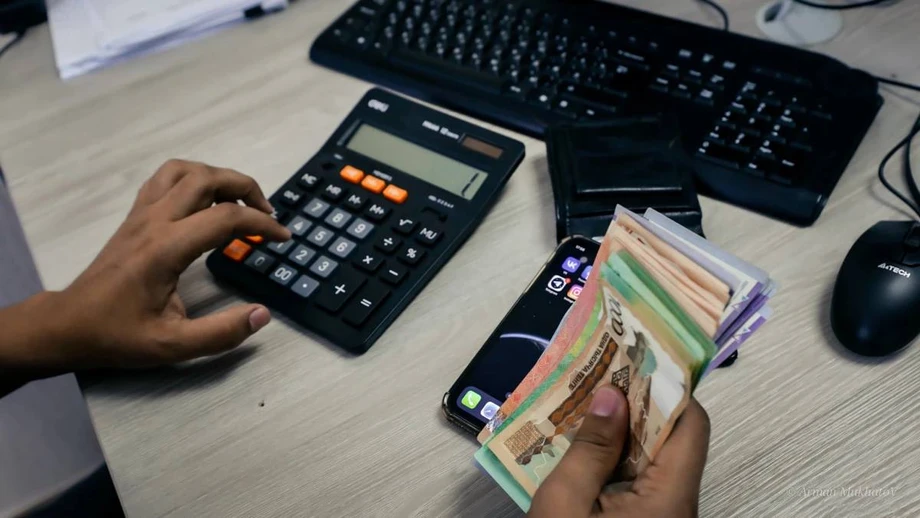
Mandatory payments could reach businesses with no income
Between 300,000 and 500,000 inactive sole proprietorships could close in Kazakhstan in 2027 if a proposal to collect taxes and social payments from their owners goes ahead, according to Maksim Baryshev, a tax expert and founder of the Uchet.kz group of companies. His upper estimate represents about 29.4% of the country's 1.7 million registered individual entrepreneurs.
Contents
Baryshev said the State Revenue Committee is considering requiring payments calculated from the minimum wage even from individual entrepreneurs whose businesses have no income, submit no reports and pay no taxes. He described discussions involving government bodies and ministries. Whether the proposal will be adopted, when it would take effect and which exemptions might apply have not been announced.
The proposal comes alongside a reported increase in the minimum monthly wage from 85,000 to 110,000 tenge on January 1, 2027. That change would raise several payments calculated using the minimum wage, including pension, social and health insurance contributions.
For an entrepreneur already making those payments, the immediate issue is a larger monthly bill. For someone keeping an unused business registration, the proposed rule could create a recurring expense despite the business earning nothing.
What the proposed rule would change
An individual entrepreneur, often abbreviated as IE, is a person registered to conduct business in their own name. Registration can remain in place even when the person has stopped trading. Baryshev's forecast concerns those inactive registrations.
Baryshev said the committee was considering a requirement for registered entrepreneurs to make payments for themselves using the minimum wage as the calculation base. He described the discussions this way, translated from Russian:
This is now being discussed in the government and ministries.
Owners of affected businesses would face a choice between accepting the recurring payments, formally suspending activity or closing their registration, according to Baryshev. The rules governing suspension would therefore matter to people who expect to resume trading later.
The minimum wage would serve as a reference amount for calculating the bill. An entrepreneur with no business income would still owe payments based on that reference amount if the proposal applied to them. The final legal wording would determine the exact obligations.
A separate State Revenue Committee response dated February 8, 2023, signed by chairman A.E. Zhanalinov and answering question No. 748010, explained the obligations of individual entrepreneurs with no income under the rules cited at that time. They still had to submit tax reports showing zero income. Pension contributions for themselves were voluntary in the absence of income, calculated at 10% of the minimum wage under Article 25 of the Law on Pension Provision in the Republic of Kazakhstan.
The response said compulsory social health insurance contributions remained mandatory even without income. Under paragraph 5 of Article 28 of the Law on Compulsory Social Health Insurance, the calculation base for individual entrepreneurs and people in private practice was 1.4 times the minimum wage established for the relevant financial year by the law on the republican budget. The exceptions covered individual entrepreneurs who had formally suspended tax reporting or were officially classified as inactive, and people in private practice who had formally suspended tax reporting. The response describes those earlier rules, not the proposed amendments for 2027.
How much could monthly contributions rise?
The reported increase in the minimum wage is 25,000 tenge, or about 29.4%. Baryshev estimated that entrepreneurs who formally assign themselves the minimum wage could see their monthly contributions rise by roughly 10,000 tenge.
A more detailed calculation gives a smaller increase under specified assumptions. It uses one minimum wage as the calculation base for pension and social contributions, and 1.4 times the minimum wage for health insurance contributions. The listed monthly amounts are:
- Pension contributions: 8,500 tenge rising to 11,000 tenge.
- Employer pension contributions: 2,975 tenge rising to 4,950 tenge, with the stated contribution rate increasing to 4.5%.
- Social contributions: 4,300 tenge rising to 5,500 tenge.
- Health insurance contributions: 5,950 tenge rising to 7,700 tenge.
Those figures total 21,725 tenge before the changes and 29,150 tenge afterward. Subtracting the two totals gives an increase of 7,425 tenge a month, although the published calculation states 7,475 tenge. The difference between the stated increase and the arithmetic is 50 tenge.
Using the listed totals, the monthly bill would rise by about 34.2%. The employer pension contribution reflects both a higher calculation base and a higher stated rate, helping explain why the combined bill rises faster than the minimum wage.
Actual payments would depend on the entrepreneur's income and the applicable calculation rules. The four listed amounts cover contributions, while Baryshev described the proposal for inactive entrepreneurs more broadly as involving taxes and other mandatory payments.
Why an unused registration could become expensive
An entrepreneur paying the illustrated total of 29,150 tenge each month would pay 349,800 tenge over a full year. At 21,725 tenge a month, the equivalent annual amount is 260,700 tenge, a difference of 89,100 tenge.
For someone already contributing at that level, the annual difference is the relevant increase. An inactive owner newly brought into a payment requirement could face a different starting point: moving from no payments to a recurring bill. The final rules would determine which contributions that person owed.
A business without revenue has no trading income from which to meet that expense. Its owner would have to find the money elsewhere or change the registration's status. That is why Baryshev expects the proposal to prompt closures among businesses that are already inactive.
What 300,000 to 500,000 closures would mean
Baryshev's forecast spans a substantial range. Against 1.7 million registered individual entrepreneurs, 300,000 closures would represent about 17.6%, while 500,000 would represent about 29.4%. The description of nearly 30% therefore applies to the upper end of his estimate.
The forecast is conditional on the proposed amendments being adopted. It is also specifically a forecast about registrations belonging to businesses that were not operating. The immediate change for those owners would be the legal status of their business and their payment obligations.
Kazakhstan had already recorded substantial deregistration before the proposal described in November. During the first nine months of 2026, 356,000 individual entrepreneurs and 20,000 legal entities were removed from registration.
Economy Minister Serik Zhumangarin said 43% of the closed individual entrepreneur registrations had no income, while 21% had become self employed. Applied to the reported total of 356,000, those rounded percentages correspond to approximately 153,000 and 75,000 registrations respectively.
The minister's figures help explain the composition of the closures: a large group had no income, while another group moved into self employment. Baryshev's proposed range for 2027 is between about 84% and 140% of the 356,000 individual entrepreneur deregistrations recorded in the first nine months of 2026. The periods differ, but the comparison shows the scale of his forecast.
Who would feel the increase most?
Baryshev expects the increase linked to the minimum wage to be modest for most individual entrepreneurs employing staff. He said relatively few employees receive exactly the minimum wage, with employers generally paying more.
Entrepreneurs making contributions for themselves using the minimum wage as their formal base are more directly exposed to the change in that benchmark. For them, a higher minimum wage feeds into the amounts used to calculate mandatory payments even if business income stays the same.
Inactive owners face the most immediate decision under the proposal Baryshev described. Keeping a registration available for possible future use could carry a monthly cost. Formal suspension could be an option for some, while closure would end the registration.
The dates that matter
The developments involve both deregistrations already recorded and changes described for 2027. The key dates are:
- January to September 2026: Kazakhstan recorded the deregistration of 356,000 individual entrepreneurs and 20,000 legal entities.
- November 12, 2026: Baryshev's account of discussions about mandatory payments for inactive entrepreneurs was published.
- January 1, 2027: The reported increase in the minimum wage from 85,000 to 110,000 tenge is scheduled to begin.
- 2027: Baryshev expects between 300,000 and 500,000 inactive registrations could close if the proposed amendments are adopted.
The January date concerns the reported minimum wage increase. Adoption of the separate proposal for inactive entrepreneurs would determine whether owners with no business income also become liable for payments calculated from that wage.
Key Points
- The State Revenue Committee is discussing mandatory payments for inactive individual entrepreneurs, according to tax expert Maksim Baryshev.
- In its February 2023 response, the committee said entrepreneurs with no income still had to file zero-income tax reports; pension contributions for themselves were voluntary, while health insurance contributions were mandatory except for the specified suspended or officially inactive categories.
- Baryshev estimates 300,000 to 500,000 inactive registrations could close in 2027 if the proposal is adopted.
- The reported minimum wage increase is from 85,000 to 110,000 tenge on January 1, 2027.
- The detailed contribution figures total 29,150 tenge a month, up from 21,725 tenge. Their arithmetic difference is 7,425 tenge.
- Kazakhstan recorded 356,000 individual entrepreneur deregistrations in the first nine months of 2026; the economy minister said 43% had no income.