An algal genome finds a home in animal cells
Japanese researchers have created hybrid cells that retain an entire algal genome inside mammalian cells, bringing an ambitious idea closer: giving animal cells some of the useful abilities of plants. The cells continued dividing for more than 150 generations, according to a university announcement, but they could not carry out photosynthesis.
Contents
- An algal genome finds a home in animal cells
- Why this tiny alga was chosen
- How the team brought the cells together
- Fusion worked far better than engulfing algae
- How much algal DNA survived?
- Foreign chromosomes became lasting residents
- Silencing helped the foreign DNA stay
- Why photosynthesis is still missing
- What this could change for food and medicine
- Key Points
The research, published on November 12, 2026, in Nature Communications, combined a tiny red alga called Cyanidioschyzon merolae with cells from Chinese hamsters and humans. In the most complete hamster hybrid, sequencing detected material covering 100% of the algal genome. More than 95% of the transferred algal genes, however, were silent.
The team included researchers from the University of Tokyo, Institute of Science Tokyo and Kindai University. Its Nature Communications study, titled Epigenetic gatekeeping enables genome-scale horizontal gene transfer in eukaryotic cells, describes how animal cells can accommodate large amounts of foreign DNA by chemically marking it and suppressing its activity.
The finding connects two challenges that researchers must now address together. Animal cells need to keep the imported genetic instructions through repeated divisions. They also need to activate selected instructions if those genes are to do useful work.
The team calls the hybrids planimal cells, combining the words plant and animal. University of Tokyo professor Sachihiro Matsunaga proposed the concept in 2018. Potential applications include cells that produce oxygen, medicines or food ingredients with help from light. The immediate achievement is a stable genetic combination: the algal chloroplasts, the structures that perform photosynthesis, broke down during fusion.
Why this tiny alga was chosen
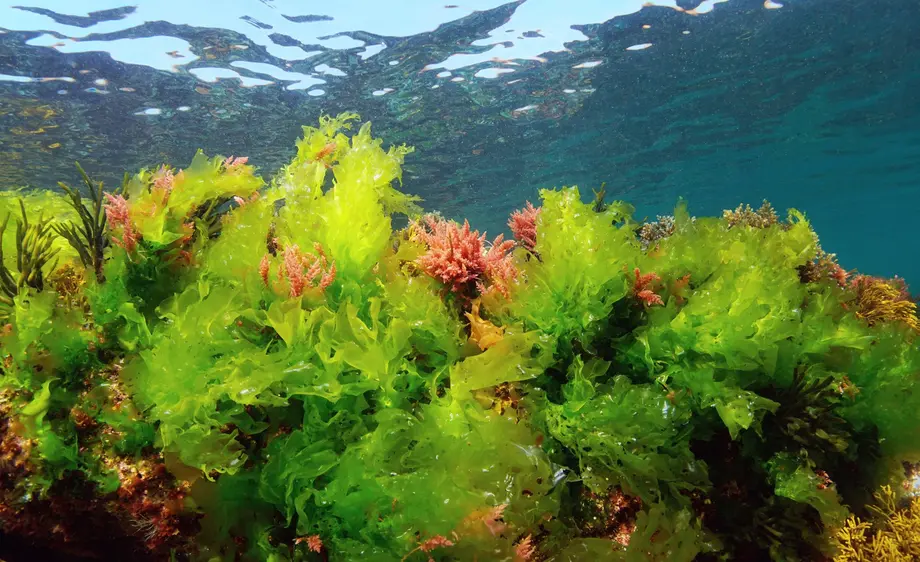
Cyanidioschyzon merolae, also called schyzon, was discovered in acidic hot springs in Italy. It has no cell wall, making it a practical partner for an experiment that requires cell membranes to merge.
Schyzon also has an unusually compact genome for an organism capable of photosynthesis. Its nuclear DNA contains approximately 16.5 million base pairs, the paired chemical letters that encode genetic information. The mammalian genome used for comparison in the paper contains about 2.4 billion base pairs, roughly 145 times as much.
The researchers used Chinese hamster ovary cells, specifically the CHO-K1 line, and human HT-1080 cells. CHO cells are already used in pharmaceutical production. HT-1080 is a laboratory cell line derived from a human cancer of connective tissue.
The two hosts gave the team a way to examine how different mammalian cells handled the same foreign genetic material. Hamster cells retained larger portions of the algal genome than the human cells did.
How the team brought the cells together
The researchers used polyethylene glycol, a chemical that helps cell membranes fuse. Mammalian cells in the experiment measured about 50 micrometres across, compared with about five micrometres for schyzon. Individual mammalian cells could therefore fuse with two or more algal cells.
The algae carried engineered genetic markers. Some produced fluorescent signals that allowed the team to follow DNA inside living cells. Others provided resistance to the antibiotic blasticidin, helping researchers identify and grow mammalian colonies that had acquired the marked algal DNA.
Fluorescent signals appeared in the mammalian cytoplasm, the space surrounding the nucleus, as early as six hours after fusion. Signals indicating activity of the transferred reporter inside the mammalian nucleus became detectable at about 24 hours.
The observations followed a short sequence:
- 2018: Matsunaga proposed the planimal cell concept.
- Six hours after experimental fusion: fluorescent signals were detected in the cytoplasm of all 19 cells examined.
- 24 hours after fusion: nuclear reporter signals were detected in 13 of 21 cells examined.
- 48 hours after fusion: all 19 cells examined at that stage showed clear nuclear reporter signals.
- November 12, 2026: the study and institutional announcement were published.
Fusion worked far better than engulfing algae
The team also tested whether mammalian cells could acquire algal DNA by taking up intact algae, a process called phagocytosis. In simple terms, the receiving cell engulfs material from outside itself.
Both approaches produced colonies resistant to blasticidin, but their yields were very different. For every 12 million cells, engulfment produced an average of 3.7 resistant colonies, compared with 3,098.7 after cell fusion. From those figures, fusion produced about 837 times as many resistant colonies.
The researchers therefore used fusion for the detailed experiments that followed. The engulfment results remained scientifically useful because they offered a laboratory route for studying how DNA from an organism taken inside another cell can become inherited by the receiving cell.
Movement toward the nucleus also mattered. When the researchers inhibited dynein, a motor protein that transports material along tracks inside cells, fluorescent material remained in the cytoplasm through 48 hours and the nuclear reporter signal was absent. The findings suggest that the receiving cell's transport machinery helps deliver the foreign DNA toward its nucleus.
How much algal DNA survived?
The researchers established 18 stable lines derived from hamster cells and 13 from human cells. A cell line is a population descended from cells that can be maintained and studied in the laboratory. The human lines were obtained through fusion; the hamster lines included both fusion and engulfment experiments.
Genome sequencing at the 20th generation showed substantial differences between the methods and hosts. Hamster lines produced by engulfment retained up to 48.9% of the algal genome, with an average of 30.2%. Hamster fusion lines retained up to 100%, averaging 55.8%.
Human fusion lines retained up to 66% of the algal genome, with an average of 14.9%. The complete genome result therefore came from a particular hamster line, named CHO-Cm7.
A detailed reconstruction of CHO-Cm7 recovered 16.3 million base pairs of algal sequence, representing 98.76% of the reference genome and 5,345 annotated algal genes. The 100% figure describes coverage when sequencing reads were matched to the reference genome; the 98.76% figure describes the sequence recovered in the reconstructed genome.
Foreign chromosomes became lasting residents
The transferred DNA included large chromosome sections and intact algal chromosomes. Chromosomes are packages of DNA that cells copy and distribute when they divide. Six algal chromosomes remained as continuous, unfragmented regions in the detailed hamster genome reconstruction.
Microscopy placed much of the algal DNA near the end of the short arm of a hamster X chromosome. Further analysis found algal chromosomes linked through telomeres, the repeated DNA sequences at chromosome ends. In a human hybrid line, the team verified a junction connecting algal DNA to a human chromosome using several sequencing methods.
Kindai University's research announcement says the hybrid cells divided for more than 150 generations while maintaining algal DNA. The paper also describes persistence for 95 generations without antibiotic selection. The latter experiment tested whether the foreign DNA would remain when cells no longer needed the inserted resistance marker to survive the antibiotic.
Researchers count these generations as cell divisions, rather than transfers between culture containers. The persistence matters because useful engineered cells must pass their new genetic material to their daughter cells as they multiply.
Silencing helped the foreign DNA stay
More than 95% of the algal genes were inactive inside the hybrid cells, according to the institutional announcement. The receiving mammalian cells added chemical marks to the imported DNA and packed it into a condensed state associated with reduced gene activity.
DNA methylation is one of those marking processes. It attaches small chemical groups to DNA without changing the order of its genetic letters. The marks can help control whether a gene's instructions are used.
The compacted DNA formed heterochromatin, a tightly packed arrangement of DNA and associated proteins. A useful comparison is a collection of instruction books stored with most pages closed: the information remains present, while access to it is restricted.
When the team used hamster cells lacking an enzyme responsible for adding new methylation marks, stable hybrids formed less efficiently and transferred algal DNA was more readily lost. The researchers call this accommodating and restraining process epigenetic gatekeeping. It gives the study its central finding: the machinery that quiets foreign genes also helps the receiving cell keep them.
Why photosynthesis is still missing
The hybrid cells retained algal genetic information, but their chloroplasts broke down during fusion. Photosynthesis requires working chloroplasts and coordinated activity from the genes that support them. In the new cells, the chloroplasts were lost and most algal genes were switched off.
Chloroplasts use light to drive reactions that release oxygen from water and help convert carbon dioxide into carbohydrates, including sugars. Those carbohydrates store energy that cells can use.
Matsunaga's team had previously introduced schyzon chloroplasts into hamster cells under special culture conditions. Initial photosynthetic reactions were detected, but maintaining the system through repeated cell division was difficult. That experience helped motivate the attempt to transfer the algal genome as well.
Matsunaga, a professor at the University of Tokyo's Graduate School of Frontier Sciences, described the next objective in comments translated from Japanese:
Next, we want to introduce chloroplasts and get the schyzon genes working too, so that photosynthesis produces oxygen.
The institutional announcement says the researchers plan to develop methods for selectively activating genes associated with photosynthesis or useful substance production. The technical task is to preserve the stability achieved through gene suppression while allowing chosen functions to operate.
What this could change for food and medicine
Cultivated meat is one possible application. Animal cells grown for food need nutrients and oxygen. If researchers could equip such cells with sustained photosynthesis, the cells might produce some useful substances or oxygen themselves, potentially reducing parts of the supply needed to keep a culture growing.
Pharmaceutical production is another proposed use, especially because CHO cells already serve as factories for medicines and useful proteins. The institutional announcement also raises the possibility of therapeutic human cells that make oxygen in environments where oxygen is scarce, and animal cells that capture carbon dioxide.
Those applications depend on further experiments. No timetable was given for achieving sustained photosynthesis, producing food or developing a treatment. The study reports DNA transfer, retention and regulation; the proposed production benefits remain goals for future work.
The research also offers a different approach to cell engineering. Instead of introducing selected genes individually, scientists could first transfer a large collection of genetic instructions, then activate the functions they need. The immediate question is which algal genes can be switched on while the hybrid cells continue growing reliably.
Key Points
- A Japanese team fused red algae with hamster and human laboratory cells, creating hybrids that retained large amounts of algal DNA.
- One hamster line retained material covering the entire algal genome; human lines retained up to 66%.
- The institutional announcement reports more than 150 generations of division. The paper also describes DNA persistence for 95 generations without antibiotic selection.
- More than 95% of algal genes were silent, and DNA methylation helped the cells accommodate the foreign genetic material.
- The hybrids could not photosynthesize because chloroplasts broke down and most algal genes remained inactive.
- Oxygen production, cultivated meat and pharmaceutical manufacturing are proposed applications, with no development timetable announced.