A vast burial with a surprisingly small center
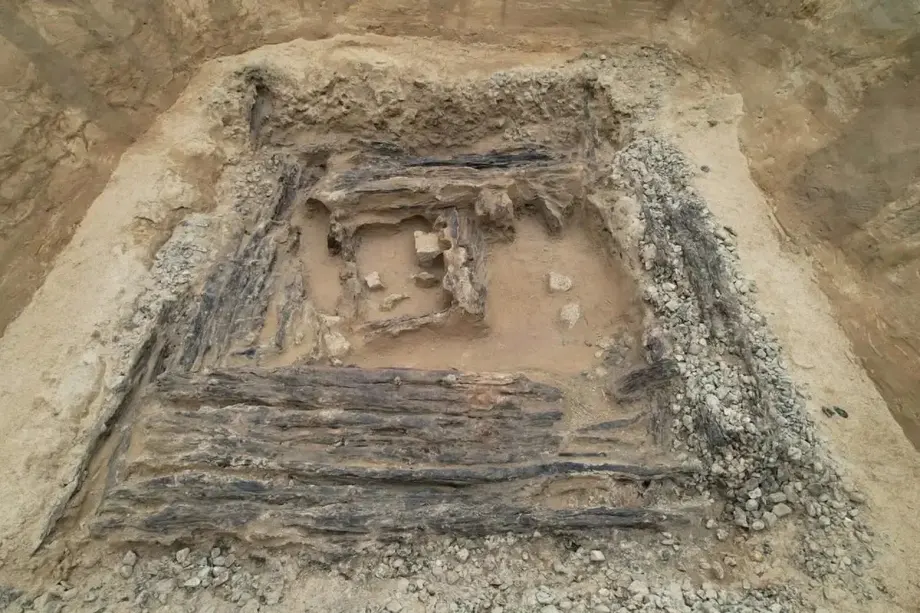
A tomb stretching 73 meters through the Duurlig Nars cemetery in eastern Mongolia has yielded 413 artifacts, including a glass cup possibly made in the Roman Empire, 15 carved jade objects and silver horse ornaments resembling finds from the Korean Peninsula. Yet the burial at its heart is unexpectedly compact: two nested wooden chambers surrounding a single coffin.
Contents
- A vast burial with a surprisingly small center
- How builders created the monumental tomb
- Why the shallow chamber matters
- A glass cup that may have traveled from Rome
- Fifteen jade objects show customs being reworked
- Silver, gold and crystal point toward the Korean Peninsula
- Decades of research behind the discovery
- The excavation and its next stages
- Protecting the cemetery beyond the excavation
- Key Points
The National Museum of Korea announced the completed excavation of Tomb No. 160 on November 6, 2026, describing it as the largest Xiongnu burial identified in Mongolia. Located in Bayan-Adarga district in Khentii province, the tomb reaches 14.5 meters below ground and was covered by nine layers of stone.
Archaeologists date the burial to the late first or second century CE, approximately 2,000 years ago. Its combination of monumental construction, precious belongings and a smaller central chamber offers researchers two connected lines of inquiry: how the Xiongnu elite obtained goods from distant regions, and how their burial customs changed as political power weakened.
The excavation brought together the National Museum of Korea, the Institute of Archaeology of the Mongolian Academy of Sciences and the National Museum of Mongolia. Their work on Tomb No. 160 began in 2023 and concluded in 2026, building on decades of cooperation at Mongolian archaeological sites.
The person buried inside remains unidentified. Teeth and hair recovered from the coffin are intended for scientific examination, while the glass vessel will undergo chemical analysis to investigate where it was made. Those studies will connect the excavation's striking objects with more precise information about their origins and owner.
How builders created the monumental tomb
Tomb No. 160 measures about 73 meters when its entrance passage, extending south, is included. Ancient builders cut the earth into steps, installed the burial structures and sealed the tomb beneath successive layers of stone. Excavators worked back through those layers to reach the center.
The nested wooden structures enclosed one coffin. A carriage coated with lacquer, a protective decorative finish, lay directly above the central burial. Researchers regard the carriage, valuable grave goods and labor required for construction as signs that the occupant belonged to the highest ranks of Xiongnu society.
The museum's completed excavation measurements are smaller than earlier descriptions. Archaeologist G. Eregzen, director of the Mongolian Academy of Sciences' Institute of Archaeology, described an excavation pit about 90 meters long, more than 40 meters wide and 16 to 17 meters deep; another preliminary estimate put the tomb at 88 meters long and 18 meters deep.
Eregzen also described the practical scale of the work: an average of 160 tonnes of earth removed daily and more than 40,000 tonnes of soil and stone cleared. His account places the finely worked objects in a larger setting, a burial project requiring substantial organization both when it was built and when it was excavated.
Why the shallow chamber matters
The tomb's 14.5 meter depth caught researchers' attention because comparably large Xiongnu burials in central Mongolia can reach 22 meters. Using those figures, Tomb No. 160 is 7.5 meters shallower, approximately one third less deep.
A smaller companion burial examined at Duurlig Nars in 2019 showed a similar pattern. That gives the team another example within the same cemetery to compare with the unusual central chamber of Tomb No. 160.
Researchers suggest the architecture may reflect social changes during the weakening of Xiongnu power. The tomb belongs to a period when that power was changing, yet its enormous exterior and rich contents still display the resources available to its occupant. Comparing the main burial with surrounding graves will help researchers examine how those changes affected different people.
A glass cup that may have traveled from Rome
A transparent glass vessel with a handle is among the excavation's most intriguing discoveries. Researchers suspect it was manufactured within the Roman Empire and plan to examine its chemical composition to investigate its place of production.
Glass contains a mixture of ingredients used by its makers. Measuring those ingredients can help specialists compare a vessel with known production traditions and possible manufacturing regions. The planned analysis is therefore central to understanding how this particular cup fits into the tomb's wider collection of objects.
Trade, diplomatic gifts and exchanges through intermediary communities are among the possible ways valuable goods could have reached the Mongolian steppe. An object could pass through several hands before arriving at its final destination. The excavation team has yet to identify the cup's production center or its route to Duurlig Nars.
The National Museum of Korea, one of the institutions leading the excavation, described the collection as evidence of connections across Eurasia. In its announcement, the museum said:
This excavation clearly shows that the Xiongnu of 2,000 years ago were linked to a broad exchange network reaching from Rome to the Korean Peninsula.
The cup's proposed Roman origin sits alongside more detailed comparisons involving the jade and silver objects. Together, those finds allow researchers to investigate several kinds of contact, from the movement of finished goods to the adoption of decorative styles and burial practices.
Fifteen jade objects show customs being reworked
Fifteen jade pieces lay in overlapping layers at the bottom of the coffin. Researchers compare them with bi discs, ceremonial jade objects associated with burial practices in China's Han dynasty.
The Duurlig Nars pieces depart from the familiar round form of Han examples. Their shapes are irregular, and their surfaces carry intricate carvings. Researchers interpret those differences as evidence that the Xiongnu adopted elements of Han funerary culture while changing their appearance to suit their own preferences.
The placement inside the coffin gives the jade a different role from a possession simply stored elsewhere in the tomb. These objects formed part of the arrangement around the deceased. Their shapes, decoration and position provide evidence about burial choices as well as connections with neighboring societies.
Silver, gold and crystal point toward the Korean Peninsula
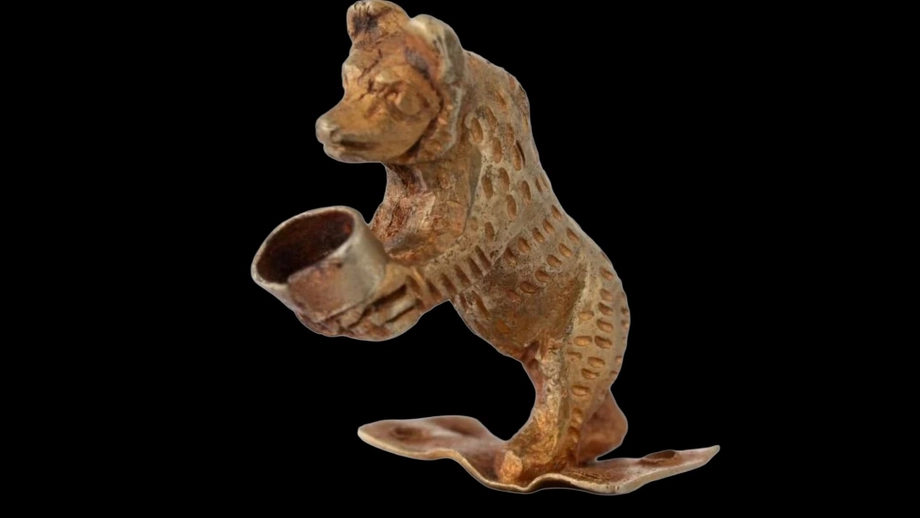
A silver ornament shaped like a gourd provides a particularly close comparison with objects from the Korean Peninsula. Made by hammering thin silver sheet, the pendant resembles horse harness decorations recovered from Lelang, also called Nangnang, burials around present day Pyongyang.
Researchers identified a comparison with Tomb No. 219 at Seogam-ri, whose ornaments are held by the National Museum of Korea. The Duurlig Nars pendant has a piece of rock crystal set into its center, adding a distinctive feature to the shared form.
A round gold ornament found beside it used gold leaf and red and blue material beneath transparent crystal. Light passing through the crystal would reveal the colors underneath. The team described this type of ornament as a first discovery in a Xiongnu tomb.
The silver decoration likely adorned a horse harness, placing elaborate craftsmanship on equipment associated with riding. Alongside the lacquered carriage, it shows how transport and horses featured in the display of status surrounding this burial.
The museum said finds of this quality and scale had not previously been identified in eastern Mongolia. Their significance lies in the combination: objects associated with different regional traditions were brought together in one carefully arranged elite grave.
Decades of research behind the discovery
The National Museum of Korea has investigated the Mongolian steppe since 1997. Its researchers connect that work with questions about how ancient Korean culture developed through contact with neighboring societies, including the Xiongnu.
Duurlig Nars contains about 300 tombs. Excavations there have already revealed other elaborate burials, providing a growing set of examples against which Tomb No. 160 can be studied.
An excavation described in August 2007 uncovered a large burial measuring 11 by 9 meters, with an entrance passage 15 meters long and a coffin eight meters below ground. Finds included a lacquered carriage, jade, gold decoration and horse equipment. Archaeologists also recovered the remains of 12 horses and more than 10 sheep and goats, which they associated with sacrificial practices.
Two smaller square graves investigated alongside that earlier burial contained objects including bronze vessels, pottery and lacquerware. The cemetery's research history therefore reaches beyond one spectacular tomb to the relationships between large and small burials, their contents and their construction.
The excavation and its next stages
The project's key dates show how the latest discoveries developed from earlier fieldwork into a program of conservation and laboratory study:
- 1997: The National Museum of Korea began research on the Mongolian steppe.
- 2007: Excavation results from other Duurlig Nars burials documented carriages, horse equipment and valuable grave goods.
- 2019: A nearby companion burial showed a similarly small, shallow central chamber.
- 2023: The joint excavation of Tomb No. 160 began.
- August 21, 2026: Mongolian President Ukhnaa Khurelsukh visited the excavation.
- November 6, 2026: The National Museum of Korea announced completion of the excavation.
- November 6 and 7, 2026: Findings were presented at the 50th national conference of the Korean Archaeological Society in Gangneung.
Teeth and hair from the coffin will be examined as researchers seek information about the occupant's biological sex, age and possible family relationships with people in neighboring graves. Genetic analysis may help establish kinship, allowing the team to study whether the cemetery's burial arrangements also reflect family connections.
The artifacts were scheduled to travel to South Korea by the end of 2026 for conservation and scientific analysis, with two Mongolian researchers participating as conservation trainees. The museum also plans digital content using a three dimensional record of the excavation, followed by a comprehensive excavation report. No release dates were given for the laboratory results or final report.
Protecting the cemetery beyond the excavation
The National Museum of Korea and Eregzen said Xiongnu elite burial sites, including Duurlig Nars, were added to UNESCO's World Heritage List in July 2026. Eregzen identified six sites in the group: Noyon Uul, Duurlig Nars, Gol Mod I, Gol Mod II, Chikhertiin Zoo and Takhiltyn Khotgor.
Eregzen placed those sites within a much larger archaeological record. He said more than 25,000 Xiongnu burials have been documented across Eurasia, with 10 of the 14 sites containing elite tombs located in Mongolia and four in Russia. The selected Mongolian sites represent different regions, periods and forms of burial.
Duurlig Nars and Takhiltyn Khotgor lie about 2,000 kilometers apart, yet Eregzen noted similarities in their structures, rituals and artifacts. Studying that combination of shared customs and regional differences can help explain how a vast steppe empire organized itself.
Protection now involves practical decisions about site boundaries, management and facilities. Eregzen called for a dedicated World Heritage administration and described plans for a research center and a museum with two exhibition rooms at Duurlig Nars that had been delayed by a lack of funding. Conservation of the objects and care of the cemetery are parallel tasks: the finds need laboratory treatment, while the place that gives them their historical setting needs lasting protection.
Key Points
- Tomb No. 160 at Duurlig Nars measures 73 meters including its entrance passage and reaches 14.5 meters deep.
- The National Museum of Korea describes it as Mongolia's largest identified Xiongnu burial.
- Excavators recovered 413 artifacts, including possible Roman glass, 15 jade objects and elaborate horse ornaments.
- The small central chamber resembles a nearby burial and may help researchers study changes in Xiongnu society.
- Scientific work will investigate the glass's origin and the occupant's biological profile and possible family relationships.
- Conservation, digital documentation and a comprehensive excavation report are planned.