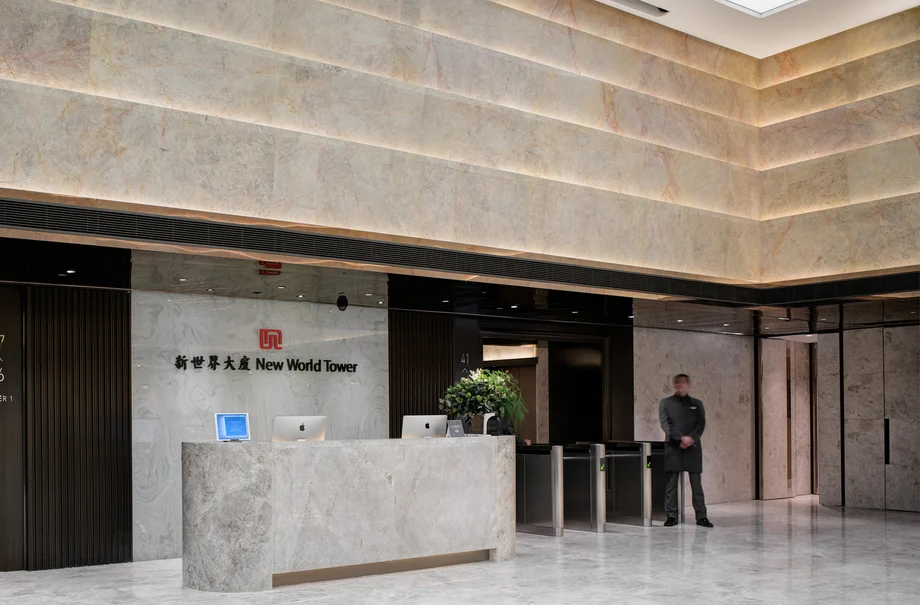
A fundraising plan twice the company's market value
New World Development suspended trading in its shares and several bonds it guarantees at 9 a.m. on Friday, November 13, 2026, pending an announcement about inside information. The Hong Kong developer last traded at HK$4.87 as it reportedly prepared a possible rights issue of up to HK$25 billion, against total debt of HK$143.3 billion at the end of June.
Contents
- A fundraising plan twice the company's market value
- Why HK$25 billion would matter
- What existing shareholders could be asked to pay
- Banks may arrange the sale without guaranteeing the proceeds
- The Cheng family's support and control
- The airport share option adds another ownership calculation
- Losses show why raising cash has become urgent
- Asset sales are another source of funds
- How the pressure built
- Key Points
The proposed fundraising would be roughly twice the company's market value of about HK$12.2 billion. People familiar with the discussions said banks had been appointed to prepare the transaction and the controlling Cheng family planned to contribute fresh capital.
The suspension notice gave no details of the inside information. The fundraising discussions were still under way, the plan might not proceed, and no subscription price, final size, shareholder payment deadline or trading resumption date had been announced. New World declined to comment on the fundraising reports.
A rights issue gives existing shareholders an opportunity to buy newly issued shares, usually in proportion to what they already own. For New World's investors, the immediate issue is how much additional money they might need to contribute to maintain their ownership percentage.
The market valuation needs care. About HK$12.2 billion was widely cited, while HK$122 billion also appeared in coverage. The smaller figure is consistent with the share count implied by the reported airport authority option: 750 million shares representing about 29.8% of existing capital. At HK$4.87 each, that implies a market value of approximately HK$12.3 billion.
Why HK$25 billion would matter
New World's debt had fallen by HK$2.7 billion over the year to June, leaving HK$143.3 billion outstanding. That puts the previous year's total at approximately HK$146 billion, meaning the reduction was about 1.8%.
A successful HK$25 billion fundraising would equal approximately 17.4% of the June debt balance. If every dollar were used to repay borrowings, before transaction costs and other changes, debt would fall to HK$118.3 billion. The actual reduction would depend on how much was raised and how the company used the proceeds.
The more immediate pressure is HK$23.2 billion of debt that was due for repayment or refinancing within 12 months of the June balance sheet date. Refinancing means replacing an existing loan with another borrowing rather than paying it off from cash already available.
The maximum proposed fundraising exceeds that near term debt amount by HK$1.8 billion. That comparison explains the scale of the transaction under discussion: it could provide substantial resources for approaching obligations, although the company also needs money to operate its businesses.
What existing shareholders could be asked to pay
A possible structure discussed in the fundraising coverage would offer at least two new shares for every existing share. Higher ratios, including three or four new shares for each existing share, have also been suggested. These are possible structures rather than announced terms.
The arithmetic explains why such a large issue is being considered. The airport option figures imply approximately 2.52 billion existing shares. Issuing two new shares for each would create roughly 5.03 billion shares. Raising HK$25 billion from that number would require a subscription price of about HK$4.97, slightly above the last trading price.
A subscription price below HK$4.87 would therefore require more than two new shares per existing share to reach the full HK$25 billion target, using that approximate share count. A smaller fundraising would change the calculation.
An investor holding 100 shares would be entitled to buy 200 more under a structure offering two new shares for each existing share. If all those new shares were issued and the investor bought none, their percentage ownership would fall to one third of its previous level. With three new shares per existing share, it would fall to one quarter.
Shareholders may be able to sell their subscription rights if those rights are listed for trading. That could recover some value for someone who does not want to invest more money. Eligibility, trading arrangements and deadlines would depend on the eventual offer documents.
Banks may arrange the sale without guaranteeing the proceeds
Banks involved in the preparations were reportedly considering soft underwriting. In plain language, they would seek investors for the new shares without committing their own money to buy everything left unsold.
A firm underwriting commitment can give a company greater certainty about the money it will receive because an underwriter agrees to take an agreed shortfall, subject to contractual conditions. The arrangement being discussed for New World would leave more of the fundraising dependent on actual demand.
The Cheng family's participation would therefore matter in two ways: the cash it contributes directly and any commitment to buy shares that other investors leave behind. A stated intention to participate gives less financial certainty than a specified subscription amount or a binding agreement to cover a shortfall.
For smaller shareholders, the bank arrangements and the family's commitments would help determine whether the announced fundraising target becomes cash in New World's accounts. Those details would sit alongside the subscription price as central parts of any formal proposal.
The Cheng family's support and control
Chow Tai Fook Enterprises, the Cheng family's investment business, reportedly holds about 45% of New World. The family plans to participate in the proposed rights issue, according to people familiar with the discussions.
Earlier investment discussions also involved the family. Bain Capital had explored an injection that would include fresh Cheng family funding. More recent accounts said Bain had decided against taking a stake and would not participate in the rights issue.
Blackstone had also considered an investment but reportedly stepped back after the Cheng family declined to relinquish control. Together, those developments put the focus on a fundraising structure that could bring in substantial capital while allowing the family to retain its leading position.
Chow Tai Fook Enterprises was separately reported to have approached banks for about HK$5 billion in financing. Its spokesperson disputed that account, describing its contents as inconsistent with the facts or based on assumptions and speculation. That financing therefore remains disputed rather than a confirmed source of support for New World.
The airport share option adds another ownership calculation
New World's September 30, 2026 agreement to return the 11 SKIES project early to the Airport Authority included an arrangement involving shares held by Chow Tai Fook Enterprises. The authority received an option to acquire 750 million New World shares, approximately 29.8% of the existing issued capital.
The reported option purchase price was HK$1, while buying the shares through exercise would cost HK$2.25 billion, or about HK$3 per share. The option could be exercised once within three years of the termination date.
The arrangement has an ownership condition: Chow Tai Fook Enterprises must retain at least 30% after exercise, and another party must not become the single largest shareholder. That makes the family's future percentage holding relevant to both the fundraising and the airport arrangement.
Using the reported current percentages, transferring a stake equal to 29.8% of existing capital from a holding of about 45% would leave roughly 15.2%. The family would therefore need a different ownership position before a transfer of that size could satisfy the 30% condition.
A rights issue could change both the family's shareholding and the total number of shares. If the family acquired a larger proportion of the new shares than other investors, its percentage holding could rise, while the fixed option over 750 million shares would represent a smaller percentage of the enlarged company.
The HK$2.25 billion exercise payment would go to Chow Tai Fook Enterprises as the seller of those shares. A subscription for new shares, by contrast, would put fresh equity into New World itself.
Losses show why raising cash has become urgent
New World reported a record loss attributable to shareholders of HK$28.1 billion for the financial year ending in June 2026, equivalent to HK$7.72 per share. Interest expenses were close to HK$5 billion, while selling, department store, administrative and other operating expenses also approached HK$5 billion.
The group's recurring businesses generated about HK$2.2 billion in net operating profit. Tax expenses exceeded HK$1.2 billion, and noncash impairment charges exceeded HK$18.3 billion, including charges associated with 11 SKIES.
An impairment is an accounting reduction in the recorded value of an asset. It reduces reported profit without requiring an equal cash payment at that moment. Interest and debt repayments, however, require money when they fall due.
That combination explains the pressure on New World. It is dealing with reduced asset values while also needing cash to service a large debt balance. Raising equity would bring in money without adding another loan, although it would expand the share base and change ownership percentages.
Asset sales are another source of funds
New World has also been selling assets outside its central business priorities. A commercial site in Hong Kong's Central district raised about HK$1 billion, while office projects in Hangzhou and Ningbo fetched approximately HK$2 billion.
A planned mainland China real estate investment trust, or C-REIT, would include Shanghai's K11 Art Mall and K11 ATELIER New World Tower. A REIT allows investors to hold an interest in income producing property through an investment vehicle.
The proposed Shanghai transaction was sized at about RMB3.82 billion, with expected net proceeds of roughly RMB3.2 billion. Those proceeds remain tied to completion of the planned transaction.
Debt management has also included reductions in the value of perpetual bonds and deferred interest payments. Perpetual bonds have no fixed final repayment date. The peak period for debt repayments has reportedly been moved back by two years, although HK$23.2 billion still required repayment or refinancing within a year of June.
How the pressure built
The trading suspension follows several months of debt, asset and ownership developments. The main dates show how the proposed share sale fits into the wider effort to bring money into the group.
- End of June 2026: Total debt stood at HK$143.3 billion, including HK$23.2 billion requiring repayment or refinancing within 12 months.
- September 30, 2026: New World agreed to return 11 SKIES early, alongside the Airport Authority share option arrangement involving Chow Tai Fook Enterprises.
- October 2026: Bain Capital was reported to be exploring an investment involving fresh funding from the Cheng family.
- November 13, 2026: New World announced a trading halt before the market opened. The suspension took effect at 9 a.m., with the shares last quoted at HK$4.87.
The next substantive step is the company's inside information announcement. Investors will need the formal terms to calculate the cash required to participate, the possible change in their ownership and the amount of funding New World expects to secure.
Key Points
- New World shares and several guaranteed bonds were suspended from trading on November 13 pending inside information.
- The developer is reportedly preparing a rights issue of up to HK$25 billion, roughly twice its market value.
- The Cheng family plans to participate, while banks are considering an arrangement without a firm commitment to buy unsold shares.
- Total debt was HK$143.3 billion at the end of June, with HK$23.2 billion requiring repayment or refinancing within 12 months.
- Shareholders who do not subscribe could see a substantial reduction in their percentage ownership.
- The fundraising remains under discussion, with final terms and a timetable still to be announced.