Why Gan says openness is the practical answer
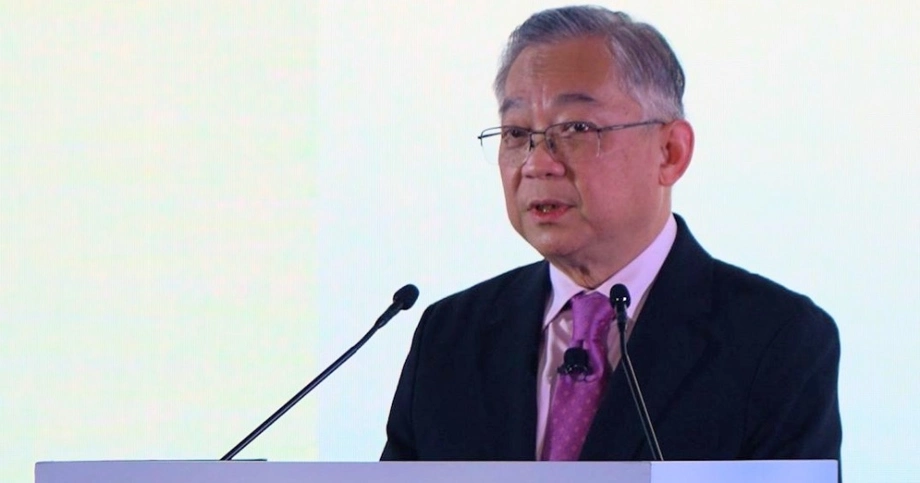
Deputy Prime Minister Gan Kim Yong used a keynote speech on Nov. 27, 2026, at the fifth Asia Future Summit at Marina Bay Sands Expo and Convention Centre to give ASEAN a direct message: inward looking policy may feel safer, but it leaves the region with fewer choices. Gan, who is also Minister for Energy, Trade and Industry (Trade), told policymakers, business leaders and industry experts that ASEAN must answer rising economic nationalism with deeper integration and wider partnerships.
Contents
- Why Gan says openness is the practical answer
- The dates that shape this speech
- What economic nationalism changes in daily life
- How AI can lift productivity and widen gaps
- Why AI opportunity brings a security bill
- How distant wars reach fuel, freight and food bills
- Why ASEAN wants to be a bridge, not a battleground
- What Singapore wants to carry into 2027
- What the trade and digital agreements would do
- What is still undecided and what comes next
- Key Points
The summit, presented by SPH Media titles, brought together policymakers, business leaders and industry experts, with OCBC as presenting sponsor, Marina Bay Sands as venue partner and Amazon Web Services as cloud partner. His remarks came after the United States announced fresh tariffs and chip export restrictions in the previous two weeks. A tariff is a tax on imported goods. Export controls are rules that limit where sensitive technology can be shipped.
Gan named three forces that make the choice harder: artificial intelligence (AI), geopolitical shocks and competition over economic power among major countries. The minister responsible for trade and energy framed those forces as a test of regional cooperation. He told the summit:
Each can strengthen the impulse to turn inward. Yet each also makes cooperation more crucial.
Asia has seen higher tariffs, disruptions to energy supplies and growing uncertainty over global trade during the past two years. Gan said ASEAN still grew by close to 5 per cent last year and continues to offer opportunities for businesses and investors. He said every government wants jobs, essential supplies and stronger resilience, but closing markets inside ASEAN would shrink the chances available to every member.
The dates that shape this speech
Gan's message landed at the end of a busy month for regional trade policy, during a year when ASEAN turns 60 and Singapore takes the rotating chairmanship. The sequence matters because agreements signed or launched now will be implemented under the new chair.
- Nov. 17, 2026: At last month's Manila handover, the Philippines passed the chairmanship to Singapore. Prime Minister Lawrence Wong received the symbolic gavel from Philippine President Ferdinand R. Marcos Jr. as leaders closed the 49th ASEAN Summit.
- Earlier in November 2026: ASEAN signed the regional Digital Economy Framework Agreement.
- Nov. 27, 2026: Gan gave the keynote at the Asia Future Summit and answered questions on tariffs, chips and AI safety.
- End of 2026: The upgraded ASEAN Trade in Goods Agreement is set to begin rollout.
- Jan. 1, 2027: Singapore formally starts its chairmanship, the same year ASEAN marks its 60th anniversary.
- 2027: Singapore is due to host the 50th and 51st ASEAN summits.
- 2028 and 2029: Thailand is due to take the chair, followed by Timor-Leste, admitted in 2025.
An October agenda setting in Singapore had already linked integration to energy, technology and ties with Europe, Canada, Africa, South America and the Pacific Islands.
What economic nationalism changes in daily life
Gan acknowledged why governments turn inward. Every government wants to protect jobs, secure essential supplies and strengthen resilience. Those goals are easy to understand when factories depend on imported parts, households rely on stable prices and ports move goods through contested routes.
The risk, he said, is that those concerns can become barriers between ASEAN members. He told the summit that raising barriers among ASEAN members would narrow opportunities for each of them.
Raising barriers among ourselves would narrow the opportunities available to each of us.
In practice, a restriction on exports can raise input costs for a factory in a neighbouring country. A slower customs process can keep perishable goods longer at a border. A tariff can make imported inputs more expensive, which can raise prices for consumers. Gan's argument was practical: ASEAN members can gain more by keeping regional markets open while building stronger ties beyond the region.
How AI can lift productivity and widen gaps
Gan presented AI as an economic tool, not a fashion. Manufacturers can use it to spot defects and reduce waste. Logistics firms can plan deliveries more efficiently. Smaller firms can use cloud services to reach capabilities that once needed large investments of their own.
Cloud services are computing tools delivered over the internet, so a company does not need to buy and run every server itself. Gan described the effect on smaller companies in plain terms:
Smaller firms can access capabilities through cloud services that previously required substantial investments of their own.
Gan said the gains depend on how widely firms and workers can use AI to create value. That means improving data, redesigning processes, training people and testing which uses actually help. He also warned that AI can disrupt industries and jobs. Governments, employers and training institutions need to prepare workers for changing roles and help displaced workers move into new ones.
Regional cooperation can extend those efforts by sharing strengths and experience, including lessons from serious AI incidents and near misses. Gan said no country can manage AI safety alone. He called on ASEAN to build on the ASEAN Guide on AI Governance and Ethics, work with partners on safety research, testing and safeguards, and keep human control over increasingly capable systems.
Why AI opportunity brings a security bill
AI can help find software weaknesses and strengthen defences, Gan said. It can also make cyberattacks easier to carry out and faster, leaving businesses less time to respond. In simple terms, the same tools that help defenders scan systems can help attackers automate tasks.
Gan said cooperation on safety becomes more critical as AI becomes more powerful and widely used. He urged ASEAN partners to share lessons from serious incidents and near misses, which are events that came close to causing harm. He said maintaining human control and preventing misuse matters more as systems become able to act on their own.
During a dialogue after the keynote, Gan was asked whether Nvidia had stopped chip shipments to Southeast Asia, including Singapore. He did not confirm that. The wider chip issue matters because advanced chips power data centres, telecoms equipment and industrial systems. Singapore accounts for about one in 10 chips made worldwide, and a major wafer fabrication plant opened there in 2026.
Gan, Deputy Prime Minister and Minister for Energy, Trade and Industry (Trade), said Singapore was engaging businesses to understand the impact and that firms were working with partners to keep access to chips. He said:
We have not confirmed it. We are in the process of engaging our businesses, to reach out to them, to see what is the impact on their businesses.
He said Singapore would work with the United States on concerns while reviewing its own regulations and monitoring. He said firms in Singapore must follow rules in countries where they operate, and firms doing business in Singapore must respect Singapore rules. Gan, who described trust as central to the role of Singapore as an international business hub, said:
Singapore has always safeguarded our global international reputation very jealously.
How distant wars reach fuel, freight and food bills
Gan said the wars in Iran and Ukraine showed how conflicts far from ASEAN can affect businesses and households. Energy markets work through connected prices: when oil, gas or shipping routes come under pressure, transport and input costs rise across many economies at once.
Gan, the minister responsible for energy and trade, described the path from disruption to household costs. He told the summit:
When energy supplies are disrupted or shipping routes come under pressure, the effects ripple through the economy. Higher fuel, freight and fertiliser costs raise business costs and push up the prices of everyday goods for everyone.
His proposed response was to keep trade flowing, share information and coordinate responses. ASEAN economic ministers earlier this year reaffirmed their commitment to open markets and avoiding unnecessary trade restrictions, and called for closer cooperation on energy security and food supply chains.
Gan also pointed to the ASEAN Power Grid, which links Lao PDR, Thailand, Malaysia and Singapore. The project shows that electricity can be traded across borders under agreed rules. That matters because a country short of power can buy from a neighbour instead of relying only on its own generation.
Why ASEAN wants to be a bridge, not a battleground
Competition over economic power is reshaping how countries trade, invest and get access to technology. Gan said governments are watching dependencies and control over critical capabilities more closely. For ordinary readers, a dependency is a reliance that becomes risky when a supplier, route or technology is cut off.
Gan said ASEAN countries cannot decide how major powers manage their differences. He told the summit that the region can still keep relationships across those divides:
ASEAN countries cannot determine how major powers manage their differences. But we can maintain relationships across these divides and remain a bridge for trade, investment and cooperation.
The United States and China remain key partners, with their businesses, technologies and markets important to regional growth. Both are among the largest trading partners and sources of foreign direct investment for ASEAN. Foreign direct investment means money placed in factories, offices and companies rather than only in shares.
Gan said ASEAN must keep the confidence of partners through clear rules, reliable institutions, respect for laws and commitments, and firm action against wrongdoing. He also said common rules help smaller economies have a voice. He said:
Without these rules, smaller economies would be more exposed to decisions taken by larger powers, and businesses would face greater uncertainty.
ASEAN is widening ties through talks to upgrade trade agreements with South Korea and Canada, moves to expand RCEP and improve its operation, and closer links with the European Union and Gulf Cooperation Council, a group of six Gulf states.
What Singapore wants to carry into 2027
Singapore takes the rotating ASEAN chairmanship at a milestone moment. ASEAN will mark its 60th anniversary in 2027, and Singapore last held the chair in 2018. The theme, Deeper Integration, Wider Partnerships, puts two goals together: making ASEAN economies work more closely and expanding ties with countries beyond Southeast Asia.
Gan said Singapore will carry this approach into its chairmanship, building on work by the Philippines. He wants member states to deepen integration, widen partnerships and develop opportunities in the digital and green economies. The 2027 chairmanship agenda put a number on the ambition: the combined ASEAN economy, about US$4.5 trillion, could reach US$10 trillion by the early 2040s with further integration, reform and growth. That is an increase of US$5.5 trillion, taking it to more than twice the current size.
Singapore will host the 50th and 51st ASEAN summits, while ASEAN has 11 members following Timor-Leste admission in 2025. Gan, Deputy Prime Minister and Minister for Energy, Trade and Industry (Trade), ended his keynote with a goal for residents rather than only for companies:
Through deeper and wider cooperation, we can secure stronger growth, greater resilience and better lives for our people.
What the trade and digital agreements would do
The upgraded ASEAN Trade in Goods Agreement is set to roll out at the end of 2026. Gan said it will reduce business costs through streamlined procedures and more transparent rules. In practice, that means fewer repeat forms, clearer classification of goods and less uncertainty about charges at borders.
A customs related mutual recognition arrangement gives certified trusted traders faster clearance and priority treatment in participating countries. Trusted trader status is a label given to companies that meet agreed standards, so customs officers can process their shipments with less inspection.
The Digital Economy Framework Agreement, signed earlier in November 2026, extends integration into online commerce. Gan said it would make cross border transactions, payments and access to digital services easier. A business in one ASEAN country could find it simpler to sell to customers in another, receive payment and use digital services across borders.
Singapore has been pushing related digital rules for years. A 2025 ASEAN EU digital economy push sought clearer rules for payments, data transfers and online trust as trade tensions rose. At that point, no timetable had been given for an ASEAN EU agreement. The 2026 agreement is a regional ASEAN pact, while ties with the European Union remain a separate track.
What is still undecided and what comes next
Several questions remain open. Gan did not confirm the Nvidia halt, and he did not give a figure for how many companies might be affected by changes in chip access. No timetable was given for completing upgraded talks with South Korea and Canada, and no date was set for a wider ASEAN EU digital pact during the 2025 proposal.
On tariffs, Gan said Singapore must be clear about its principles and act in its own interest. He said negotiations have no guaranteed result and that Singapore must weigh gains against what it gives up. The minister responsible for trade and energy said:
We must be prepared to walk away when the price they ask for is too high.
The next concrete dates are the end of 2026 rollout for the upgraded goods agreement, the formal start of the Singapore chair on Jan. 1, 2027 and the ASEAN summits Singapore will host during the year. Beyond that, Thailand is due to take the chair in 2028 and Timor-Leste in 2029.
Gan's message to businesses and workers was that preparation needs to start before the rules arrive. Firms can improve data and processes, workers can train for changes related to AI, and governments can keep markets open while sharing information on energy, food and safety. The goal he set was growth that people can feel in jobs, prices and opportunities.
Key Points
- Gan urged ASEAN on Nov. 27, 2026 to counter economic nationalism with deeper integration and wider partnerships.
- He named AI, geopolitical shocks and competition over economic power as forces that push countries inward while making cooperation more necessary.
- ASEAN grew by close to 5 per cent last year, and Gan said the region remains attractive to businesses and investors.
- The upgraded ASEAN Trade in Goods Agreement is set to roll out at the end of 2026, while the Digital Economy Framework Agreement was signed earlier in November.
- Singapore takes the ASEAN chair on Jan. 1, 2027, during the 60th anniversary year of the grouping.
- Gan did not confirm that Nvidia halted chip shipments to Southeast Asia, and Singapore is reviewing rules against illegal chip trade.