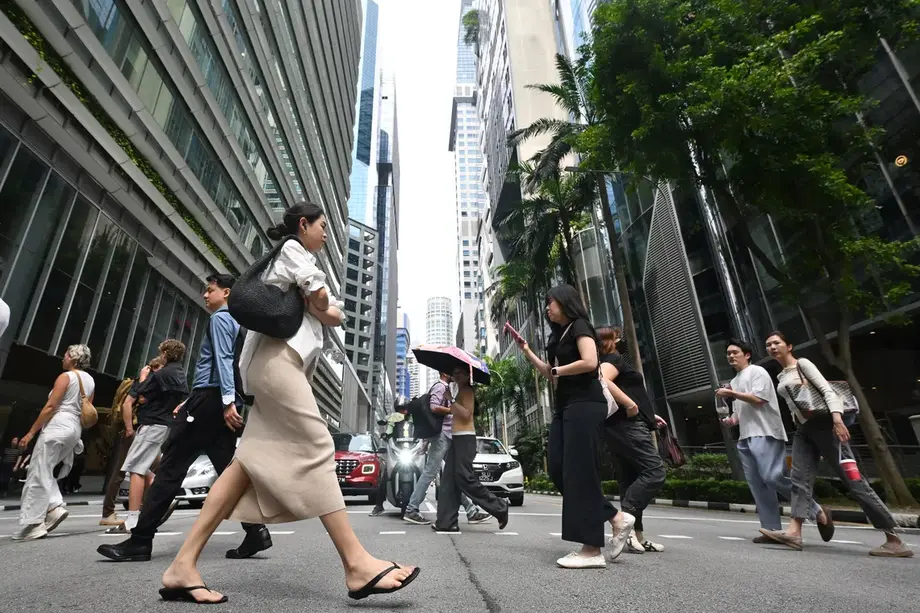
More workers need longer to find their next job
Singapore is considering broader financial support, longer training and stronger workplace protections as retrenchments increasingly affect professionals and workers take longer to find new jobs. Acting Manpower Minister Jasmin Lau said the Government wants to adjust existing programmes to help people through career changes, including workers in their 30s who fall below some current age thresholds.
Contents
- More workers need longer to find their next job
- Why professionals face a harder transition
- Strong headline numbers can hide a mismatch
- Age limits and income ceilings are under scrutiny
- Household bills shape career decisions
- Employment Act review looks beyond traditional protections
- Graduates may get longer training with a route into jobs
- Seniors need income, savings and workable hours
- Flexible work needs more than a formal policy
- The dates shaping the next decisions
- Key Points
Retrenchments rose from 4,620 in the second quarter of 2026 to a preliminary 4,800 in the third quarter. Professionals, managers, executives and technicians, known as PMETs, now account for nine in 10 retrenched workers, compared with between six and seven in 10 a decade earlier.
The pressure continues after a job ends. The proportion of retrenched workers finding another job within six months has fallen to 54.9%, from 64.6% a decade ago. Within a year, the figure is 69.8%, down from 77.9%. For families paying mortgages and supporting children or elderly relatives, a longer search can quickly become a financial strain.
Lau outlined the ministry's thinking during a November 6 interview at the Lifelong Learning Institute. The proposals cover workers at several stages of life: graduates seeking practical experience, professionals changing industries and seniors trying to combine employment with caregiving.
The Ministry of Manpower, or MOM, intends to adapt existing support rather than add a new collection of programmes. Lau said workers need practical help they can use, explaining her approach in direct terms:
They need to feel that the existing schemes can work for them.
Why professionals face a harder transition
PMETs make up about six in 10 workers, a share that has stayed broadly steady over the past decade. Their share of retrenchments has climbed to about 90%. The change means job losses have become much more concentrated among people in professional and technical occupations.
Specialised experience can make finding a comparable position difficult. A worker may have earned a good salary by learning one company's systems or developing deep knowledge of a particular industry. Moving elsewhere can require learning a different business before those skills become useful again.
Lau gave the example of a software engineer moving from a technology company into healthcare. The engineer may retain technical skills while needing to learn unfamiliar systems and how healthcare organisations operate. Employers taking people from another sector increasingly want that retraining completed before hiring, she said.
About 60% of workers who change industries receive slightly lower wages, according to Lau. That creates two pressures at once: households must manage a period without employment and may then have to adjust to a smaller income.
Strong headline numbers can hide a mismatch
Singapore's unemployment remains low, while job vacancies and employment growth remain strong, Lau said. Some of those openings, however, are in construction and marine activities, where employers typically recruit foreign workers. Vacancies in those sectors offer limited help to a retrenched professional seeking a role suited to their experience.
Financial services, information and communications, and advanced manufacturing offer growth opportunities. Those industries also face international competition, making restructuring and changes in staffing a recurring part of working life.
Lau attributed much of the recent restructuring to global developments, including changing tariffs and conflict in the Middle East. She said businesses experimenting with artificial intelligence were also becoming more cautious about hiring, while widespread displacement of workers by the technology had yet to emerge.
The ministry expects retrenchments to remain around recent levels and is watching the labour market over the next two quarters. Its immediate concern is how quickly people can move into suitable new work, especially when a change of industry requires training first.
Age limits and income ceilings are under scrutiny
Workers in their 30s are increasingly affected by restructuring, Lau said, prompting MOM to examine eligibility barriers in programmes designed around older workers. The SkillsFuture Level-Up Programme, launched in 2024, provides credits and subsidies for reskilling but is currently available only to Singaporeans aged 40 and above.
A worker aged 35 can face the same loss of a specialised role as someone aged 45. Reviewing age requirements would allow the Government to consider support according to the career disruption a person faces, rather than age alone.
The SkillsFuture Jobseeker Support scheme is also being reviewed, including its eligibility requirements and assistance period. It currently provides up to S$6,000 over six months to eligible workers who became unemployed involuntarily and previously earned up to S$5,000 a month.
Labour MPs have called for the income ceiling to rise to about S$7,600, the median monthly wage for a PMET. That proposed ceiling is S$2,600, or 52%, above the current limit. Median means the middle value: half of the relevant workers earn more and half earn less.
No revised eligibility thresholds, payment amounts, assistance period or implementation date have been announced. Lau said support must give people room to find suitable work while encouraging an active search and a timely return to employment.
Household bills shape career decisions
Middle income professionals often support children and older relatives while paying housing loans. Lau argued that financial assistance needs to reflect those obligations if workers are expected to spend time retraining rather than immediately accept whatever job pays the bills.
Lau, who is also Senior Minister of State for Digital Development and Information, said the purpose of greater support was to make a considered career transition financially possible:
If we are trying to support PMETs who are in middle income bands, then (the) amount of support we give them would have to be improved.
The practical issue is the gap between losing one occupation and becoming ready for another. Training takes time, but mortgage payments and household expenses continue throughout it. More support could give workers greater scope to prepare for jobs in growing sectors.
Lau also said the experience of retrenchment is personal and emotional. Recent job cuts at GovTech offered lessons about how support is delivered: some workers need time to process the news before they are ready to seek career advice. Assistance therefore needs to remain accessible when they are ready to use it.
Employment Act review looks beyond traditional protections
MOM is reviewing the Employment Act with unions and employers, with recommendations and the direction of reforms expected in early 2027. This tripartite process brings together the Government, worker representatives and businesses to consider changes to Singapore's main labour law.
Lau said many provisions have traditionally focused on workers in manual occupations. The review will examine whether some protections should extend further to PMETs as the workforce changes.
Retrenchment benefits are a central issue. MOM is considering ways to get employers that can afford compensation to pay it, potentially by attaching conditions to government grants or restricting access to foreign workers. Such administrative measures would use permissions and public funding to influence employer behaviour.
Lau said a legal requirement could lead to lengthy disputes when a business lacks the money to pay. Workers and companies could incur legal fees while payment remains out of reach. She also warned that overly restrictive requirements might encourage employers to replace permanent positions with contract roles.
The review may also examine medical leave, including allowing employees who are unwell to take sick leave without producing a medical certificate. Lau said the aim is to give workers greater security while keeping rules clear and workable for employers.
Graduates may get longer training with a route into jobs
Fresh graduates face a different problem: getting enough experience to secure their first stable role and progress beyond it. The proportion receiving a job offer within six months has fallen from about 95% to about 90%. The share obtaining a permanent or long term offer within a month of graduation slipped from 52% to 50%.
MOM is drawing lessons from the Graduate Industry Traineeships programme, known as GRIT, which began in October 2025. About 250 graduates have completed training, and roughly 60% of those completers have found work.
GRIT provides up to 800 places, with traineeships lasting three to six months. Participants receive monthly allowances of S$1,800 to S$2,400, of which the Government pays 70%. Participating companies or organisations cover the remainder.
Lau said three months can be too short for trainees to gain the skills a business needs or for employers to justify investing substantial training resources. MOM is considering longer, more structured arrangements with mentorship, recognised certification and a job opportunity at the end.
A possible programme lasting up to a year could help at least 1,000 graduates gain experience in 2027. Participants could work on actual projects, either within one department or through rotations. The Government is considering paying part of the salary and training costs, while employers would provide supervisors and plan the learning.
Businesses would also need to explain what skills graduates require to advance. As AI takes on more basic tasks, younger employees may have fewer opportunities to learn through routine work. Structured training would give them a deliberate route from entry level experience to more demanding responsibilities.
Seniors need income, savings and workable hours
Senior workers could receive more help through Workfare, which supplements the earnings of workers on lower incomes and helps them save for retirement. Lau said longer lives, including years spent in poorer health, increase the pressure on retirement savings.
Lau, a former deputy secretary at the Health Ministry, said savings accumulated in the Central Provident Fund, or CPF, by ages 55 to 60 may be insufficient to support some people throughout retirement. CPF is Singapore's compulsory savings system, used for needs including retirement, housing and healthcare.
The ministry also wants older people who wish to work to have more opportunities to remain employed. Recommendations announced by a tripartite workgroup on October 26 would bring the retirement age to 65 and the re-employment age to 70 from January 1, 2029, a year ahead of the original target.
The retirement age sets the age before which an employer generally cannot require an employee to retire because of age. Re-employment rules provide eligible older workers with a route to continue working beyond that point, subject to the applicable conditions.
MOM is working with companies on flexible roles, including jobs performed only on selected days. Workers in their 50s may be caring for elderly parents, while some also help look after grandchildren. A manageable schedule can determine whether they can continue earning.
Flexible work needs more than a formal policy
MOM's report released in May found that 84.5% of employees who needed a flexible work arrangement received one. Requests were nevertheless uncommon, suggesting that formal access and employees' willingness to ask are separate challenges.
Guidelines introduced in 2024 set out how workers can request arrangements such as different working hours or locations. Lau said some parents hesitate to request flexibility or childcare leave because they worry about handing work to colleagues.
Lau, a mother of two, said her conversations with working parents showed why written policies need support from workplace culture:
I always tell them, I fully understand how you feel, and it makes me understand better why policies themselves are not enough.
For employers, making flexibility usable involves planning workloads and cover when someone is absent. For workers balancing employment with care, those everyday arrangements can matter as much as eligibility for a government scheme.
The dates shaping the next decisions
The proposed changes combine immediate reviews with a longer timetable for senior employment. Several programmes already operate, while the next stage concerns who qualifies, how long support lasts and what employers must provide.
- 2024: The SkillsFuture Level-Up Programme launched, and guidelines established a process for requesting flexible work arrangements.
- October 2025: GRIT began offering graduates industry traineeships.
- Second quarter of 2026: Retrenchments reached 4,620, rising to a preliminary 4,800 in the third quarter.
- October 26, 2026: A tripartite workgroup announced recommendations for higher retirement and re-employment ages from 2029.
- November 6, 2026: Lau outlined plans to adjust worker support during a media interview.
- Early 2027: Recommendations from the Employment Act review are expected.
- January 1, 2029: The recommended retirement age of 65 and re-employment age of 70 would take effect.
The central policy choice is how to give workers enough financial and practical support to make a useful transition while keeping a return to suitable employment at the heart of the system. That requires different responses for a graduate building experience, a professional learning a new industry and a senior arranging work around care responsibilities.
Key Points
- PMETs now account for about 90% of retrenchments, up from 60% to 70% a decade ago.
- The share finding another job within six months has fallen from 64.6% to 54.9%.
- MOM is reviewing support eligibility and duration, including barriers affecting younger workers and middle income professionals.
- The Employment Act review is expected to produce recommendations in early 2027.
- Longer graduate training could combine practical projects, mentorship and clearer job opportunities.
- Senior employment plans include greater flexibility and recommended retirement and re-employment ages of 65 and 70 from January 2029.