Deepening Ties Through Innovation
Singapore and China are expanding their decades-long partnership with a strong emphasis on technology, artificial intelligence, and digital trade. Both governments have continuously adapted their collaboration to meet changing economic needs over the years. This bilateral relationship relies heavily on three major government-to-government projects that shaped different stages of development. The Suzhou Industrial Park focused on industrial growth, the Tianjin Eco-City advanced sustainable urban development, and the Chongqing Connectivity Initiative improved regional links. These flagship initiatives continue to evolve and open up new avenues for cooperation in emerging sectors such as biotechnology and green economies.
Contents
- Deepening Ties Through Innovation
- The 22nd Joint Council for Bilateral Cooperation
- Collaborative Research and Artificial Intelligence
- Commercializing Innovation and Financial Integration
- Connecting People and Educational Institutions
- Upholding the Rules-Based International Order
- Timeline of Key Developments
- At a Glance
Building on these strong foundations, leaders from both nations gathered for high-level diplomatic engagements in late November 2026. Singapore Prime Minister Lawrence Wong met with Chinese President Xi Jinping in Shenzhen on November 20, 2026, at Kylin Villa to discuss expanded collaboration. Following these discussions, the two countries officially launched negotiations to upgrade their bilateral free trade agreement. Known as the China-Singapore Free Trade Agreement 4.0, this proposed upgrade aims to cover the digital economy, cross-border data flows, and government procurement rules. Bilateral merchandise trade reached 162.9 billion Singapore dollars in 2025, accounting for 11.7 percent of Singapore's global merchandise trade, while Singapore has remained China's largest source of foreign direct investment by annual flows since 2013.
The 22nd Joint Council for Bilateral Cooperation
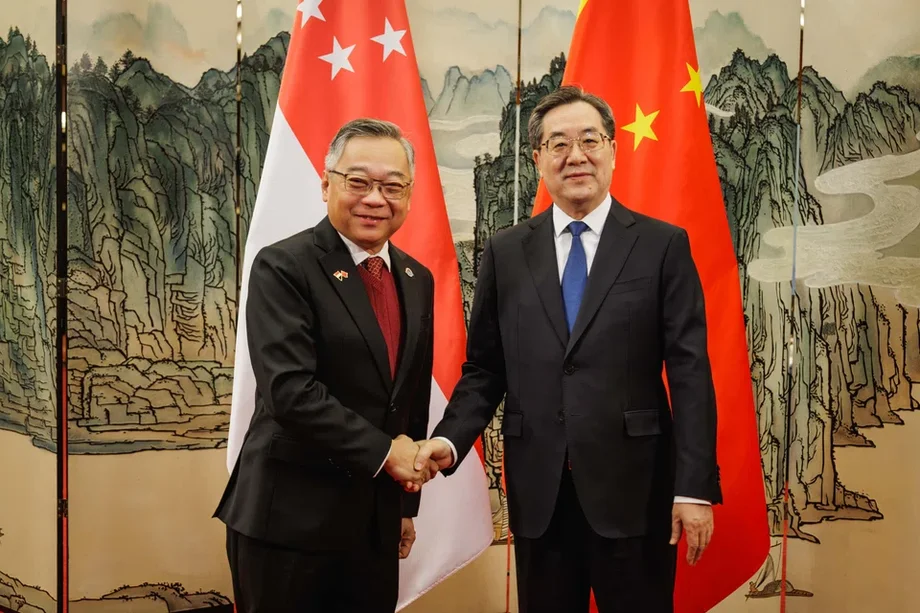
The diplomatic momentum continued in Singapore as Chinese Vice Premier Ding Xuexiang arrived for a two-day official visit from November 22 to 23, 2026. Invited by Singapore Deputy Prime Minister and Minister for Energy, Trade and Industry Gan Kim Yong, Vice Premier Ding participated in the highest-level annual bilateral cooperation mechanism between the two nations. The annual gathering, established in 2004, alternates venues between Singapore and China to review practical cooperation and chart future growth. This year's meeting carried the theme Innovating Together for New Opportunities, reflecting a shared commitment to exploring new economic frontiers. Alongside the main council meeting, DPM Gan and Vice Premier Ding co-chaired joint steering council meetings for the three flagship government-to-government projects, reviewing their progress and discussing future expansion. During bilateral talks in Beijing prior to the event, Prime Minister Lawrence Wong outlined the breadth of the upcoming agreements. As detailed in the official announcement on the Prime Minister's Office website, the meetings were expected to yield significant results across multiple sectors. Expressing optimism for the discussions, Prime Minister Lawrence Wong stated during bilateral talks with Chinese Premier Li Qiang:
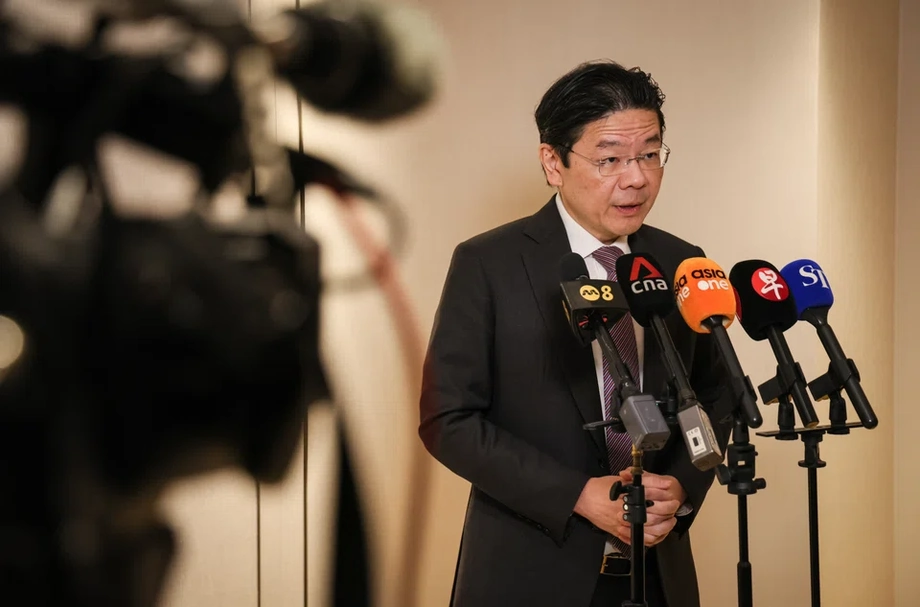
At the JCBC, we expect to conclude more than 20 deliverables spanning areas like trade, digitalization and financial integration to research and innovation in the health care and education industries and that reflects the depth and breadth of our cooperation.
Collaborative Research and Artificial Intelligence
Technology and scientific research serve as central pillars for the current phase of bilateral cooperation. Both Singapore and China have made substantial investments in artificial intelligence and high-tech industries to drive economic productivity and high-quality development. Prominent technology companies such as ByteDance and Moonshot AI demonstrate the active nature of China's innovation ecosystem. To harness complementary strengths, Enterprise Singapore launched Co-Innovation Programmes with selected Chinese provinces and cities in 2020. These initiatives have already supported more than 40 projects focusing on artificial intelligence, biomedical sciences, and green technologies. Practical applications of these joint efforts are already visible in local communities. In Singapore's Punggol town, local transport operators Grab and ComfortDelGro partnered with Chinese technology firms WeRide and Pony.ai to introduce self-driving shuttle services. These autonomous shuttles help residents travel more conveniently to transport hubs and neighborhood amenities. Further building on these foundations, the bilateral meetings in Singapore included announcements of new cooperation agreements between research centers in both countries, giving researchers additional opportunities to pool their expertise and translate laboratory breakthroughs into practical solutions.
Commercializing Innovation and Financial Integration
Economic integration between Singapore and China extends beyond research into commercial markets and financial transactions. China maintained its position as Singapore's top merchandise trade partner for more than a decade, while Singapore continues to serve as China's largest foreign investor. Both governments are working to help businesses commercialize their innovations and expand into new markets by utilizing established regional platforms. The China-Singapore Guangzhou Knowledge City illustrates this potential. Established in 2010, the Guangzhou Knowledge City acts as a launchpad for Singapore businesses entering China's Greater Bay Area. Its International Intellectual Property Innovation Service Centre assists Singapore companies in protecting and commercializing their intellectual property within China while enabling Chinese enterprises to utilize Singapore's intellectual property offerings for international expansion. Financial cooperation is also simplifying cross-border business operations. The Monetary Authority of Singapore and the People's Bank of China have collaborated closely to expand remittance channels, enabling instant, small-value transfers for individuals and businesses alike.
Connecting People and Educational Institutions
Lasting technological and economic cooperation relies heavily on strong interpersonal networks and educational exchanges. Singapore and China share extensive people-to-people links, particularly within the education and research sectors. Expanding these connections allows students, researchers, and technical experts to exchange knowledge and develop collaborative solutions. A key platform for this exchange is the Singapore-China Science and Technology People-To-People Exchange Programme, which was launched during the 19th Joint Council for Bilateral Cooperation in 2023. Educational institutions in both countries continue to deepen their ties through joint academic programs and cutting-edge research collaborations. These sustained interactions help participants gain a deeper understanding of each other's economic and societal structures, eventually forming the basis for long-term research and business partnerships.
Upholding the Rules-Based International Order
These cooperative efforts unfold amidst an increasingly uncertain international environment characterized by rapid technological disruption, climate change pressures, and geopolitical tensions. As both nations navigate these global shifts, leaders have emphasized the necessity of upholding international law and the rules-based multilateral system. This multilateral framework has supported the economic development of both countries over several decades, providing businesses with the confidence to invest and enabling cross-border collaboration. Recent disruptions, such as the situation in the Strait of Hormuz, have highlighted the vulnerability of global trade networks for open, trade-dependent economies. Maintaining the right of transit passage remains a critical priority for both Singapore and China, as safeguarding open trade routes serves their mutual economic interests.
Timeline of Key Developments
- January 2009: The China-Singapore Free Trade Agreement takes effect as China's first comprehensive bilateral FTA with an Asian country.
- 2010: The China-Singapore Guangzhou Knowledge City is established to serve as a business launchpad in the Greater Bay Area.
- 2020: Enterprise Singapore launches Co-Innovation Programmes with selected Chinese provinces and cities.
- 2023: The Singapore-China Science and Technology People-To-People Exchange Programme is launched at the 19th JCBC.
- November 20, 2026: Prime Minister Lawrence Wong and President Xi Jinping meet in Shenzhen to announce negotiations for upgrading the bilateral free trade agreement.
- November 22 to 23, 2026: Chinese Vice Premier Ding Xuexiang visits Singapore to co-chair the 22nd Joint Council for Bilateral Cooperation and related joint steering council meetings.
At a Glance
- Chinese Vice Premier Ding Xuexiang visited Singapore from November 22 to 23, 2026, for high-level bilateral talks.
- The 22nd Joint Council for Bilateral Cooperation was co-chaired by Ding Xuexiang and Singapore Deputy Prime Minister Gan Kim Yong.
- Negotiations for the China-Singapore Free Trade Agreement 4.0 were launched to cover digital trade, cross-border data flows, and government procurement.
- More than 40 joint projects in artificial intelligence, biomedical sciences, and green technologies have received support since 2020.
- Bilateral merchandise trade totaled 162.9 billion Singapore dollars in 2025.