A Four Billion Dollar Bill and a Twenty Million Dollar Answer
On October 22, 2026, the board of the Fund for Responding to Loss and Damage closed its first extraordinary meeting with a decision the climate finance system had never taken: it provisionally set aside US$21.6 million for a single country's disaster. Of that sum, US$20 million is earmarked for a recovery programme along the Bhote Koshi and Trishuli rivers and US$1.6 million for logistics and administration. The country is Nepal. The disaster is the flash flood of August 26 that began when a mass of ice and rock fell from Langtang Lirung, a peak close to the border with China.
Contents
- A Four Billion Dollar Bill and a Twenty Million Dollar Answer
- What Came Down the Valley on August 26
- The Warning That Never Came
- A Fund Built for This Crisis
- The Queue Behind Nepal
- Antalya: A Summit That Ended Without a Text
- The Mountain Agenda Item That Never Was
- The Money That Did Arrive
- What Nepal Is Changing at Home
- Three Months On, Winter in the Tents
- Key Points
Nepal's government puts recovery and reconstruction at US$4.78 billion. A joint post disaster needs assessment by the National Disaster Risk Reduction and Management Authority and the National Planning Commission reached US$4.77 billion, and a planning commission assessment released in November put the figure at NPR 706.65 billion, about US$5.2 billion. Measured against the government's US$4.78 billion, the US$20 million programme covers about 0.42 percent.
Camila Minerva Rodríguez Tavárez, the Dominican co-chair of the fund's board, described the vote as proof of what the institution was built to do.
This milestone demonstrates that the Fund can do what it was designed to do: listen to a country in crisis and respond with urgency, in line with our rules and mandate.
The decision, taken fifty seven days after the flood, remains provisional. On November 26 the Ministry of Agriculture, Forests and Environment published a notice inviting concept notes for the programme from fund accredited national and international organisations based in Nepal. A detailed proposal still has to pass the fund's assessment before any money moves, and no date has been set for that approval.
What Came Down the Valley on August 26
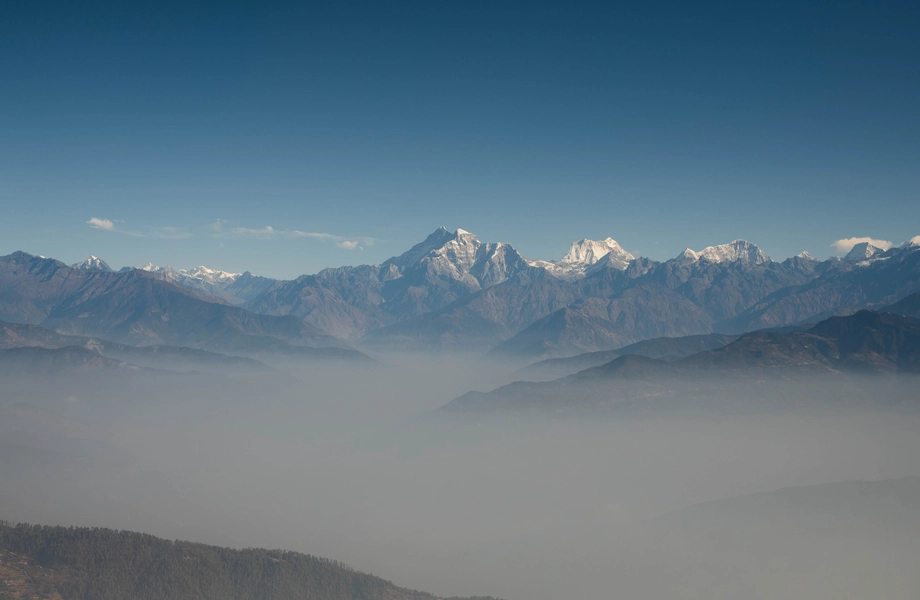
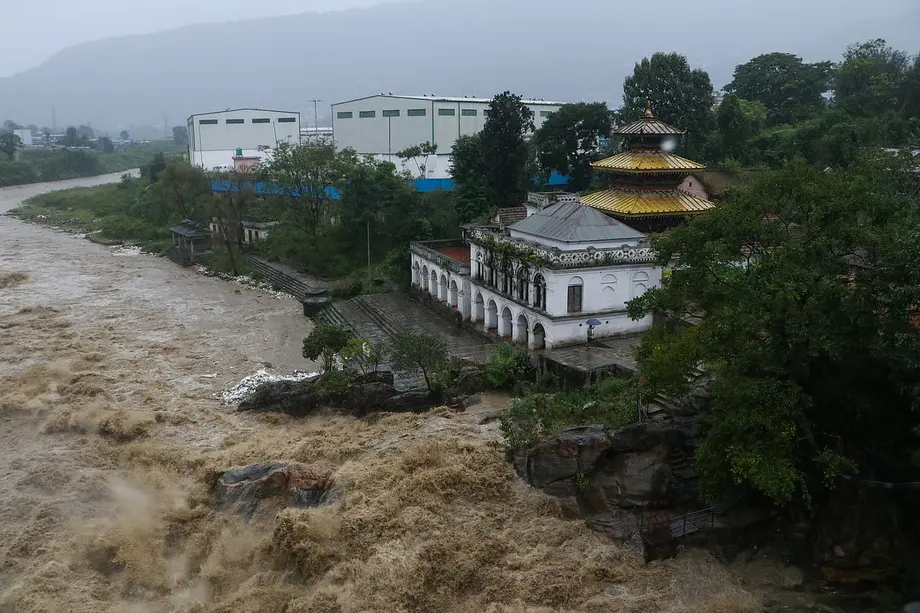
Langtang Lirung stands about 12 miles from the Rasuwagadhi-Gyirong border crossing into Tibet. Around 400 people were preparing to cross on the morning of August 26 when the mountain failed. Water reached the border post roughly seven minutes later at more than 100 miles an hour, and the 65 foot control gate was carried about 60 miles downstream along the Trishuli.
Roughly 7 billion cubic feet of glacial ice and rock came down, a mass large enough that the U.S. Geological Survey first read it as a magnitude 5.2 earthquake. A review of the collapse records an estimated 7,500 homes destroyed and rebuilding costs of US$4.71 billion. Nepal's authorities count more than 1,500 dead and more than 5,000 missing; one published tally put the dead at 1,455 and the missing at 5,285, while the International Centre for Integrated Mountain Development gave 1,451 dead and 5,745 missing. Some 84,270 people were displaced, including 32,021 children.
The valley was also Nepal's densest concentration of power stations. Fourteen hydropower plants stood along the 60 kilometre corridor. Upper Trishuli 1, a 215 megawatt plant due for completion in December, was struck 16 minutes after the collapse with 1,433 workers inside; more than 800 were rescued and about 300 are suspected to have been trapped in access tunnels blocked by debris and mud. Nepal lost nearly 750 megawatts of hydropower capacity in the corridor and about 431 megawatts on the national grid, just over a tenth of the country's total.
A World Weather Attribution analysis published in mid September concluded that years of rising temperatures had thinned the glacier and thawed the permafrost in the fractured rock beneath it, leaving the slope far more likely to give way. An outburst flood had already come down the same corridor in July 2025, killing nine people and damaging several of the same projects.
The Warning That Never Came
Nepal's glacier hazard work is organised largely around glacial lakes, whose volumes and stability are monitored for signs of a breach. An avalanche of ice and rock offers almost no such lead time. The flood gauges in the Lhende Khola valley were destroyed before they could send an alert.
Weather monitoring is thin. India and Nepal operate roughly five to 10 automated stations per 10,000 square kilometres, against about 120 in Switzerland, a country less than a third of Nepal's size. When a slope collapsed at Blatten in Switzerland in 2025, 300 people were evacuated nine days in advance. Langtang had no comparable system.
Milind Kudapa, a graduate research assistant at Columbia Climate School, described a race between construction and risk.
We are building into the hazard zone faster than we are learning to see it, and it only takes a small trigger to turn decades of construction into a few minutes of debris.
Plant by plant approvals left a second gap. Every project in the Bhote Koshi and Trishuli corridor was assessed on its own, with no basin wide study of what one flood could do to all of them. The Rasuwagadhi plant, rebuilt on the same site after the 2025 flood, was destroyed again in August. Ram Prasad Dhital, chairman of Nepal's Electricity Regulatory Commission, has argued that construction standards must rise nationally, a cost consumers are expected to absorb through bills 10 to 12 percent higher.
A Fund Built for This Crisis
Governments agreed to create the Fund for Responding to Loss and Damage at COP27 in Sharm el-Sheikh in 2022, approved its rules at COP28 in Dubai a year later and invited the World Bank to host it on an interim basis in 2024. Its first call for proposals opened at COP30 in Belém, Brazil, in November 2025 under the Barbados Implementation Modalities, the pilot phase that governs its early operations.
Nepal's request letter was dated August 31 and signed by Gita Chaudhary, the minister for agriculture, forests and environment, and finance minister Swarnim Wagle. The Barbados route let Nepal apply outside the regular window. Board members and alternates from developed and developing countries settled the amount through several rounds of consultation, and the board approved it at a special meeting on Thursday, October 22.
Ibrahima Cheikh Diong, the fund's executive director, framed the decision as an operational turning point.
By stepping up to meet this moment, the Board has shown that we can adapt our operations to the pressing needs on the ground.
The Queue Behind Nepal
The fund's first general round drew 176 requests from 119 countries worth US$2.8 billion against US$342 million available, more than eight times the pot. The first decisions on those applications are expected in December. By July 31, governments had pledged US$822.71 million and paid in US$485.77 million.
Fresh promises came at Antalya. The European Commission signed a 25 million euro contribution agreement, about US$27 million, formalising a pledge first made at COP28, and Spain pledged another 15 million euros. Against projected need, the sums are small: research cited by the Fill the Fund campaign estimates that economic loss and damage in developing countries could average around US$400 billion a year by 2030.
Harjeet Singh, global convenor of that campaign and founding director of the Satat Sampada Climate Foundation, said developed countries backed the Nepal allocation while insisting it must not become a template for future decisions.
No country should have to endure a catastrophe and wait seven weeks, through historic letters and relentless pressure, just to unlock the Fund's first-ever emergency meeting. We must set up a permanent rapid-response system that moves support in days, not months.
Bibek Raj Kandel, a Nepali climate finance specialist, said the process asks the wrong thing of a country in the middle of an emergency. "It's asking for a country that is dealing with the climate emergency to work on a proposal," he said, calling it a layer of bureaucracy out of step with the urgency, and noting that a proposal filed after floods in Kathmandu and landslides in the eastern hills is still sitting on the table.
Pakistan, which led the push for the fund after its 2022 floods affected 33 million people and killed more than 1,730, has received nothing. "We have still not really got anything. We haven't seen anything on the ground at all as yet," said Shezra Mansab Ali Khan Kharal, the country's minister of state for climate change. Pakistan has submitted two projects and was told the cap is US$200 million. Abid Qaiyum Suleri, executive director of the Sustainable Development Policy Institute in Islamabad, called the pledges "hollow promises" and said that for a heavily indebted economy the form of the money matters as much as the amount.
Jocelyn Perry of Refugees International argued that migrant workers and informal groups carry much of the recovery work and cannot reach a fund designed around governments.
The Fund must create a simplified direct access window for community organizations, providing a dedicated funding stream with small grants accessible to informal groups, unregistered collectives, and community-based organizations.
Antalya: A Summit That Ended Without a Text
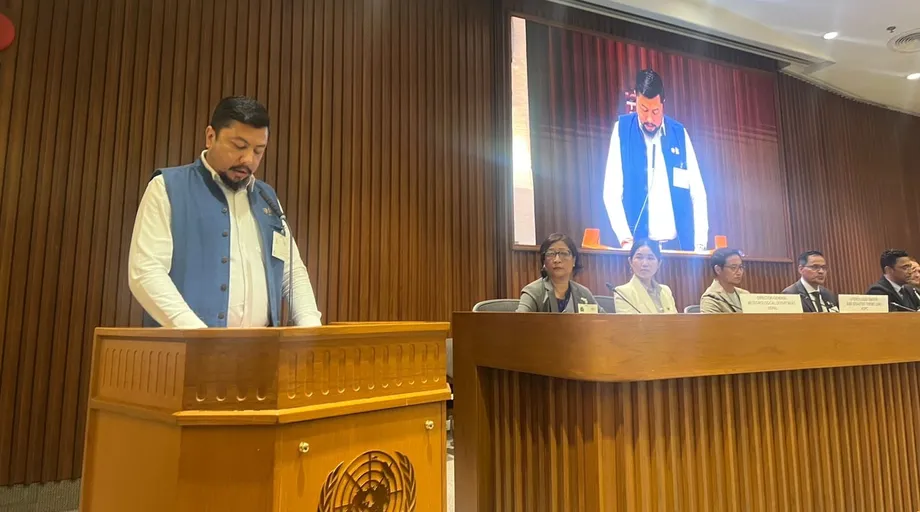
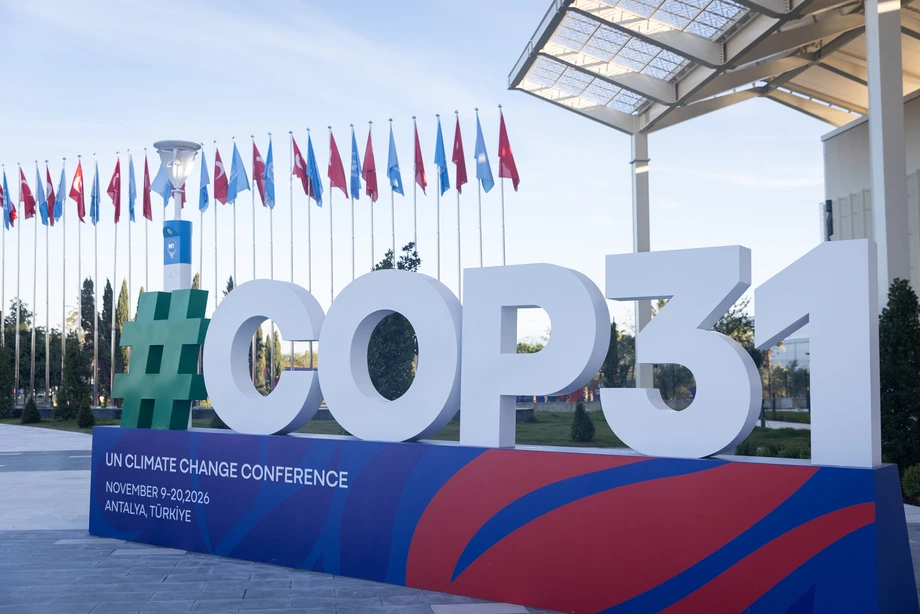
COP31 opened in Antalya, Turkey, on November 9. Prime minister Balendra Shah had carried the flood to the United Nations General Assembly in September, calling it a "Himalayan tsunami" and proposing a Himalayan Climate Resilience Mechanism led by Nepal, India and China to share satellite data for monitoring the range. In Antalya the argument moved to the negotiating rooms, and foreign minister Shisir Khanal put the human cost in front of the opening plenary.
I come here from a nation still in grief.
Khanal set out three priorities for mountain regions: holding warming to 1.5 degrees Celsius with specific attention to the Himalayas, a dedicated action plan on mountains and climate change, and mountain specific indicators inside the Global Goal on Adaptation and the New Collective Quantified Goal on Climate Finance. He noted that mountains cover about 27 percent of the world's land area and host around 15 percent of its people.
Nepal left with none of the three. The conference's cover decision collapsed on November 22, only the second summit in 20 years to end without an overarching agreement. Rich countries offered no new money for Nepal's recovery, and one European negotiator had said before the talks began that new disaster aid was "dead in the water". The Solomon Islands answered with a US$400,000 pledge to the Green Climate Fund, a gesture aimed at shaming larger contributors.
Dharam Uprety, who heads Nepal's disaster response agency, returned pessimistic.
We left with empty hands. In the past, I used to be very optimistic, but I'm very pessimistic about the COPs. Without any adequate outcomes, it's just a waste of money.
The Mountain Agenda Item That Never Was
Nepal and Bhutan, later joined by Kyrgyzstan, proposed a formal agenda item on "1.5 degrees Celsius warming in mountains". It did not reach the agenda and was folded into the presidency's cover text instead. When that text failed, draft paragraphs 22 and 23 failed with it. They would have created a work programme on mountains and climate change under the Nairobi Work Programme, with formal scientific dialogues at the 66th and 68th sessions of the Subsidiary Body for Scientific and Technological Advice and at COP32.
Glacial monitoring, early warning systems and adaptation measures designed for mountain terrain therefore have no formal United Nations mandate. Manjeet Dhakal, an adviser to the chair of the Least Developed Countries bloc, treated the outcome as limbo rather than defeat.
Even though the proposal did not make it onto the formal agenda, mountain issues are a focus at this COP.
Dhakal was blunter about the pace of the fund itself. "If we can't respond to the urgency, then the process is obviously not healthy," he said, adding that a wait of two months for resources is "not fit for purpose".
Inside the hall, Nepali delegates pressed a legal argument. Prajwol Birkram Rana, a youth climate activist, tied the flood to the International Court of Justice's advisory opinion of July 23, 2025, which held that states carry obligations under international law to protect the climate system from significant harm. He also described the gap between goodwill and delivery. "Definitely, Nepal is getting sympathy from everyone because of the recent flood, but it's difficult to translate that sympathy into action," he said.
Sumnima Udas, a member of parliament, told a plenary on just transition that Nepal had become the case study nobody wants to be.
We have become the evidence. We have become the story. But we don't want Nepal to be only an example of the climate crisis. We want to be an example of how the world responds to it.
Gita Chaudhary, who led the delegation, met the COP31 presidency with a demand rather than a request.
We have not come to Antalya for another acknowledgement. We have come for a decision. We have come for justice.
Imane Saidi, a senior researcher at the Imal Initiative for Climate and Development and a negotiator on climate finance, described the pattern behind the arithmetic. "We create funds and we leave them empty," she said.
The Money That Did Arrive
The largest cheque came from New Delhi. During a visit to India from November 22 to 23, his first bilateral trip abroad since taking office in March, Shah secured a package of NPR 24,000 crore, about US$1.62 billion, announced by Narendra Modi after talks at Hyderabad House. It divides into roughly NPR 5,600 crore of grants and NPR 18,400 crore of concessional credit, meaning loans offered on softer terms than commercial borrowing. India calls it the largest assistance package it has ever given Nepal. Modi said the aim was to restore infrastructure, rebuild communities and help families "get their lives back on track".
For scale, India's package is about a third of Nepal's US$4.78 billion rebuilding bill and roughly eighty times the fund's US$20 million programme. Trade runs both ways: India imports around 1,200 megawatts of electricity from Nepal.
The terms have become a political fight at home. Nepali Congress general secretary Pradeep Poudel has demanded that Shah publish an itemised account of the visit and say whether the money is a loan or a grant, questions at the heart of the loan or grant dispute. The fund's decision was first set out in the fund's first allocation, and India's money in the 1.6 billion dollar announcement.
What Nepal Is Changing at Home
Between the international meetings, Kathmandu rewrote part of its own disaster law. The Ordinance to Amend Some Nepal Laws Related to Disaster, 2083 BS, issued on the government's recommendation, allows a missing person to be declared dead on the basis of field verification and a recommendation from the local ward and disaster management committee. Families that once waited years for a death certificate can now obtain one, and with it access to insurance, relief and state grants. For missing foreign nationals, Kathmandu has said the presumption and declaration process will begin as early as December, once their governments supply documents to the foreign ministry.
Money is also going into prevention. On November 25 the government and the United Nations Development Programme launched the GLOF-Sanjibani project, worth US$49.94 million and running to 2033. It will lower the water level of Dona, Lumding Tsho and Lower Barun by three metres each and Hongu 2 by one metre, expand hydrological and meteorological monitoring, and build early warning systems and protective works downstream. The Green Climate Fund supplies a US$36.16 million grant, Nepal US$11.32 million, UNDP US$2.14 million and private partners US$0.32 million. The project expects to reach 385,000 people directly, 55 percent of them women, and about two million more indirectly. Nepal has lowered lakes before, at Tsho Rolpa in Dolakha and Imja in Solukhumbu.
Recovery on the ground lags. The government has begun rental support of NPR 15,000 a month for 970 displaced families in Bidur municipality for at least six months, with 1,786 households identified as eligible. Insurance has covered almost none of the damage: by the end of September, insurers had paid about NPR 6.75 million, or US$44,911, against nearly NPR 21 billion in preliminary claims. The Coalition for Disaster Resilient Infrastructure estimates that US$124 billion of Nepal's infrastructure is exposed to climate driven disasters, while the country spends about US$760 million a year on disasters. In Bidur alone, 1,147 small and medium enterprises lost assets and livelihoods and are still servicing loans.
Three Months On, Winter in the Tents
Raju Dangol ran a grocery shop in Rasuwa district. He lost his younger brother in the flood and now spends his afternoons chasing an insurance company from a relief camp in Bidur, in Nuwakot district.
We have not received my brother's death certificate yet, so the banks are refusing to release the funds in his account. I am running after insurance as well. It is like living in a constant nightmare.
Durgesh Thapa, a 23 year old farmer, survived because his mother telephoned him to move to higher ground. She did not. "It is so frustrating to wait for the government to realise that they need to look after the humanitarian crisis affecting the Nepalese citizens," he said.
Temperatures in the highlands are expected to fall below freezing and approach minus 12 degrees Celsius in some areas. The World Food Programme assisted more than 20,000 people with food and 22,400 with multipurpose cash in the first weeks, and moved 919 metric tonnes of cargo by truck, helicopter and cargo drone where roads and bridges had gone. Its deputy country director in Nepal, Andrea Berardo, said recovery will outlast the emergency.
Emergency assistance helped families through the first weeks of this crisis, but recovery will take much longer. With winter approaching in Nepal's highlands, many families are still living in temporary shelters and are facing increasingly harsh conditions.
The agency's winter appeal puts the cost of one year of food security and nutrition support at an extra US$28 million. Suraj Sigdel, Nepal country director of Prosper Global, said the missing piece is a policy decision. "People have not been allowed to return to their houses because clear policy has not been brought in if they can or cannot. That is something building frustration among the survivors," he said.
Key Points
- The Fund for Responding to Loss and Damage provisionally set aside US$21.6 million for Nepal on October 22, 2026, its first allocation for a single disaster: US$20 million for a recovery programme and US$1.6 million for administration.
- The August 26 collapse of ice and rock from Langtang Lirung killed more than 1,500 people, left more than 5,000 missing, destroyed about 7,500 homes and displaced 84,270 people, including 32,021 children.
- Nepal's recovery bill is put at US$4.78 billion by the government, US$4.77 billion by a joint needs assessment and about US$5.2 billion by the National Planning Commission, so the programme covers roughly 0.42 percent.
- Nepal invited concept notes for the programme on November 26; no disbursement date has been given.
- COP31 in Antalya ended on November 22 without a cover decision, sinking draft paragraphs that would have created a work programme on mountains.
- India announced NPR 24,000 crore, about US$1.62 billion, in grants and concessional credit during Balendra Shah's visit on November 22 and 23.
- A World Weather Attribution study linked the collapse to glacier thinning and thawing permafrost driven by rising temperatures.
- Nepal lost about 431 megawatts of grid capacity, just over a tenth of the national total, and launched a US$49.94 million glacial flood project on November 25.