A record night with two films at the center
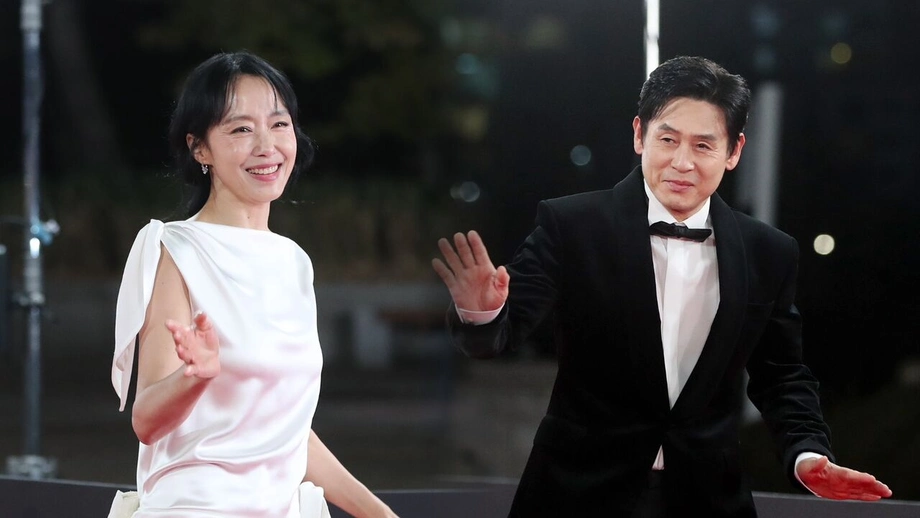
The 47th Blue Dragon Film Awards divided its biggest honors between two very different films on Wednesday night. Na Hong-jin's science fiction mystery thriller Hope won Best Film, while Lee Chang-dong's drama Possible Love collected four trophies, more than any other production. Those included Best Actor for Sul Kyung-gu and Best Actress for Jeon Do-yeon, who play a married couple in the film.
Contents
- A record night with two films at the center
- Why Possible Love swept the acting prizes
- How Sul Kyung-gu reached four Best Actor wins
- Jeon Do-yeon reaches three, and Cho Yeo-jeong completes a double
- Hope wins Best Film while Yoon Ga-eun takes Best Director
- New performers, a popular hit and a first trophy for Koo Kyo-hwan
- Ahn Sung-ki remembered as film was life itself
- The craft awards and prizes chosen by popularity
- The eligibility window and the ceremony timeline
- What the 47th awards changed
- Key Points
Sul became the first performer to win the Blue Dragon Best Actor prize four times. Jeon secured her third Best Actress trophy, drawing level with Kim Hye-soo and Yoon Jeong-hee for the most wins in that category. Their co-star Cho Yeo-jeong won Best Supporting Actress, and Lee shared Best Screenplay with Oh Jung-mi.
The ceremony began at 8:30 p.m. on November 25, 2026, at KBS Hall in Yeouido, Seoul. Han Ji-min and Lee Je-hoon hosted for a second consecutive year, with KBS2 broadcasting the event live and YouTube and Naver NOW carrying it online. Organized by Sports Chosun, the awards date to 1963 and recognize Korean films across acting, directing, writing and technical disciplines.
Hope entered the evening with 10 nominations, the largest number for any film, while Possible Love had eight. Hope ultimately won two prizes, Best Film and the combined award for cinematography and lighting. The distribution of trophies meant that the biggest film award and the largest collection of wins went to different productions.
Why Possible Love swept the acting prizes
Possible Love follows two married couples whose lives become entwined through a documentary project. Sul plays Ho-seok, a worker who loses his job and confronts financial pressure, wounded pride and the judgments of people around him. Jeon plays his wife, Mi-ok, gradually revealing the finely layered emotions beneath her response to their circumstances. Cho plays Ye-ji, a documentary director who wants to place the couple's lives on camera and must face the ethical dilemma of turning other people's experiences into creative work.
The story also examines divisions of class and the desires that surface as the characters learn more about one another. Its four Blue Dragon victories concentrated attention on the performances and writing rather than on visual spectacle. Lee Chang-dong's screenplay prize with Oh Jung-mi completed a sweep of Best Actor, Best Actress, Best Supporting Actress and Best Screenplay.
The film marked Lee's first new feature in eight years and arrived at the ceremony after winning the Grand Jury Prize at the 2026 Venice International Film Festival. It also brought several longstanding creative relationships back together. Jeon was working with Lee for the first time since Secret Sunshine, made 19 years earlier, while Sul described his own reunion with the director as coming after 23 years. Possible Love was also the fifth film in which Sul and Jeon had worked together.
Those connections gave the acceptance speeches an unusually personal character. Rather than treating the evening simply as a contest between films, the winners repeatedly returned to the patience, trust and endurance required during production.
How Sul Kyung-gu reached four Best Actor wins
Sul's earlier victories came for Peppermint Candy in 2000, Public Enemy in 2002 and The Book of Fish in 2021. Possible Love now adds a fourth Best Actor trophy to that sequence. No other actor has won the category four times since the awards began.
His performance as Ho-seok rested on the contradictions of a man trying to preserve his dignity after losing his place at work. Sul portrayed lethargy, pride and anxiety about other people's opinions without reducing the character to any one of those qualities. He won from a field that also included Koo Kyo-hwan for Once We Were Us, Park Hae-il for The Assassin(s), Yoo Hae-jin for The King's Warden and Zo In-sung for Hope.
On stage, Sul said he had not expected to win. He thanked Jeon, Cho and Zo, telling them that production would have been far harder without their presence. He also described Lee as an older brother and a teacher in his life, acknowledging that working with the director was not easy but that his colleagues had helped him through the experience.
Sul then addressed the director with the line that captured the emotional heart of his speech.
I'm not exactly young anymore, so thank you for allowing me to keep dreaming.
His final thanks went to his wife, actress Song Yoon-ah, whom he described as his eternal comrade. The record gives his latest prize a meaning beyond one successful performance: it places four roles, spanning more than two decades, at the center of Blue Dragon acting history.
Jeon Do-yeon reaches three, and Cho Yeo-jeong completes a double
Jeon previously won Best Actress for The Harmonium in My Memory in 1999 and Secret Sunshine in 2007. Her performance in Secret Sunshine also earned her the Best Actress prize at Cannes. Possible Love gives her a third Blue Dragon award in the category and her tenth trophy across all Blue Dragon competitions, a total that includes earlier recognition as a new performer and a popular star.
She defeated Go Ah-sung for Pavane, Moon Ga-young for Once We Were Us, Shin Min-a for The Eyes and Lee Jung-eun for The Journey to Gyeongju. In her speech, Jeon thanked Lee even though he was not present in the hall. She remembered Secret Sunshine as an intensely difficult production and said she had promised herself that, if they worked together again, she would approach the experience differently.
Rather than trying to do well, I approached this with the intention of enjoying every moment.
Jeon said she had been happy simply to take part in Lee's film and shared the honor with Sul, Zo, Cho and the cast and crew. Her account explained the change in her performance process: the aim was no longer to endure each scene in pursuit of perfection, but to remain present and value the work as it happened.
Cho's supporting award carried its own milestone. She had won Best Actress for Parasite in 2019, and her victory for Possible Love seven years later means she now holds Blue Dragon prizes in both the leading and supporting actress categories.
Tearfully accepting the trophy, Cho credited Jeon, Sul and Zo for remaining so fully within their characters that Ye-ji could emerge through her interactions with them. She said the experience had made her love acting more deeply. Playing on the film's title, she described the prize as a sign that acting was not merely her own unrequited love, but a possible love, and promised to continue exploring it with a pure heart.
Hope wins Best Film while Yoon Ga-eun takes Best Director
Hope was Na Hong-jin's first new film since The Wailing in 2016. It competed at the 2026 Cannes Film Festival and arrived at KBS Hall with nominations in 10 categories. Alongside Best Film, it received the cinematography and lighting prize, with Hong Kyung-pyo credited for cinematography.
Na's response to the top award began with a joke about its earlier appearance at Cannes, drawing laughter from the audience.
They should have given me this at Cannes. Why here instead?
His tone then changed as he thanked the actors, crew and others involved. He told them they had done genuinely outstanding work and described the production as one of the happiest and most memorable periods of his life. Although Hope did not convert its leading nomination count into the most victories, Best Film ensured that Na's return after a decade ended with the ceremony's principal production honor.
Best Director went instead to Yoon Ga-eun for The World of Love. She prevailed over Na, Yeon Sang-ho for Colony, Jang Hang-jun for The King's Warden and Hur Jin-ho for The Assassin(s). The result completed a striking progression: Yoon had won Best New Director at the 37th Blue Dragon Awards in 2016 for her feature debut, The World of Us, and now received the main directing prize ten years later.
Yoon used her speech to resist the idea that a film belongs to one person. She thanked performers Seo Su-bin and Jang Hye-jin, as well as Go Min-si, and said she wanted to share the occasion with the many real people whose voices had helped her understand the experiences at the center of the story. Her comments also explained why she found such a major award burdensome: she worried about the pressure of what might come next and about anyone imagining that a director creates a film alone.
New performers, a popular hit and a first trophy for Koo Kyo-hwan
The World of Love earned a second prize when Seo Su-bin won Best New Actress. In her first feature film, she played Lee Joo-in, a teenage girl trying to live through and beyond hurt and trauma. Seo thanked the people whose accounts had helped her return to herself whenever fear made the preparation difficult. She also said she did not yet understand everything the award meant and would reflect at home on why she had received it.
Park Ji-hoon won Best New Actor for The King's Warden. To play Danjong, the young Joseon king sent into exile in Yeongwol in Gangwon Province after a political coup, Park lost 15 kilograms. He thanked director Jang Hang-jun for trusting him and expressed affection and respect for senior actor Yoo Hae-jin, promising to continue working with seriousness and care.
The King's Warden drew 16.93 million admissions and received the Audience Choice Award for Most Popular Film. Park also shared the Popular Star Award, giving him two trophies on a night when his film won both audience recognition and a prize for an emerging performer. There was a personal moment during the audience award presentation as well: screenwriter Kim Eun-hee announced the winning film directed by her husband, Jang. He joked that their home was full of her trophies and that there would now be a place for one of his.
Koo Kyo-hwan's Best Supporting Actor prize for Colony was his first Blue Dragon acting trophy. He had also been nominated for Best Actor for Once We Were Us, giving him nominations in both categories in the same year. After running onto the stage with a shout of excitement, he suggested dividing the trophy so that every member of the Colony team could share it.
Kim Mi-jo completed the group of emerging winners by taking Best New Director for The Journey to Gyeongju. Lee Jung-eun, the film's lead performer and a nominee for Best Actress, embraced her as the announcement was made. The film did not win either of those two acting and directing categories for Lee, but Kim's victory ensured that its first feature director left with major recognition.
Ahn Sung-ki remembered as film was life itself
The evening's most solemn passage honored Ahn Sung-ki, who died earlier in 2026. He received a posthumous lifetime achievement award, presented personally by fellow actor Lee Jung-jae. Ahn's son, Ahn Philip, went on stage to accept it on his father's behalf.
Lee Jung-jae struggled to hold back tears as he remembered a senior colleague who had endured a long illness without displaying the difficulty to those around him. He said Ahn had instead comforted colleagues when they worried about him. Lee also recalled the actor's sincere promise that he would meet audiences again in a new film, a return he was never able to make.
Ahn Philip said his family had felt great joy upon hearing about the award. He imagined that his modest father might have laughed and insisted that he was not yet old enough to receive a lifetime honor. The following year would have marked 70 years since Ahn's film debut.
The son then conveyed the beliefs that had guided his father's working life.
To my father, film was life itself. A film is not made by one person alone; it is completed when audiences remember it in their own hearts.
He described his father's excitement whenever a strong production or a new character arrived, and said the actor had been happiest on a film set. His speech extended the same principle to performers: audiences give actors the encouragement that allows them to continue and grow. He closed by thanking viewers and fans who had supported Ahn throughout his career and by expressing the hope that Korean cinema would reach still more people.
The craft awards and prizes chosen by popularity
Several productions away from the main acting contest also left with trophies. Good News won two, for Kim Sang-bum's editing and Han Ah-reum's art direction. Lee Min-hwi received Best Music for Pavane. The technical award recognized stunt work on Humint by Yoo Sang-seop, Lee Won-haeng and their team.
Hong Seung-gi won the Chung Jung-won Best Short Film award for Mungchi. The associated short film competition was open to South Korean citizens and international students in South Korea, with a panel of film experts selecting the winner. Its place in the ceremony gave a new director a platform alongside filmmakers and performers with much longer careers.
The Popular Star Award was shared by four actors:
- Park Ji-hoon, who also won Best New Actor for The King's Warden.
- Park Ji-hyun, nominated for Best Supporting Actress for Wild Sing.
- Oh Jung-se, nominated for Best Supporting Actor for Wild Sing.
- Shin Min-a, nominated for Best Actress for The Eyes.
Together with the audience prize for The King's Warden, these awards preserved a place for public response within a program otherwise dominated by jury recognized achievements in filmmaking. They also gave Hope, Possible Love and The King's Warden three distinct measures of success: the top film honor, the largest trophy total and the largest cinema audience.
The eligibility window and the ceremony timeline
Films qualified for the 2026 awards if they opened in South Korean cinemas or were released through streaming services between October 8, 2025, and October 11, 2026. Streaming releases are commonly described in Korea as OTT releases, meaning films delivered directly over internet platforms. The ceremony presented prizes in 18 areas, while the main nominations had been announced across 15 categories.
- October 8, 2025: The eligibility period opened for qualifying Korean films.
- October 11, 2026: The release window closed.
- October 28, 2026: Nominations were announced in 15 categories, with Hope leading on 10 and Possible Love following on eight.
- November 25, 2026: Winners were revealed during the ceremony at KBS Hall in Seoul.
The dates show how quickly the process moved after the eligibility window closed. Nominations arrived just over two weeks later, and the ceremony followed another four weeks after that. By the time the winners reached the stage, the field already encompassed films released across slightly more than a year.
What the 47th awards changed
Four trophies from eight nominations made Possible Love the ceremony's most successful film, but the evening did not produce a single sweep. Hope secured Best Film, Yoon received Best Director for The World of Love, and Good News, The King's Warden and The World of Love each finished with two awards. Voters therefore separated their judgments about the strongest complete production, the most accomplished direction and the most celebrated ensemble of performances.
The individual records are easier to measure. Sul now stands alone with four Best Actor wins. Jeon joins Kim Hye-soo and Yoon Jeong-hee on three Best Actress victories. Cho holds both leading and supporting actress prizes, Koo has his first Blue Dragon acting trophy, and Yoon has progressed from Best New Director to Best Director over ten years.
For Park, Seo and Kim, the awards attach lasting recognition to work completed at the start of their film careers. For Ahn Sung-ki's family and colleagues, the tribute instead placed nearly seven decades of screen work before a new audience. The ceremony's clearest legacy lies in that combination of established records, emerging voices and a farewell framed around the audiences who keep films alive.
Key Points
- Possible Love won four awards: Best Actor, Best Actress, Best Supporting Actress and Best Screenplay.
- Sul Kyung-gu became the first actor to win four Blue Dragon Best Actor trophies.
- Jeon Do-yeon earned her third Best Actress prize, tying the category record held with Kim Hye-soo and Yoon Jeong-hee.
- Na Hong-jin's Hope won Best Film and the cinematography and lighting award after entering with 10 nominations.
- Yoon Ga-eun won Best Director for The World of Love, whose star Seo Su-bin was named Best New Actress.
- Park Ji-hoon won Best New Actor for The King's Warden, which attracted 16.93 million admissions and received the audience popularity prize.
- Koo Kyo-hwan, Cho Yeo-jeong and Kim Mi-jo won the supporting actor, supporting actress and new director awards respectively.
- Ahn Sung-ki received a posthumous lifetime achievement award, accepted by his son Ahn Philip.
- The ceremony took place on November 25, 2026, at KBS Hall in Seoul, hosted by Han Ji-min and Lee Je-hoon.