An Appeal Built Around Banks, Assets and Aid
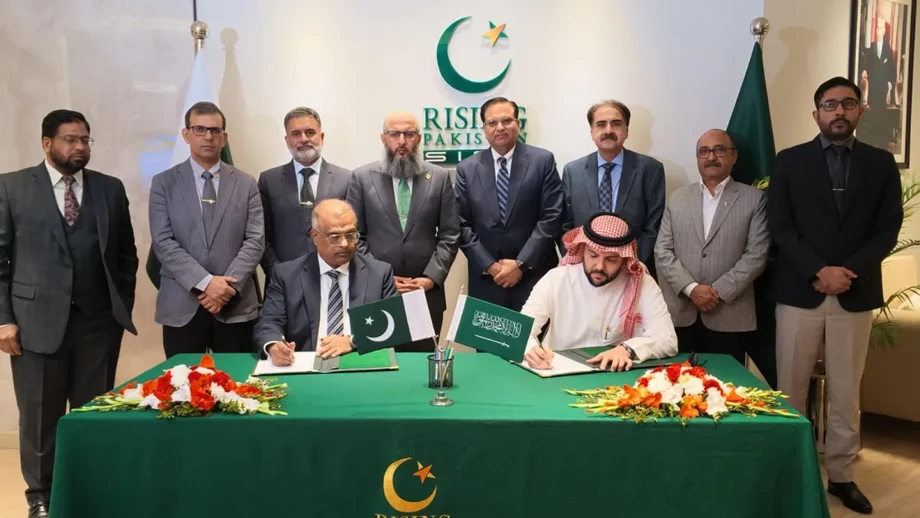
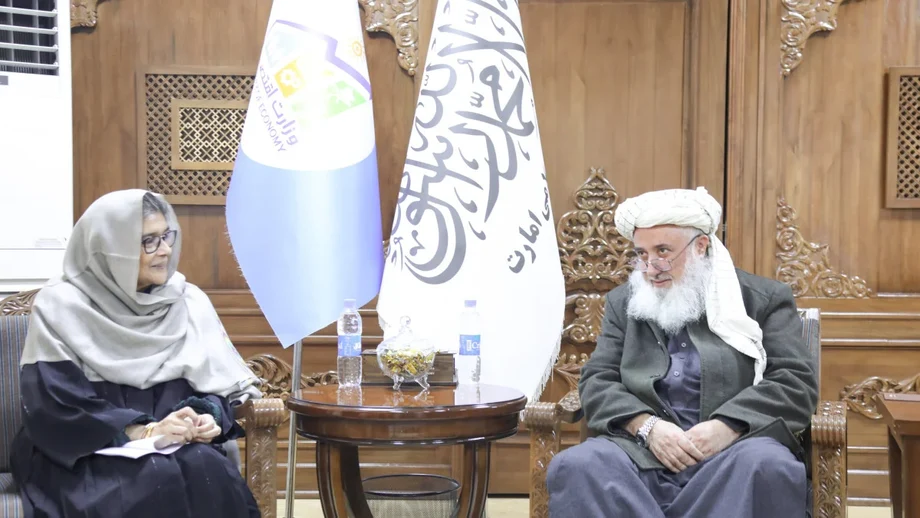
Din Mohammad Hanif, acting head of the Ministry of Economy in the Taliban administration, has called for economic sanctions to be lifted and Afghanistan's frozen foreign exchange reserves to be released. He made the appeal during a meeting in Kabul on Tuesday with Rabab Fatima, head of the United Nations Assistance Mission in Afghanistan (UNAMA), the UN mission responsible for political engagement and assistance coordination in the country.
Contents
- An Appeal Built Around Banks, Assets and Aid
- Why Afghan Banks Are Central to the Dispute
- Where $3.5 Billion in Afghan Reserves Went
- Why the Minister Wants a Different Kind of Aid
- What Fatima Promised During the Talks
- How Can Growth Coincide With Falling Output Per Person?
- Domestic Production Claims Meet a Changing Rural Economy
- What Tuesday's Meeting Changes Now
- The Bottom Line
Hanif connected the financial requests to a broader argument about how Afghanistan should recover. He cited progress in domestic production, exports, investment, economic infrastructure and efforts to stabilize the afghani, the national currency. In his account, access to national assets and fewer banking restrictions would help expand trade, attract Afghan and foreign capital, create employment and improve living conditions. He also asked international donors to move gradually away from concentrating on emergency relief and toward development programmes that strengthen local economies.
Two World Bank figures framed the urgency of that appeal. Afghanistan's total economy is forecast to grow by 3% in 2026, yet economic output per person is expected to fall by 3.3%. This would be the third consecutive annual decline in output per person. Total production can therefore expand while the average amount produced for each member of the population continues to shrink, leaving intense pressure on employment and livelihoods.
Why Afghan Banks Are Central to the Dispute
Afghan banks sit at the centre of the problem because international commerce depends on their ability to move money across borders. A company may need its bank to pay an overseas supplier, receive export earnings or provide routine financial services to investors. Afghanistan's banks continue to struggle to access the international financial system, even though international sanctions primarily target the Taliban and associated individuals and entities.
Sanctions and frozen reserves are related but distinct. Sanctions restrict dealings with designated people, entities or activities. Frozen reserves are national financial assets that Afghanistan's central bank cannot currently use. Hanif's argument joined the two issues by presenting banking restrictions and blocked assets as obstacles to ordinary economic activity. The Ministry of Economy, which published the account of the talks, summarized his position in these words:
He stressed that removing existing restrictions and allowing Afghanistan access to its national assets could play an important role in strengthening the country's economic system, expanding trade, attracting domestic and foreign investment, creating employment opportunities and improving people's livelihoods.
Hanif supported that argument with claims of improvement in production, exports, investment and infrastructure, as well as currency stability. The public account did not provide an export value, an investment total or an exchange rate to accompany those claims. Its central message was instead about capacity: Afghan officials want businesses to have usable payment channels, investors to have greater confidence and the central bank to regain access to national reserves.
Where $3.5 Billion in Afghan Reserves Went
Afghanistan lost access to billions of dollars in foreign exchange reserves after the Taliban returned to power in August 2021. These reserves differ from donor aid. They are financial assets held for the central bank, while humanitarian or development assistance consists of money, goods and services supplied by donors. Reserves can help a country manage international payments, support confidence in its currency and respond to financial shocks.
In 2022, the United States transferred $3.5 billion from the Afghan central bank's reserves to a fund based in Switzerland. Washington made the return of that money conditional on the central bank demonstrating its independence and putting financial safeguards in place. Independence concerns the institution's ability to make monetary and financial decisions without political control. Safeguards are intended to provide confidence that the resources will be managed properly and protected from misuse.
The Kabul meeting did not produce a new timetable for meeting those conditions or identify which assets might be released first. Nor did it announce a decision by the United States concerning the Swiss fund. The sequence leading to Hanif's appeal can be summarized through four developments:
- August 2021: The Taliban returned to power, and Afghanistan subsequently lost access to billions of dollars in reserves held abroad.
- 2022: The United States moved $3.5 billion in Afghan central bank reserves to the fund based in Switzerland and attached conditions to their return.
- 2026: The World Bank forecast 3% growth in total output alongside a 3.3% contraction in output per person.
- November 2026: Hanif took the sanctions and reserves requests directly to Fatima during their Tuesday meeting in Kabul.
Why the Minister Wants a Different Kind of Aid
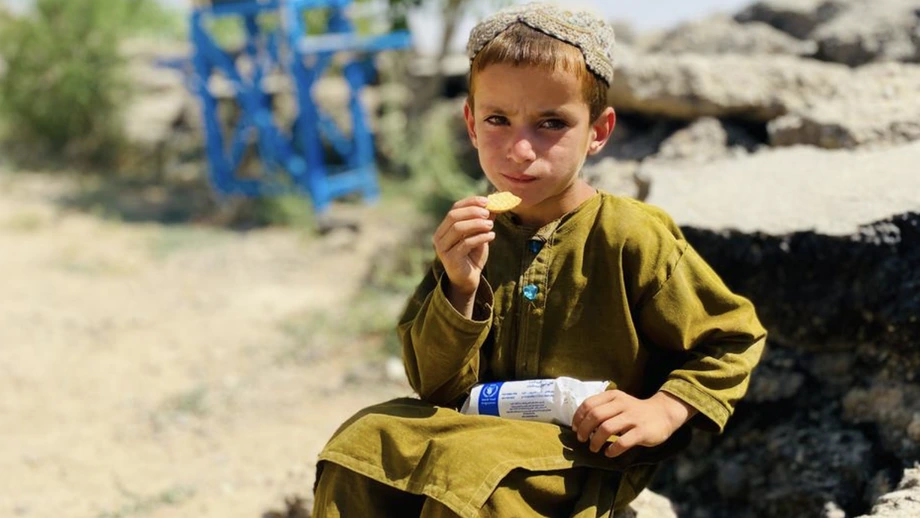
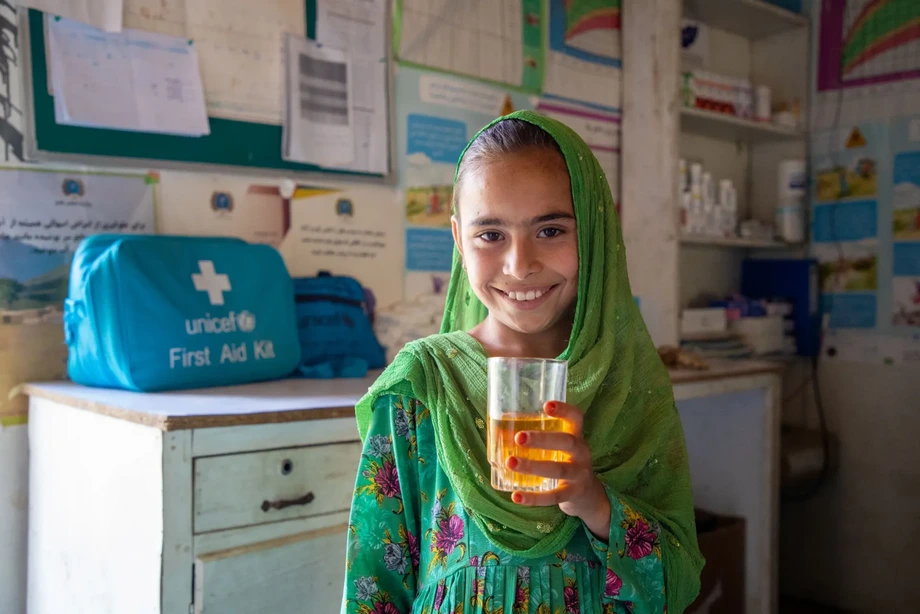
Recurring drought, climate change, poverty, unemployment and the return of Afghan refugees formed the second part of Hanif's case. Returning refugees need livelihoods and services in communities already facing economic pressure. Drought and climate pressures also weaken the rural incomes on which many households depend. Hanif argued that emergency assistance alone cannot create the lasting economic capacity needed to respond to those challenges.
The minister asked for a gradual redirection rather than an abrupt end to humanitarian support. The Ministry of Economy described his requested change in aid policy as follows:
He emphasised that the focus of international assistance should gradually shift from purely emergency and humanitarian relief towards sustainable development programmes, strengthening local economies and creating conditions for economic self-reliance.
Emergency relief addresses immediate needs, such as keeping people fed, housed and alive during a crisis. Development programmes are intended to create capacity that remains after an individual project ends, including infrastructure, stronger production and employment. Hanif's proposal would place more weight on the second category so that Afghan communities could depend less on repeated rounds of urgent assistance.
No project list, budget or start date accompanied the public description of that proposal. The request nevertheless establishes the standard by which Hanif wants future assistance judged: whether it supports local economic activity and jobs, rather than only providing temporary relief. His reference to infrastructure also connects the aid debate with his claim that Afghanistan has already made progress in production and investment.
What Fatima Promised During the Talks
Fatima welcomed the continuation of dialogue and pledged continued humanitarian and development cooperation, according to the ministry's account. She also undertook to maintain support for the private sector and to continue efforts aimed at strengthening Afghanistan's political engagement with the international community. Her response included stronger coordination with officials in the Taliban administration and efforts to mobilize additional resources to improve economic and living conditions.
She stressed constructive cooperation between international institutions and the Afghan authorities as a way to respond better to public needs. Those commitments cover dialogue, assistance, coordination and resource mobilization. They did not include a promise to remove sanctions, a date for releasing reserves or a newly announced development budget.
UNAMA provides a channel for engagement with Afghan institutions and international partners, but it does not hold the $3.5 billion transferred to Switzerland. Decisions about that money involve the conditions set by Washington, while changes to sanctions require action by the governments or bodies responsible for them. Fatima's pledges consequently represent continued cooperation rather than settlement of the financial demands.
How Can Growth Coincide With Falling Output Per Person?
The World Bank's two forecasts measure different things. Total economic growth tracks whether the country produces more goods and services. Output per person divides that total production by the population. If population increases faster than production, the average falls even while the economy as a whole becomes larger.
The expected 3.3% decline is an average economic measure, not a prediction that every worker's pay will fall by exactly that amount. It indicates that production is not keeping pace with the number of people among whom it is divided. A third consecutive annual decline also suggests that the pressure extends beyond a single year's harvest, aid cycle or change in population.
For Afghanistan, the return of refugees adds urgency to the need for employment, while unemployment, drought and poverty limit the ability of many households to absorb further economic strain. Hanif's emphasis on investment and job creation addresses that gap between total growth and average output. His appeal links financial access with the practical task of creating enough productive activity for a growing population.
Domestic Production Claims Meet a Changing Rural Economy
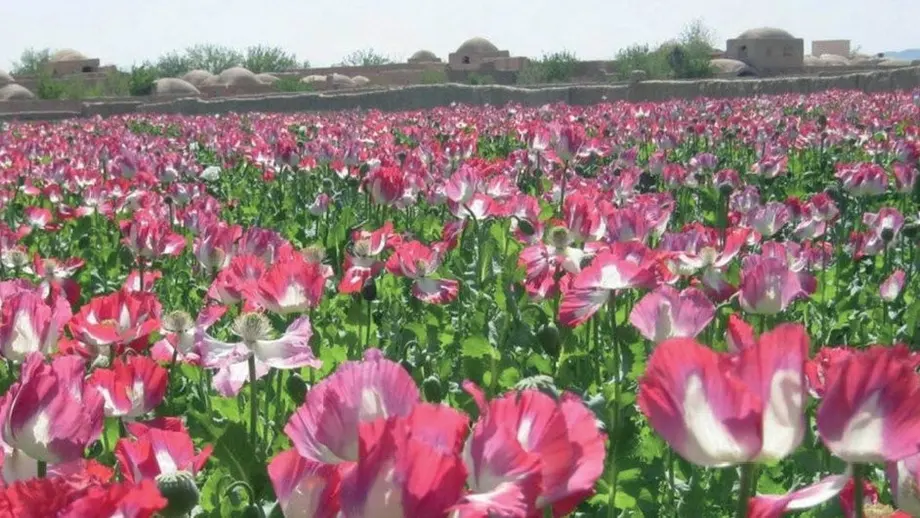
Hanif's reference to domestic production comes amid sharp changes in one rural sector. The scale of those changes was visible when Afghanistan's opium crop surged in the 2026 estimates published by the United Nations Office on Drugs and Crime. Cultivation rose from 10,200 hectares in 2025 to 43,300 hectares in 2026, while estimated opium production increased from 296 tonnes to 1,466 tonnes.
Badakhshan accounted for 29,482 hectares, more than two thirds of the national cultivated area. The national figure remained far below the 232,000 hectares recorded in 2022, the year the Taliban announced its narcotics ban. At 43,300 hectares, the 2026 area was about 81% smaller than that earlier benchmark, despite the sharp rebound from 2025.
The Taliban Interior Ministry rejected the UN findings, saying its field information and crop destruction showed a much smaller surviving harvest. The UN agency said it could not independently verify the authorities' eradication figures. For rural communities, swings in cultivation affect farm earnings and money circulating through local markets. They also form part of the difficult economic setting in which Hanif wants lawful investment, infrastructure and lasting employment to expand.
What Tuesday's Meeting Changes Now
For Afghan businesses, the requested financial changes would affect the basic mechanics of trade: making payments, receiving export income and attracting capital. For households, the ministry's promised benefits are jobs and improved livelihoods. For people dependent on assistance, the proposed aid shift would add development programmes to emergency support rather than immediately replacing relief.
Tuesday's meeting ended without an announced transfer of reserves, a sanctions decision, a new aid amount or a date for another meeting. Its documented outcome was a commitment to continue humanitarian and development cooperation, support private enterprise, coordinate more closely and seek additional resources. Hanif's larger requests remain tied to decisions outside the meeting room, while the 3% growth forecast and falling output per person define the economic pressure surrounding them.
The Bottom Line
- Hanif asked Fatima in Kabul for sanctions relief and the release of Afghanistan's frozen foreign exchange reserves.
- He cited progress in production, exports, investment, infrastructure and stabilization of the afghani.
- The United States transferred $3.5 billion in Afghan central bank reserves to a Swiss fund in 2022, with conditions attached to their return.
- Hanif wants aid to move gradually from emergency relief toward development, local economic strength and employment.
- Fatima pledged continued cooperation, private sector support, closer coordination and efforts to mobilize resources, but announced no financial release.
- The World Bank forecasts 3% economic growth in 2026, alongside a 3.3% decline in output per person for a third consecutive year.
- No timetable was announced for lifting sanctions, returning reserves or launching the proposed development programmes.