A Robot That Removes Fibroids and Keeps the Womb
A surgeon at a console in Jakarta, four robotic arms inside a patient's pelvis and a fibroid lifted away from healthy uterine muscle: this is the scene Mayapada Hospital Jakarta Selatan is putting forward for women with uterine fibroids or ovarian cysts who still hope to become pregnant.
Contents
- A Robot That Removes Fibroids and Keeps the Womb
- What Fibroids and Cysts Actually Are
- How the Machine Works, and Who Holds the Controls
- What Robotic Myomectomy Can and Cannot Promise
- Endometriosis and the Cases That Need More
- A 48-Year-Old Patient and a Cluster of Fibroids
- Why Not Every Diagnosis Ends on an Operating Table
- From Chennai to Moradabad: 2,321 Kilometres
- The Same Machines Beyond Gynaecology
- Four Days in November
- What Patients Should Ask First
- Key Points
The hospital's obstetrics and gynaecology centre uses a da Vinci Xi surgical system, the same machine it deploys for selected cancer, urinary tract and digestive operations. Two of its specialists set out their approach in comments released on 24 November 2026.
Malvin Emeraldi, an obstetrics and gynaecology specialist who also holds a fertility subspecialty (Sp.OG, Subsp.FER), said planning starts with the woman rather than the diagnosis. Doctors assess the condition of the uterus, the ovaries and the fallopian tubes, the ovarian reserve, the patient's age and her pregnancy plans before deciding whether an operation is needed at all.
Therefore, the choice of procedure needs to be tailored to the nature of the condition, the organs affected, the patient's age and their pregnancy plans.
The gap between two operations explains the attention. A myomectomy removes fibroids and leaves the uterus in place, which is why it is offered to women who want children. A hysterectomy removes the uterus altogether. Robotic instruments are being promoted as a way to take out the growths without taking out the organ, and every consultation begins with whether that is possible in a particular body.
What Fibroids and Cysts Actually Are
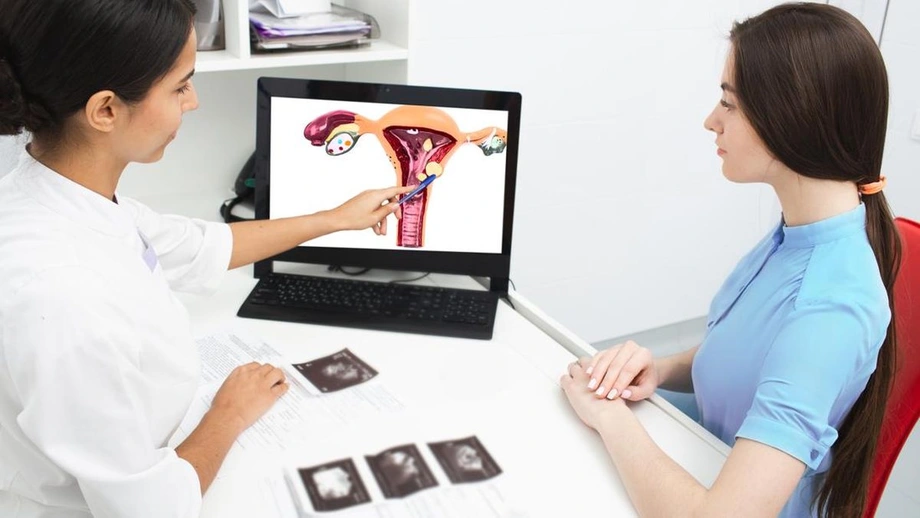
Fibroids, also called leiomyomas or myomas, are growths of tissue that form in or around the uterus. Johns Hopkins Medicine's patient guide describes them as almost always not cancer and very common, with the risk rising with age until menopause. They can be tiny or as large as a grapefruit, grow on the outer surface of the uterus, inside its wall or into the cavity, and appear in clusters.
The symptoms the Jakarta doctors list follow the clinical pattern: heavy and prolonged menstrual bleeding, pelvic pain, bloating, a feeling of pressure in the abdomen, frequent urination, constipation and, for some women, infertility or problems during pregnancy. Johns Hopkins adds that a myomectomy removes only the fibroids, which makes it the better choice for patients who want children.
Ovarian cysts are a separate problem. They are sacs filled with fluid or tissue that develop in or on an ovary. Putri Deva Karimah, an obstetrics and gynaecology specialist (Sp.OG), explained that when a cyst persists, enlarges or causes symptoms, doctors may consider a robotic-assisted ovarian cystectomy to remove it while keeping the healthy ovarian tissue.
In suitable cases, robotic technology can support a more targeted procedure, allowing the cyst to be treated while taking care to preserve the ovarian tissue.
How the Machine Works, and Who Holds the Controls
A da Vinci system is three connected pieces of equipment rather than a single robot, as TPMG's da Vinci overview sets out: a console where the surgeon sits with hands in wristed instruments, a patient cart that holds the arms over the operating table, and a vision cart that lets the team watch the operation. The platform was launched in 1999 as the first robotic system cleared by the US Food and Drug Administration for laparoscopic surgery and has since been used in more than six million procedures across four generations, named SI, X, XI and SP.
The instruments turn a surgeon's hand, wrist and finger movements into motion inside the abdomen, with a range beyond that of a human wrist, while a high definition 3D view shows the tissue close up. TPMG notes a benefit for the surgical team as well: instead of standing over a patient for hours, the surgeon sits at the console, which cuts the muscle soreness and fatigue that long laparoscopic days cause.
The marketing around surgical robots invites one obvious misunderstanding, and Sariberkis Castillo, a gynaecologist and robotic surgeon at Hospital Metropolitano de Santiago in the Dominican Republic, tackled it directly on the television programme Bienestar al Día, hosted by Yadira Pimentel, on 18 November 2026.
"¿Cómo que un robot me va a operar? El robot yo lo voy a manejar, yo lo voy a dirigir." ("A robot is going to operate on me? I am going to handle the robot, I am going to direct it.")
From the console, she said, the field appears enlarged and in three dimensions: "Cuando tú estás en la consola y ves todo tridimensional, estás como dentro del abdomen de la paciente" ("When you are at the console and you see everything in three dimensions, you are almost inside the patient's abdomen"). The view matters most in the narrow spaces of the pelvis, where nerves, ureters and bowel sit close to the organs being repaired.
Her hospital in Santiago works with the same family of machines, a da Vinci Xi backed by a centre for robotic surgery that serves several medical specialties.
What Robotic Myomectomy Can and Cannot Promise
For fibroids, the operation is called a robotic-assisted myomectomy. Johns Hopkins Medicine's guide lists what it may offer over open surgery: fewer complications for some patients, a shorter hospital stay, faster recovery and access to fibroids that are difficult to remove by other methods. Patients often go home the same day, although an overnight stay is possible.
The same guide sets out the risks plainly. They include infection, excess bleeding, blood clots that can travel to the lungs and cause breathing problems, injury to nearby organs such as the bowel or the ureters, wound healing problems, pelvic infection, complications in a later pregnancy, reactions to anaesthesia and regrowth of fibroids after surgery.
Two limits are worth knowing before a consultation. Robotic surgery is often more expensive than other methods, and it can take longer in the operating room. The technology is not available in every city or hospital.
Malvin pointed to the technical reasons the approach suits some pelvic operations.
Robotic myomectomy may be suitable in certain cases to remove fibroids while preserving the healthy structure of the uterus. With the support of 3D visualisation and flexible instruments, robotic technology can help doctors perform procedures with greater precision, particularly when fibroids are located in hard-to-reach areas.
One detail from the Johns Hopkins guide has nothing to do with robots and everything to do with planning: most women who become pregnant after a myomectomy may need a caesarean section to prevent complications during delivery. A woman choosing the operation may also be choosing a surgical birth later, and the guide advises her to tell her obstetrician once she conceives.
Endometriosis and the Cases That Need More
Endometriosis is the condition that most often forces a trade-off. Tissue similar to the uterine lining grows outside the uterus, causing inflammation, scarring and adhesions that bind organs together. It affects roughly 10% of women of reproductive age worldwide and can produce severe pelvic pain, painful periods, urinary or bowel problems and infertility.
When the disease has attached itself to surrounding organs, the dissection becomes delicate work. Malvin said the purpose is to remove the affected tissue while keeping the function of the reproductive organs as far as possible, so that fertility problems are managed with a future pregnancy in mind. A hysterectomy or an oophorectomy, the removal of one or both ovaries, remains an option when complex endometriosis calls for a wider operation and medical indications support it.
Not every case ends in an operating theatre. Castillo said many patients with endometriosis do not need surgery at all: "Muchas veces no necesitan ir a cirugía" ("Many times they do not need to go to surgery"). Treatment can begin with pain medication and hormone therapy, with an operation reserved for severe symptoms, extensive disease or affected organs. Deep endometriosis that reaches the bladder or the intestine may need specialists from several fields working as one team.
A 48-Year-Old Patient and a Cluster of Fibroids
The technical argument is easier to follow through a single case at RS Pondok Indah-Pondok Indah in Jakarta, where Putri operated on a 48-year-old woman who had endured severe menstrual pain and bleeding for months.
Examinations showed adenomyosis, a condition in which tissue like the uterine lining grows into the muscle wall of the uterus, together with a fibroid of considerable size. Chronic inflammation had caused adhesions between organs in the pelvis, so the surgeons faced the task of separating inflamed uterine tissue without injuring nearby structures or triggering heavy bleeding.
A robot fitted with a high resolution 3D camera gave the team a closer view of the boundary between diseased and healthy tissue, and instruments that move with more freedom inside a crowded pelvis. The team stressed one point for patients worried by the word robot: the machine does not act on its own. A trained surgeon controls every movement from a console.
The case shows why the size and number of fibroids matter as much as the diagnosis. Clusters of growths sitting close to other pelvic organs raise the difficulty of any operation, whether the surgeon works with a robot, a laparoscope or an open incision.
Why Not Every Diagnosis Ends on an Operating Table
Robotic surgery has criteria for who qualifies. Castillo said candidates are screened beforehand for cardiovascular health, anaesthesia requirements and general laboratory results. The size of the uterus, previous abdominal operations, adhesions, other illnesses and the shape of a patient's anatomy all shape the decision.
Mayapada's own description of its service starts at the same place: examination and consultation first, then a plan matched to the individual. The hospital did not say how many robotic gynaecological operations it has performed, what the procedures cost in Indonesia, or how outcomes compare with standard keyhole surgery.
Patients weighing the option in Jakarta can reach the call centre on 150770 or the WhatsApp line on 0817-17-150770, and an emergency line on 150990, with an emergency call button inside the MyCare application.
From Chennai to Moradabad: 2,321 Kilometres
Robotic surgery took a further step on 25 November, when a surgeon in Chennai operated on a patient in Moradabad, Uttar Pradesh, about 2,321 km away, removing uterine fibroids in roughly 45 minutes.
Leena Mehrotra, a senior consultant gynaecologist, obstetrician, IVF specialist and robotic and laparoscopic surgeon at Apex Hospital, worked the SSI Mantra robotic system from Prashanth Hospitals in Chennai while the patient lay in Apex Hospital in Moradabad. Prashanth Fertility described it as South India's first live robotic telesurgery for a myomectomy. Doctors attending the ninth Annual Conference on Controversies in Infertility Management (CIIM 2026) at The Leela Palace in Chennai watched the operation as it happened.
Telesurgery differs from ordinary robotic surgery because the console and the patient are in different buildings, sometimes in different states. A medical team stood beside the patient in Moradabad, coordinating with Mehrotra and technical staff throughout.
Robotic telesurgery represents an important advancement in surgical care, enabling specialists to perform procedures on patients located in geographically distant locations without compromising on surgical precision and control.
The hospital said the patient, whose fibroids were affecting her fertility, was recovering well and expected to be discharged within a couple of days, subject to medical assessment. It did not disclose the network used, the delay recorded during the operation or the backup arrangements if the connection had failed, three details that matter when judging how far remote surgery can travel safely.
Japan is testing a related arrangement. In Japan's remote robotic surgery study, five patients with colorectal cancer were operated on in a study linking Hirosaki University Hospital with Tsugaru General Hospital about 30 kilometres away, with a surgeon beside the patient controlling a hinotori robot built by Medicaroid while a supervising surgeon at the other site operated the same machine. Masaki Mori, the Tokai University professor who heads the Japan Surgical Society committee promoting remote surgery, said the primary goal was to eliminate regional disparities in surgical treatment, with practical use targeted in about two years. Further operations are planned through March before the organisers seek regulatory approval and insurance coverage.
The Same Machines Beyond Gynaecology
Jakarta has more than one robotic programme. Tzu Chi Hospital Pantai Indah Kapuk lists robotic laparoscopy for urology, digestive surgery, gynaecology and hernia repair. Its gynaecology list covers myomectomy, ovarian cyst removal, hysterectomy and salpingo-oophorectomy, the removal of a fallopian tube and ovary together. The hospital also offers a robotic total knee replacement using Cuvis Joint technology, where the system helps plan the position and alignment of the implant before the surgeon operates.
The hospital sets out five benefits it attributes to the approach: greater precision, a more detailed view of the surgical area, smaller incisions, a minimally invasive route and the potential for faster recovery, with recovery time depending on the operation and the patient.
At Mayapada, the da Vinci Xi is used beyond the reproductive organs for selected cases in oncology, urology, and gastrohepatology, the field covering the digestive system and liver.
Four Days in November
The announcements arrived within a week, in three countries.
- 18 November 2026: Castillo explains on Bienestar al Día which gynaecological conditions the da Vinci Xi at her Santiago hospital can treat.
- 19 November 2026: a Jakarta team describes the robot-assisted operation on the 48-year-old woman with adenomyosis and a large fibroid.
- 24 November 2026: Malvin's comments on fertility and surgical choice are released, and the account of his briefing is published that afternoon.
- 25 November 2026: Mayapada's description of robotic myomectomy and cystectomy appears, and in India a surgeon in Chennai removes fibroids from a patient 2,321 km away in about 45 minutes.
What Patients Should Ask First
Johns Hopkins Medicine's guide closes with a checklist that applies to any hospital, robot or not: the name of the procedure, the reason for it, the results to expect, the risks and benefits, possible complications, where and when it will happen, the qualifications of the person performing it, what would happen without it, the alternatives, how results will be communicated, who to call afterwards and what it will cost.
Preparation for a robotic myomectomy involves practical steps. Patients may need to stop blood thinners, stop smoking because it slows healing, and follow fasting instructions. Tests can include an electrocardiogram for heart rhythm, an ultrasound to map the fibroids, an MRI for more detail and blood tests for infection, anaemia and kidney function. Someone should be available to drive the patient home.
Afterwards, moving around helps prevent blood clots, shoulder pain from the gas used to inflate the abdomen can last several days, and fever, heavy bleeding, severe pain or trouble breathing call for immediate contact with the surgeon. Fibroids can grow back, so returning symptoms need another conversation.
Key Points
- Mayapada Hospital Jakarta Selatan uses a da Vinci Xi robot for myomectomy, ovarian cystectomy, endometriosis surgery and, when indicated, hysterectomy or ovary removal.
- Malvin Emeraldi, Sp.OG, Subsp.FER, said procedure choice depends on the disease, the organs affected, the patient's age and her pregnancy plans.
- Putri Deva Karimah, Sp.OG, described robot-assisted cystectomy that keeps healthy ovarian tissue, and a 48-year-old patient with adenomyosis, a large fibroid and pelvic adhesions.
- Johns Hopkins Medicine lists shorter stays and faster recovery among the benefits, and infection, bleeding, organ injury and fibroid regrowth among the risks; most women who conceive after myomectomy may need a caesarean section.
- Endometriosis affects roughly 10% of women of reproductive age worldwide and does not always require surgery.
- On 25 November, a Chennai surgeon removed fibroids from a patient 2,321 km away in Moradabad in about 45 minutes using a telesurgery setup.
- Japan's trial of remote robotic assistance, run between two hospitals about 30 kilometres apart, plans further operations through March before seeking approval and insurance coverage.