What happened at the Minimum Wage Board meeting
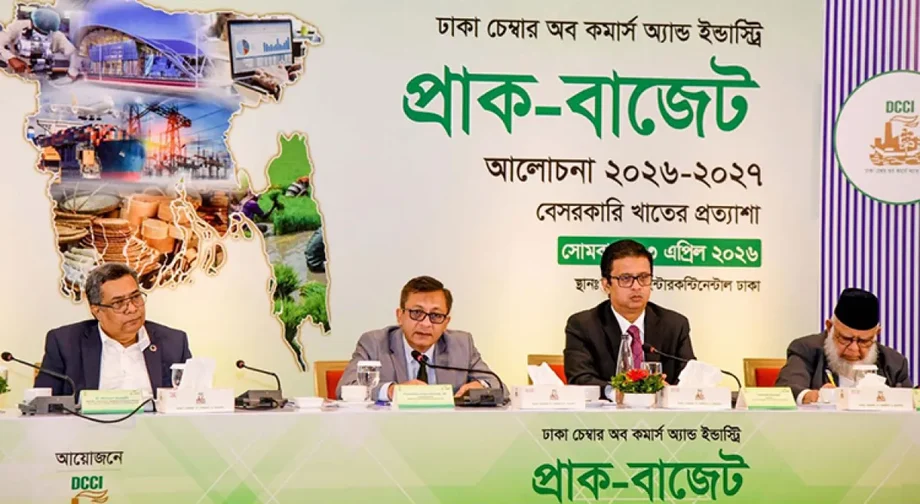
Bangladesh's garment factory owners submitted a minimum wage proposal on Monday, 23 November 2026, but the Minimum Wage Board refused to make the figure public, leaving workers without an answer after weeks of protests. The third meeting of the board began at 11:45 am at the Labour Building in Segunbagicha, Dhaka, and continued past a briefing at 4:45 pm.
Contents
- What happened at the Minimum Wage Board meeting
- Why the board withheld the number
- What each side is offering
- What is happening on the streets
- The economic damage
- Three decades of wage revisions
- What independent analysts say
- What the industry says about its capacity
- International pressure and political tension
- What happens next
- Key Points
Board chairman Syed Azad Subhani, a district and sessions judge, told journalists that the employers' side had submitted its proposal. He said both sides would review the proposals and could return with revised figures. The meeting could extend into Tuesday, he said.
The board's decision to keep the amount secret was unanimous, Subhani said. He explained that the final wage would be recommended by the board and determined by the government, and that employers would have to implement it. To avoid confusion, tension or misunderstanding among stakeholders, the board decided not to disclose the figure now, he said.
We decided in the board meeting unanimously that we are not disclosing the proposal the employers have given right now. Because ultimately the wage board will recommend something and the government will determine it, and the employers will have to implement it.
Why the board withheld the number
The board's decision left workers' representative Babul Akhter frustrated. He told reporters at the same briefing that the employers' offer was not acceptable. The gap between the two sides remained wide, he said.
The owners have submitted their proposal. But we do not consider it acceptable, just as they do not find our proposal acceptable. Under the circumstances, both sides will submit revised proposals, and we will discuss the matter.
Akhter also said the owners' proposal was nowhere near the workers' proposal. He expected both sides to move: workers would come down a little, and owners would go up a little.
The board's membership includes neutral member Mosleh Uddin Ahmed, employers' representative ABM Shamsuddin, workers' representative Babul Akhter, permanent workers' representative Anwar Hossain and permanent employers' representative Asif Ayub. Experts present were BGMEA President Mahmud Hasan Khan and Additional Senior Secretary Nur Mohammad Amin for employers, and Rashedul Alam, general secretary of the Bangladesh Mukto Garment Sramik Union Federation, for workers. The board's preparation had included a field inspection in Ashulia. (The board's preparation)
What each side is offering
Workers' representatives formally proposed a minimum monthly wage of Tk32,000 for Grade 4 workers at the board's second meeting on 9 November. They also proposed Tk30,000 for apprentices. Babul Akhter argued that a family of four needed between Tk45,000 and Tk60,000 a month to cover nutrition, calorie needs, housing, healthcare and education. After weighing the industry's capacity and the wider economy, the workers' side scaled its proposal to Tk32,000 for the lowest regular grade.
On the streets, workers have demanded Tk30,000, up from the current Tk12,500 fixed in November 2023. That is an increase of about 140 percent.
The employers' exact figure remained undisclosed. Subhani said the proposed minimum wage was above Tk14,500. A workers' leader, speaking on condition of anonymity, said the employers had proposed more than Tk15,000. Before the meeting, two BGMEA leaders said the owners would propose about Tk14,300, roughly a 15 percent increase. Asked about media reports of Tk14,500, Subhani called that information entirely unrealistic.
ABM Shamsuddin, the owners' representative on the board, said workers' demands were unrealistic given the state of the industry.
A healthy duck can lay a golden egg every day, but can you expect the same from a sick duck?
Shamsuddin declined to comment further.
What is happening on the streets
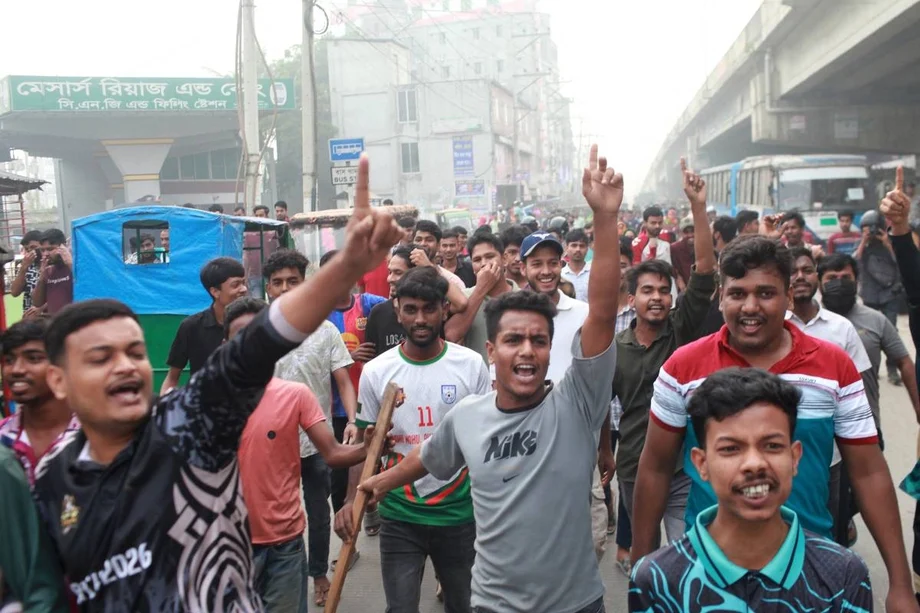
Protests by garment workers have continued since October. On Monday, workers from several factories blocked the Dhaka-Mymensingh highway at Gargaria Masterbari in Sreepur around 11:00 am. Around 400 to 500 workers from one factory brought out a procession along the Mymensingh-bound lane, according to eyewitnesses. Police used tear gas, batons and sound grenades to disperse them.
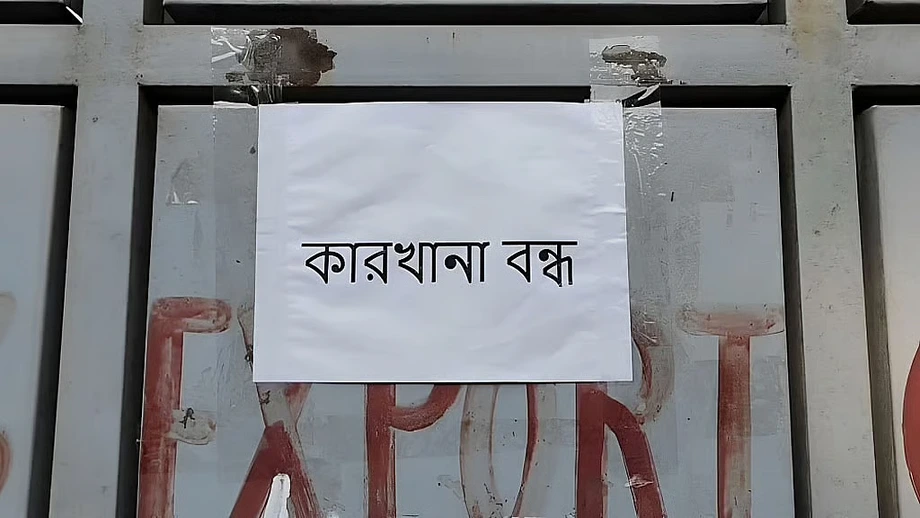
In Gazipur, 19 garment factories that had been closed indefinitely during the protests reopened. In Savar and Ashulia, 21 factories remained closed under Section 13(1) of the Bangladesh Labour Act, while another 18 declared general holidays after workers refused to work despite entering the factories, according to Mohammad Mominul Islam Bhuiyan, superintendent of Ashulia Industrial Police-1. By evening, the number of factories declaring general holidays had risen to 33, and 22 were suspended under Section 13(1), he said.
Section 13(1) of the Bangladesh Labour Act allows factory owners to suspend operations and withhold wages when a strike is classified as illegal, under a no work, no pay provision. The provision has deepened workers' anger because they lose income while factories stay shut.
The wave of protests began on 31 October. (protests began on 31 October) Earlier this month, nine factories closed indefinitely, affecting about 20,000 workers. (nine factories closed indefinitely)
Outside the Labour Building on Monday, several hundred workers protested and demanded a minimum monthly wage of Tk30,000. Nazma Akter, president of the Sommilito Garments Sramik Federation, handed a list of demands to the wage board chairman.
Our demand is clear: the minimum wage for workers must be Tk30,000. Otherwise, we will launch a bigger movement.
Jolie Talukder, vice president of the Garment Workers Trade Union Centre, called on owners to propose a wage workers can live on, consistent with the workers' proposal, and to reopen factories quickly so that workers' lives and the industry can return to normal.
The economic damage
The Bangladesh Garment Manufacturers and Exporters Association (BGMEA) said a survey of members found that 317 factories lost $428 million in production during 18 days of disruption from 1 to 18 November. Orders worth $254 million, covering about 59 million pieces, were shifted to other countries. Only 317 of more than 600 affected factories were able to send data in time, so actual losses could be much higher.
The extent of the damage cannot be measured solely in terms of immediate financial losses.
Mohammed Shahedul Islam, secretary-general of BGMEA, said the disruption came during the period before Christmas, a busy time for overseas orders. The industry earns about $38 billion a year and accounts for about 80 percent of Bangladesh's export earnings. It employs more than four million people. Bangladesh is the world's second biggest garment exporter after China.
Other figures point to wider strains. The Commerce Minister told Parliament in September that 405 garment factories closed between July 2023 and June 2026. Garment exports fell by 1.64 percent in the 2025-26 financial year. Private sector credit growth fell to a record low of 4.17 percent in September.
Three decades of wage revisions
The minimum wage for garment workers in Bangladesh has been revised seven times since 1985. It started at Tk627. A wage board was formed for the first time in 1994 and set the minimum at Tk930. The figure rose to Tk1,662.50 in 2006, Tk3,000 in 2010, Tk5,300 in 2013, Tk8,000 in 2018 and Tk12,500 in 2023.
The 2023 revision followed a familiar pattern. Workers sought Tk20,393. Employers offered Tk10,400, less than half. Protests erupted the next day and continued for three weeks. Four workers died during those demonstrations: Russell Howlader, Imran, Jalal Uddin and Anjuara Khatun. Employers later raised their offer to Tk12,500, which was finalised.
In each of the past five wage boards, employers proposed half or less than half of what workers demanded. The final wage was set higher than the employers' first offer after negotiations.
Bangladesh's minimum wage rose by 136 percent between 2016 and 2026, compared with 54 percent in Vietnam and 50 percent in Cambodia. The country started from a lower base. Its minimum wage of about $100 remains below Vietnam's $144 to $207, Cambodia's $210 and Guangdong's $405.
What independent analysts say
The Centre for Policy Dialogue (CPD) proposed a minimum wage between Tk18,578 and Tk24,204. It weighed industry capacity, production costs, interest rates, export prices and US tariff pressures. CPD rejected BGMEA's claim that its estimate counted housing expenses twice. The think tank said it removed house rent from nonfood expenditure and tobacco from food expenditure before calculating other essential costs, which include clothing, utility bills, education, transport, personal care and communication. It used the median household size to avoid the influence of high or low values.
The Global Living Wage Coalition estimated a living wage of Tk25,166 a month in 2025 for the satellite cities and districts around Dhaka, where most garment factories are located. A worker on the minimum wage earns Tk14,117 a month without overtime, or 56 percent of that living wage, according to an analysis by Md. Rubaiyath Sarwar. With 52 hours of overtime, the worker earns Tk17,467, or 69 percent. BGMEA says a Grade 4 worker earns Tk19,500 on average, and Tk22,000 with the festival bonus, overtime and other benefits.
The analysis proposed a minimum wage of Tk17,830, an increase of Tk5,330 or 42.6 percent, to bring pay without overtime to 80 percent of the living wage. A second step, in later revisions, would close the remaining gap. The proposal sits within the CPD range and below the full living wage.
Section 141 of the Bangladesh Labour Act 2006 requires the wage board to consider the cost of living, the standard of living, the cost of production, productivity, the price of products, inflation, the nature and risk of the work, business capability and the social and economic conditions of the country and the locality. The International Labour Organization's Minimum Wage Fixing Convention, 1970 (No. 131) groups these factors under the needs of workers and their families, and economic factors such as productivity and the level of employment.
What the industry says about its capacity
BGMEA, in a letter to CPD this week, said production costs rose by 25 to 30 percent over three years while export prices fell by 2.6 percent. Factories' profit margins fell from 12.61 percent in 2022 to 7.34 percent in 2024. A survey found that 67.11 percent of factories received no price increase from buyers, and 25 percent reported fewer orders from buyers than in 2023. Factories' wage costs rose by 31 percent after the 2023 wage increase.
One factory representative said a small price increase from buyers would have a big impact. "If the buyers just pay 5 cents more, it will have a big impact," the representative said.
BGMEA has argued that a wage increase above 15 percent would be unsustainable for the sector, which faces rising costs and weak global demand. Industry leaders said many small factories could struggle to cope even with a 15 percent increase.
International pressure and political tension
Global labour groups and brand coalitions have backed the workers' demands. On 19 November, the Action, Collaboration, Transformation (ACT) initiative called for an urgent and meaningful increase in Bangladesh's minimum garment wage, citing living costs, inflation, productivity and economic conditions. ACT expressed concern about reports of violence and retaliation linked to the process of setting wages, and urged respect for workers' rights to freedom of association, peaceful assembly and social dialogue.
ACT's brand members include H&M Group, Inditex, C&A, Primark, Next and PVH Corp. They said they would work with suppliers to ensure that statutory and negotiated wage increases were reflected in purchasing prices.
Political tension has added to the unrest. Protests by former Prime Minister Sheikh Hasina's Awami League have continued alongside the garment workers' movement, creating pressure on multiple fronts. The opposition has proposed a national taskforce to address the garment crisis, including priority gas and electricity supplies to export industrial areas within 30 days, financial support for struggling factories and a monthly public dashboard tracking production, orders, closures and jobs. (opposition taskforce proposal)
What happens next
The wage board may meet again on Tuesday. Both sides are expected to submit revised proposals. The board will consider all proposals and send its final recommendation to the labour ministry. The government will then determine the final wage, which employers must implement.
The revised minimum wage is expected to be announced in December and take effect in January 2027. Under amendments to the Bangladesh Labour Act passed in 2026, the revision cycle was shortened from five years to three years, setting a deadline of 30 April 2027 for the board to complete its work. Both workers and owners have said they want the process finished earlier, with the goal of implementing the new wage structure from December 2026 so that workers receive higher pay in January 2027.
Babul Akhter said workers would continue their movement until the final gazette is published. He also urged workers to return to work and keep production going. "The workers will continue their movement until the final gazette is published," he said.
What is not yet known is the exact amount the employers proposed, whether Tuesday's meeting will produce an agreement, and what the final wage will be.
Key Points
- Garment factory owners submitted a minimum wage proposal on 23 November 2026, but the Minimum Wage Board withheld the figure.
- Chairman Syed Azad Subhani said the proposed wage was above Tk14,500; a workers' leader said it exceeded Tk15,000.
- Workers' representative Babul Akhter proposed Tk32,000 for Grade 4 and rejected the owners' offer as too low.
- Workers on the streets demand Tk30,000, up from the current Tk12,500 set in 2023.
- BGMEA says 317 factories lost $428 million in production from 1 to 18 November, and $254 million in orders shifted abroad.
- The board may meet again on Tuesday; revised proposals are expected from both sides.