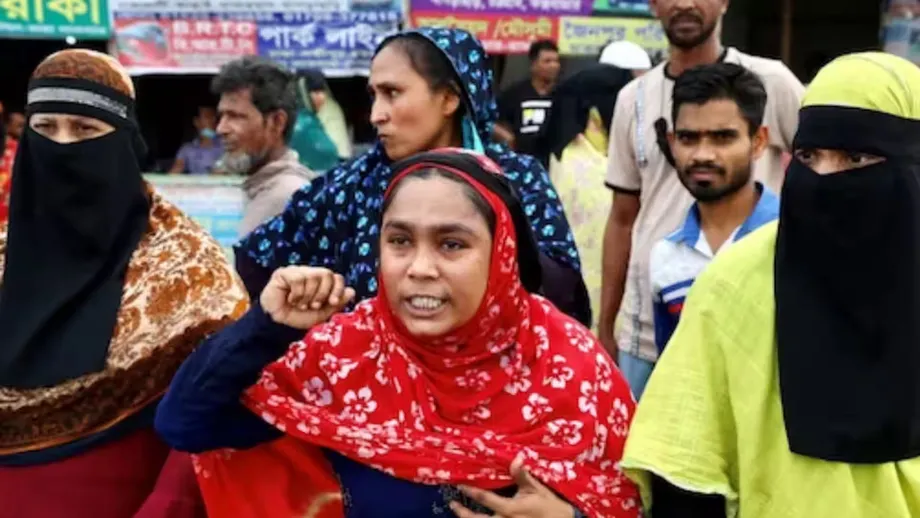
Demand for Tk 30,000 spreads across industrial districts
At least 30 garment factories in and around Kathgara in Ashulia suspended work on Saturday as workers demanded a minimum monthly wage of Tk 30,000, while demonstrations in Gazipur left traffic backed up for nearly two kilometres on the Dhaka-Tangail highway. The government promised to form a wage board on Sunday and urged workers to return to their factories.
Contents
- Demand for Tk 30,000 spreads across industrial districts
- How the Ashulia stoppage spread
- Clashes leave injuries and a security response
- Gazipur protests block a major highway
- Workers link higher wages to keeping their jobs
- What the promised wage board would do
- Overdue salaries become part of the talks
- How the dispute developed
- Key Points
The demand would lift the monthly minimum by Tk 17,500 from the current Tk 12,500 cited by labour leader Khairul Mamun Mintu. That is an increase of 140 percent, making the proposed wage 2.4 times the existing amount. Workers also sought an end to alleged blacklisting and arbitrary dismissal, bringing job security into a dispute already centred on the cost of supporting a family.
Mohammad Mominul Islam Bhuiyan, superintendent of Ashulia Industrial Police-1, confirmed the closure of at least 30 factories at about 1:45pm. A further account attributed a figure of 25 closures to the same police superintendent. Factory managers were sending workers home as demonstrations spread and concerns grew about damage to buildings and clashes outside.
Labour and Employment Minister Ariful Haque Chowdhury said the government would form a minimum wage board and publish the announcement in an official gazette on Sunday. The announcement followed talks with labour leaders and representatives of the garment and knitwear industries.
A new board would begin the process of reviewing wages. Workers were still seeking agreement on the amount they should receive, alongside action on overdue salaries and employment practices.
How the Ashulia stoppage spread
Workers at Naim Knitwear in Kathgara began a stoppage inside their factory on Saturday morning, according to police. They later moved outside, demonstrated and threw bricks at several nearby factories. Police and protesters then chased each other through the area.
Disruption extended across Kathgara and nearby parts of the Ashulia industrial belt, including Jirab, Narsinghpur and Amtala. An official at a garment factory in Kathgara Amtala said almost all surrounding factories, apart from two or three, had announced a holiday. Management would assess the situation before deciding its next steps.
Continental, AR Jeans and CWA were among the factories where damage was reported. Windows at AR Jeans and Continental were broken. Several managers suspended operations as workers gathered outside and pressure grew on neighbouring factories to stop production.
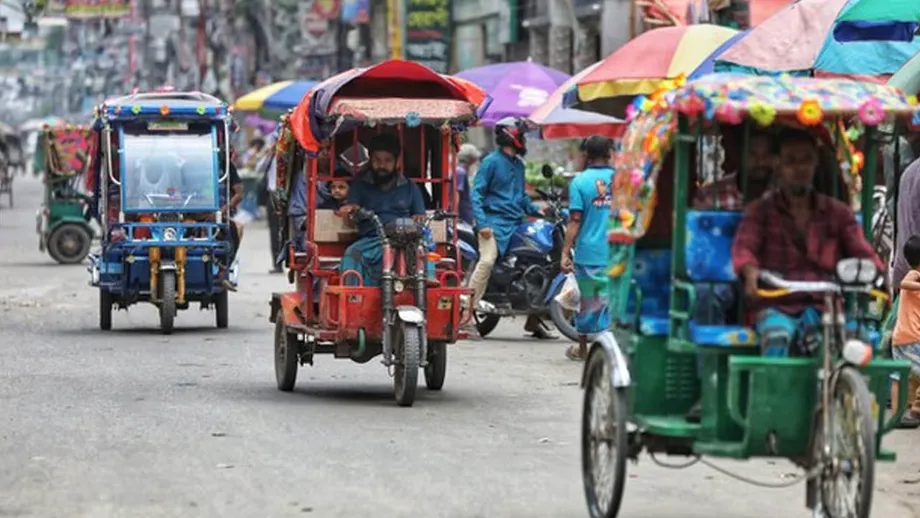
Auto-rickshaw drivers using the Bishmail-Jirabo road said traffic had stopped after the protests began. They moved to safer locations to avoid getting caught in confrontations. For workers, drivers and nearby businesses, the immediate disruption therefore reached beyond factory gates.
The police superintendent said officers were trying to persuade demonstrators to disperse. He also expressed concern that workers gathering at different locations might prevent employees at other factories from working.
Clashes leave injuries and a security response
Ashulia police superintendent Mominul Islam Bhuiyan said one officer was admitted to hospital with a head injury caused by bricks thrown by protesters. Additional Superintendent Syed Faisal Islam was also reported as putting the number of injured police officers at six, alongside other injured people.
Workers and passersby were among those reported hurt during the confrontations. Police used tear gas and sound grenades while trying to disperse crowds in Nischintapur. Industrial Police-1 Inspector Abul Kalam Azad said additional security personnel had been deployed and officers were monitoring the industrial area.
Police also recovered three objects resembling crude bombs near a factory in Nischintapur on the Baipail-Abdullahpur road. The police superintendent placed the recovery outside a Nasa Group factory and said the Bangladesh Police Anti Terrorism Unit had been informed; another description placed it outside New Age and said Ashulia police had been notified.
The identity of whoever brought or left the objects, and whether they contained explosives, had not been confirmed. Police said specialist officers would take the next steps at the scene.
Gazipur protests block a major highway
Workers from several factories near Chandra Palli Bidyut in Kaliakair, Gazipur, stopped work and entered the streets around noon on Saturday. Their demands included the same Tk 30,000 minimum monthly wage sought in Ashulia, along with higher allowances.
Employees from nearby factories joined the demonstration, disrupting traffic in both directions on the Dhaka-Tangail highway. Naojor Police Outpost Inspector Abdul Karim said at about 4:30pm that the resulting traffic jam stretched nearly two kilometres and that the protest was continuing.
Gazipur Industrial Police Superintendent Amjad Hossain said at about 5:30pm that workers at 10 to 12 factories across Gazipur had staged scattered demonstrations. Between 18 and 20 factories in Kaliakair had declared holidays amid the unrest.
Abdul Karim said workers from factories that closed in the afternoon were also joining the protest. The closures therefore changed the movement of people through the area: employees leaving production floors added to the crowds already on the highway.
Amjad Hossain, the senior industrial police officer overseeing the response in Gazipur, described the police effort:
We are trying to bring the situation under control.
Demonstrations also reached Dhaka, where garment workers blocked the Mirpur 10 intersection on Saturday. Wage protests were therefore affecting an urban junction, roads serving the Ashulia factories and a major highway through Gazipur during the same day.
Workers link higher wages to keeping their jobs
Khairul Mamun Mintu, legal affairs secretary of the Bangladesh Garments and Sweaters Workers Trade Union Centre, said workers had long demanded a Tk 30,000 minimum wage. He pointed to rising food prices, rent, medical expenses and other household costs as reasons the existing minimum was insufficient.
The wage demand is a request to raise the lowest monthly pay covered by the wage framework. For an employee receiving Tk 12,500, the requested Tk 17,500 increase would be larger than the entire current monthly minimum. That helps explain the size of the gap between what workers receive and what demonstrators are seeking.
Workers also alleged that factories were dismissing experienced employees without justification and sharing blacklists that prevented them from finding another garment job. In this context, blacklisting means circulating a worker's name so other employers avoid hiring that person.
Protest demands included cancelling such lists, stopping arbitrary dismissals, providing support for dismissed workers and ensuring safe working conditions. A higher wage matters little to a household if its wage earner loses access to employment, making these employment demands closely connected to the pay dispute.
Mintu said workers had expected an announcement establishing a wage board by October. He said the failure to meet that expectation had fuelled anger. A ministry meeting on Friday night agreed that work on forming the board would begin by Sunday, but he said that message had not properly reached ordinary workers.
What the promised wage board would do
Labour Minister Ariful Haque Chowdhury said on Saturday that the government would establish the board on Sunday and issue the decision through the official gazette. A gazette is the government's formal publication for decisions and legal notices.
The minister made the announcement after meetings involving employers, labour representatives and ministry officials. He described the preceding discussions with central garment labour leaders as lasting several hours. Representatives of the Bangladesh Garment Manufacturers and Exporters Association, known as BGMEA, and the Bangladesh Knitwear Manufacturers and Exporters Association, known as BKMEA, had accepted the demand to form a board, he said.
The wage board structure described in the announcement includes a chairperson, an independent member, an employer representative and a worker representative. When wages for a particular industry are considered, representatives of employers and workers from that industry participate in the process.
Section 139 of the Bangladesh Labour Act provides for the government to consider setting minimum wage rates for an industry following an application from employers, workers or both sides. The board gives those groups a formal setting in which to address the wage level.
The minister announced the board's formation, while the workers' requested Tk 30,000 rate remained a demand awaiting a decision. No date was given for a final wage recommendation, approval or the start of any revised payments.
That leaves a practical gap between the government's immediate commitment and the change workers want in their pay packets. Sunday's promised gazette was the next stated step in the process.
Overdue salaries become part of the talks
Unpaid wages were also discussed with BGMEA and BKMEA representatives, the minister said. The associations would speak to factory owners and seek payment of outstanding salaries as quickly as possible.
The discussions included paying workers by the seventh day of each month. For households depending on a regular salary, payment timing affects whether rent, food and other bills can be covered when they fall due, even before any new minimum wage is settled.
Ariful urged workers to withdraw their demonstrations and return to work. He argued that factory closures, damage and interruptions to production could delay deliveries to buyers. If owners could not deliver goods and receive payment, he said, paying wages could also become more difficult.
The minister also alleged that people coming from outside were encouraging workers to protest. His public remarks did not identify those people. Labour representatives, meanwhile, described the anger in terms of wages, dismissals, alleged blacklisting and the delayed wage board announcement.
The government's response therefore involved several different tasks: creating the wage board, pressing employers to clear arrears and encouraging factories to resume production. Each addresses a different part of the dispute, and the promise to form the board left the other demands on the table.
How the dispute developed
Saturday's unrest followed several days of wage protests in the Gazipur industrial area. The main developments described by officials and labour representatives were:
- Friday: Labour leaders met the minister for several hours. Mintu said a ministry meeting that night agreed to begin work on forming a wage board by Sunday.
- Saturday morning: Workers at Naim Knitwear in Ashulia stopped work before demonstrations spread to nearby factories.
- Saturday around noon: Workers near Chandra Palli Bidyut in Kaliakair entered the streets and disrupted the Dhaka-Tangail highway.
- Saturday, about 1:45pm: Ashulia's industrial police superintendent confirmed that at least 30 factories had declared holidays.
- Saturday, about 4:30pm: Police said the highway queue near Chandra stretched nearly two kilometres and the protest was continuing.
- Saturday, about 5:30pm: Gazipur's industrial police superintendent described scattered protests involving workers at 10 to 12 factories and closures at 18 to 20 factories in Kaliakair.
- Sunday: The minister promised to form the wage board and publish the announcement in the official gazette.
The immediate test for the government is delivering that promised administrative step. For workers, the central issues remain the eventual wage amount, payment of salaries already owed and whether they can keep or regain employment without being excluded from other factories.
Key Points
- Garment workers demanded a minimum monthly wage of Tk 30,000, compared with the Tk 12,500 current minimum cited by a labour leader.
- Ashulia police gave a figure of at least 30 factory closures; another account attributed 25 closures to the same superintendent.
- Clashes in Ashulia left police officers and other people injured, while three objects resembling crude bombs were recovered in Nischintapur.
- Protests in Kaliakair created a traffic jam nearly two kilometres long, and 18 to 20 factories there declared holidays.
- The labour minister promised a wage board and gazette announcement on Sunday, while urging workers to return to work.
- Workers also sought action on overdue pay, alleged blacklisting and arbitrary dismissal. A final decision on a new wage rate was still pending.