Sweeping Security Overhaul Targets Strained Washington Ties
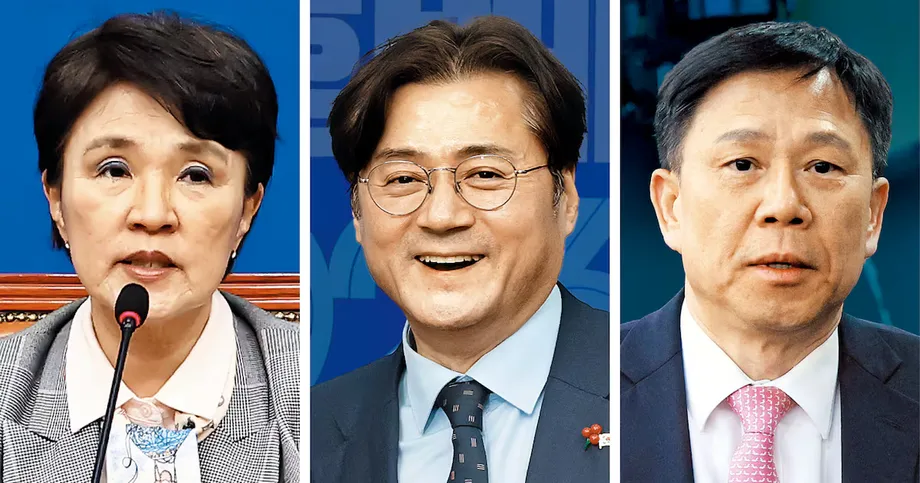
South Korean President Lee Jae-myung announced on November 23, 2026, a major cabinet and security reshuffle that replaces the director of the National Intelligence Service and four cabinet ministers ahead of next month's Group of 20 summit in Miami. Lee nominated former Justice Minister Kang Kum-sil to lead the spy agency, career diplomat Lim Woong-soon as foreign minister, and three term former lawmaker Hong Ik-pyo as unification minister. Democratic Party lawmaker Han Jun-ho was tapped as minister of the interior and safety, while senior presidential spokesperson Kang Yu-jung was nominated as minister of culture, sports and tourism.
Contents
- Sweeping Security Overhaul Targets Strained Washington Ties
- Why Washington Restricted Intelligence Sharing With Seoul
- How a Missed APEC Summit Accelerated the Shakeup
- First Woman Tapped to Lead South Korea Spy Agency
- Veteran Diplomat and Former Lawmaker Take Key Foreign Posts
- Domestic Ministries and Unfinished Cabinet Business
- Timeline of Events Leading to the Reshuffle
- Political Loyalty Concerns and Approval Rating Pressures
- What Happens Next in Parliament and Miami
- Key Points
Presidential Chief of Staff Lim Kwang-hyun outlined the appointments at the presidential office briefing in Seoul, marking the first overhaul of the administration's foreign policy and security leadership in one year and five months since Lee took office in June 2025. Outgoing National Intelligence Service Director Lee Jong-seok and Unification Minister Chung Dong-young had been closely identified with a faction advocating greater diplomatic autonomy from Washington. Lim Kwang-hyun said the shakeup was designed to inject fresh leadership into state affairs while keeping the government's core commitment to a firm alliance with the United States and peace on the Korean Peninsula unchanged.
In a rapidly changing international order, we will seek to attain maximum results from pragmatic diplomacy and take the lead on opening the path to peaceful coexistence on the Korean Peninsula, while firmly protecting the people's safety and swiftly pushing for grand transformations felt by the people, including growth led by regions and a leap toward a cultural powerhouse.
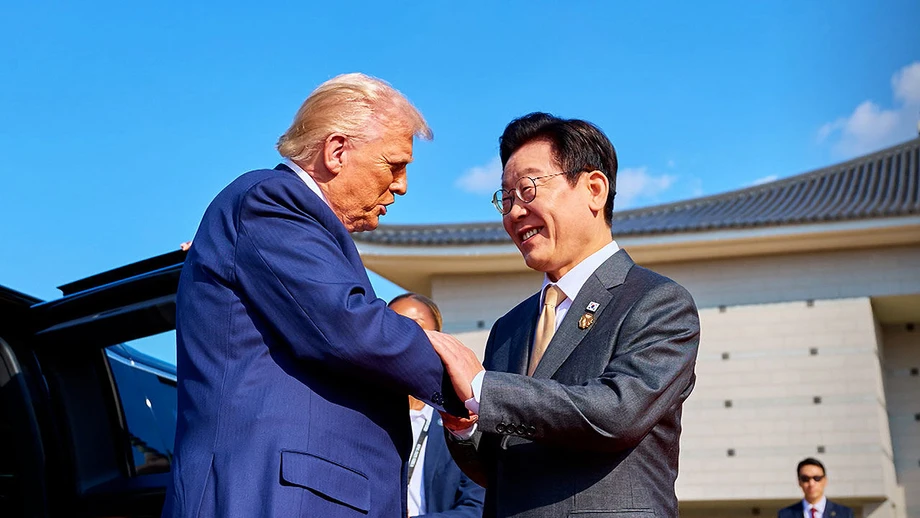
Diplomatic observers in Seoul view the simultaneous removal of Lee Jong-seok and Chung Dong-young as an effort to repair ties with the White House before Lee attends the Group of 20 summit in Miami on December 14 and 15. President Lee is expected to hold an informal golf meeting with United States President Donald Trump during the gathering. Lim Woong-soon, who has served as second deputy director of the National Security Office since June 2025, replaces outgoing Foreign Minister Cho Hyun, a specialist in multilateral diplomacy.
Why Washington Restricted Intelligence Sharing With Seoul
Relations between Seoul and Washington deteriorated sharply over the past year after disputes over classified intelligence and North Korea policy spilled into public view. During a National Assembly Foreign Affairs and Unification Committee session in March, Chung Dong-young disclosed that North Korea operates a uranium enrichment facility in Kusong, North Pyongan Province. United States officials concluded that joint intelligence had been leaked and restricted the sharing of intelligence on North Korea with Seoul for more than seven months.
Chung drew further criticism from alliance advocates by arguing that the Unification Ministry should share jurisdiction over the Demilitarized Zone, an area overseen by the United Nations Command under the 1953 Armistice Agreement. He also sparked domestic debate by stating it was difficult to determine whether North Korea had deliberately planted land mines along the border and by discussing a framework treating the two Koreas as separate states. In August, Foreign Minister Cho Hyun publicly described Chung's engagement proposals as idealistic, underscoring deep divisions inside Lee's cabinet.
Friction also surrounded outgoing spy chief Lee Jong-seok, who faced criticism over a perceived tilt toward Beijing and disputes with Washington following a personal information leak at ecommerce company Coupang in November 2025. In March, Lee Jong-seok sought to visit the United States, but the trip fell through when both sides failed to coordinate schedules. Three months later, in June, the National Intelligence Service did not participate in a trilateral cybersecurity meeting with the United States and Japan focused on North Korean threats, and Washington delayed issuing visas for intelligence officers assigned to the South Korean embassy.
Senior diplomats acknowledged the breakdown publicly during the autumn. United States Secretary of State Marco Rubio raised concerns about intelligence cooperation during a September 18 meeting with Cho Hyun. In October, a senior Trump administration official stated that South Korea was expected to meet longstanding alliance standards on intelligence and counterespionage. That same month, South Korean Ambassador to the United States Kang Kyung-hwa told a parliamentary audit at the embassy in Washington that consultations and communication at senior levels with the White House were falling short of expectations, a strain the United States ambassador in Seoul described as turbulence.
How a Missed APEC Summit Accelerated the Shakeup
President Lee returned to Seoul on November 19 from the Asia-Pacific Economic Cooperation summit in Shenzhen, China, without seeing a hoped for meeting between Trump and North Korean leader Kim Jong Un materialize on the sidelines. Inside the presidential office, officials reportedly held intelligence staff accountable for overly optimistic projections that talks were imminent. During the autumn, the National Intelligence Service had briefed lawmakers on the parliamentary intelligence committee that a summit between Washington and Pyongyang could happen at any time around the Shenzhen gathering.
Lim Woong-soon's team at the Office of National Security had reached the opposite conclusion, assessing the chances of an APEC sideline summit as low. That accurate forecast strengthened the standing of National Security Adviser Wi Sung-lac, who leads the camp favoring close alignment with Washington. Wi remained untouched in Monday's reshuffle, and diplomatic observers expect his influence over foreign and security strategy to grow now that two prominent figures from the autonomy camp have departed.
Links between Wi and the incoming nominees also suggest closer internal coordination at Cheong Wa Dae. Kang Kum-sil previously chaired Wi's political support committee, and Wi is known to have recommended Lim Woong-soon for his deputy national security post in June 2025. Removing Chung and Lee Jong-seok ends months of competing public statements between cabinet ministries, though it places greater pressure on the new team to deliver measurable diplomatic results in Washington.
First Woman Tapped to Lead South Korea Spy Agency
Kang Kum-sil would become the first woman to direct the National Intelligence Service in the 65 years since its forerunner, the Korean Central Intelligence Agency, was founded in 1961. Trained as a lawyer, Kang spent 13 years as a judge before entering private practice in 1996 and serving as vice president of Lawyers for a Democratic Society. In 2003, President Roh Moo-hyun appointed her as South Korea's first female justice minister and the youngest person to hold that office, where she led early efforts to reform the state prosecution service.
After leaving the Justice Ministry in 2004, Kang worked as managing partner at the law firms Jipyong and One, ran unsuccessfully as the Uri Party candidate for Seoul mayor in 2006, and served on the supreme council of the United Democratic Party in 2008. She chaired the support committee for Lee Jae-myung during the 2021 Democratic Party presidential primary, traveled to France as a presidential special envoy in July 2025, and has served this year as the foreign ministry's ambassador for global climate and environment. Lim Kwang-hyun explained why the president selected a legal figure rather than an intelligence officer.
She is a resolute and reasonable legal professional who led prosecution reform and engaged in diverse activities on the international stage, including serving as Ambassador for Women's Human Rights at the Ministry of Foreign Affairs.
Presidential officials said Kang's conviction in keeping state power agencies neutral makes her suited to strengthen democratic oversight of the spy agency while addressing cyber threats through international partnerships. Opposition lawmakers challenged that rationale immediately, arguing that a background in law and politics does not prepare a nominee to manage covert operations or monitor North Korean military developments. People Power Party chief spokesperson Park Sung-hoon criticized the pick as a political reward that ignores professional security expertise.
Tapping a legal professional with no practical experience whatsoever in intelligence or counterintelligence is a declaration that even the core institution of national security will be run according to political ties and ideological alignment.
Veteran Diplomat and Former Lawmaker Take Key Foreign Posts
Lim Woong-soon brings 37 years of diplomatic service to the Foreign Ministry, offering a contrast with his multilateralist predecessor Cho Hyun. Born in Daejeon in 1964, Lim graduated from the economics department at Yonsei University and entered the foreign service in 1988 after passing the 22nd diplomatic examination. His overseas postings span Europe and North America, including assignments in Austria, Italy, France, Spain, New York as deputy consul general, Ottawa as ambassador to Canada, and Washington as political counselor and minister at the South Korean embassy.
During the Lee Myung-bak administration, Lim served as deputy head of the North Korea Nuclear Diplomacy Planning Team under the Korea Peace Negotiations Headquarters, giving him direct experience in nuclear talks. In 2019, under President Moon Jae-in, he faced disciplinary action over a leaked telephone conversation between South Korean and United States leaders, though he was later cleared of the charges through court litigation. A former senior diplomat noted that Lim is well regarded among American counterparts and could help restore working level trust in Washington.
Lim has an extensive network in the U.S., and U.S. officials also trust him.
Hong Ik-pyo, nominated to lead the Ministry of Unification, combines academic research on North Korea with more than a decade in parliament. Born in 1967, Hong studied political science at Hanyang University, worked at the Korea Institute for International Economic Policy, advised then Unification Minister Lee Jae-joung in 2007 under the Roh Moo-hyun government, and taught as a professor at the University of North Korean Studies. He served three terms in the National Assembly from 2012 to 2024, acted as Democratic Party floor leader from September 2023 to May 2024 while Lee chaired the party, and recently served as senior presidential secretary for political affairs.
President Lee previously described Hong as a reasonable and amicable lawmaker who practiced politics of tolerance and cooperation through compromise and agreement. While Hong shares historical ties to the Roh administration's engagement wing, scholars expect his background as presidential political chief to restrain controversial public statements. Ewha Womans University professor Park In-hwi said the previous friction over North Korea's hostile posture and Chung's separate state remarks had placed Seoul and Washington in an awkward position.
If Hong, who previously served as Cheong Wa Dae's political chief, becomes minister, he is likely to be more cautious.
Domestic Ministries and Unfinished Cabinet Business
Han Jun-ho, a two term Democratic Party lawmaker and former MBC television news anchor, was nominated to replace Yun Ho-jung as minister of the interior and safety. Han served as head of the execution office during Lee's 2022 presidential campaign and holds legislative experience in transportation and artificial intelligence. His immediate task will be stabilizing the Serious Crimes Investigation Agency, which began operating in October following a criminal justice overhaul that stripped state prosecutors of independent investigative powers, though critics note Han lacks prior experience in policing or public safety.
Kang Yu-jung, a former film critic and university professor with nearly 20 years in cultural scholarship, was tapped to lead the Ministry of Culture, Sports and Tourism. She entered politics in 2024 as a proportional representation lawmaker for the Democratic Party and has served as senior presidential spokesperson since Lee's inauguration in June 2025. Chief of Staff Lim Kwang-hyun said Kang's academic background and administrative experience make her suited to advance regional growth and cultural industries.
Monday's announcement left one major cabinet vacancy unresolved at the Ministry of Education. President Lee approved the dismissal of Education Minister Choi Kyo-jin on November 22 following criticism over a large scale cheating scandal driven by artificial intelligence during this year's nationwide College Scholastic Ability Test. Cheong Wa Dae did not name a replacement for Choi on Monday and did not specify when a successor would be selected.
Timeline of Events Leading to the Reshuffle
Developments across diplomacy, intelligence sharing, and domestic politics over the past year built momentum toward Monday's cabinet overhaul.
- June 2025: President Lee Jae-myung takes office after a special election, appointing Lim Woong-soon as deputy national security adviser and Lee Jong-seok to head the National Intelligence Service.
- July 2025: Education minister pick Lee Jin-sook withdraws amid plagiarism allegations, the first of five cabinet nominees to fall through before taking office.
- March 2026: Unification Minister Chung Dong-young discloses North Korea's Kusong uranium enrichment site to lawmakers, prompting United States restrictions on intelligence sharing, while spy chief Lee's planned Washington trip falls through.
- June 2026: The National Intelligence Service does not attend a trilateral cybersecurity meeting with the United States and Japan, and Washington delays visas for South Korean intelligence officers.
- August 30, 2026: Lee conducts an earlier cabinet reshuffle in which two nominees later withdraw amid public controversies, while his foreign and security chiefs keep their posts.
- September 18 to 21, 2026: Secretary of State Marco Rubio raises intelligence concerns with Foreign Minister Cho Hyun; Lee's approval rating falls to 37 percent in a Gallup Korea poll; Chief of Staff Kang Hoon-sik offers to resign.
- October 2026: Ambassador Kang Kyung-hwa tells lawmakers that White House consultations are limited, while the Serious Crimes Investigation Agency launches amid debate over cabinet attendance.
- November 18 and 19, 2026: Lee attends the APEC summit in Shenzhen, China, where an anticipated meeting between Trump and Kim Jong Un fails to happen.
- November 22, 2026: Lee accepts Education Minister Choi Kyo-jin's resignation over an artificial intelligence exam cheating scandal.
- November 23, 2026: Lee announces five new nominees for the spy agency and the foreign, unification, interior, and culture ministries.
- December 14 and 15, 2026: Lee is scheduled to attend the Group of 20 summit in Miami, where a golf meeting with Trump is expected.
Political Loyalty Concerns and Approval Rating Pressures
Lee's personnel shakeup unfolds against steep political headwinds at home that have narrowed his room for error. Public support for the president hovered near 60 percent for months after his June 2025 inauguration, aided by voter reaction against former President Yoon Suk-yeol, who was sentenced to life in prison in February for leading an insurrection following his December 2024 martial law declaration. By September 21, 2026, however, a Gallup Korea survey showed Lee's approval rating had dropped 23 percentage points to 37 percent, with 20 percent of disapproving respondents citing housing policy and 16 percent pointing to personnel failures.
Public frustration grew after five earlier ministerial nominees withdrew under scrutiny, including education pick Lee Jin-sook in July 2025, gender equality nominee Yong Hye-in on September 13, and justice nominee Kim Seung-won on September 19. Voters also reacted to sliding stock prices, uneven housing costs outside Seoul's Gangnam district, and retail investor losses tied to leveraged single stock exchange traded funds rolled out before June's local elections, in which the ruling party lost the Seoul mayoral race. Speaking at a Blue House press conference on September 18, Lee accepted personal blame for the slide in public confidence.
In the end, I came to think that all of it, taken together, was because of my own shortcomings.
Critics argue that Monday's nominations prioritize personal loyalty and factional ties to Lee and former presidents Roh Moo-hyun and Moon Jae-in over domain expertise. Beyond Kang Kum-sil's lack of intelligence work and Han Jun-ho's absence of public safety credentials, Hong Ik-pyo and Kang Yu-jung both moved directly from senior roles inside Cheong Wa Dae. Seoul National University professor Lee Keun cautioned that personnel swaps alone will not convince Washington or domestic voters unless daily governing habits change.
The replacement of the NIS director and the foreign and unification ministers is merely a symbolic measure. Changes in the patterns of speech and behavior by the president and government officials must be detected to reattach the first button of trust recovery.
Unresolved strategic tests still await the incoming security team once confirmation procedures conclude. Washington and Seoul face delicate talks over the Coupang data dispute, the transfer of wartime operational control, South Korean plans to build a submarine powered by a nuclear reactor, and Trump's repeated requests for allied maritime and security support in the Middle East. Whether Kang, Lim, and Hong can unify government messaging before the Miami summit will determine if the reshuffle restores trust with South Korea's chief ally.
What Happens Next in Parliament and Miami
All five nominees must testify at National Assembly confirmation hearings before President Lee can formally appoint them to office. Under South Korean law, parliamentary hearings do not end in a binding vote, meaning Lee can finalize the appointments even if opposition lawmakers withhold consent, though intense questioning is expected over Kang Kum-sil's intelligence credentials and Han Jun-ho's readiness for public safety oversight. The presidential office has not yet announced dates for the confirmation hearings or a timeline for naming a new education minister.
Attention will shift to Florida once the hearings conclude, as South Korean officials prepare briefing books for the December 14 and 15 Group of 20 summit in Miami. If confirmed in time, Lim Woong-soon and Kang Kum-sil will face immediate pressure to restart suspended intelligence exchanges with Washington and establish clear channels with the White House ahead of Lee's expected meeting with Trump.
Key Points
- President Lee Jae-myung nominated Kang Kum-sil to lead the National Intelligence Service and tapped Lim Woong-soon, Hong Ik-pyo, Han Jun-ho, and Kang Yu-jung for the foreign, unification, interior, and culture ministries on November 23, 2026.
- Kang Kum-sil would become the first woman to lead South Korea's intelligence agency in its 65 years of history since 1961.
- The dismissals of spy chief Lee Jong-seok and Unification Minister Chung Dong-young follow seven months of United States restrictions on North Korea intelligence sharing triggered by Chung's March disclosure of the Kusong uranium facility.
- Missed expectations for a meeting between Donald Trump and Kim Jong Un at the November 18 and 19 APEC summit in China widened rifts between autonomy advocates and alliance supporters led by National Security Adviser Wi Sung-lac.
- Opposition leaders and scholars warned that appointing close political aides without intelligence or safety backgrounds risks deepening domestic skepticism after Lee's approval rating fell to 37 percent in September.
- All five nominees await nonbinding parliamentary confirmation hearings with no dates yet announced, while the Miami Group of 20 summit takes place on December 14 and 15.