Ruling Party Official Signals Shift on Nuclear Policy
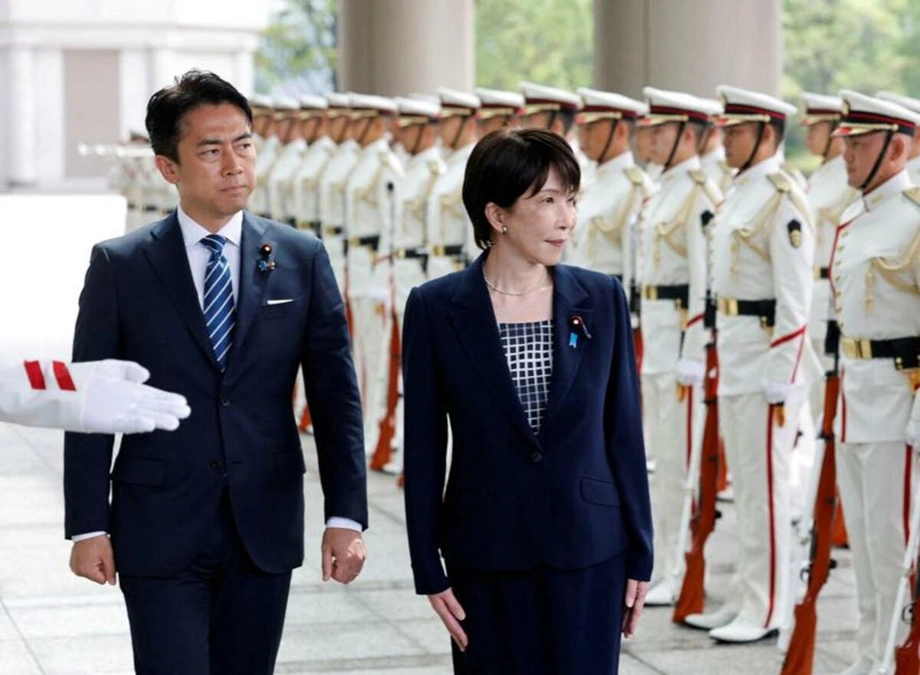
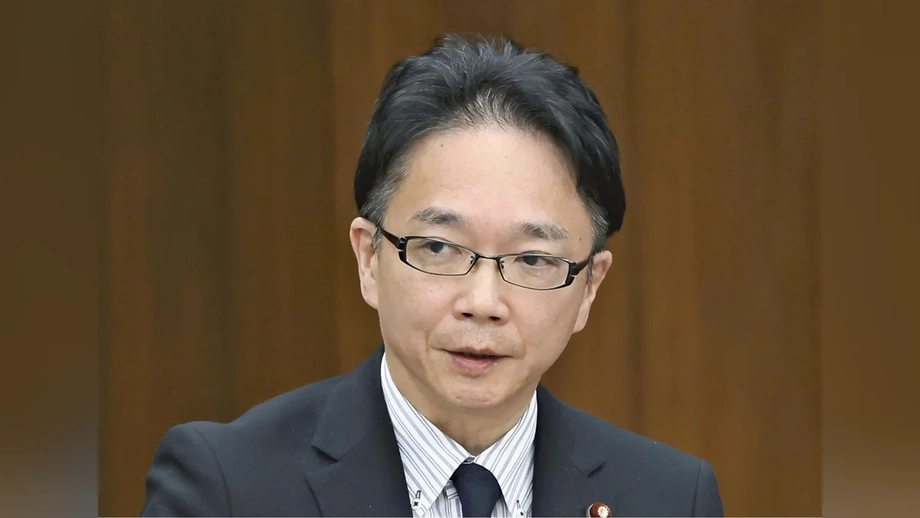
Keitaro Ohno, a senior security policy official in Japan's ruling Liberal Democratic Party, stated on November 22, 2026, that explicitly writing an emergency exception into the nation's longstanding nuclear policy is one option under review before a major defense overhaul in December. Speaking during a television broadcast alongside security policymakers from ruling and opposition parties, Ohno addressed plans to revise the three core documents that guide Japanese national security. While he insisted that Japan must strictly preserve its pledges against possessing or manufacturing nuclear weapons, he signaled openness to formalizing a rule that would allow foreign nuclear weapons onto Japanese territory during a crisis.
Contents
- Ruling Party Official Signals Shift on Nuclear Policy
- How the Three Non-Nuclear Principles Work
- Draft Security Documents and Defense Spending Battles
- Proposed Changes to Weapons Export Rules
- Former Foreign Minister Warns Against Policy Shift
- Atomic Bomb Survivors and Civic Petitioners Protest
- Local Assemblies Across Japan Push Back
- Diplomatic Backdrop and Regional Warnings Over China Ties
- Timeline of the Nuclear Policy Debate
- Key Points
Ohno also addressed growing debate over whether Japan should acquire submarines powered by nuclear reactors, an idea strongly promoted by the Liberal Democratic Party's coalition partner, the Japan Innovation Party. Although the Liberal Democratic Party has left nuclear submarines out of its formal policy proposals so far, Ohno stressed that the party is not ruling out the discussion and shares the same fundamental view as its coalition ally. During the same program, Keishi Abe, a security policy leader in the Japan Innovation Party, argued that such vessels are vital for defending the western Pacific.
Introducing his party's position on the first two pillars of Japanese nuclear restraint, Ohno stated that those bans allow no compromise, while noting that a 2010 parliamentary interpretation permitting temporary emergency port calls by ships carrying nuclear weapons is gaining acceptance.
Japan must absolutely maintain the principles of not possessing and not producing nuclear weapons. Defining the emergency exception position explicitly is one option.
Keishi Abe followed with a direct appeal for expanding Japan's undersea fleet beyond conventional diesel vessels.
When considering the defense of the western Pacific, submarines powered by nuclear reactors are essential.
How the Three Non-Nuclear Principles Work
Japan's nuclear policy rests on a framework known as the Three Non-Nuclear Principles, which state that the country will not possess nuclear weapons, will not produce them, and will not permit them to be brought into its territory. For decades, these three rules served as the foundation of Japan's identity as the only nation ever to suffer atomic bombings in wartime. The policy grew out of restrictions imposed by Allied forces under General Douglas MacArthur during the occupation that followed World War Two, before Prime Minister Eisaku Sato formally articulated the principles as part of his Four Pillars Nuclear Policy in 1968.
In practice, local governments also enforced strict checks on foreign military vessels to uphold the third principle banning entry. Starting in 1975, the Kobe City Council adopted a local rule known as the Kobe Formula, requiring any foreign warship seeking to dock at Kobe port to submit written certification confirming it carried no nuclear arms. Writing a formal exception for emergencies into national security documents would mark a sharp departure from how the public has long understood that third pledge.
Draft Security Documents and Defense Spending Battles
Prime Minister Sanae Takaichi's administration plans to revise three foundational policy papers by December 2026: the National Security Strategy, the National Defense Strategy, and the Defense Buildup Program. Draft outlines prepared for the revision maintain the Three Non-Nuclear Principles as a general rule while adding explicit language permitting nuclear weapons into Japan during emergencies. The drafts also state that the government will launch a formal study on introducing submarines powered by nuclear reactors and aim to reach a conclusion quickly, with initial project work slated for the early years of the five years beginning in fiscal 2027.
Unlike conventional submarines that must surface or run snorkels frequently to recharge batteries, submarines powered by nuclear reactors can remain submerged for months and travel across vast ocean distances at high speed. Defense planners at the Defense Ministry are simultaneously proposing a strategy of denial, designed to deter an attack by building capabilities that physically block an invasion. Under this concept, the military wants to expand its fleets of unmanned drones, missiles able to strike across long distances, integrated air and missile defense networks, and ammunition and supply stocks needed to sustain a prolonged conflict.
Financing this buildup has triggered sharp disagreement inside the government. Under the existing plan covering five years from fiscal 2023, Japan allocated 43 trillion yen for defense. For the upcoming cycle, the Defense Ministry has requested roughly 80 trillion yen, an increase of 37 trillion yen, or about 86 percent, nearly doubling the current budget. Citing tight public finances, the Finance Ministry has countered with a figure in the low 50 trillion yen range, leaving the final spending total undecided ahead of the December deadline.
Proposed Changes to Weapons Export Rules
Officials revealed on November 17, 2026, that the government has also started drafting revisions to the preamble of the Three Principles on Transfer of Defense Equipment and Technology, the rules governing Japanese arms exports. Although those export guidelines sit outside the three security documents, the cabinet intends to revise and approve them in tandem so both frameworks support increased overseas defense sales.
According to officials involved in the drafting, the updated preamble would remove a passage stating that Japan has upheld the basic rule of observing the Three Non-Nuclear Principles, along with a pledge that Japan will not become a military power that threatens other countries. Planners want to add text backing the development and manufacturing of weapons systems with exports in mind, while keeping existing statements describing Japan as a peaceful nation committed to proactive pacifism and a posture focused strictly on defense.
Former Foreign Minister Warns Against Policy Shift
Katsuya Okada, who served as foreign minister under the Democratic Party of Japan in March 2010, has pushed back against government plans to cite his past parliamentary testimony as justification for codifying an emergency exception. During a March 2010 legislative session, Okada stated that if a crisis required nuclear weapons to enter Japan, the cabinet in office at that moment would make the decision with its political survival at stake. Every administration since then, including Takaichi's government, has upheld that interpretation.
In a recent interview, Okada explained that his 2010 remarks only envisioned an extreme scenario in which Japan could not survive without temporarily bending the rule, such as a brief visit by a United States submarine armed with strategic nuclear weapons able to strike an enemy homeland, an event he believed would almost never happen. Today, Okada warns that the United States is moving ahead with plans to place new nuclear missiles on surface warships and submarines, raising the chance that armed vessels could seek port calls in Japan even during peacetime.
Speaking directly about the draft language under review in Tokyo, Okada cautioned that writing an exception into official policy would undermine public trust just as Cold War agreements once did.
It would repeat the lies told to the public that came to light during the investigation into secret nuclear agreements.
Atomic Bomb Survivors and Civic Petitioners Protest
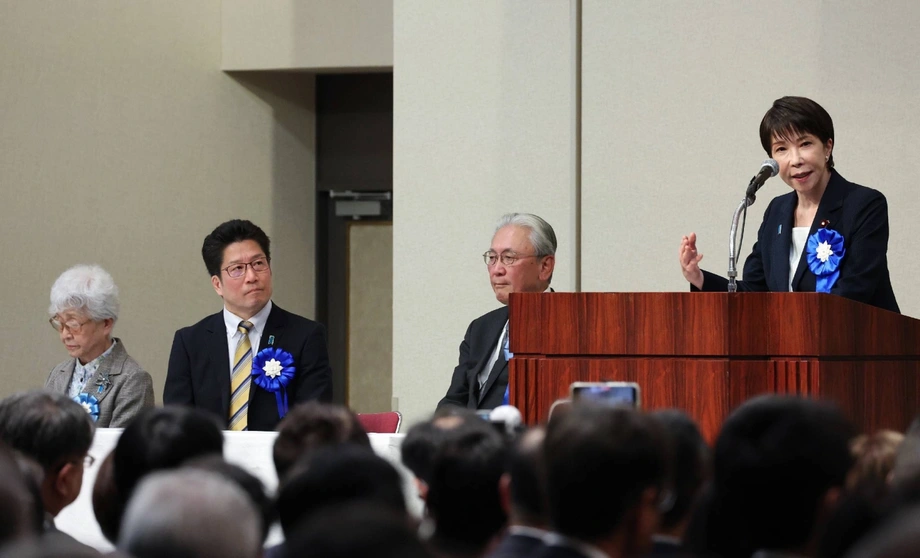
Survivors of the 1945 atomic bombing of Hiroshima condemned the proposed exception during a November 22 press conference in Hiroshima City following a public signature campaign urging Japan to join the Treaty on the Prohibition of Nuclear Weapons. Satoshi Tanaka, age 82, secretary-general of the Hiroshima Liaison Conference of Atomic Bomb Survivors Organizations, reacted angrily to reports that the government is weighing an explicit loophole.
This is simply outrageous. The Three Non-Nuclear Principles are a minimum rule that must never be shaken.
Hiroshi Harada, age 87, chair of the Hiroshima Prefectural Confederation of Atomic Bomb Sufferers Organizations, added that the government had failed to deliver meaningful answers to survivor appeals submitted on August 6, the anniversary of the Hiroshima bombing.
There is no willingness. They should accept the power and misery of the atomic bomb as their own personal concern.
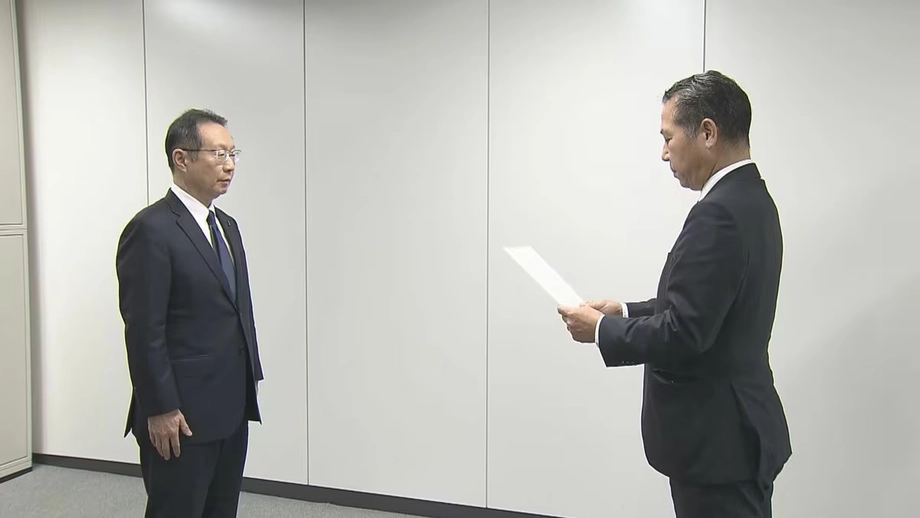
Opposition has also focused on the submarine proposal. On November 20, civic groups delivered a petition carrying nearly 47,000 signatures to the Defense Ministry demanding that Tokyo abandon any plan to acquire submarines powered by nuclear reactors. Petitioners argued that Japan holds a special duty as an atomic bombed country to advance nuclear disarmament and warned that deploying nuclear vessels would betray that mission.
Local Assemblies Across Japan Push Back
Resistance to revising nuclear policy has spread across regional legislatures throughout Japan. A nationwide survey compiled as of November 20 shows that 500 local assemblies, representing roughly 28 percent of all municipal and prefectural councils in the country, have passed a combined 569 resolutions urging the central government to uphold, strictly observe, or pass a law protecting the Three Non-Nuclear Principles. Over the single month following October 22, 37 additional councils joined the effort, adopting 43 new resolutions.
Thirteen prefectural assemblies have passed such measures: Nagano, Chiba, Nagasaki, Kanagawa, Hiroshima, Toyama, Miyazaki, Iwate, Fukuoka, Miyagi, Shimane, Ehime, and Okinawa. The city councils of Hiroshima and Nagasaki have approved resolutions multiple times, joined by major regional cities expressing specific historical and constitutional concerns:
- Naha City Council passed a resolution by majority vote on October 6 recalling Okinawa's 27 years under United States administration after World War Two, when up to about 1,300 nuclear weapons were reportedly deployed on the islands, and demanding steadfast adherence to the Three Non-Nuclear Principles.
- Sendai City Council voted on October 8 to demand that the Three Non-Nuclear Principles remain national policy, appear explicitly in the revised security documents, and never be altered by cabinet decision alone.
- Sapporo City Council approved a resolution on October 30 declaring that any revision to the Three Non-Nuclear Principles is completely unacceptable and must be rejected to preserve constitutional peace ideals.
Diplomatic Backdrop and Regional Warnings Over China Ties
Japan's security debate is unfolding alongside strained ties with Beijing, highlighted during Prime Minister Takaichi's diplomatic trip that wrapped up on November 19. At the Asia-Pacific Economic Cooperation summit in Shenzhen, China, Takaichi told reporters she achieved solid results, though public attention focused on chilly diplomatic signals. When Takaichi's government aircraft landed at Shenzhen Bao'an International Airport on November 18, a height gap of about 40 centimeters separated the cabin door from the boarding stairs, an issue Chief Cabinet Secretary Kihara said on November 20 had been communicated in advance. A Chinese Foreign Ministry protocol ambassador greeted Takaichi without welcoming music or dance, contrasting with flowers and musical performances staged for Philippine President Ferdinand Marcos.
During the Shenzhen meetings on November 18 and 19, Takaichi and Chinese President Xi Jinping shook hands twice, including an encounter lasting 10 seconds on November 19 when Takaichi walked over to speak with Xi, who maintained a calm expression. In the summit group photograph, Takaichi stood at the edge of the back row, while Canadian Prime Minister Mark Carney, in office for one year and eight months, was placed near the center. Elsewhere on her itinerary, Takaichi attended a Quad summit in Manila on November 17 alongside United States President Donald Trump, Australia, and India, held bilateral talks with the leaders of the Philippines, Thailand, and South Korea, and met Russian President Vladimir Putin for roughly 30 minutes on November 18 in the first direct Japan-Russia summit talks in about seven years to demand the release of detained Japanese newspaper reporter Yuki Imai and discuss Japan Tobacco's Russian operations.
Chinese and Japanese observers alike have warned about the geopolitical risks of Tokyo's military shift. Lian Degui, director of the Center for Japanese Studies at Shanghai International Studies University, argued on November 23 that Japan is advancing remilitarization step by step and that touching the Three Non-Nuclear Principles marks a major departure from postwar peace pledges. Lian urged Tokyo to view China's development rationally and maintain stable ties with Asian neighbors.
The Takaichi administration represents the approach advocating a hardline stance toward China and military expansion.
Inside Japan, former Japanese Ambassador to China Yuji Miyamoto stressed on a November 21 television broadcast that maintaining stable ties with Beijing is vital for Japan's future, while a Sunday television commentator questioned how much national interest Japan has lost through worsening relations with China.
Timeline of the Nuclear Policy Debate
Key decisions and protests spanning more than a decade have shaped the current confrontation over Japan's nuclear posture before the cabinet's year-end deadline. Several core questions remain undecided, including the final wording of the three security documents, the ultimate budget compromise between 50 trillion yen and 80 trillion yen, and the exact timeline for any nuclear submarine study.
- March 2010: Then Foreign Minister Katsuya Okada tells parliament an administration could decide on emergency nuclear port calls with its fate on the line.
- October 6 to 30, 2026: City councils in Naha, Sendai, and Sapporo pass resolutions opposing any weakening of the Three Non-Nuclear Principles.
- November 17, 2026: Officials reveal plans to strip references to the Three Non-Nuclear Principles from the preamble of defense export rules as Takaichi attends the Quad summit in Manila.
- November 18 to 19, 2026: Takaichi attends the APEC summit in Shenzhen, meeting Russian President Vladimir Putin and shaking hands with Chinese President Xi Jinping.
- November 20, 2026: Civic groups submit nearly 47,000 signatures opposing nuclear submarines to the Defense Ministry as local assembly resolutions against changing nuclear policy reach 500 councils.
- November 22, 2026: Ruling party official Keitaro Ohno discusses an emergency nuclear exception and nuclear submarines on television while atomic bomb survivors protest in Hiroshima.
- December 2026: The Takaichi cabinet plans to finalize revisions to the three core national security documents.
Key Points
- Ruling Liberal Democratic Party official Keitaro Ohno said writing an emergency exception into Japan's third nonnuclear principle is one option ahead of December's security policy overhaul.
- Draft security documents plan to initiate a formal review of acquiring submarines powered by nuclear reactors, starting work early in the five years from fiscal 2027.
- The Defense Ministry wants roughly 80 trillion yen for the next five years, nearly double the current 43 trillion yen plan, while the Finance Ministry favors the low 50 trillion yen range.
- Former Foreign Minister Katsuya Okada warned that codifying an exception could invite peacetime visits by United States warships carrying new nuclear missiles.
- Nearly 47,000 citizens signed a petition against nuclear submarines, and 500 local councils representing 28 percent of Japan's assemblies have demanded preservation of the Three Non-Nuclear Principles.
- The domestic debate unfolds alongside strained diplomatic ties with China following Prime Minister Sanae Takaichi's November APEC trip to Shenzhen.