A Historic Ruling at the World Court
Malaysia formally announced its respect for a landmark decision by the International Court of Justice holding Myanmar responsible for genocide against its Rohingya minority. The judgment, delivered on November 19, 2026, marks the first time in the 80-year history of the United Nations top court that judges determined a sovereign state committed genocide. The case originated from an application filed in November 2019 by The Gambia under the 1948 Genocide Convention, an international treaty adopted after the Holocaust that obligates participating nations to prevent and punish the destruction of protected ethnic, national, racial or religious groups. On November 22, the Foreign Ministry in Putrajaya issued a statement addressing the outcome.
Contents
- A Historic Ruling at the World Court
- What the Court Found in Rakhine State
- Reactions from Governments and International Bodies
- Timeline of Key Developments
- Malaysia's Domestic Context and Refugee Management
- Diplomatic Tensions and Regional Engagement
- Court Orders for Reparations and Restitution
- Obstacles to Safe Repatriation
- At a Glance
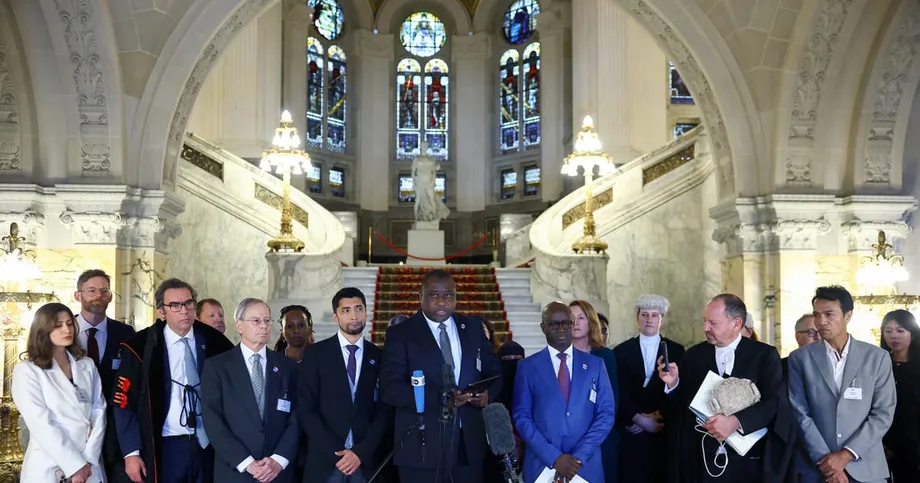
The Foreign Ministry noted that the court's conclusions matched Malaysia's longstanding stance on safeguarding vulnerable populations. The legal battle concluded after seven years of proceedings at the Peace Palace in The Hague, where a 15-judge panel reviewed extensive evidence regarding military clearance operations launched in northern Rakhine State in 2017. Judges voted nine to six to find that Myanmar carried out acts prohibited under the convention with the specific intent to destroy a substantial part of the Rohingya population. Readers can review our earlier coverage on the International Court of Justice Finds Myanmar Responsible for Rohingya Genocide in Landmark Ruling for details on the trial proceedings.
What the Court Found in Rakhine State
The International Court of Justice rejected Myanmar's defense that its military campaign constituted a legitimate counter-terrorism response to attacks by an armed group named the Arakan Rohingya Salvation Army. Court President Yuji Iwasawa detailed how security forces killed an estimated 10,000 Rohingya civilians, including infants, and subjected women and girls to widespread sexual violence. Judges also found that nearly 400 villages, amounting to about 40 percent of the settlements across three townships in northern Rakhine State, were partially or totally destroyed through burning and bulldozing.
Legal experts explain that proving genocide requires demonstrating a specific intent to destroy a protected group, an evidentiary hurdle because governments rarely document such plans. The court inferred this intent from the systematic nature of the violence, the targeting of children, and measures intended to prevent births, such as restricting families to two children. Following seven years of proceedings reach a decisive moment in the legal case, the verdict recognized the Rohingya as a distinct ethnic group, a status denied by Myanmar authorities who frequently label them as foreign migrants.
Reactions from Governments and International Bodies
Reactions to the ruling varied across the globe, reflecting deep divisions over international justice. United Nations Secretary-General António Guterres welcomed the judgment as a powerful recognition of the victims and a reaffirmation that impunity for such horrific acts must not stand. British Foreign Minister Ed Miliband announced the expulsion of Myanmar's defense attaché and called for an urgent session at the UN Security Council, the body holding the power to enforce court orders. Conversely, a spokesperson for Myanmar's military-backed government dismissed the ruling as unfair and non-unanimous.
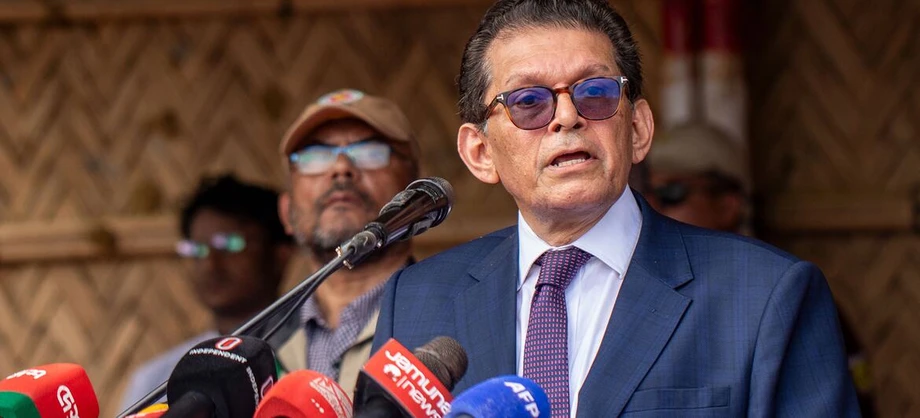
Major powers expressed caution regarding the broader legal implications. The United States State Department stated that officials would study the decision to fully assess its implications while emphasizing the importance of preventing the politicization of the court. Meanwhile, the Foreign Ministry in Malaysia outlined its diplomatic approach following the judgment. In an official statement, the ministry declared:
Malaysia will continue to advocate for a comprehensive and durable resolution to this protracted crisis, including actively engaging all relevant parties to implement concrete measures toward alleviating the plight of the Rohingya sheltered within its territory.
Timeline of Key Developments
- November 11, 2019: The Gambia files the genocide case against Myanmar at the International Court of Justice.
- August and September 2017: Myanmar security forces launch clearance operations in northern Rakhine State, driving over 700,000 Rohingya into Bangladesh.
- January 2026: The court holds oral hearings, examining survivor testimonies and evidence of atrocities.
- November 19, 2026: The International Court of Justice delivers its final, binding judgment finding Myanmar responsible for genocide.
- November 22, 2026: Malaysia's Foreign Ministry releases a statement respecting the judgment and reaffirming commitments under the Genocide Convention.
Malaysia's Domestic Context and Refugee Management
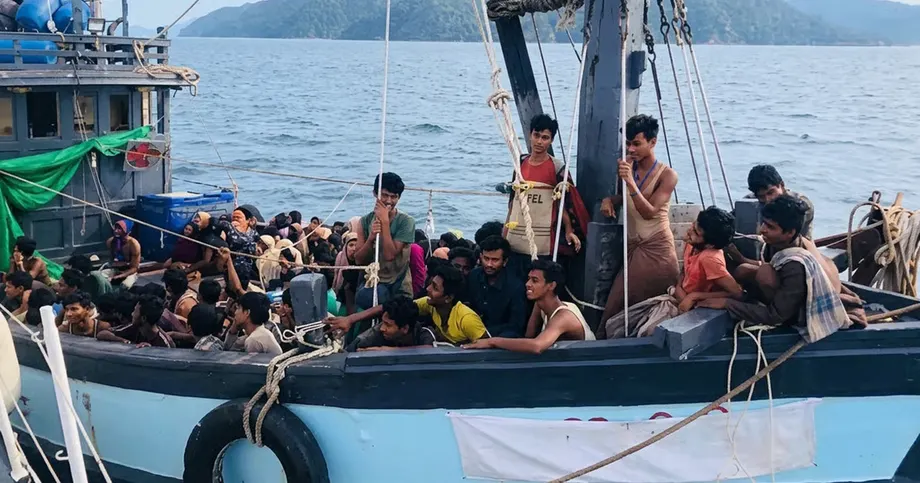
Malaysia hosts a substantial population of displaced Rohingya who fled the violence across successive waves of persecution. A total of 133,400 Rohingya refugees and asylum seekers were registered with the United Nations High Commissioner for Refugees in Malaysia as of September 30, while 6,294 individuals were held at immigration detention depots as of October 31. The United Nations agency recently halted its registration and documentation activities following a government decision to establish a national system for managing asylum seekers. Malaysia is not a signatory to the 1951 Refugee Convention, treating arrivals as temporary residents.
Deputy Prime Minister Ahmad Zahid Hamidi announced that the cabinet approved a proposal to resettle 10,000 Rohingya refugees in Turkiye through a skills-training initiative. Participants would undergo three to six months of Technical and Vocational Education and Training tailored to Turkish industries. This proposed transfer operates separately from repatriation to Myanmar and remains subject to final arrangements between governments, UNHCR coordination, and the consent of the refugees involved. Critics have previously raised concerns over Malaysia's broader deportation practices concerning Myanmar nationals.
Diplomatic Tensions and Regional Engagement
The genocide ruling arrives amid ongoing domestic and regional friction over Malaysia's diplomatic engagement with Myanmar's military leadership. Former Klang MP Charles Santiago publicly questioned Prime Minister Anwar Ibrahim over the decision to welcome Myanmar leader Min Aung Hlaing during a state visit on October 8. Critics argue that offering diplomatic recognition to junta leaders undermines international efforts to hold the regime accountable for atrocities documented during the civil war triggered by the 2021 military coup.
The Foreign Ministry affirmed that Malaysia will work collectively through multilateral channels to address the crisis. The government pledged to engage the United Nations, the Organisation of Islamic Cooperation, and ASEAN on matters arising from the judgment. These diplomatic efforts aim to build a sustainable framework for peace, although regional bodies remain divided on how to integrate Myanmar while the military continues its campaign against domestic opponents and ethnic armed groups.
Court Orders for Reparations and Restitution
The International Court of Justice issued specific binding orders requiring Myanmar to rectify the consequences of its wrongful acts. The court ordered Myanmar to cease ongoing violations by enacting domestic legislation giving full effect to the Genocide Convention and to investigate and prosecute suspected perpetrators. Furthermore, the ruling mandates that Myanmar provide restitution by enabling the safe, voluntary, and dignified return of displaced Rohingya to their original places of residence, alongside family reunification and property restoration.
The judges determined that the exact amount and modalities of financial compensation must be decided in a subsequent phase of proceedings. Myanmar must transmit a report to the court within two years detailing the measures adopted to fulfill these restitution requirements. Because the court lacks an enforcement mechanism, the practical realization of these remedies relies heavily on pressure from the UN Security Council and international partners.
Obstacles to Safe Repatriation
Returning to Rakhine State presents severe physical dangers for displaced Rohingya living in the camps of Cox's Bazar. Control over Rakhine State has shifted significantly amid the ongoing civil war, with an ethnic armed organization known as the Arakan Army governing large portions of the territory bordering Bangladesh. Analysts note that the Arakan Army has also been accused of committing abuses against civilians, while Myanmar's military continues to launch airstrikes and maintain blockades that restrict food and humanitarian aid.
Human rights monitors and community advocates emphasize that a court ruling alone cannot guarantee safety without fundamental political changes. Refugees face acute shortages of food, a lack of legal citizenship, and a risk of violence from multiple armed factions operating inside Myanmar. Ensuring a secure environment requires verified guarantees from all controlling authorities and the restoration of full civil rights for the Rohingya population.
At a Glance
- The International Court of Justice ruled that Myanmar committed genocide against the Rohingya minority during military operations in 2017.
- The judgment passed by a nine to six vote among the 15 judges, marking the first state-level genocide ruling in the court history.
- Malaysia's Foreign Ministry announced its respect for the decision, stating the findings align with national policies on protecting vulnerable groups.
- The court ordered Myanmar to provide reparations, allow safe returns, and report back on compliance within two years.
- Malaysia is pursuing a separate bilateral initiative to resettle 10,000 Rohingya refugees in Turkiye through vocational training programs.