A Historic Legal Milestone in The Hague
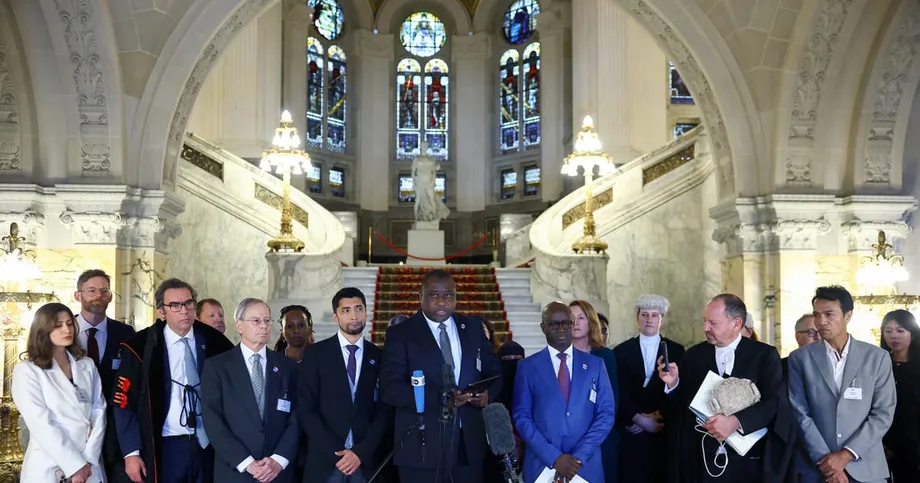
The International Court of Justice delivered a groundbreaking verdict on November 19, 2026, ruling that Myanmar committed genocide against the Rohingya Muslim minority during military operations in 2017. ICJ President Yuji Iwasawa read the decision in the Great Hall of Justice in The Hague, marking the first time in the 80-year history of the United Nations court that judges determined a sovereign state committed genocide. The case, initiated by The Gambia under the 1948 UN Genocide Convention with backing from the 57-member Organisation of Islamic Cooperation, concluded after seven years of legal proceedings. Judges found that Myanmar's security forces carried out mass executions, widespread sexual violence, and extreme violence against children, intending to destroy a substantial part of the Rohingya population. Readers can review our International Court of Justice Finds Myanmar Responsible for Rohingya Genocide in Landmark Ruling for details on the trial proceedings and judicial findings.
Contents
The legal battle began on November 11, 2019, when The Gambia filed its application at the Peace Palace. During hearings in January 2026, the court examined extensive evidence regarding military operations in northern Rakhine State. Eleven states intervened in the proceedings to offer interpretations of the ICJ's genocide ruling concerning international humanitarian law and state obligations. The final verdict was decided by a nine-to-six vote among the 15-judge panel, reflecting deep division on the bench regarding how to infer genocidal intent from circumstantial evidence. Understanding genocidal intent presents a severe evidentiary hurdle in international law because governments rarely document plans to exterminate an ethnic group. Myanmar defended its 2017 military campaign as a legitimate counter-terrorism response to attacks by the Arakan Rohingya Salvation Army, an armed group that had raided border posts. The court rejected this defense, noting that the scale, brutality, and pattern of violence far exceeded what military necessity could justify.
Evidence and Findings of the 2017 Crackdown
The United Nations' highest judicial body detailed the systematic destruction inflicted on the Rohingya, a predominantly Muslim ethnic minority with centuries-old roots in northern Rakhine State. According to the court's assessment, Myanmar security forces killed at least 10,000 civilians, including a large number of men and boys executed in mass killings. The judgment also documented widespread acts of gang and mass rape, extreme violence against children, and the burning of hundreds of villages and farmland. The court noted that these areas were subsequently cleared and replaced with permanent structures, including military bases and resettlement zones for non-Rohingya ethnic groups.
The judges determined that Myanmar violated three core provisions of the 1948 Convention on the Prevention and Punishment of the Crime of Genocide by killing members of the group, causing serious bodily or mental harm, and imposing measures intended to prevent births within the community. The court concluded that the only reasonable inference drawn from this mosaic of circumstantial evidence was an intention by the state of Myanmar to destroy a substantial part of the Rohingya population. Furthermore, the court found that Myanmar failed to prevent genocide when armed civilians participated alongside security forces, failed to punish perpetrators, and failed to enact necessary domestic legislation to fulfill its treaty obligations. The judges also ruled that Myanmar violated a 2020 provisional order requiring the preservation of evidence related to the case.
Reactions from Myanmar and the Global Community
The government of Myanmar swiftly rejected the ruling, describing it as unfair and legally flawed. Presidential spokeswoman Khaing Khaing Soe spoke at a press conference in Naypyitaw on November 20, 2026, criticizing the decision for lacking unanimity among the judges. Myanmar maintained that its military operations were lawful counter-terrorism measures directed against armed insurgents rather than an attempt to destroy an ethnic group.
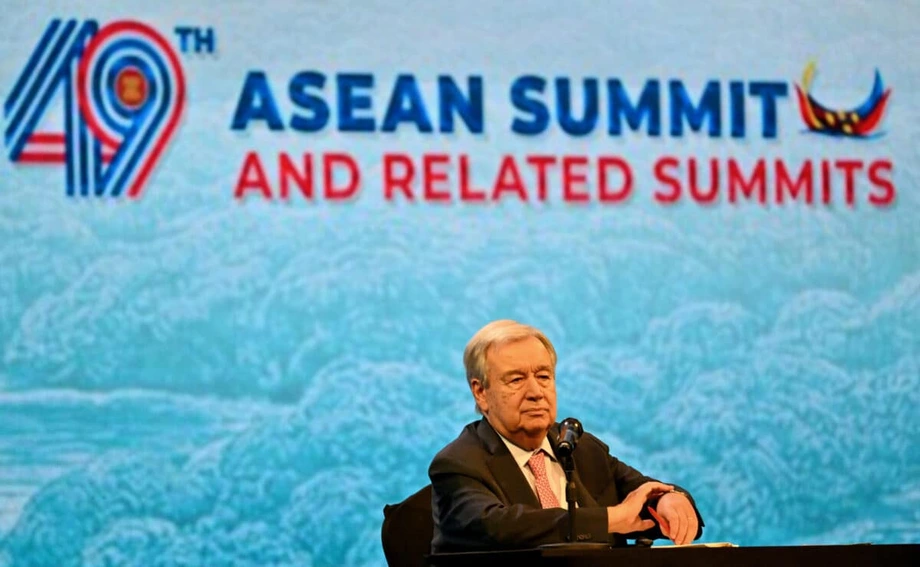
International reactions to the historic judgment were deeply divided. United Nations Secretary-General António Guterres called the decision a landmark for international justice, while UN human rights chief Volker Türk described Myanmar's actions as one of the most egregious crimes known to humankind. Amnesty International Secretary General Agnes Callamard hailed the verdict as an authoritative recognition of past atrocities and urged the UN Security Council to impose a global arms embargo and refer the situation to the International Criminal Court. Meanwhile, the United Kingdom announced immediate diplomatic penalties, including the expulsion of Myanmar's defense attaché and a formal request for an urgent UN Security Council meeting, as reported by Foreign Secretary Ed Miliband. India took note of the verdict through Ministry of External Affairs spokesperson Randhir Jaiswal, reiterating its support for the safe return of refugees while emphasizing humanitarian relief efforts such as Operation Insaniyat.
Implications for Refugees and Regional Stability
For the roughly 1.2 million Rohingya refugees living in protracted displacement in Bangladesh, the ruling offers profound legal recognition of their suffering. Most refugees reside in the congested camps of Cox's Bazar, where they face severe challenges including fire hazards, infectious diseases, and strict work restrictions. Mohammad Rofik, a community leader at the camp, described the verdict as a vital victory for acknowledging their ordeal. Following the judgment, General Assembly President Khalilur Rahman visited the refugee camps on November 20, 2026, to show solidarity and urge the international community to turn legal accountability into actionable solutions.
The ICJ ordered Myanmar to take concrete steps toward restitution, including facilitating the safe, voluntary, and dignified return of displaced Rohingya, returning or replacing lost property, locating missing persons, and providing physical and psychological rehabilitation. Myanmar must submit a report to the court within two years detailing these restitution measures, with compensation arrangements to be determined in a subsequent phase of proceedings. However, implementation remains uncertain because the court lacks an independent enforcement mechanism and relies on the UN Security Council, where permanent members such as China and Russia hold veto power. In a related regional development, Malaysian Deputy Prime Minister Ahmad Zahid Hamidi announced on November 20, 2026, that Malaysia would coordinate with Turkey and the United Nations High Commissioner for Refugees to resettle 10,000 Rohingya refugees through a structured skills training program to ease domestic pressures.
Broader Legal Context and Pending International Cases
The Myanmar judgment carries significant legal weight for other proceedings before the International Court of Justice involving the interpretation of the Genocide Convention. Legal experts have noted that the court's methodology in inferring genocidal intent from circumstantial evidence could influence pending cases, such as South Africa's genocide case against Israel concerning military operations in Gaza. South Africa instituted proceedings in December 2023, alleging violations of the convention, while Israel has rejected the accusations, maintaining its campaign targets Hamas rather than Palestinians as a group. Similar legal questions are present in Ukraine's proceedings against Russia, which were initiated after Russian President Vladimir Putin cited alleged genocide in eastern Ukraine to justify the 2022 invasion. Although the Myanmar ruling does not establish a binding precedent for these separate disputes under Article 59 of the ICJ Statute, its judicial reasoning will undoubtedly inform how international judges assess state responsibility and genocidal intent in future cases.
The path from a historic judicial ruling to tangible justice remains complex. As legal scholars and human rights advocates examine the full scope of the 191-page judgment, the immediate future depends on whether international pressure can compel Myanmar's military regime to comply with the court's orders. For the displaced Rohingya, the verdict marks the first time an international court has formally named the crime inflicted upon them, transforming decades of denial into a matter of established global record.
The Bottom Line
- The International Court of Justice found Myanmar responsible for committing genocide against the Rohingya minority during 2017 military operations.
- The historic 9-6 majority ruling marks the first time an international court has held a sovereign state directly responsible for genocide.
- The court ordered Myanmar to facilitate the safe and voluntary return of refugees, investigate perpetrators, provide reparations, and submit a compliance report within two years.
- Myanmar rejected the verdict as unfair and divided, while international leaders and human rights organizations welcomed the decision and called for urgent enforcement measures.