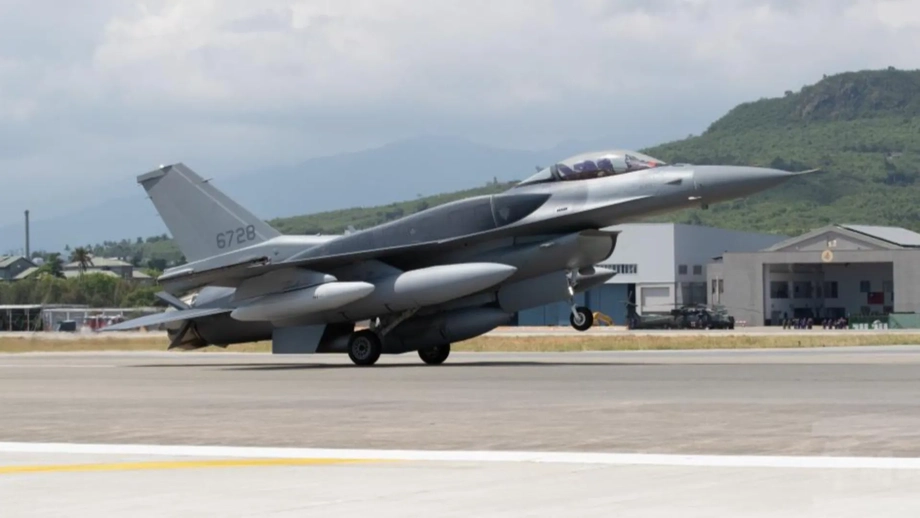
Five fighters arrive after years of waiting
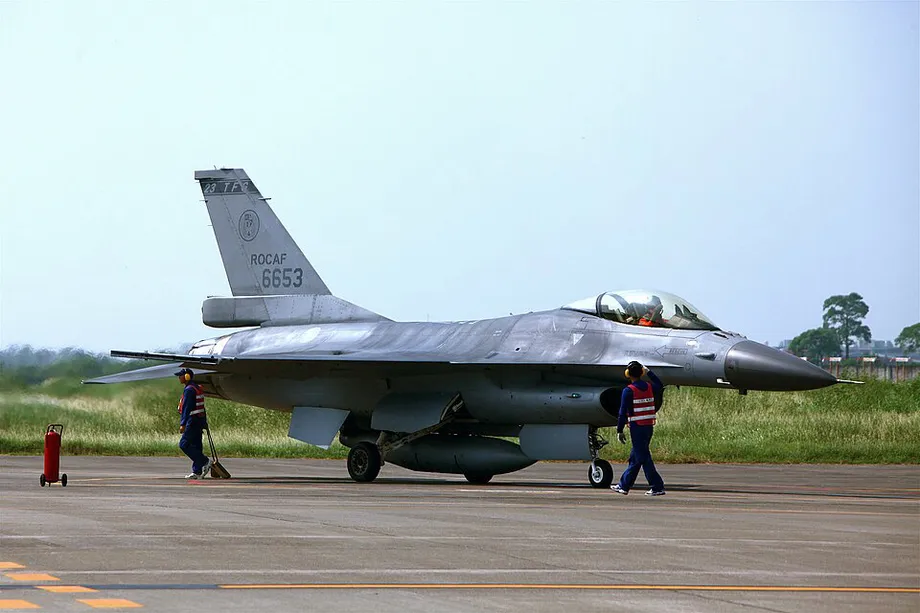
Taiwan has received five of the 66 new Lockheed Martin F-16 Block 70 fighters approved for sale by the United States in 2019, bringing the first aircraft into the country seven years after the purchase was agreed. Two reached Taitung on October 2, 2026, followed by three in November. With 61 still outstanding, Taiwan has received about 7.6 percent of its order.
Contents
- Five fighters arrive after years of waiting
- How the delivery timetable slipped
- Why the Pacific crossing added another delay
- What the new aircraft bring to Taiwan
- What happens before the fighters can fly missions?
- Delays become an argument over new spending
- Where the F-16s fit in the wider weapons backlog
- Equipment questions continue alongside production
- Why timing matters for Taiwan's defense
- Key Points
The aircraft are headed for the Republic of China Air Force's 7th Tactical Fighter Wing at Chihhang Air Base, also known as Zhihang, on Taiwan's eastern coast. The first pair, numbered 6727 and 6728, begin replacing capacity previously provided by the wing's F-5 Tiger II fighters, which were retired in 2024.
National Security Council Secretary-General Joseph Wu shared footage of approaching fighters on November 8, greeting their arrival:
Welcome home!
The deliveries mark progress on a purchase costing NT$247.23 billion, roughly US$7.7 billion, and on a wider backlog of about US$30 billion in weapons Taiwan has sought from Washington. They also arrive during a political dispute over whether Taiwan should approve more military spending while earlier purchases remain undelivered.
For the air force, landing the aircraft begins another stage of work. Crews must inspect them, complete acceptance procedures, learn their systems and integrate them into operations. Taiwan needs both the remaining aircraft and enough trained personnel to turn the purchase into a usable force.
How the delivery timetable slipped
Taiwan originally expected deliveries to begin in 2023 and finish by the end of 2026. Production problems pushed back the start, and a subsequently reported schedule places completion in 2027 and 2028.
Taiwan's Air Force Command documented an intermediate setback in its production schedule statement. The first aircraft had been expected to leave the production line in the third quarter of 2024. Supplier delays and adjustments to American assembly schedules moved that target to the fourth quarter.
The command said it would monitor progress through project meetings and factory inspections, while working toward completing delivery flights to Taiwan by the end of 2026. That official target provides a measure of how far the program has slipped.
Lockheed Martin's move of F-16 production from Fort Worth, Texas, to Greenville, South Carolina, contributed to the delays as the new facility began operating. Supply shortages in 2021 added further disruption. By October 2025, Defense Minister Wellington Koo acknowledged that completing all 66 aircraft in 2026 would be difficult.
The main milestones show several different stages of the wait:
- 2019: The United States approves the sale of 66 new fighters.
- 2023: Deliveries were originally expected to begin.
- 2024: The first aircraft's planned factory rollout moves from the third to the fourth quarter.
- October 2, 2026: Aircraft 6727 and 6728 arrive at Chihhang.
- November 2026: Three more fighters bring the delivered fleet to five.
- 2027 and 2028: A reported revised schedule places the remaining deliveries across these years.
Lockheed Martin has said it is committed to supplying capabilities supporting United States policy and Taiwan's security goals, while referring questions about schedules and operational use to the governments involved. A firm date for the full fleet to become operational has not been announced.
Why the Pacific crossing added another delay
The first two fighters left the United States on August 17, 2026, but were still awaiting arrival in Taiwan in early September. Stops in Hawaii and Guam extended the journey, with adverse weather cited as a cause of delays.
Moving fighters across the Pacific requires more than sufficient fuel for a single flight. Aircraft need aerial refueling support, suitable conditions at their destinations and places where maintenance can be performed. A delay at one stop can affect the remaining journey.
Taiwan's first F-16 delivery flight in 1997 required 19 aerial refuelings: nine between Fort Worth and Hawaii, six between Hawaii and Guam, and four on the final leg to Taiwan. The new Block 70 fighters can carry additional fuel in tanks fitted close to their fuselages, but their transfer still requires careful planning.
The first two arrivals on October 2 ended that journey. Their landing also moved the program from producing and transporting aircraft toward preparing them for service.
What the new aircraft bring to Taiwan
Taiwan already operates approximately 140 older F-16A/B Block 20 fighters that have received modern radar and other electronic upgrades. The 66 Block 70 aircraft are newly built fighters, purchased under the Peace Phoenix Soaring, or Fengxiang, program. The earlier fleet's modernization was carried out under the separate Phoenix Rising program.
The new aircraft use the AN/APG-83 active electronically scanned array radar, commonly shortened to AESA. This radar directs its beam electronically, allowing it to search and track targets rapidly. Taiwan's upgraded older F-16s use the same radar.
Block 70 aircraft can also carry conformal fuel tanks, which fit along the body of the fighter to extend its range. Their General Electric F110 engines differ from the Pratt & Whitney F100 engines fitted to Taiwan's older F-16s.
These differences affect pilot instruction, maintenance work and the equipment needed to support the fleet. Familiarity with the F-16 gives Taiwan a foundation, while the new version still requires its own preparation.
What happens before the fighters can fly missions?
The 7th Tactical Fighter Wing was established at Taitung on December 1, 2023, to operate the new aircraft. Taiwan's defense ministry said the wing organized its operational squadrons in three phases and sent aircrew and maintenance personnel to the United States in batches for conversion training.
Conversion training teaches people who already work with military aircraft how to operate a different aircraft type or version. Pilots learn its controls and procedures, while ground personnel learn how to inspect, repair and support its equipment.
Taiwan's Ministry of National Defense described the preparations accompanying the first delivery:
The Air Force has planned, carried out handover and retraining procedures, and progressively implemented various maintenance tasks to ensure that combat capability is gradually established.
Acceptance is another step. Officials check that the delivered aircraft meet the agreed requirements before completing the handover process. Integration then brings the fighters into the air force's working arrangements, including training, maintenance and mission planning.
The arrival of three more aircraft expands the fleet available for this work. Increasing the number of aircraft at the base helps the wing develop routines while it waits for the much larger balance of the order.
Delays become an argument over new spending
President Lai Ching-te's requests for additional defense funding face opposition scrutiny partly because earlier purchases have taken so long to arrive. The Kuomintang, or KMT, has used the delays to question the reliability of buying more weapons from the United States.
David Sacks of the Council on Foreign Relations described the argument the opposition has been making against new special budgets:
If the United States can't deliver what we've already paid for, why should we spend more money on things that we're not sure will ever be delivered?
The five arrivals give the government a concrete result to point to. The remaining 61 aircraft give opponents a continuing reason to press for delivery guarantees and closer scrutiny of schedules.
Taiwan allocated the fighter purchase through a special budget covering 2020 to 2026. The reported extension of deliveries into 2027 and 2028 means aircraft would continue arriving after that original budget period. A spending allocation, a factory completion date and an aircraft's arrival are separate milestones, each affecting how lawmakers judge progress.
Where the F-16s fit in the wider weapons backlog
The fighter order forms part of a much broader set of American arms purchases. A Ministry of National Defense review submitted to Taiwan's legislature identified three delayed programs among 24 active United States procurement programs, with the other 21 progressing on schedule.
Those figures mean one in eight programs was behind schedule. The delayed purchases include expensive equipment, so that share gives only one measure of the problem. Counting programs assigns the same weight to each purchase regardless of its cost or military role.
Taiwan has also pushed completion of torpedo and bomb deliveries to 2028. Those purchases cover MK-48 heavyweight torpedoes for submarines and AGM-154C Joint Standoff Weapons associated with the modernization of older F-16s.
The Trump administration also had yet to release a US$14 billion weapons package that lawmakers approved almost a year earlier. Its release remained uncertain as the new fighters arrived, leaving another major decision pending alongside the work of completing existing orders.
Taiwan's procurement challenge therefore extends from authorization and production through delivery and preparation for service. The five F-16s show movement at the delivery stage of one large purchase.
Equipment questions continue alongside production
Lawmakers have also questioned the AN/ALQ-254 Viper Shield electronic warfare system intended for the new aircraft. Such equipment helps a fighter identify and respond to electronic threats, including hostile radar.
The dispute concerns a 2012 Legislative Yuan requirement tied to United States Air Force equipment standards. Defense Minister Koo argued that the requirement applied to Taiwan's earlier Block 20 upgrade rather than the new Block 70 purchase, and pointed to other Block 70 operators using the same system.
Whether the internal suite was installed on the first two delivered aircraft remained unconfirmed. The equipment debate concerns the configuration Taiwan receives, while production scheduling and Pacific transit involve different practical tasks.
Taiwan also contributed to F-16V development. A National Audit Office review through October 2025 recorded about US$319.85 million in related development contributions. Arrangements allow Taiwan to recover part of that investment when other countries purchase systems covered by it, adding a financial dimension to a program whose aircraft are only now arriving.
Why timing matters for Taiwan's defense
China claims Taiwan and seeks to bring the island under its control. United States military officials have warned that China could attempt a takeover as soon as 2027, placing the reported 2027 and 2028 delivery schedule against a period of heightened security concern.
Taiwan's representative office in the United States says maintaining the status quo in the Taiwan Strait remains its goal. A spokesperson described the ability to obtain modern equipment such as the F-16 Block 70 as an essential part of achieving peace through strength.
The spokesperson also set out Taiwan's intended response to the pressure:
Facing a growing challenge, we will continue to strengthen our national defense accordingly, and deepen cooperation with like-minded partners in our region.
For the air force, the immediate priorities are concrete: receive more aircraft, complete inspections, train crews and build a dependable maintenance system. Each step determines how quickly the new fighters can contribute to air defense.
Five arrivals have begun that process at Taitung. Completing the remaining deliveries and preparing the fleet for missions will determine how much of the long promised expansion Taiwan can use, and when.
Key Points
- Taiwan has received five of 66 new F-16 Block 70 fighters, leaving 61 outstanding.
- The first pair arrived at Chihhang Air Base on October 2, 2026, followed by three more in November.
- The purchase costs about NT$247.23 billion, or US$7.7 billion.
- Deliveries originally expected to finish in 2026 are now reported to extend into 2027 and 2028.
- The fighters will serve with the 7th Tactical Fighter Wing after acceptance, integration and training.
- Delivery delays continue to shape Taiwan's debate over additional defense spending.