Three delayed programs carry major costs
Taiwan expects to finish receiving 28 MK-48 heavyweight torpedoes and AGM-154C Joint Standoff Weapons in 2028, while the delivery schedule for 66 new F-16V Block 70 fighters remains uncertain, according to a Ministry of National Defense report submitted to the Legislative Yuan.
Contents
- Three delayed programs carry major costs
- Submarine torpedoes now due by 2028
- Upgraded aircraft still await their glide bombs
- Most of the 66 new fighters are still outstanding
- Factory output explains the pressure on the schedule
- How the delivery dates have shifted
- Other purchases continue to arrive
- Taiwan wants payments tied to production
- Key Points
The ministry classified three of its 24 active US arms procurement programs as delayed. The remaining 21 were progressing on schedule. That means one in eight programs was behind, although counting programs gives each purchase equal weight regardless of its price, size or military purpose.
The delayed purchases include NT$5.46 billion for submarine torpedoes and NT$247.23 billion for new fighters. The AGM-154C weapons belong to a broader F-16A/B upgrade program budgeted at about NT$135.97 billion, covering aircraft improvements as well as munitions.
Production lines that needed to restart, shortages of materials and components, and work to integrate new equipment run through the ministry's explanations. For the fighters, moving the production line also contributed to the delay.
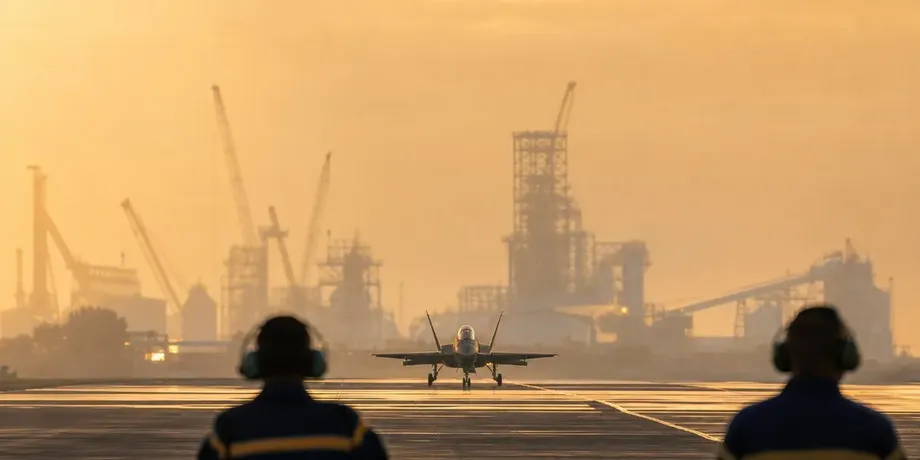
Taiwan has begun receiving the new aircraft, but the arrival of the first pair leaves most of the order outstanding. The ministry gives October 2, 2026, as their arrival date at Chihhang Base in Taitung; another account places the arrival on October 3.
The practical problem is different for each purchase. Submarines are waiting for additional weapons, upgraded fighters are waiting for their planned glide bombs, and the air force is waiting for most of a new fleet. Meanwhile, deliveries of tanks, drones, communications equipment and other air and coastal defense systems are advancing.
Submarine torpedoes now due by 2028
The MK-48 order consists of 24 torpedoes for combat and four for training. These are heavy weapons launched from submarines against targets at sea. Training units allow crews to practise handling and firing procedures without using the combat stock.
The ministry said the full order had been scheduled for delivery in 2026. Supply chain disruption and the need to restart production led to repeated changes, with completion now planned for 2028.
Earlier procurement briefings described deliveries across 2026 to 2028, following an original window of 2023 to 2026. The latest report identifies 2028 as the year when all torpedoes should have arrived.
The detailed ministry figures put the allocation at NT$5,460,586,000, commonly rounded to NT$5.46 billion. Its latest planning information lists the wider project as running from 2018 to 2033, whereas an earlier briefing described a budget period of 2018 to 2028. The delivery deadline remains 2028 in the latest account; a project's administrative or budget timetable can extend beyond the arrival of its equipment.
Upgraded aircraft still await their glide bombs
The AGM-154C purchase is part of the Feng Chan program, which modernized Taiwan's existing F-16A/B fighters. The ministry says upgrades to 141 aircraft were completed by the end of 2023. Earlier descriptions of the modernization program used a figure of 140 aircraft.
The aircraft work and the weapons deliveries have followed different schedules. Pilots can receive upgraded aircraft while still waiting for a particular weapon intended for those aircraft.
The AGM-154C is a glide bomb released from an aircraft. Its wings allow it to travel toward a target after release, letting the aircraft launch from farther away than it could with a conventional unguided bomb. Although procurement accounts sometimes call it a missile, its gliding flight explains the term Joint Standoff Weapon.
Lieutenant General Huang Wen-chi, director of the ministry's Department of Strategic Planning, told lawmakers Taiwan selected the Block 3 version. He described it as a generation ahead of the version then used by the United States.
The ministry said that choice required the US side to restart production, obtain materials and complete system development and integration. Integration means making sure the weapon and the aircraft's computers, software and controls work together correctly.
The latest ministry account says the weapons schedule moved from completion in 2023 to completion in 2028. Earlier briefings described an original delivery window of 2025 to 2026, followed by a revised window of 2027 to 2028. Both revised accounts place full delivery in 2028.
The approximately NT$135.97 billion allocation covers the wider aircraft upgrade program, including the AGM-154C purchase. The ministry's detailed planning account lists that program from 2012 to 2028; an earlier briefing used 2012 to 2026. Treating the entire allocation as the price of the bombs would overstate their stated cost.
Most of the 66 new fighters are still outstanding
Taiwan allocated NT$247.23 billion for 66 new F-16 Block 70 aircraft over 2020 to 2026. These are newly built fighters, separate from the older F-16A/B aircraft already modernized under Feng Chan. All 66 had originally been scheduled to reach Taiwan in 2026.
The first two aircraft reached Chihhang Base after spending about six weeks in Hawaii during their journey across the Pacific. Weather, technical issues and political timing were cited as reasons for that stop taking longer than expected.
By October 19, six aircraft were described as having completed factory acceptance: two were in Taiwan, two were at a US base for training and two were undergoing testing. Factory acceptance is a formal check of the aircraft against the purchase requirements. Further preparation, training and the flight to Taiwan can still follow.
Defense Minister Wellington Koo said more fighters were expected before the end of 2026. Asked whether all 66 could arrive by the end of 2027, he said the ministry would keep coordinating with the United States but could make no commitment. A replacement date for delivery of the entire fleet has not been announced.
Factory output explains the pressure on the schedule
Lockheed Martin delivered 16 F-16 Block 70/72 aircraft in 2024 and another 16 in 2025, while working toward a production rate of four a month, or 48 a year. Those figures cover its customers collectively, rather than Taiwan alone.
The manufacturer's F-16 Block 70/72 Fast Facts figures listed 36 aircraft delivered in its fourth quarter 2025 earnings material and 44 by October 2026. The increase was eight aircraft. Its backlog was about 120 new fighters, roughly half intended for Taiwan.
The target of 48 aircraft annually is three times the 16 delivered in each of the previous two years. Reaching that pace would require a substantial increase in output while the company also supplies other buyers.
Koo told lawmakers in an earlier procurement briefing that 50 of Taiwan's aircraft were on the production line and that 10 were expected to finish assembly by that year's end before undergoing flight tests. He described longer working hours at the factory.
We want the public to know that this does not mean there is no progress," Koo said. "The work is moving ahead at full speed, with two shifts working 20 hours a day.
Air force Chief of Staff Lieutenant General Lee Ching-jan explained that Taiwanese personnel must inspect and accept the aircraft in the United States. A contingent then stays for aircraft training before the jets are flown to Taiwan. Assembly, testing, acceptance, training and arrival are separate steps, each taking time.
How the delivery dates have shifted
The schedules show a mix of completed aircraft work, delayed weapons and new equipment arriving in batches. Several dates help explain why the ministry can report progress while still classifying three programs as late.
- 2017: The United States approved the AGM-154C sale described in earlier procurement briefings.
- 2020: The budget period began for the 66 new fighters and the third generation ground communications program.
- End of 2023: Taiwan completed the F-16A/B aircraft upgrades under Feng Chan.
- October 2026: The first two newly built fighters reached Chihhang Base, with the ministry recording October 2.
- 2026: The original target year for receiving all 66 new fighters and, in the latest ministry account, all 28 torpedoes.
- 2027 to 2028: The revised AGM-154C delivery window given in earlier ministry briefings.
- 2028: The latest deadline for completing both torpedo and AGM-154C deliveries.
- 2029: Planned completion of the third generation ground communications program.
Taiwan's lawmakers are therefore tracking two kinds of milestones: when individual batches arrive and when an entire order is complete. A first shipment helps units begin using equipment, while the final shipment determines whether the full purchase has been delivered.
Other purchases continue to arrive
The ministry listed M1A2T tanks, Switchblade 300 drones and parachute equipment for airborne operations among purchases reaching full delivery in 2026. Its detailed account described all equipment in those categories as received, while other descriptions presented completion as expected by the end of the year.
Deliveries were also continuing for Stinger portable air defense weapons, Harpoon coastal defense systems, MS-110 reconnaissance pods and MQ-9B drones. These purchases serve different tasks, from defending against aircraft and ships to collecting images and observing activity.
The communications program has more than NT$8.7 billion allocated for 2020 to 2029. It includes 154 communications nodes, 24 relay systems and eight network management centers, with equipment arriving in batches.
A communications node connects users to a network. A relay passes messages onward, while a management center helps control the network. The program is intended to give military units a connected means of exchanging information, rather than supplying a single type of weapon.
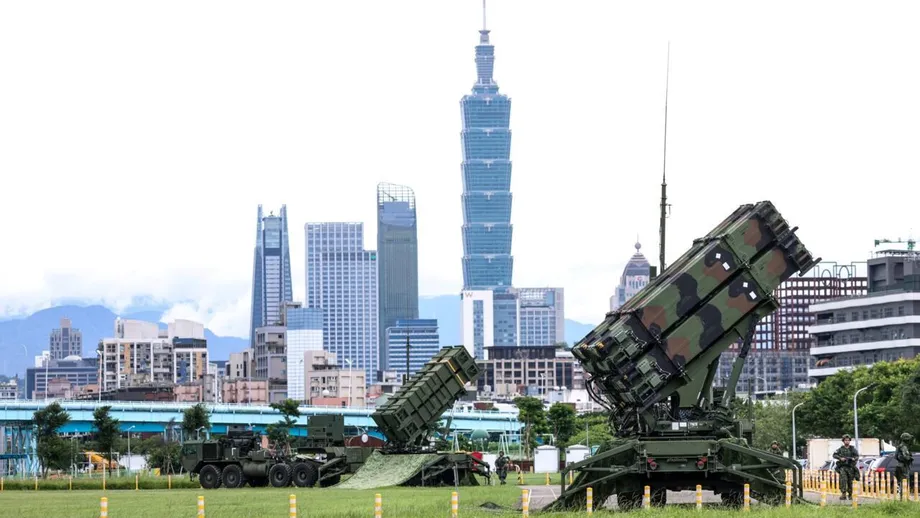
The Patriot II upgrade and Patriot III procurement program runs from 2007 to 2027 and carries an allocation exceeding NT$179.1 billion. It covers upgrades to three Patriot II system units, six Patriot III system units and 102 extended range Patriot III missiles. Deliveries are taking place in batches, with completion expected in 2027.
Taiwan wants payments tied to production
Taiwan and the United States monitor the purchases through regular meetings. The ministry has also asked for payment schedules to follow production progress, seeking to avoid paying too far ahead of equipment being ready.
That request connects financial oversight with the factory problems behind the delays. Lawmakers can examine how much has been paid alongside how many weapons have been built, tested, accepted and delivered.
The three delayed programs also show why a single delivery figure can leave readers with an incomplete picture. Taiwan has finished upgrading its older fighters, but their planned glide bombs are late. New fighters have begun arriving, but most remain outside Taiwan. Other purchases are meeting schedules that extend into 2027 or 2029.
The next scheduled completion points are the Patriot program in 2027, the torpedoes and AGM-154C weapons in 2028, and the communications program in 2029. For the new fighter fleet, the immediate task is to turn aircraft moving through production and testing into further arrivals at Chihhang Base.
Key Points
- Taiwan's defense ministry classifies three of 24 active US arms procurement programs as delayed.
- All 28 MK-48 torpedoes and the AGM-154C weapons are now expected by 2028.
- The 66 new F-16 Block 70 fighters were originally due in 2026; no replacement completion date has been announced.
- The first two new fighters reached Chihhang Base in October 2026.
- Production restarts, supply shortages, factory relocation and weapons integration contributed to the delays.
- The ministry says 21 other programs are on schedule, including purchases arriving in batches over several years.
- Taiwan has requested that payments be tied more closely to production progress.