Arsenic findings put residents and water supplies under scrutiny
Thailand's Public Health Ministry said on November 17, 2026, that some Chiang Rai residents had arsenic levels above reference standards, prompting further investigation into their exposure. Officials reported no confirmed cases of acute arsenic poisoning, while disruptions to the Mae Sai water supply had affected about 23,000 households across 14 villages.
Contents
- Arsenic findings put residents and water supplies under scrutiny
- Why Chiang Khong needs a different investigation
- What the health tests have found
- Understanding the water figures and health risks
- A muddy river exposes the fragility of Mae Sai's supply
- How the response developed
- Groundwater checks and better treatment
- Food, farming and the cost to households
- Thailand seeks access to pollution sources across the border
- Key Points
Permanent Secretary for Public Health Dr. Somruek Jungsaman said the contamination problem had persisted for more than two years. The ministry was tracking residents' health alongside drinking water, household supplies and natural waterways, working with environmental authorities.
The findings present different problems in different places. Health officials said tested Provincial Waterworks Authority supplies in the Kok and Ruak river areas remained within standards. Chiang Khong district required closer attention because arsenic in natural water sources overlapped with mineral bearing geology and could affect groundwater supplies.
An earlier Department of Health statement, dated October 15, said all 38 groundwater based village systems tested in Mae Sai, Chiang Saen and Wiang Chiang Rung passed the arsenic standard. Deputy Director General Dr. Naresrit Khattasema said monitoring would continue at other sources. Those three districts do not include Chiang Khong.
Somruek said the situation required serious surveillance rather than a declaration of a health crisis. Investigators would assess exposure levels, duration and the number of people affected before judging its severity. For families, the immediate priorities are more concrete: finding a tested water source, keeping supplies running and knowing when symptoms need medical attention.
Why Chiang Khong needs a different investigation
Department of Health Director General Dr. Thiti Sawaengtham divided the November 17 assessment into two areas. In the Kok and Ruak basins, he said treated water from the Provincial Waterworks Authority remained satisfactory, village groundwater supplies had shown no impact in the information received, and monitoring of residents had found no contamination.
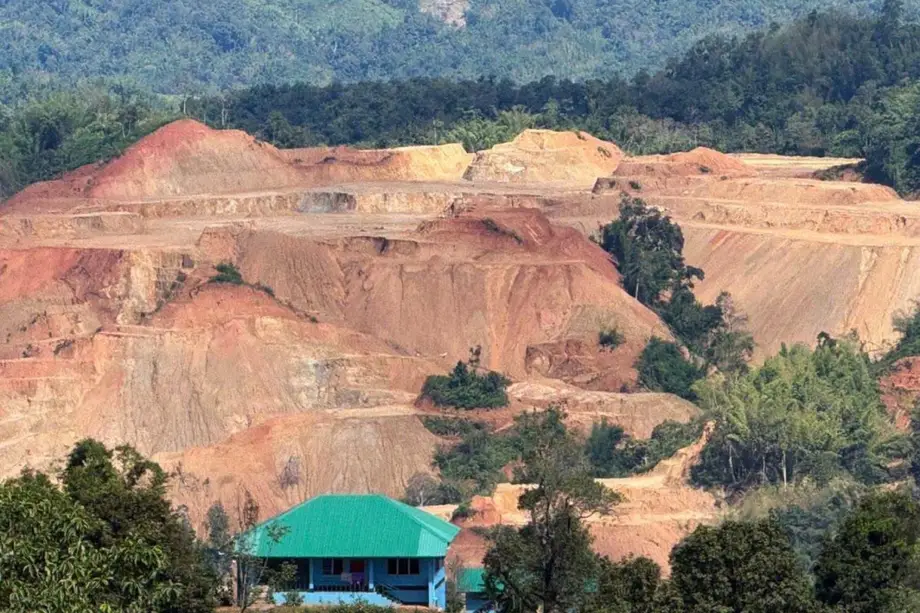
Chiang Khong was more concerning. Thiti said relatively high arsenic concentrations had been found in natural sources and surface water in an area crossed by mineral deposits. Health teams were examining the possibility of effects on systems supplied by groundwater and extending surveillance to other areas with similar geology.
Local officials said seven of Chiang Rai's 163 village waterworks had stopped operating because of arsenic, one in Rim Kok and six in Chiang Khong. In Ban Kaen Nuea, treated water reportedly contained 0.2 milligrams per litre, 20 times the drinking water limit of 0.01 milligrams per litre.
Huai So Subdistrict Mayor Chan Taklai said geological surveys identified natural gold bearing rock formations near local groundwater, leading to a ban on new wells there. Arsenic can be released when minerals in underground rock dissolve. Investigators are also examining whether polluted surface water is entering shallow groundwater elsewhere.
What the health tests have found
Chiang Rai Deputy Provincial Public Health Chief Dr. Narong Luecha said on November 16 that more than 2,000 residents considered at risk had undergone screening. Of 300 people tested directly, seven had detectable arsenic and one exceeded the reference threshold. Provincial health data for a July 14 to 16 testing programme recorded 31 people above the inorganic arsenic reference level among 549 tested; the populations and testing programmes were described differently.
The July result amounts to about 5.6% of that tested group. Somruek said investigators needed to establish how widely exposure extended beyond the people sampled. Narong said several people with detectable arsenic were chili growers, whose exposure histories included both water and agricultural chemicals.
Health Minister Pattana Promphat said patients with skin complaints, nausea, vomiting and diarrhoea were being assessed, with doctors considering heavy metals alongside other possible causes. Officials were still investigating the sources of residents' exposure, awaiting results from roughly 400 people in five Mae Sai communities, and awaiting laboratory confirmation of some recent river readings.
Teams visiting Mae Sai on October 14 interviewed residents about their daily activities and collected urine samples. The Department of Disease Control's health monitoring programme is scheduled to continue until 2029, with arrangements to refer people needing further assessment to specialist care.
Thiti also highlighted the need to identify the form of arsenic measured. Inorganic arsenic is the main concern in this investigation. Some forms associated with seafood have different toxicity, so laboratories and doctors need to consider the test method, recent diet and exposure history when interpreting results.
Understanding the water figures and health risks
Thailand's drinking water limit is 0.01 milligrams of arsenic per litre, which Thiti said follows the World Health Organization guideline. He also cited a limit of 0.05 milligrams per litre for water intended for other household uses. A milligram per litre describes how much of a substance is present in a given volume of water.
Sai River monitoring figures cited during the response ranged from 0.012 to 0.055 milligrams per litre. Against the drinking water reference of 0.01, those concentrations are 1.2 to 5.5 times the limit. A field test on November 6 gave a preliminary reading of 0.25 milligrams per litre, while an account of untreated water at the Mae Sai plant put the concentration at 0.3 milligrams per litre. On November 17, Thiti said figures circulating at 0.3 to 0.4 required confirmation.
Senator Nantana Nantavaropas cited river arsenic reaching 28 times the safety limit; People's Party leader Natthaphong Ruengpanyawut cited tests above 30 times in some locations. Dates, sampling points, test methods and the standard used all matter when comparing river measurements.
Thiti said illness associated with prolonged arsenic exposure can develop over years, often five to 10 years, while a sufficiently large dose can cause acute poisoning. Risk depends on the amount swallowed, concentration, duration and form of arsenic. Nausea, vomiting and diarrhoea were among the symptoms officials highlighted.
River water entering a treatment plant and treated water leaving it are tested at different stages. Families need results for the supply they actually use. The Provincial Waterworks Authority's November 11 update said water in its treatment system met standards after raw water conditions allowed normal production on November 10.
A muddy river exposes the fragility of Mae Sai's supply
Mae Sai's plant stopped production on November 5 after the Sai River became too muddy for its filters. A detailed account put turbidity above 14,000 NTU, against a treatment capacity of about 6,000 NTU. NTU is a measure of cloudiness caused by suspended particles.
The interruption affected about 23,000 households in 14 villages. Accounts described full operations resuming two days later, followed by the November 10 and 11 updates confirming normal production conditions and satisfactory treatment system results. Interior Ministry officials visiting on November 16 said excessive cloudiness had forced interruptions on several occasions.
Officials are surveying Nong Nam Phu, Khun Nam Nang Non and the Kham River in Mae Chan district as alternative sources. Disaster prevention teams would arrange water transport systems, while older groundwater wells were also being considered as temporary backups where testing supported their use.
In Chiang Khong, local authorities approved an 800,000 baht plan for a pipeline extending eight kilometres from Huai Yaek Sai Reservoir to four villages. Nearly 10 villages had already received replacement water from Huai Kiang Reservoir. A larger Mae Sai project to obtain water from the Mekong was described as scheduled for completion in 2028.
Senator Nantana said two reverse osmosis units were inadequate for more than 20,000 affected households. Natthaphong said Provincial Waterworks Authority systems accounted for about 15% of water consumption, calling for stronger checks on village supplies. Their concern centres on coverage: safe water must be available in sufficient quantities and close enough for families to use every day.
How the response developed
The November announcements followed months of testing and earlier warnings. Pollution Control Department monitoring in late September found arsenic above the surface water standard at every Sai River sampling site, as described in the earlier river testing findings. Other rivers showed changes between monitoring rounds, making repeated sampling necessary.
- July 14 to 16, 2026: A provincial testing programme recorded inorganic arsenic above its reference level in 31 of 549 people tested.
- October 14 and 15: Health teams visited Mae Sai, collected samples and announced that 38 tested village groundwater systems passed the arsenic standard.
- November 5 and 6: Excessive river cloudiness interrupted Mae Sai production, followed by a preliminary field arsenic reading of 0.25 milligrams per litre.
- November 12: Thailand pressed Myanmar on shared river pollution during talks in Naypyidaw.
- November 15 to 17: Ministers visited affected areas, sought alternative water sources and announced further health and source investigations.
- Late November: The first meeting of a joint Thai and Myanmar water quality working group was expected.
Provincial agencies are also testing aquatic animals for arsenic, mercury, lead and cadmium. Monitoring has identified arsenic above standards at some Kok and Ruak river points, and both arsenic and lead above standards in the Sai.
Groundwater checks and better treatment
The Department of Groundwater Resources reported that nine of 133 groundwater samples collected in Chiang Mai and Chiang Rai in 2026 exceeded 0.01 milligrams of arsenic per litre. The remaining 124 were within the limit. About 6.8% of samples exceeded the threshold across that testing programme.
The department's 2025 inspections covered groundwater and village systems at 18 sites. Wells at four locations exceeding the standard were cleaned and rehabilitated. For 2026 to 2027, it plans community reverse osmosis systems at 11 sites, an agricultural water supply system at another site, and observation wells near surface water sources.
Reverse osmosis pushes water through a membrane to reduce dissolved contaminants. The science ministry said community systems using this technology continued to reduce arsenic and other heavy metals effectively. Systems still need maintenance and testing of the water they produce.
The Department of Health's October statement explains a critical household point: boiling water or adding chlorine cannot remove arsenic. Chlorine helps control germs. Arsenic requires suitable treatment equipment and confirmation that the treated water meets standards.
Portable M-Sense devices developed by Thailand's National Nanotechnology Center provide preliminary arsenic screening in about three to five minutes. The government plans to distribute them to local agencies. Researchers working with Naresuan University are also using isotope analysis, which examines chemical signatures, to help trace possible contamination sources.
Food, farming and the cost to households
Farmers in 39 villages use the Sai and Ruak rivers to irrigate about 60,500 rai, roughly 24,000 acres, of rice fields. Earlier Chiang Rai farmland tests found arsenic above the soil standard in about 20% of agricultural areas sampled, with another 50% requiring monitoring.
Narong said more than 200 crop and livestock samples had been tested without unsafe arsenic levels. Natthaphong said pollutants had been detected in rice, while fisheries testing had identified excessive heavy metal accumulation in some aquatic species. Testing is continuing across soil, water, crops and animals, each of which gives information about a different part of the food supply.
Pattana advised residents to vary their food and obtain some from nearby areas to reduce repeated exposure from a single location. Farmers unable to avoid contact with suspect water were advised to wear gloves and waterproof boots. Residents were told to avoid direct contact with affected water and sediment, and seek prompt care for severe diarrhoea or vomiting.
Water concerns are also raising household spending. Preecha Phromsanga, a trader living with his wife and seven year old child in Mae Sai, said his family had switched to bottled drinking water and was spending more than 1,000 baht a month on it. He used filtered tap water for washing.
Senator Maneerat Khamwang called for a designated lead agency, deadlines, measurable targets and compensation. Her demands connect the environmental response to daily losses: families buying water, growers facing uncertain irrigation supplies and communities waiting for reliable replacements.
Thailand seeks access to pollution sources across the border
National Security Council Secretary General Gen. Chaipruak Doungprapat said on November 17 that Thailand planned a team to inspect suspected contamination sources, including industrial plants, in neighbouring countries. Discussions involved Myanmar and China, with possible local talks involving Shan State.
Chaipruak said wastewater treatment at mining operations was substandard and that smaller plants would need attention alongside large mines. He said access depended on cooperation from the countries involved and those controlling the affected territory.
The security chief described Thailand's readiness to join inspections:
Our side is ready to go in, examine the situation and coordinate if the other side is ready, because we understand the hardship people are facing. Families of military personnel also live along the border in that area. Everyone is facing hardship.
Myanmar mining official Myo Myint Thein said unauthorized operations might be occurring near the border beyond government oversight. Thai officials suspect upstream mining in Shan State, while Chiang Khong's geology is being investigated through a separate local assessment.
The diplomatic effort follows November 12 pollution talks between Foreign Minister Sihasak Phuangketkeow and Myanmar leader Min Aung Hlaing. Thailand intends to seek permission for upstream monitoring equipment. Prime Minister Anutin Charnvirakul has also discussed northern river contamination with Chinese Premier Li Qiang.
Deputy Prime Minister Yodchanan Wongsawat has proposed small dykes or holding ponds at mines to retain waste and requested scientific work to identify contamination sources, with Chinese laboratories invited to help verify findings. His six urgent measures cover mineral controls, water restoration, environmental and agricultural monitoring, health screening, alternative water sources and assistance.
Trade restrictions are another option under discussion. Chaipruak said stopping Thai companies from accepting Myanmar minerals for export might be insufficient on its own. Lawmaker Phattarapong Leelaphat called for tracing shipments to individual mines. Figures cited in that debate show Thailand's antimony ore imports rising from 76 tons in 2023 to 42,217 in 2024 and 68,919 in 2025.
The next practical steps are the expected late November working group meeting, completion of pending health and laboratory tests, and replacement water projects. Residents need both reliable supplies now and action that reduces contamination before it reaches their rivers and wells.
Key Points
- Health officials confirmed arsenic above reference levels in some Chiang Rai residents, with no confirmed acute poisoning cases reported.
- Chiang Khong faces particular scrutiny because contaminated sources overlap with mineral bearing geology.
- All 38 village groundwater systems covered by the Department of Health's October announcement passed the arsenic standard.
- Mae Sai supply interruptions affected about 23,000 households across 14 villages.
- Boiling and chlorine cannot remove arsenic. Drinking and cooking water should come from sources with confirmed test results.
- Thailand is pursuing alternative water sources, longer health monitoring and inspections involving Myanmar and China.
- A joint Thai and Myanmar water quality working group was expected to meet in late November.