A market rout spreads far beyond chip stocks
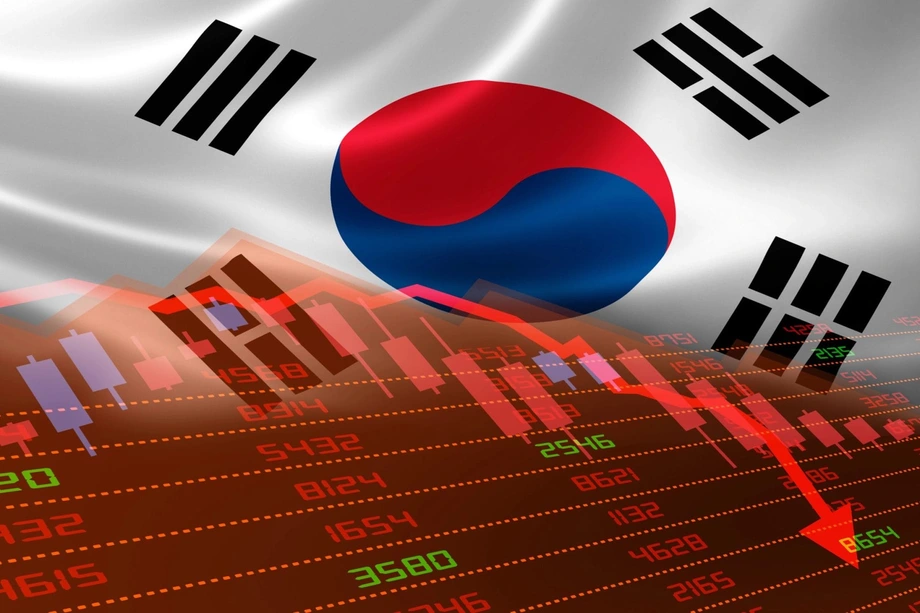
South Korea's Kospi lost 671.05 points, or 11.71%, in the week ending November 6, 2026, closing at 5,059.69 as foreign investors sold heavily and fears about artificial intelligence investment battered technology shares. Korea Exchange figures released on November 8 showed the damage reached much further: 844 of the country's 2,659 listed companies touched their lowest intraday prices of the year.
Contents
- A market rout spreads far beyond chip stocks
- How an early gain turned into a trading halt
- Why US policy fears reached Korean factories
- Foreign selling concentrates on two market giants
- Autos, brokerages and smaller companies join the decline
- ETF losses reach portfolios and retirement savings
- Investors split between bigger bets and cash substitutes
- Authorities move to reduce forced selling
- Brokerages see cheaper shares, with selling pressure unresolved
- Key Points
Almost one in three listed companies reached that mark during the five trading sessions. On November 6 alone, 720 stocks hit intraday yearly lows, while 669 closed at their lowest prices of the year. The Kosdaq, which includes many smaller technology and growth companies, fell 11.06% over the week to 644.27.
Samsung Electronics dropped 16.13% and SK Hynix lost 20.17%. Their decline pulled down major stock indexes and investment funds, spreading losses to people holding baskets of shares rather than individual chip stocks. South Korea's listed exchange traded fund market fell below 400 trillion won for the first time in about seven months.
The immediate pressure came from a combination of weakness on Wall Street, foreign capital withdrawals and concern that tighter US regulation could delay construction of data centres, the buildings filled with computers that power AI services. Financial authorities responded with trading pauses and a temporary relaxation of rules governing loans used to buy shares.
How an early gain turned into a trading halt
The week began with a rally. By Friday morning, the Kospi was briefly below 5,000, a level it had last crossed beneath during trading in February. Its November 6 close was the lowest since March 31.
- November 2: The Kospi rose 2.24% to 5,859.08.
- November 3: The index fell 3.59% to 5,648.79.
- November 4: A brief recovery lifted it 0.62% to 5,683.80.
- November 5: Selling intensified, sending it down 5.28% to 5,383.80.
- November 6: The index fell 6.02%, or 324.11 points, to 5,059.69, after reaching an intraday low of 4,911.28.
The fall from Monday's close to Friday's close was about 13.6%, larger than the weekly decline because Monday's advance had initially lifted the market above the previous week's closing level of 5,730.74.
A Level 1 circuit breaker stopped trading on the main exchange for 20 minutes at about 9:03 a.m. on November 6. Sell sidecars were also activated on the Kospi and Kosdaq. A circuit breaker pauses the broader market during an extreme fall; a sidecar temporarily restricts certain automated orders linked to sharp moves in futures prices.
Why US policy fears reached Korean factories
Concerns following the Democratic Party's sweeping victory in the US midterm elections centred on possible restrictions affecting AI and data centre investment. Investors worried that a slower pace of construction would reduce future demand for memory chips, power equipment and other products supplied by Korean companies.
Wall Street added to the pressure. On November 5, the Nasdaq fell 5.52% and the S&P 500 dropped 3.44%. About $2.5 trillion in Nasdaq market value was erased, worsening sentiment before South Korean trading began the next morning.
Samsung Electronics and SK Hynix are especially exposed to expectations for AI spending because memory chips are essential components in the computers running those services. Their share prices reflect investors' expectations for future profits, so fears about investment several years ahead can move prices immediately.
Lee Jae-won, an analyst at Yuanta Securities, said the concern focused on slower growth after 2028. He described the current condition of supply contracts and profits this way:
The risk of data center construction delays from regulation has grown, but there is no evidence that existing supply contracts or memory profits have been undermined,
Lee called the selling excessive and said lower oil prices and long term interest rates could help sustain AI investment. The next policy details and companies' actual spending decisions will determine how much construction schedules change.
Foreign selling concentrates on two market giants
Foreign investors sold a net 10.56 trillion won of South Korean equities during the week, including about 10.4 trillion won on the main Kospi market. They were net sellers in all five sessions.
Samsung Electronics and SK Hynix accounted for roughly 73% of the Kospi outflow. Foreign investors sold about 2.1943 trillion won of Samsung shares and 5.4219 trillion won of SK Hynix shares. Net selling means the value sold exceeded the value purchased by those amounts.
Foreign ownership in Samsung fell to 45.95%, its lowest since July 2009. SK Hynix's foreign ownership declined to 48.27%, the lowest since November 2021. Individual investors moved in the opposite direction, buying a net 4.1577 trillion won of the two companies between November 2 and 6.
Samsung finished the week at 188,700 won, down from 225,000 won the previous week. SK Hynix closed at 1.132 million won, compared with 1.418 million won. Both touched their lowest intraday prices in seven months on November 6.
The two companies' combined market value fell to about 1,930 trillion won, below 2,000 trillion won for the first time in roughly seven months. At their June 25 peak, they represented 57.11% of the Kospi's market value. Their share had fallen to around 46%, still leaving almost half the main market concentrated in two businesses.
Autos, brokerages and smaller companies join the decline
Korea Exchange figures showed that 272 Kospi companies and 572 Kosdaq companies reached intraday yearly lows during the week. Smaller companies faced particularly broad pressure: the Kosdaq accounted for more than two thirds of the 844 affected stocks.
Hyundai Motor closed at a yearly low of 277,500 won on November 3. Hanwha Aerospace ended November 6 at 660,000 won. Doosan Enerbility, HD Hyundai Heavy Industries, POSCO Holdings and Hanwha Ocean also reached yearly lows, extending the selloff across autos, shipbuilding, energy and industrial businesses.
Brokerage companies suffered as well. Mirae Asset Securities, Korea Investment Holdings, Samsung Securities and Kiwoom Securities all closed at yearly lows. Falling trading activity and weaker investor confidence added to concerns about their earnings.
On the Kosdaq, Alteogen, EcoPro, EcoPro BM and Rainbow Robotics closed at their lowest prices of the year. Semiconductor equipment companies Leeno Industrial and Wonik IPS also fell to yearly lows, alongside biotechnology businesses LigaChem Biosciences and ABL Bio.
Celltrion provided a rare positive result, gaining 10.13% over the week. Its advance stood against losses elsewhere in healthcare, showing how uneven the search for alternatives to technology shares had become.
ETF losses reach portfolios and retirement savings
The Korea Exchange figures put the market capitalisation of South Korea's 1,184 listed exchange traded funds at 393.5682 trillion won on November 6, down about 26% from 532.9746 trillion won on June 22. Another published set of figures attributed to the exchange put those totals at 393.2377 trillion won and 534.5539 trillion won, respectively. Both show a contraction of more than a quarter.
An exchange traded fund, or ETF, holds a basket of investments and trades on an exchange like a share. A fund following the Kospi 200 holds exposure to major Korean companies, so heavy losses in Samsung and SK Hynix also reduce the value of many investors' fund holdings.
KODEX 200's market value fell from roughly 32 trillion won in June to 19.5 trillion won on November 6, a decline of about 39%. TIGER US S&P500, meanwhile, rose above 20 trillion won and moved ahead of KODEX 200 in fund rankings. Three of the five largest products by net assets tracked US indexes.
Individual investors had bought a net 82.3726 trillion won of ETFs during the year through November 6. About 50.0441 trillion won of those purchases came after April 15, when ETF assets first exceeded 400 trillion won. Continuing purchases were overwhelmed by falling investment values.
Retirement savings are also exposed. At the end of the previous year, about 50 trillion won of South Korea's roughly 500 trillion won in retirement pension assets was invested in ETFs, a share of about 10%. Further investment was estimated during 2026.
ETF market capitalisation measures the market value of fund shares, while net assets measure the value of investments held after liabilities. Final net asset totals were scheduled for release on November 9.
Investors split between bigger bets and cash substitutes
Trading activity showed investors responding in sharply different ways. Seven of the 10 most actively traded domestic ETFs from October through November 6 were inverse or leveraged products, with those products accounting for more than 95% of trading volume in that leading group.
Inverse funds seek to rise when their reference market falls. Leveraged funds seek a multiple of a market's daily move, increasing both potential gains and losses. Their daily targets mean returns over several days depend on the sequence of rises and falls.
South Korean investors also bought a net $2.19753 billion of US stocks between November 2 and 6, exceeding the $1.96234 billion purchased throughout August. More than 70% of that week's net purchases, or $1.62525 billion, went into SOXL, a fund targeting three times the daily movement of a semiconductor index. Alphabet and the leveraged Nasdaq fund TQQQ were other major purchases.
Other money moved toward less volatile holdings. KODEX Money Market Active attracted more than 2 trillion won over the month. The fund invests in very short maturity bonds and commercial paper, which is short term company debt, allowing investors to keep money invested while avoiding direct exposure to stock index movements.
Investor deposits stood at 88.5338 trillion won on November 5, according to the Korea Financial Investment Association. They had remained below 100 trillion won for nearly a month. Loans used to finance share purchases totalled 28.7715 trillion won.
Authorities move to reduce forced selling
The government and financial authorities decided on November 6 to waive securities firms' obligation to maintain a 140% collateral ratio on margin loans for three months starting November 9.
Margin loans let investors borrow money to buy shares, using assets as security. Under a 140% requirement, a loan of 100 won requires collateral worth 140 won. A steep fall in share prices can leave an account below that threshold and trigger demands for more collateral or forced share sales.
The temporary waiver aims to ease that pressure. Forced sales can push prices lower, creating further collateral shortfalls for other borrowers and setting off another round of selling.
Borrowers still face investment losses and repayment obligations. The measure addresses the pressure to sell during a sudden market fall, while the direction of prices remains tied to company earnings, policy developments and investor demand.
Brokerages see cheaper shares, with selling pressure unresolved
The Kospi's November 6 close was about 44.5% below its June 22 closing high of 9,114.55. That longer decline helps explain why several brokerages argued against panic selling even as daily losses accelerated.
Kim Sun-woo, an analyst at Meritz Securities, said Samsung and SK Hynix had reached historically low valuations. Park Joon-young of Hanwha Investment & Securities said historical price patterns suggested shares were near a bottom. Heo Jae-hwan of Eugene Investment & Securities compared the retreat with previous major downturns and advised investors against joining the selling.
Yang Ji-hwan, head of the research centre at Daishin Securities, gave a more cautious assessment of whether the decline had finished:
The index has entered oversold territory, but it is hard to say it has bottomed because supply-demand threats such as hedge fund stop-loss selling and liquidations cannot be seen as resolved,
Yang favoured waiting rather than selling into the fall and suggested that investors with cash make any purchases gradually. Seo Sang-young, an executive director at Mirae Asset Securities, also warned that foreign selling pressure and volatility would continue, citing dollar strength, interest rates and US economic indicators.
When markets reopen on November 9, investors will face the first trading session under the temporary collateral waiver. Foreign fund flows, Wall Street trading and details of US policy will be central to whether the selling eases, while the scheduled ETF asset release will give a fuller measure of the damage to fund portfolios.
Key Points
- The Kospi fell 11.71% during November 2 to 6, closing at 5,059.69; the Kosdaq lost 11.06%.
- Some 844 listed companies, or 31.7% of the total, touched intraday yearly lows.
- Foreign investors sold about 10.4 trillion won of Kospi shares, with roughly 73% concentrated in Samsung Electronics and SK Hynix.
- South Korea's listed ETF market fell below 400 trillion won, about 26% below its June peak.
- A temporary waiver of the 140% margin loan collateral requirement was set to begin on November 9 for three months.
- Brokerages pointed to cheaper valuations while warning that forced selling and foreign outflows could prolong volatility.