Mortgage payments and stock purchases drive a lending jump
South Korea's bank household loans reached a record 1,203.9 trillion won at the end of October, rising by 5 trillion won in a month as apartment financing and renewed borrowing for stock purchases pushed lending higher. The balance crossed 1,200 trillion won for the first time, according to the Bank of Korea's October Financial Market Trends release on November 11.
Contents
- Mortgage payments and stock purchases drive a lending jump
- How quickly did borrowing accelerate?
- Why apartment loans rose as transactions slowed
- Different housing loans moved in opposite directions
- Stock purchases and seasonal repayments changed the credit picture
- Borrowing spread beyond the banks
- Higher interest costs added pressure on households
- Companies also relied heavily on bank credit
- Deposits grew while markets pulled in different directions
- A stock slump brought a separate regulatory response
- Key Points
The increase was ten times September's revised gain of 500 billion won. Across banks and other financial institutions combined, household loans rose by 6.4 trillion won in October, reversing a 2.2 trillion won fall in September, according to the Financial Services Commission's October household lending figures.
South Korean households had already added 42.4 trillion won in loans during the first ten months of the year. That exceeded the previous full year's increase of 38 trillion won by 4.4 trillion won, or about 11.6 percent, with two months still remaining.
Housing loans remained the largest part of bank household debt, accounting for about 79.6 percent of the total. Yet the sharp change in October came largely from other borrowing, including unsecured loans and overdrafts, which returned to growth after falling in September.
The rise came while borrowing restrictions remained in place and interest costs were increasing. Previously approved apartment loans continued to reach borrowers, while holiday payments and bank accounting adjustments made the September comparison unusually low. Together, those forces explain why lending could accelerate even as housing transactions slowed and households faced more expensive credit.
How quickly did borrowing accelerate?
Bank household loan growth had slowed from 5.5 trillion won in July to 3.5 trillion won in August and a revised 500 billion won in September. October's 5 trillion won increase was the largest since July.
The BOK's revised September figure shows that bank household lending continued to grow that month. An initial September release had put the increase at 600 billion won. The actual September decline occurred across the financial sector as a whole, where falling loans outside banks outweighed the banking increase.
The broader monthly figures show how lending slowed before turning upward again:
- May: Household loans across all financial sectors increased by 9.3 trillion won.
- June: The increase narrowed to 8.3 trillion won.
- July: Lending rose by 6.4 trillion won.
- August: Growth slowed to 2.8 trillion won.
- September: Lending fell by 2.2 trillion won.
- October: Lending returned to growth, increasing by 6.4 trillion won.
October's increase across all lenders was also 1.5 trillion won larger than the 4.9 trillion won gain in the same month a year earlier. The comparison shows both a reversal from September and faster growth than a year before.
Why apartment loans rose as transactions slowed
Mortgage lending across all financial institutions increased by 4 trillion won in October, up from 3.2 trillion won in September. Banks accounted for 3.3 trillion won of October's gain, while other lenders accounted for 700 billion won.
The detailed BOK breakdown puts October's bank mortgage increase at 3.3 trillion won, compared with 2.9 trillion won in September. Initial descriptions of October's increase used the 2.9 trillion won figure. The outstanding bank mortgage balance reached 958.7 trillion won.
Previously approved group loans were a major driver. These loans finance payments connected with apartment developments, including instalments during construction and relocation expenses. Approval and payment can happen months apart, so money can continue flowing even after current property sales weaken.
Apartment transactions in Greater Seoul fell from about 19,000 in August to 18,000 in September. Meanwhile, the monthly increase in group mortgage loans across financial institutions widened from 1.7 trillion won to 2.4 trillion won, the largest gain since April.
Different housing loans moved in opposite directions
Bank group lending increased by 1.2 trillion won in October, compared with 700 billion won in September. Growth in general mortgage loans moved the other way, narrowing from 1.6 trillion won to 1.4 trillion won.
Jeonse deposit loans also continued to fall. Under South Korea's jeonse rental system, tenants typically provide a large refundable deposit to a landlord rather than paying a conventional monthly rent. Some tenants borrow to assemble that deposit.
Jeonse loans declined by 800 billion won in October after falling by 900 billion won in September. October marked their 14th consecutive monthly decline.
The housing figures therefore describe several different borrowing needs. Financing for apartment construction and relocation was expanding, while loans for rental deposits were shrinking. For lenders managing their loan books, scheduled apartment payments remained a source of growth even when other housing credit weakened.
Stock purchases and seasonal repayments changed the credit picture
Other bank household loans, including unsecured credit and overdrafts, rose by 1.7 trillion won in October after falling by 2.3 trillion won in September. Their outstanding balance reached 244.3 trillion won.
The BOK linked the turnaround partly to individuals' net purchases of domestic stocks. It also cited September effects, including holiday bonuses used to repay borrowing and banks' sales or write offs of bad loans.
A write off removes a loan that a bank considers unlikely to be recovered from its recorded loan assets. Such adjustments, together with temporary repayments, can lower one month's lending balance and make the following month's increase appear larger. This comparison is often called a base effect.
Across the whole financial sector, other household loans rose by 2.4 trillion won after falling by 5.4 trillion won in September. Within that broader category, credit loans alone increased by 1.2 trillion won, reversing a 2.9 trillion won decline.
Borrowing to buy shares adds a repayment obligation to an investment whose value can fall. For a household, that means interest and principal still need to be paid even if the shares are worth less than their purchase price.
Borrowing spread beyond the banks
Household lending outside banks increased by 1.4 trillion won in October, reversing September's 2.7 trillion won fall. Credit unions, insurers, savings banks and specialized credit finance companies all returned to growth.
During January through October, household loans outside banks rose by 12.3 trillion won, more than twice their 5.1 trillion won increase during the entire previous year. Credit unions accounted for 9.7 trillion won of that ten month gain, or roughly 79 percent.
Bank household loans increased by about 30.2 trillion won over the same ten months. The combined financial sector increase of 42.4 trillion won also exceeded the 41.6 trillion won recorded during all of 2024.
The Financial Services Commission said household lending remained within financial institutions' annual management targets. Its immediate concern was preventing lending from becoming concentrated at particular times and prompting lenders to stop issuing loans together near the end of the year.
Such a sudden interruption, described by regulators as a loan cliff, can leave borrowers unable to obtain financing when a home payment is due. Regulators said they would seek to protect funding for people with genuine housing needs, young borrowers and areas outside the capital.
Higher interest costs added pressure on households
The average interest rate on new household loans at banks accepting deposits reached 4.96 percent in September, according to the BOK. That was 0.20 percentage points higher than in August and the highest since November 2023, when the rate was 5.04 percent.
September's average was also 0.53 percentage points above April's 4.43 percent. For illustration, that difference would add about 530,000 won to a year's interest on an unchanged 100 million won balance. Actual payments depend on the loan's rate, repayment schedule and other terms.
The BOK held its benchmark rate at 3 percent in October after increases in July and August. The central bank was assessing earlier tightening while considering inflation, financial stability, Middle East tensions and robust exports.
The benchmark rate helps influence banks' funding costs, but borrowers pay the rates attached to their individual loans. September's new lending average shows the concrete pressure on households: new borrowing had become more expensive even before October's acceleration in debt.
Companies also relied heavily on bank credit
Bank lending to companies increased by 10.2 trillion won in October, bringing the outstanding balance to 1,451.8 trillion won, according to the detailed BOK figures. A 10.7 trillion won figure also circulated for October; the monthly breakdown assigns that increase to September.
Small and medium sized enterprises borrowed an additional 6.2 trillion won in October, compared with 3.2 trillion won in September. Large companies added 4 trillion won, down from September's 7.5 trillion won increase.
The BOK attributed the stronger demand among smaller companies to banks expanding corporate lending and businesses needing money for value added tax payments. The central bank explained the change in its monthly assessment:
As banks continued to expand corporate lending and demand rose to pay value-added taxes, the increase in SME loans widened.
Corporate bank loans grew by 87.9 trillion won in the first ten months, compared with 50.9 trillion won in the same period of 2025. Companies also repaid 1.7 trillion won more in corporate bonds than they issued during October. Over January through October, net bond repayments reached 22.3 trillion won, compared with net issuance of 6.4 trillion won a year earlier.
Those figures show a shift in financing toward bank borrowing while companies reduced their outstanding bond funding. Smaller businesses accounted for about 61 percent of October's corporate loan increase.
Deposits grew while markets pulled in different directions
Bank deposits increased by 30.4 trillion won in October, following a 29.1 trillion won gain in September. Time deposits, which generally require customers to leave money with a bank for an agreed period, rose by 24.1 trillion won, compared with just 2.1 trillion won a month earlier.
Deposits available for immediate withdrawal fell by 15.5 trillion won. Tax payments and the departure of corporate money temporarily placed in banks for quarter end financial management contributed to the decline. Banks also raised 15.4 trillion won through bank bonds, up from 5.7 trillion won in September.
Government bond yields fell as demand for safer assets strengthened. The yield on three year government bonds declined from 4.01 percent at the end of September to 3.72 percent at the end of October, then to 3.63 percent on November 10. By contrast, the rate on commercial paper maturing in 91 days rose from 3.42 percent to 3.84 percent during October, making that form of short term company funding more expensive.
A stock slump brought a separate regulatory response
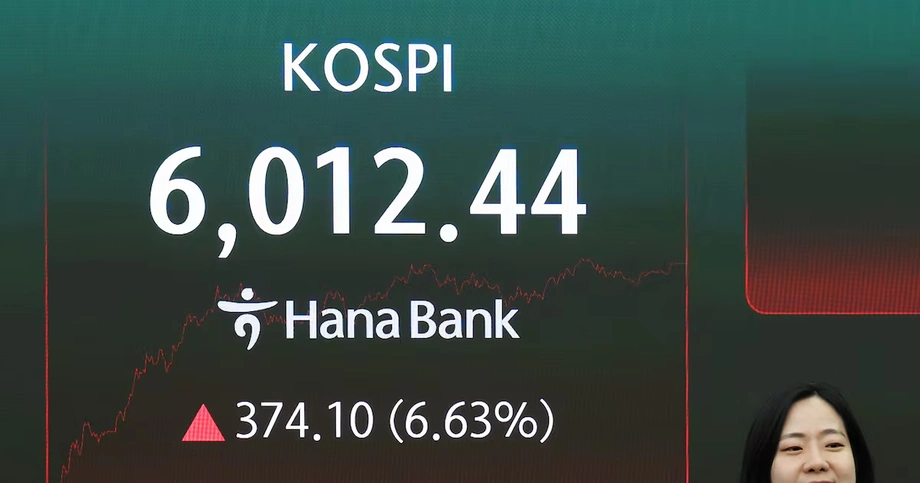
The KOSPI fell by 23.4 percent between the end of September and November 10. Stock investment fund balances declined by 26.5 trillion won during October, while net inflows excluding changes in investment values totaled 8.3 trillion won. Investors were still putting money into funds even as falling share prices reduced the value of their holdings.
From November 9, securities firms received a three month exemption from the requirement to maintain collateral equal to 140 percent of margin loans. Margin loans are brokerage loans used to buy securities, with assets pledged as security for repayment.
The temporary measure gave brokerages more flexibility in handling collateral during the selloff, reducing pressure for forced sales when falling prices weakened borrowers' coverage. Brokerage margin lending is a separate credit channel from the bank household loans measured in the BOK's monthly release.
For households and lenders, the immediate picture combines scheduled apartment financing, renewed credit borrowing and more expensive loans. Regulators' stated response was to keep debt within annual targets while preserving access to funds for housing and other genuine needs. No next household lending release date was specified.
Key Points
- Bank household loans reached a record 1,203.9 trillion won at the end of October, up 5 trillion won in a month.
- Across all financial institutions, household lending rose by 6.4 trillion won after September's 2.2 trillion won decline.
- Bank mortgage loans increased by 3.3 trillion won, while other household loans rose by 1.7 trillion won.
- Previously approved apartment group loans and individual stock purchases contributed to the increase.
- Household lending grew by 42.4 trillion won in ten months, exceeding the previous full year's 38 trillion won increase.
- The average rate on new bank household loans reached 4.96 percent in September.
- Regulators said lending remained within annual targets and sought to prevent sudden interruptions near the end of the year.