Millions of workers could gain more time in Thailand
Thailand is proposing to let more than 2.3 million migrant workers remain in employment until February 13, 2029, under a package that would also shorten renewal procedures for Myanmar and Lao workers and expand employment rights for people displaced by fighting in Myanmar.
Contents
- Millions of workers could gain more time in Thailand
- Who would receive an extension to 2029?
- How the U-turn process would change
- How the proposals developed
- Document costs could limit the relief
- Sending money home brings another pressure
- People in temporary shelters could gain wider work rights
- Why Thailand wants to retain and recruit workers
- What workers and employers need next
- Key Points
The Foreign Worker Management Policy Committee approved the measures in principle on November 6, 2026. Labour Minister Julapun Amornvivat announced the plans on November 9, linking them to labour shortages and disruption to recruitment caused by fighting in Myanmar and tensions along the border between Thailand and Cambodia.
The proposed extension covers workers registered under cabinet resolutions dated July 8 and December 2, 2025, whose permits expire on February 13 or March 31, 2027. Both groups would receive the same proposed end date: February 13, 2029.
Cabinet approval and implementing announcements from the Interior and Labour ministries are still required before workers can use the arrangements. The Department of Employment has told employers and migrants to follow its instructions as the package moves through those steps.
For a worker approaching a permit deadline, the central benefit would be continuity: more time to keep earning without a lengthy interruption to employment. For employers, retaining experienced staff would reduce the need to recruit and train replacements.
The package contains several routes with different eligibility rules. Alongside the extension affecting more than 2.3 million workers, it includes a proposed waiver of a 30 day return requirement, temporary permission for migrants with irregular status, recruitment from Sri Lanka and wider work rights for residents of temporary shelters.
Who would receive an extension to 2029?
The two cabinet resolutions from 2025 define the group covered by the large permit extension. Workers whose permission expires on February 13, 2027, would gain another two years. Those with a March 31, 2027, deadline would also move to February 13, 2029, giving them slightly less than two additional years.
Myanmar workers account for a large part of Thailand's migrant workforce, but the proposed extension is described as covering more than 2.3 million migrant workers, rather than that number of Myanmar nationals alone. Eligibility depends on the registration category and the relevant cabinet resolution.
Migrants with irregular legal status would have a different route. The committee backed temporary permission to stay in Thailand and work for one year. This would give eligible people a way to enter a lawful employment arrangement while helping businesses retain workers already in the country.
A visa and a work permit serve different purposes. A visa concerns permission to enter or stay in Thailand; a work permit concerns permission to take a job. Workers using the proposed arrangements would need to complete the procedures for their particular category.
How the U-turn process would change
Myanmar and Lao workers completing four years under the government recruitment system between January 1, 2026, and December 31, 2027, would qualify for the proposed MoU U-Turn concession. MoU means memorandum of understanding, an agreement between governments that sets out recruitment and employment arrangements.
The concession would remove the requirement to spend 30 days outside Thailand before returning for another employment term. Under the proposed process, workers would first receive approval for their work permit applications, then travel to border areas in their home countries to obtain visas before returning to Thailand.
Border travel would therefore remain part of the process. The saving would come from removing the month of waiting and shortening the administrative interruption, which Julapun said would reduce time, procedures and costs.
The proposal expands on the earlier return waiver discussed by Thai and Myanmar officials. Those discussions focused on workers completing four years in 2026, while the November committee package expressly includes workers reaching that limit in 2027.
The earlier figures identified 45,834 Myanmar workers reaching the limit in 2026 and another 46,906 in 2027, a combined 92,740 people. That gives a sense of the Myanmar workforce facing this particular renewal problem, within a much larger migrant population.
How the proposals developed
Thai and Myanmar officials have been discussing employment continuity, identity documents and social security for months. The November package brings several of those issues into the same approval process.
- July 8 and December 2, 2025: Cabinet resolutions established the worker categories now proposed for permit extensions to February 2029.
- July 23, 2026: Thailand's Department of Employment and Myanmar officials discussed a waiver for workers completing four years under the MoU system.
- August 6 and 7, 2026: The countries signed a new labour MoU during Myanmar military leader Min Aung Hlaing's Bangkok visit.
- August 25, 2026: Myanmar Labour Minister U Khin Maung Soe and Julapun discussed speeding up the U-turn process in Bangkok.
- November 6, 2026: Thailand's Foreign Worker Management Policy Committee approved the latest package in principle.
- November 9, 2026: Julapun announced the proposed measures, including extensions to February 13, 2029.
The August 25 talks took place alongside the 29th ASEAN Labour Ministers' Meeting. They covered worker data by occupation and location, additional sites issuing Certificates of Identity, legal channels for sending money home and access to Thai social security benefits.
The Labour Rights Foundation described the August MoU as aligning employment permits with the five year validity of Myanmar passports. Employment contracts under that framework were described as lasting two years, with renewal for another two. Passport validity, contract length and the proposed February 2029 permit deadline each concern a different part of a worker's documents.
Document costs could limit the relief
Workers seeking longer permission to work may still face substantial expenses obtaining or renewing identity documents. A Certificate of Identity, commonly called a CI, provides identification for migrants who need it to complete Thailand's immigration and employment procedures.
Five CI centres and mobile units were scheduled to operate from October 14, 2026, to January 14, 2027. An October 5 Department of Employment letter was described as requesting entry visas for 31 Myanmar officials assigned to the centres.
Workers have alleged that the process involves taxes and unofficial broker payments as well as document fees. Descriptions of the costs include roughly 2,660 baht for a CI booklet, 1,800 baht in taxes, 3,000 baht for a Thai visa and 1,300 to 1,500 baht for access to a queue slot.
Those listed amounts add up to 8,760 to 8,960 baht. For someone also paying for transport and losing wages while completing the process, even a shorter renewal journey can remain expensive.
The complaints follow identity centre tax allegations raised at Thailand's Parliament on November 2. Employer representative Nilubon Pongpayom said some workers faced demands of about 6,000 baht in Myanmar income tax, alongside fees and alleged unofficial payments. Her figure concerned a different reported tax demand from the 1,800 baht amount described in other worker accounts.
Sending money home brings another pressure
Myanmar's military authorities ordered MoU workers abroad in August 2023 to send 25 percent of their salaries through Myanmar banks. Conversion at an official exchange rate below the market rate reduces the money families receive compared with exchanging at the market rate. The stated penalty for failing to comply was a three year ban on overseas employment.
Workers have also described demands for income tax of 2 to 3 percent and requirements to show tax and remittance receipts when renewing passports or CI documents. Allegations of coercion and unofficial charges have made document renewal a concern for employers as well as migrants.
Thailand's proposed permit extensions address the length of lawful employment. Access to identity papers, the cost of renewing them and the conditions attached to those papers remain practical issues for people trying to complete the process.
The bilateral discussions also address benefits earned through work. Julapun, Thailand's labour minister, said the two countries were working on arrangements for workers returning to Myanmar:
"We are working on additional agreements for transfer of social security and pension rights to workers who have returned to Myanmar," he said.
Registered migrants have been promised equal rights and social security coverage, including protection during illness or unemployment. The August talks included a possible agreement between the countries' social security authorities, while Thai plans also include electronic work permit cards and online registration.
People in temporary shelters could gain wider work rights
People displaced by fighting in Myanmar would receive a separate set of employment changes under the committee package. They would be allowed to work without permits within districts hosting their temporary shelters, while the authorised employment period would increase from one year to two.
The proposals also include permit renewal, permission to change employers at destination workplaces and wider access to jobs across Thailand. The exemption from needing a work permit is described specifically for shelter districts; employment farther away would operate through the wider authorisation arrangements.
The changes build on the opening of legal employment for registered residents of nine border shelters in 2025. That programme identified about 42,600 people of working age among approximately 80,000 registered refugees, within a total shelter population of roughly 100,000.
For families in the shelters, longer employment permission would allow more time to earn a living before renewing paperwork. Permission to change employers would also give workers more options when a job ends or another employer offers suitable work. Julapun said the proposed approach followed International Labour Organization principles and had received praise from the United Nations refugee agency.
Why Thailand wants to retain and recruit workers
Thailand's Labour Ministry put the total number of Myanmar workers, including those with and without regular documents, at 4.1 million in an October 14 statement. An August 1, 2026, registration count placed the number of Myanmar nationals holding work permits at nearly 3.5 million, about 80 percent of Thailand's registered foreign workforce.
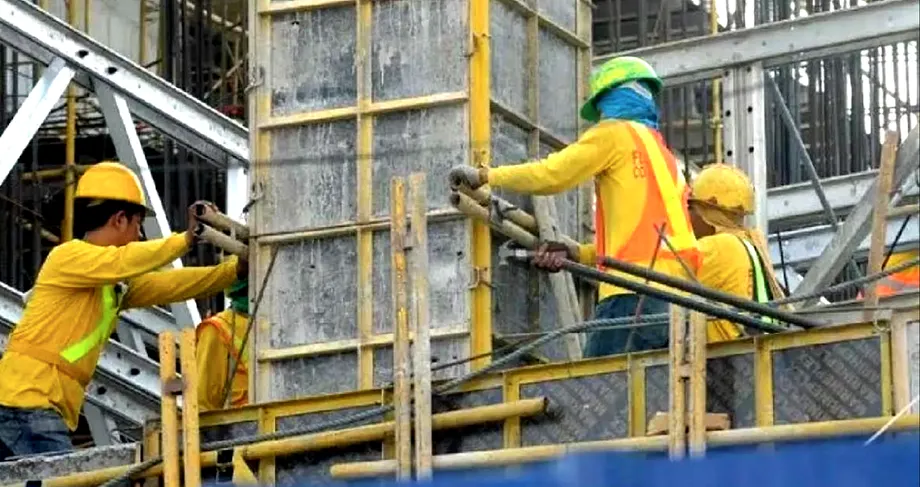
Myanmar workers are registered across manufacturing, domestic work, construction, fishing and other physically demanding occupations. Workforce figures accompanying the announcement put nearly 1.2 million in factories and more than 800,000 in construction, showing why interruptions to recruitment can affect major parts of the economy.
The committee also backed recruitment from Sri Lanka under an MoU arrangement, expected to begin in early 2027. The proposed visa would initially last two years and could be renewed for another two. This would give employers another recruitment route while Thailand seeks to retain workers already employed.
Border conditions help explain the urgency. Thailand recently raised safety concerns after fighting near the border injured a Thai civilian in Mae Sot on October 29. Fighting inside Myanmar and tensions along Thailand's frontier with Cambodia have disrupted the movement of workers from two established recruitment countries.
The broader November package also proposes exempting certain activities by temporary foreign visitors from the legal definition of work. Meetings, lectures, training, seminars, cultural performances and sports competitions are among the activities listed, reflecting a parallel effort to support international events, tourism and investment.
What workers and employers need next
The Department of Employment will submit the committee's decisions to the cabinet. Interior and Labour Ministry announcements must then take effect before eligible workers can proceed under the new arrangements.
Employers and workers can seek guidance from Bangkok employment offices in areas 1 through 10, provincial employment offices or the Labour Ministry hotline on 1506, selecting option 2. Departmental instructions will be needed to match each worker's registration category, permit deadline and renewal route to the correct process.
The next stated recruitment milestone is early 2027 for Sri Lankan workers. For migrants already in Thailand, the approaching February 13 and March 31, 2027, permit deadlines make the approval process more immediate. The proposed February 2029 extension offers a longer period of employment, while the U-turn concession targets the travel and waiting time associated with starting another term.
Key Points
- More than 2.3 million eligible migrant workers could receive permission to work until February 13, 2029.
- The extension covers categories established by cabinet resolutions dated July 8 and December 2, 2025.
- Myanmar and Lao workers completing four years during 2026 or 2027 could avoid a 30 day waiting period, with border visa procedures still required.
- Migrants with irregular status would receive a proposed route to temporary residence and one year of employment.
- People displaced from Myanmar could gain longer employment permission and wider options to work and change employers.
- Recruitment from Sri Lanka is expected to begin in early 2027.
- The package requires cabinet approval and implementing ministry announcements before it takes effect.