92,740 Workers Face Contract Deadlines Across Two Years
Thailand and Myanmar have agreed in principle to waive a requirement for Myanmar workers to spend 30 days in their home country after completing four years of employment under their government recruitment agreement. The proposal would help employers retain experienced workers, with 45,834 Myanmar workers having reached or due to reach that limit in 2026 and another 46,906 reaching it in 2027.
Contents
- 92,740 Workers Face Contract Deadlines Across Two Years
- What the 30-Day Waiver Would Change
- How the Existing Recruitment System Works
- Why Bringing in Replacements Is Difficult
- A Separate Proposal Covers Expired Documents
- Digital Permits Could Reduce Repeat Visits
- Sri Lanka Is the First Proposed New Recruitment Partner
- The Decisions and Dates That Matter
- Key Points
The immediate proposal discussed by officials covers workers whose four years end between January 1 and December 31, 2026. Thailand's Department of Employment met Myanmar authorities on July 23, 2026, and is preparing details for consideration by the Foreign Workers Management Policy Committee and the Thai cabinet. Workers would still need the required immigration and employment approvals to continue legally.
Together, the two annual groups total 92,740 people already connected to Thailand's labour market. For employers seeking to keep them, the practical concern is losing staff who know their jobs while replacement recruitment takes time. For workers, an interruption can mean travel expenses and time away from paid employment.
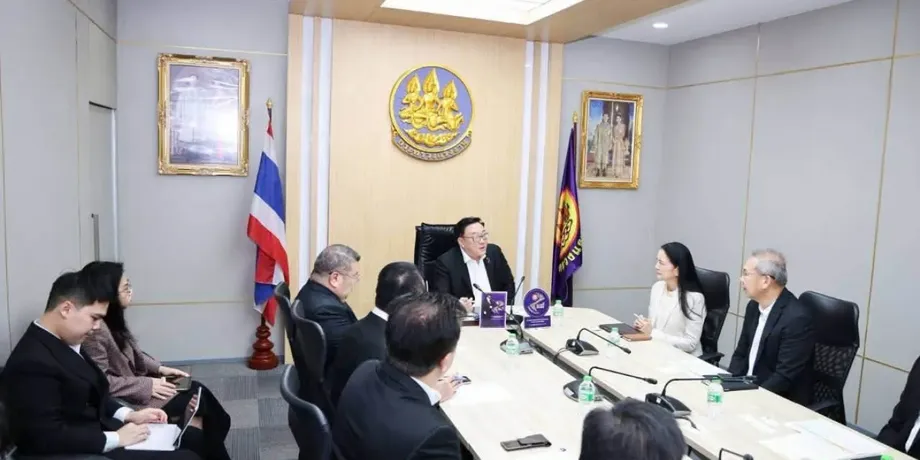
The discussions form part of a wider response to labour shortages, including pressure on construction businesses affected by unrest in Myanmar and conflict along the border between Thailand and Cambodia. Labour Minister Julapun Amornvivat discussed the measures on August 4, 2026, with a delegation led by Liza Ngamtrakulpanich, president of the Thai Contractors Association under Royal Patronage.
What the 30-Day Waiver Would Change
The proposed exemption concerns a specific part of the MOU U-Turn process, the route used when workers complete their permitted employment period and employers want to hire them again. MOU means memorandum of understanding, an agreement between governments that sets out how recruitment and employment should work.
Myanmar workers covered by the proposal would be excused from the requirement to return home for a 30-day break. Removing that interval would reduce the time they must spend outside employment and help businesses keep the same workforce rather than recruit and train replacements.
Thai officials would still check employers and workplaces, passport documents, health examinations, visas and work permits. A visa concerns permission to enter or stay in the country, while a work permit concerns permission to work. Workers need their status to meet both sets of requirements.
The 2027 group is slightly larger than the 2026 group: 46,906 compared with 45,834, a difference of 1,072 workers. That gives officials a second substantial group to plan for. The exemption described in the July discussions, however, covers workers completing their term in 2026, while the broader workforce figures extend through 2027.
How the Existing Recruitment System Works
The Department of Employment's employer work permit guide describes MOU recruitment arrangements with Cambodia, Laos, Myanmar and Vietnam. Under that system, employers submit applications to bring workers into Thailand, and workers must obtain work permits through the employment office responsible for the location of their workplace.
The guide identifies general labour and domestic work as permitted categories for workers from Cambodia, Laos and Myanmar. It lists a narrower route for Vietnamese workers, covering general labour in construction and marine fishing. These categories help explain why employers in industries requiring substantial numbers of workers are closely involved in the current discussions.
The guide directs applications to provincial employment offices in 76 provinces or Bangkok employment offices in areas 1 through 10. An employer's wish to keep a worker therefore remains part of an administrative process tied to a particular workplace and the relevant authorities.
The Department of Employment says it will consider business demand alongside conditions in Thailand's labour market. Its stated aim is to preserve workers needed by the economy while protecting employment opportunities for Thai citizens. That assessment connects the proposed waiver to actual staffing needs rather than treating every expiring contract in the same way.
Why Bringing in Replacements Is Difficult
Construction employers raised shortages linked to both unrest in Myanmar and the situation along the border between Thailand and Cambodia. Their discussions with Julapun covered keeping existing workers, managing expired documents, improving recruitment routes, reducing paperwork and seeking workers from additional countries.
New recruitment from Myanmar continues to depend mainly on air travel because land crossings used for the process remain closed amid fighting and safety concerns. Thailand proposed reopening land routes to reduce expenses for employers and workers, but Myanmar authorities said air travel remained necessary for safety reasons.
Transport restrictions make continuity more valuable to businesses. An employer losing an experienced worker may need to arrange a replacement through a recruitment system that still requires international travel, documentation and approvals. Retaining a worker already in Thailand could reduce some of that disruption, provided the worker completes the required legal process.
The measures address different points in the same staffing problem. The proposed 30-day exemption concerns people already employed in Thailand who are reaching a contract limit. Arrangements for air arrivals concern newly recruited workers. Businesses seeking staff may depend on both routes, but each has its own requirements.
A Separate Proposal Covers Expired Documents
Thai authorities are also considering temporary arrangements for workers from Cambodia, Laos, Myanmar and Vietnam whose permission to stay or work has expired. Many already have employers in Thailand. The proposal under discussion would allow qualifying workers to stay and work legally for periods of no more than two years at a time.
This group needs a route to restore or regularise its status, while the MOU proposal addresses workers reaching the end of a scheduled four years. Employers and workers therefore need to identify which process applies to them before acting on an announcement about extensions.
The policy review involves economic and security bodies, including the Interior Ministry, National Security Council, National Intelligence Agency, army and Thai Chamber of Commerce. Officials are weighing labour demand, national security, opportunities for Thai workers and Thailand's commitments to the countries from which workers come.
No registration opening date or implementation timetable has been announced for the proposed arrangement covering expired documents. Officials must first settle the policy and submit it to the Foreign Workers Management Policy Committee and then the cabinet.
A cabinet resolution dated July 14, 2026, separately extended a temporary concession for workers from Laos, Myanmar and Vietnam until December 11, 2027. The new discussions cover several groups with different nationality and document requirements, making the conditions attached to each measure important for anyone seeking continued permission to work.
Digital Permits Could Reduce Repeat Visits
The Labour Ministry has developed an e-Work Permit system intended to handle applications, permit issuance, notifications when employment begins or ends, and changes to permit details electronically. Officials presented it as another part of the effort to reduce administrative work for employers and workers.
One specific change concerns switching employers. Under the described arrangements, workers would no longer need to return to a service centre to have their identifying information collected again simply because they change employer. That would remove a repeat visit from a process that already involves several official steps.
Visa and social security matters still require coordination with the relevant agencies. Moving work permit services online would therefore address one part of the employment process, while immigration status and social insurance remain matters that authorities must coordinate alongside it.
For a worker completing four years, these measures could affect different parts of the same experience: the proposed waiver would remove a month spent at home, while electronic services could reduce paperwork and visits associated with employment permission. Their practical value depends on the final rules and the completion of required approvals.
Sri Lanka Is the First Proposed New Recruitment Partner
Thailand is also preparing to widen its recruitment options beyond its established sources of migrant labour. A cabinet decision on August 19, 2025, approved an approach for bringing workers from additional countries, with Sri Lanka selected for the first pilot group.
The target is 10,000 Sri Lankan workers, with operations expected to begin in early 2027. The Department of Employment has completed a final draft agreement, which is being sent for consideration by the Foreign Ministry's Department of Treaties and Legal Affairs and the cabinet before signing.
Nepal, Bangladesh, Indonesia and the Philippines are also among the countries identified for possible recruitment. Prospective workers must be at least 18 and complete the required legal procedures.
The size of the Sri Lankan pilot puts the policy in perspective. Its target of 10,000 workers is about 10.8% of the 92,740 Myanmar workers reaching four years across 2026 and 2027. Retaining existing staff and recruiting from new countries serve different needs: one protects continuity now, while the other broadens future choices.
Employers would still need recruitment arrangements that match their actual staffing requirements. Adding countries gives Thailand more options when conflict or transport restrictions disrupt an established route, but the proposed pilot also requires an approved agreement and an organised recruitment process.
The Decisions and Dates That Matter
The labour measures have developed through several separate decisions and discussions. The sequence helps explain why some dates refer to an existing concession, while others concern proposals still being prepared.
- August 19, 2025: The cabinet approved an approach to recruitment from additional countries, starting with a Sri Lankan pilot.
- July 14, 2026: The cabinet extended a temporary concession for workers from Laos, Myanmar and Vietnam until December 11, 2027.
- July 23, 2026: Thai and Myanmar officials agreed in principle to waive the 30-day break for Myanmar MOU workers completing four years during 2026.
- August 4, 2026: Julapun discussed labour shortages and proposed responses with the Thai Contractors Association delegation.
- Early 2027: Thailand expects to begin the Sri Lankan recruitment pilot, subject to the agreement process.
- January through December 2027: Another 46,906 Myanmar MOU workers are due to complete four years.
The immediate administrative task is to turn the agreement in principle with Myanmar into detailed Thai measures for policy committee and cabinet consideration. Employers seeking to retain workers will need those conditions to plan staffing, while workers need the relevant permissions to preserve lawful employment.
Thailand's approach combines retaining experienced staff, addressing expired documents, simplifying permit services and developing new recruitment channels. Each responds to a concrete source of disruption, from contract deadlines to closed land crossings. Keeping those processes coordinated will determine how smoothly businesses and workers can move from expiring permissions to continued employment.
Key Points
- Thailand and Myanmar agreed in principle to remove the 30-day return requirement for Myanmar MOU workers completing four years in 2026.
- The proposal still requires detailed consideration by Thailand's policy committee and cabinet, along with the necessary worker approvals.
- Some 45,834 workers reach the limit in 2026 and another 46,906 in 2027, totalling 92,740.
- A separate proposal concerns expired documents held by workers from Cambodia, Laos, Myanmar and Vietnam.
- New Myanmar recruitment continues mainly by air because of fighting and safety concerns affecting land routes.
- Thailand targets an initial 10,000 workers from Sri Lanka, with recruitment expected to begin in early 2027.