Washington would act first, Tehran says
Iran says it could reopen the Strait of Hormuz within two days if the United States accepts its conditions, shortening a proposed seven day process as Qatar and Pakistan pursue an agreement to end the war. The offer puts American action first: Washington would carry out an initial set of measures, followed the next day by the restoration of shipping through the waterway.
Contents
- Washington would act first, Tehran says
- How the shorter timetable would work
- What Iran wants in return
- Qatar and Pakistan keep messages moving
- Months of diplomacy lead to another proposal
- A gas tanker attack puts maritime safety in focus
- Why access matters to Asian energy buyers
- Strike threats continue alongside negotiations
- Key Points
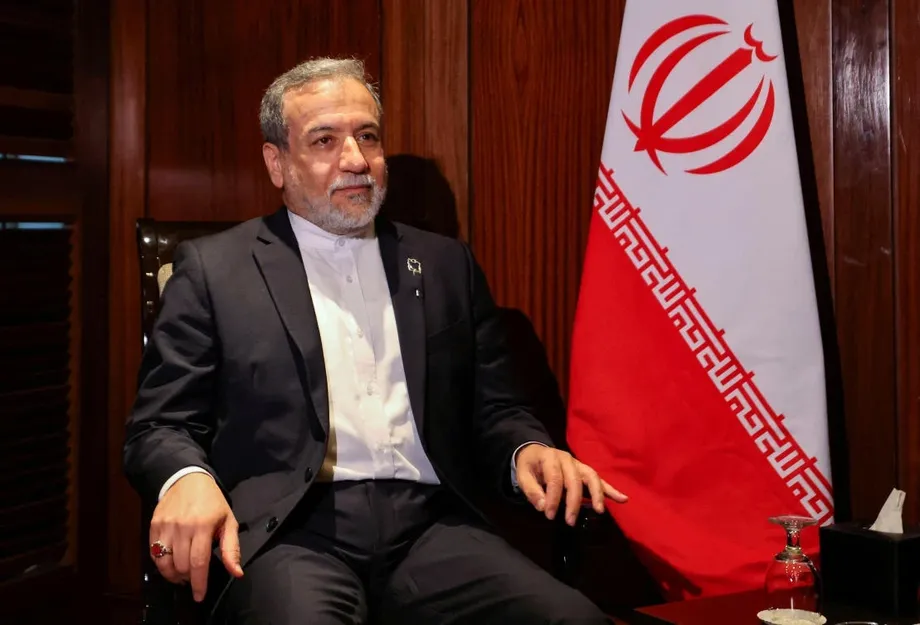
Iranian Foreign Minister Abbas Araghchi outlined that sequence in an interview released on November 1. Foreign Ministry spokesman Esmaeil Baghaei reinforced the offer on November 2, saying its implementation depended on Washington accepting Tehran's demands. Those include ending the war on all fronts, releasing frozen Iranian assets, lifting sanctions on Iran's oil sector and ending the American naval blockade of Iranian ports.
The proposal concerns a narrow passage between Iran and Oman that carried roughly one fifth of the world's oil and a substantial share of global exports of liquefied natural gas, or LNG. Iran has restricted passage since the war began in late February, while the United States has imposed its own blockade on Iranian ports.
An official briefed on the negotiations said a draft proposal to end the war was circulating through Qatari mediation. Neither government has announced a final agreement or a date for reopening the strait.
The diplomatic push comes alongside fresh threats of military action and an attack on a tanker carrying Qatari gas toward Pakistan. Together, those developments place the negotiations under immediate pressure: mediators are trying to secure a political settlement while ships and energy cargoes remain exposed to danger.
How the shorter timetable would work
Araghchi said Qatari and Pakistani mediators had worked on Iran's original September proposal to make it easier to implement and more acceptable to the parties. The earlier plan envisaged a process lasting seven days, with Hormuz reopening on day six after American action to meet Iranian demands. President Donald Trump rejected that initial proposal.
Araghchi, Iran's foreign minister, described the revised sequence in these terms:
I can say that we have now reached a two-day plan. This means that on the first day, America will implement a set of measures, and on the second day, the opening of the Hormuz strait will be reopened, and the movement will return to its previous state.
Iran is therefore offering to move the reopening from day six to day two, four days earlier within the proposed process. The sequence still requires the United States to act before Iran restores passage. The shorter timetable changes the speed of implementation while leaving that central demand in place.
Baghaei, the Foreign Ministry spokesman, described the compressed schedule as evidence of Tehran's willingness to reach an agreement:
The possibility of implementing this plan in two days is another indication of Iran's good-faith approach.
What Iran wants in return
Tehran's conditions connect access to Hormuz with the wider military and economic conflict. Iran wants an end to fighting across all fronts, access to money held abroad, relief from restrictions on oil exports and the removal of the American naval blockade.
Frozen assets are funds Iran owns but cannot freely use because of financial restrictions. Oil sanctions limit its ability to sell petroleum and receive payment. The naval blockade adds a physical restriction on trade through Iranian ports. Tehran is seeking relief across all three areas, alongside an end to the war.
Araghchi also said Washington must accept a new transit route agreed between Iran and Oman, remove sanctions introduced in recent months and reduce American troop numbers in the region. Washington has imposed another round of sanctions since August, adding economic pressure while negotiations continued.
These conditions make the proposal much broader than a shipping arrangement. A deal would have to connect military commitments, financial decisions and rules governing vessels passing through Hormuz. The precise measures Washington would take on the first day, and how the parties would confirm their completion, have not been publicly detailed.
Qatar and Pakistan keep messages moving
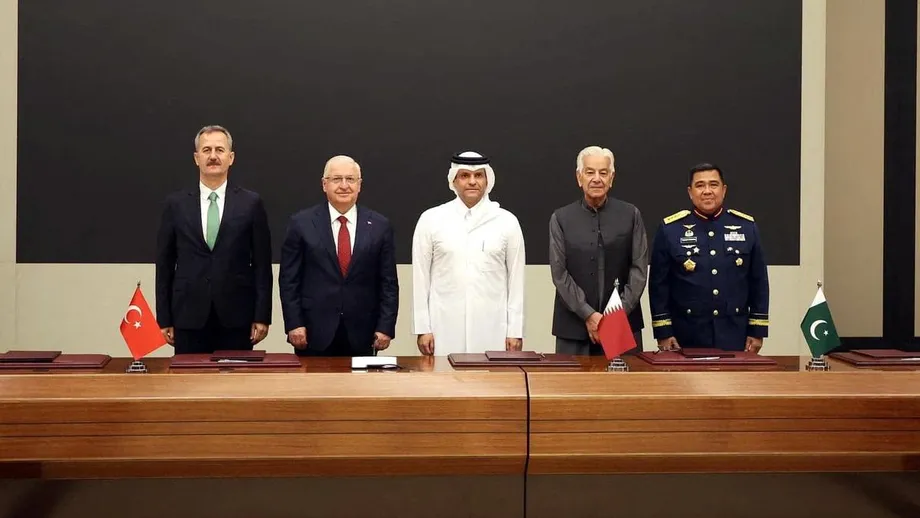
Qatar and Pakistan have continued carrying messages between Washington and Tehran despite the failure of earlier negotiations to produce a lasting settlement. Qatari mediators visited Tehran on Friday, while Iranian Deputy Foreign Minister Kazem Gharibabadi traveled to Doha to support exchanges with Washington through Qatari intermediaries.
Iranian negotiators left Doha on Sunday. An official briefed on the talks said their departure was not caused by difficulties in the negotiations and that a follow up meeting was possible. The official gave no details of the circulating draft agreement.
US Vice President JD Vance also sent a letter to Mohsen Rezaei, the head of Iran's Supreme National Security Council. Rezaei said in a video broadcast on Iranian television that he had read it but had not yet replied. He described a change in the American tone as encouraging.
Rezaei, whose council handles major national security decisions, offered this assessment:
I haven't yet responded. Their tone has completely changed.
Rezaei nevertheless said Iran would maintain its restrictions on Hormuz until its conditions, including the release of frozen assets, were met. His remarks paired a positive reading of the letter with the same demand expressed by the Foreign Ministry: American concessions must come before reopening.
Months of diplomacy lead to another proposal
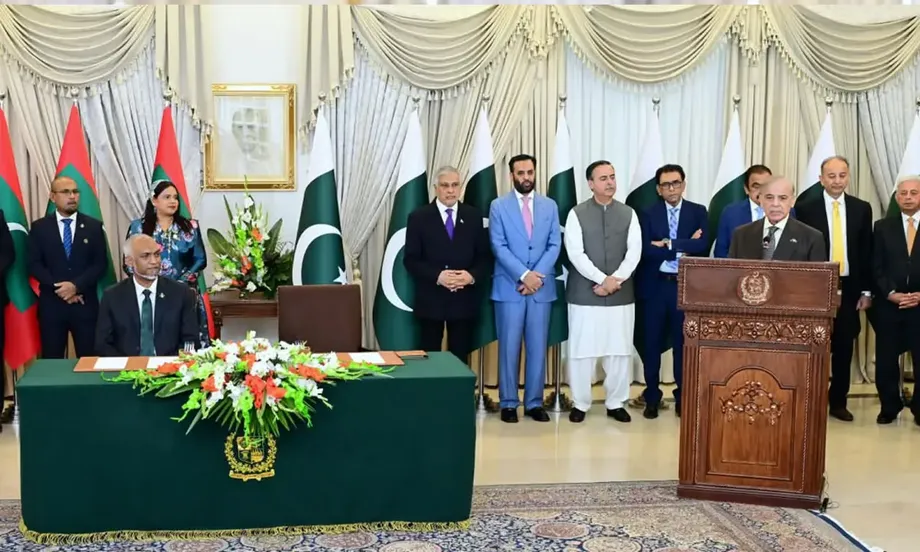
Pakistan's role builds on a June negotiating framework that later broke down. The June Islamabad memorandum was intended to support further discussions on nuclear issues, sanctions and ways to manage disputes. Disagreements over security guarantees and navigation through Hormuz continued after that effort collapsed in July.
The latest exchanges also follow the October regional security talks in Tehran, where Iran, Saudi Arabia, Pakistan and Türkiye agreed to keep discussions open. Pakistan proposed that gathering, which brought regional security concerns into the broader effort to prevent renewed fighting.
The main stages of the current diplomatic effort are:
- Late February: The war began, followed by Iranian restrictions on Hormuz and an American naval blockade of Iranian ports.
- June and July: A negotiating framework brokered with Pakistani involvement was agreed, then broke down.
- September: Iran submitted its seven day proposal through Qatar, envisaging reopening Hormuz on day six.
- October 26: Iran, Saudi Arabia, Pakistan and Türkiye agreed in Tehran to continue regional security discussions.
- November 1 and 2: Araghchi and Baghaei publicly described the shorter process, conditional on American acceptance of Iran's demands.
Security guarantees and passage through the strait have remained central throughout those efforts. The current proposal again tries to settle the order of action: what Washington must do first, and when Tehran would allow shipping to resume.
A gas tanker attack puts maritime safety in focus
The attack on the LNG carrier Al Mayeda shows the immediate stakes for the countries conducting the mediation. The vessel was carrying Qatari gas toward Pakistan when it came under fire near the Strait of Hormuz during the preceding week.
Pakistan had negotiated with Iran for the ship's safe passage. People familiar with the incident said Iranian authorities had given permission just hours before the attack. The vessel flies the Marshall Islands flag and is owned by Qatar Gas Transport Company.
Qatar's Foreign Ministry said it had begun an investigation to establish the circumstances and identify those responsible. Responsibility for the attack has not been publicly established. Pakistan had made no public response in the account of the incident.
The Qatari Foreign Ministry said it reserved the right to protect the country's ships, crews and assets:
The Ministry of Foreign Affairs affirms that the State of Qatar reserves its right to take all necessary measures, in accordance with international law and the UN Charter, to protect its assets and safeguard its vessels and their crews.
Saudi Arabia also condemned the attack, citing the threat to navigation and global energy supplies. Qatar warned of environmental dangers from attacks on energy carriers, including risks to the marine environment and regional water security.
Why access matters to Asian energy buyers
Pakistan's involvement as both a mediator and the intended destination of the Al Mayeda's cargo connects the negotiations directly to energy deliveries. LNG is natural gas cooled into liquid form so that ships can transport it. A disruption to a carrier's journey affects the movement of fuel from the exporter to the buyer, even when governments have negotiated permission for passage.
Oil shipments through Hormuz have also become concentrated among operators willing to continue sailing. September tracking figures discussed in the Sinokor shipping dispute put crude carried by tankers associated with the South Korean group at 105.6 million barrels out of 286.3 million barrels passing through the strait, about 37 percent.
Those associated vessels carried 8.3 million barrels more than the combined 97.3 million barrels moved by Saudi Arabia's Bahri, Kuwait Oil Tanker Company and Abu Dhabi National Oil Company's shipping arm. Iran subsequently threatened legal action against Sinokor vessels over alleged transit violations, while the company disputed responsibility for ships identified by Iranian authorities.
For cargo owners, ship operators and crews, an agreement would need to translate political promises into predictable passage. The proposed Iran and Oman route, the lifting of restrictions and the protection of vessels would all affect whether a reopening restores regular deliveries.
Strike threats continue alongside negotiations
Trump has described negotiations as productive while continuing to threaten further attacks. On October 31, he said the United States still had to address one or two targets, including Pickaxe Mountain in central Iran. The site is suspected of having a nuclear role; Tehran denies that it is a nuclear facility.
The American president said Washington would not launch new attacks before the US midterm vote on Tuesday, November 3. His comments left further military action possible after the election, making that vote the next immediate political date surrounding the talks.
Iran has issued its own warnings. Supreme leader Mojtaba Khamenei told senior military commanders on Saturday that any threat should receive an immediate response without geographical limits. He also ordered an update to Iran's target list to include American and Israeli assets.
The meeting was the first reported gathering between Khamenei and the senior military leadership since he assumed the role in March after his father, Ayatollah Ali Khamenei, was killed in American and Israeli strikes. Mojtaba Khamenei has not been seen publicly since before taking office.
Baghaei, speaking for Iran's Foreign Ministry, warned against renewed military action:
Any act of aggression against Iran, any military attack against Iran, by whatever means, will be met with a powerful, immediate and comprehensive response from us.
Washington and Tehran are therefore exchanging proposals while retaining threats of force. The immediate diplomatic task is to turn the proposed sequence into commitments both governments accept, before another attack interrupts negotiations or puts more vessels at risk.
Key Points
- Iran says Hormuz could reopen on the second day of a process beginning with American measures to meet its demands.
- Tehran seeks an end to the war, access to frozen assets, relief from oil sanctions and an end to the US naval blockade.
- Araghchi also called for acceptance of an Iran and Oman transit route and fewer American troops in the region.
- Qatar and Pakistan are mediating, and a draft agreement is circulating, but no final deal or reopening date has been announced.
- The attack on the Pakistan bound LNG carrier Al Mayeda remains under investigation by Qatar.
- Fresh military threats and the November 3 US midterm vote frame the next stage of diplomacy.