Energy and transport costs threaten another squeeze on household budgets
Philippine inflation could reach 8.1% in October 2026, the Bangko Sentral ng Pilipinas said, as higher fuel prices, electricity bills and transport fares threaten to push the annual increase in consumer prices above September's 7.2%. The central bank forecast a range of 7.1% to 8.1%, with cheaper agricultural products expected to provide some relief.
Contents
- Energy and transport costs threaten another squeeze on household budgets
- What the October forecast means
- Why cheaper food may provide only partial relief
- Why the BSP raised interest rates
- Unexpected fares and a smaller wage increase
- The outlook stretches into 2027 and 2028
- The dates and decisions to watch
- Key Points
The Philippine Statistics Authority is scheduled to release the official October figures on November 5. At the bottom of the BSP's forecast range, inflation would ease by 0.1 percentage point from September. At the top, it would accelerate by 0.9 percentage point. Either outcome would leave households facing price increases well above the central bank's 3% annual target.
The forecast follows a decision to raise the benchmark interest rate by 50 basis points, equivalent to half a percentage point. BSP Governor Eli Remolona Jr. said the decision reflected concern about the coming months as well as the outlook for next year, when inflation could remain high before monetary policy has its fuller effect.
The BSP identified the main forces behind its October estimate in a statement:
Upward price pressures are likely to come from higher prices of domestic fuel, electricity, and transport fares.
For families, those pressures arrive through several bills at once: the cost of getting to work or school, powering a home and buying goods transported to shops. Lower food prices could soften that pressure, although the central bank still expects the broad basket of consumer purchases to become substantially more expensive than a year earlier.
What the October forecast means
Inflation measures how quickly prices rise across a basket of goods and services bought by households. An annual reading of 8.1% would mean that the basket costs 8.1% more than in the same month a year earlier. Individual purchases can rise faster, rise more slowly or become cheaper.
September's 7.2% reading had already marked a sharp acceleration from August's 6.1%. If October reaches the upper end of the forecast, the annual rate would have risen by two percentage points in two months. That comparison helps explain why the BSP has become more concerned about persistent pressure on household budgets.
The country was already experiencing a September price squeeze when the peso closed at a record PHP62.90 per US dollar on October 8. September rice inflation reached 20.3%, while transport inflation stood at 14.6%, showing how much faster some essential expenses were rising than the national average.
The BSP's October forecast brings a different balance of pressures: energy and fares are pushing upward, while improved agricultural supply could pull some food prices downward. The official release will show how those movements combine in the national inflation rate.
Why cheaper food may provide only partial relief
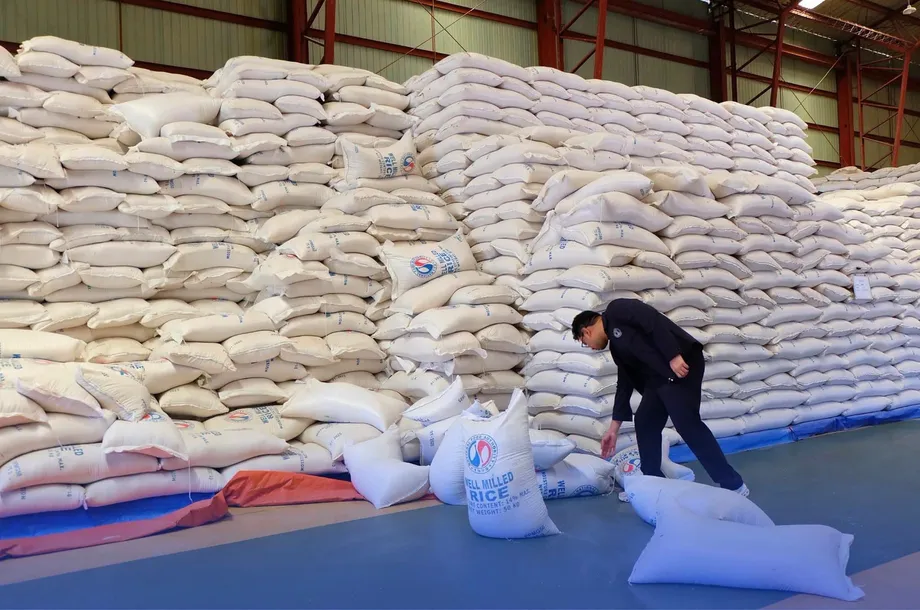
Rice, vegetables, meat and fish are the agricultural products the central bank identified as potential sources of relief. The BSP attributed their lower prices to favorable supply conditions, meaning that sufficient goods were reaching the market to ease pressure on prices.
The central bank explained that offset in its statement:
These pressures could be partially offset by lower prices of key agricultural commodities, such as rice, vegetables, meat, and fish, owing to favorable supply conditions.
Food matters heavily to the national result. In September, food and nonalcoholic beverages accounted for 35.8% of headline inflation, housing and utilities for 24%, and transport for 18.3%. Together, those categories contributed 78.1% of the national rate.
Those figures show why cheaper agricultural products could make a meaningful difference, while also explaining why food relief alone may leave families under pressure. Electricity and transport sit alongside food among the largest contributors to rising living costs.
El Niño adds a risk to the food outlook. The BSP warned that it could raise the cost of agricultural inputs and products. Drier conditions can reduce water available for farming and affect harvests, making the current improvement in supply an important factor to watch rather than a settled outlook for the coming year.
Why the BSP raised interest rates
Remolona said the central bank acted because it expected inflation to accelerate further through a combination of oil prices, transport fares and possible weather effects on food. His explanation placed the October forecast within a longer period of expected price pressure.
The governor described the reasoning behind the increase:
We took this decisive action because we forecast that inflation will accelerate further in the coming months due to oil prices, transport fares, and the potential effects of El Nino on food prices.
A rise of 50 basis points increases the policy rate by 0.50 percentage point. Higher policy rates tend to make borrowing more expensive, encouraging some households and businesses to delay spending or investment. Slower demand can reduce the ability of businesses to keep raising prices.
The decision followed calls for stronger tightening from former BSP officials Diwa Guinigundo and Wilhelmina Mañalac before the October 22 policy meeting. They had urged consideration of a half percentage point increase as inflation spread beyond food and fuel, even while economic activity remained weak.
Interest rates work through spending and financial decisions over time. The BSP is trying to limit the spread of higher costs into repeated price increases across the economy, while weighing the pressure that more expensive borrowing places on consumers and businesses.
Unexpected fares and a smaller wage increase
Transport fares were among the developments that surprised the central bank. Remolona said the increases were larger than expected, alongside a rise in oil prices and another increase in food costs.
The governor described those developments this way:
Oil prices went up a bit. Then we had a bump in food prices. But mainly domestic supply shocks. Transport fares went up more than we thought.
Domestic supply shocks are disruptions or changes inside the country that make goods or services harder or more expensive to provide. For households, larger fare increases mean a bigger share of income goes toward routine journeys, leaving less money for other purchases.
The first tranche of the Metro Manila wage increase took effect on September 26 after several delays. Remolona said that increase was smaller than the BSP had expected. The wage adjustment therefore entered the central bank's assessment differently from fares, which exceeded its expectations.
Wages matter on both sides of the price equation. Higher pay helps workers cover their bills, while also adding to costs for employers. The size of wage and fare changes helps the BSP judge how pressures may move through the economy after the initial increase in fuel or food prices.
The outlook stretches into 2027 and 2028
The BSP projects average inflation of 6.1% in 2026 and 6% in 2027, against its 3% annual target. The forecast for 2026 is 3.1 percentage points above that target, while the forecast for 2027 is twice the target rate.
Annual averages and monthly peaks describe different things. The 6% forecast for 2027 combines inflation readings across the year; a particular month could be considerably higher. Remolona said headline inflation could reach 8% at some point in 2027, with an even steeper increase for poorer households.
The governor set out that concern:
So maybe in 2027, let's say 8%. But for the poor, it's even worse, 9% in 2027,
Poorer households can experience a different inflation rate because their spending is concentrated differently across goods and services. When essentials take a larger share of a family's budget, increases in those prices leave less room to reduce other spending.
Remolona said monetary policy takes about a year to begin having an effect, with inflation expected to move closer to target in 2028. That delay helps explain why the BSP is responding now to risks expected to persist next year.
The dates and decisions to watch
November 5 is the next immediate checkpoint, when the Philippine Statistics Authority is scheduled to publish the October inflation result. The BSP will then assess the reading alongside economic growth data and developments in the Middle East, where the conflict has pushed global oil prices higher.
The main developments span several dates:
- September 26, 2026: The first tranche of the Metro Manila wage increase took effect.
- September 2026: Annual inflation reached 7.2%, up from 6.1% in August.
- October 2026: The BSP raised its benchmark rate by 50 basis points and forecast October inflation at 7.1% to 8.1%.
- November 5, 2026: The Philippine Statistics Authority is scheduled to release official October inflation figures.
- December 17, 2027: The BSP's final monetary policy meeting for 2027 is scheduled.
- 2028: The BSP expects inflation to begin approaching its target as monetary restraint takes effect.
Remolona has left further interest rate increases open, without committing to their size. He said the decision would depend on incoming information:
I would say we remain open to further interest rate hikes. I can't say whether it will be 50 or 25 or bigger,
The central bank's immediate task is to assess whether cheaper agricultural products are providing enough relief to offset energy and transport costs. For households, the November release will put a national figure on that balance, while the BSP's longer outlook points to continued pressure on living expenses through 2027.
Key Points
- The BSP forecasts October inflation of 7.1% to 8.1%, compared with September's 7.2%.
- Fuel, electricity and transport fares are pushing prices higher; cheaper rice, vegetables, meat and fish could provide partial relief.
- The central bank raised its benchmark interest rate by 50 basis points and remains open to further increases.
- The BSP projects average inflation of 6.1% in 2026 and 6% in 2027, above its 3% target.
- Official October inflation figures are scheduled for release on November 5.
- Remolona expects monetary policy to help bring inflation closer to target in 2028.