Japan trials will begin with a small fleet
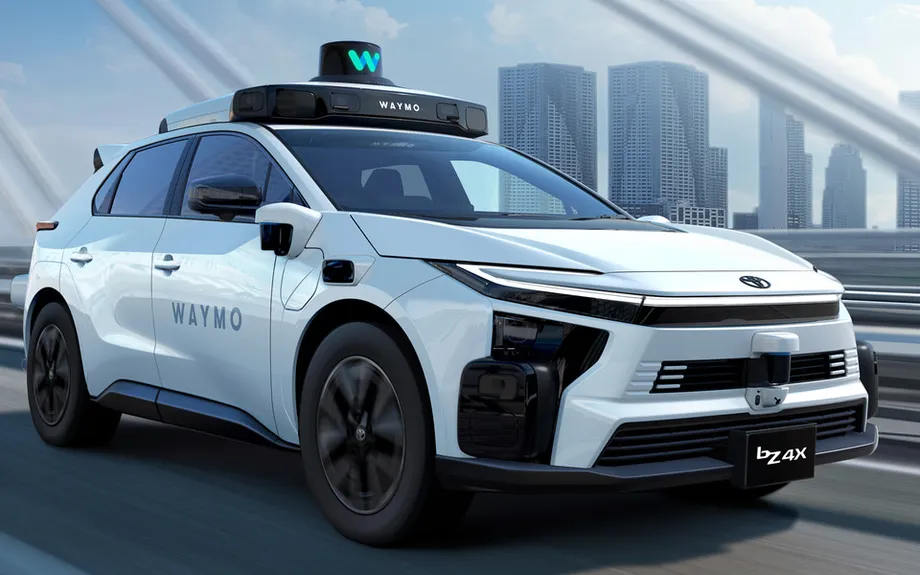
Toyota and Waymo plan to begin testing and validating driverless Toyota bZ4X electric taxis in Japan in 2027, with the vehicles built and fitted with autonomous driving equipment at Toyota's Takaoka Plant in Toyota City, Aichi Prefecture. Britain is expected to follow in subsequent years as the companies work toward commercial services.
Contents
- Japan trials will begin with a small fleet
- What Level 4 means for a taxi passenger
- Takaoka will build the cars and install the technology
- A cabin designed around passengers
- Japan and Britain come first
- Waymo's Jaguar testing continues alongside Toyota
- How the partnership reached this stage
- The work could extend beyond taxis
- Key Points
The announcement on October 30, 2026, moves their April 2025 preliminary partnership into a more concrete phase: a named vehicle, a manufacturing location and a year for initial operations. Toyota will supply the cars and integrate the hardware, while Waymo, the autonomous driving business owned by Google parent Alphabet, will provide the driving technology.
The 2027 bZ4X program will begin with trials rather than a confirmed public commercial launch. Toyota executive vice president Nakajima said initial operations would involve a small number of vehicles. The companies intend to commercialize the service after testing and validation.
Toyota and Waymo describe the project as a step toward Japan's first fully autonomous taxi service using mass produced vehicles manufactured domestically. For passengers, the eventual aim is a taxi journey without a person driving the vehicle.
What Level 4 means for a taxi passenger
The bZ4X taxis will use Level 4 autonomous driving technology. At this level, a vehicle can perform the driving task without a human driver within specified operating conditions, such as a defined service area. The operating limits determine where and when the vehicle can provide rides.
Testing and validation will check how the vehicle and its automated driving system work together before wider deployment. A commercial service requires both a suitable car and a driving system able to handle the roads and conditions within its permitted operating area.
Toyota and Waymo say their partnership combines Toyota's vehicle development and manufacturing experience with Waymo's fully autonomous technology. Their stated goal is to expand the use of Level 4 vehicles whose safety has been validated.
Takaoka will build the cars and install the technology
Toyota's Takaoka Plant will handle the process from assembling the base vehicle to installing Waymo's autonomous driving hardware. Placing both tasks at the same factory gives Toyota responsibility for delivering a vehicle equipped for the autonomous fleet, rather than supplying only the underlying car.
The bZ4X is a battery electric vehicle built on Toyota's e-TNGA platform, developed with Subaru. A vehicle platform is the basic engineering foundation shared by a model or family of models. Here, Toyota and Waymo are using an existing electric vehicle as the foundation for a specialized taxi.
Factory integration is a central part of the agreement because the car and its autonomous equipment must function together. Toyota contributes the manufacturing process and vehicle engineering, while Waymo supplies the system that carries out the driving.
Waymo co-CEO Dmitri Dolgov said Toyota was selected for its safety technologies, reliability and vehicle quality. Those priorities connect the partnership's two main tasks: building dependable vehicles and preparing an automated driving system for commercial operation.
A cabin designed around passengers
The planned bZ4X taxis will include automatic opening and closing doors, an electrically operated rear hatch, rear legroom and indirect cabin lighting. Toyota has presented the configuration as a way to improve comfort and make boarding and leaving the vehicle easier.
Automatic doors and a powered luggage opening are particularly relevant to a service designed to operate without a driver. They move some everyday taxi functions into the vehicle itself, while the rear cabin becomes the main space customers use during a journey.
The passenger features also show how the project extends beyond adding autonomous equipment to a standard car. Toyota is preparing a version of the bZ4X for taxi use, with attention to the parts of the journey that happen before and after the vehicle moves.
Japan and Britain come first
Japan will be the initial testing ground for the Toyota vehicles, followed by planned deployment in Britain and potentially other markets. Japan and Britain both drive on the left and generally use cars with the steering wheel on the right, giving the initial program a shared vehicle configuration.
Dolgov, Waymo's co-CEO, described the starting markets during the announcement:
We'll start with the right-hand drive markets in Japan and the UK.
Toyota also manufactures vehicles with the steering wheel on the left, including versions of the bZ4X. Nakajima said the company wanted to gain experience in Japan before pursuing broader opportunities. The sequence puts initial learning in Japan ahead of wider international deployment.
The companies have not disclosed the Japanese operating locations, an exact fleet count, a date for commercial bZ4X passenger service, financial terms or production targets. Britain is planned for subsequent years, with its service launch dependent on the necessary permits; no further countries or firm deployment dates were specified.
Waymo's Jaguar testing continues alongside Toyota
Waymo began testing Jaguar I-PACE vehicles in Japan in 2025. Drivers from Tokyo taxi company Nihon Kotsu drove the vehicles around the capital to help Waymo develop its software's understanding of local roads and driving conditions.
Dolgov said Waymo still planned a Japanese pilot using the Jaguar vehicles in 2027. A fully autonomous service in Tokyo is also planned for that year. The Toyota testing program therefore sits alongside work involving another vehicle model, with the bZ4X's commercial introduction to follow its own testing and validation process.
Waymo has also been testing Jaguar I-PACE vehicles in London in preparation for a robotaxi service. The Toyota agreement would add another vehicle model for its international operations, while its existing Jaguar programs continue.
For readers tracking the launch dates, the practical point is that 2027 covers more than one activity: bZ4X trials in Japan and a planned Waymo pilot involving Jaguars. The Toyota announcement sets the year for testing its vehicles, while commercialization is a later objective.
How the partnership reached this stage
Toyota and Waymo first agreed in April 2025 to explore developing and deploying a new autonomous vehicle platform. The October 2026 announcement identifies how that cooperation will begin to take physical form at Takaoka.
The sequence also includes Toyota's broader work on automated driving:
- April 2025: Toyota and Waymo announce a preliminary agreement to explore an autonomous vehicle platform.
- 2025: Waymo begins testing Jaguar I-PACE vehicles in Japan with help from Nihon Kotsu drivers.
- August 2026: Toyota discusses entering the Level 4 robotaxi business using Waymo technology and sets a separate vehicle technology goal for 2028.
- October 30, 2026: Toyota and Waymo detail the bZ4X program and production at Takaoka.
- 2027: Testing and validation of autonomous bZ4X vehicles are scheduled to begin in Japan.
- Subsequent years: The companies plan to introduce the Toyota vehicles in Britain and potentially other markets.
Toyota's separate 2028 goal concerns technology requiring only minimal driver handling. The bZ4X taxi project has a different operating model: Level 4 automation designed to drive without a human driver within its defined conditions.
The work could extend beyond taxis
Toyota and Waymo will continue exploring autonomous technology for personally owned Toyota vehicles. That would take their cooperation beyond fleets, where vehicles are operated as part of a managed taxi service, into cars used by individual owners.
Nakajima, Toyota's executive vice president, said at an online press briefing that the partnership:
holds the potential to expand into various areas beyond taxis, including commercial vehicles
The companies also plan to consider how knowledge gained from Waymo's real world operations could improve road safety. Dolgov said they share Toyota's goal of zero traffic fatalities and want to bring the safety and convenience of autonomous driving to more people in Japan and other major markets.
Nakajima linked that work to transportation infrastructure, including how vehicles interact with the roads around them. In a statement describing the collaboration, he said:
This collaboration will help scale that technology and bring it to customers in Japan and beyond through Waymo's ride-hailing service, and in parallel, Toyota will continue to explore how integrating vehicles with traffic infrastructure can make those roads safer still,
The immediate commitment remains the bZ4X testing program. Private cars, commercial vehicles and infrastructure cooperation are additional areas the companies intend to explore as they build experience with the taxi fleet.
Key Points
- Toyota and Waymo plan to begin driverless bZ4X testing and validation in Japan in 2027.
- Toyota's Takaoka Plant will assemble the vehicles and install Waymo's autonomous driving hardware.
- Initial operations will use a small fleet, with commercialization intended after testing.
- The taxis will use Level 4 technology, which enables driverless operation within specified conditions.
- Britain is a planned later market, while Waymo continues separate Jaguar testing programs.
- The partnership may also extend to privately owned cars, commercial vehicles and road safety projects.