A private meeting brings the hardware partnership into focus
OpenAI chief executive Sam Altman met Foxconn Chairman Young Liu in Taiwan at noon on October 30, 2026, as the companies worked toward more specific cooperation on the equipment needed to run artificial intelligence. Liu said OpenAI's recent progress was helping it predict its future hardware needs more accurately, giving their joint work a clearer direction.
Contents
- A private meeting brings the hardware partnership into focus
- What the original agreement covers
- Why better forecasts matter
- Foxconn expects growth to remain uneven
- Why Liu sees shortages as a demand signal
- The bubble debate turns on two different markets
- Two customer groups drive demand, with two more still developing
- A wider manufacturing network is also on Liu's agenda
- Key Points
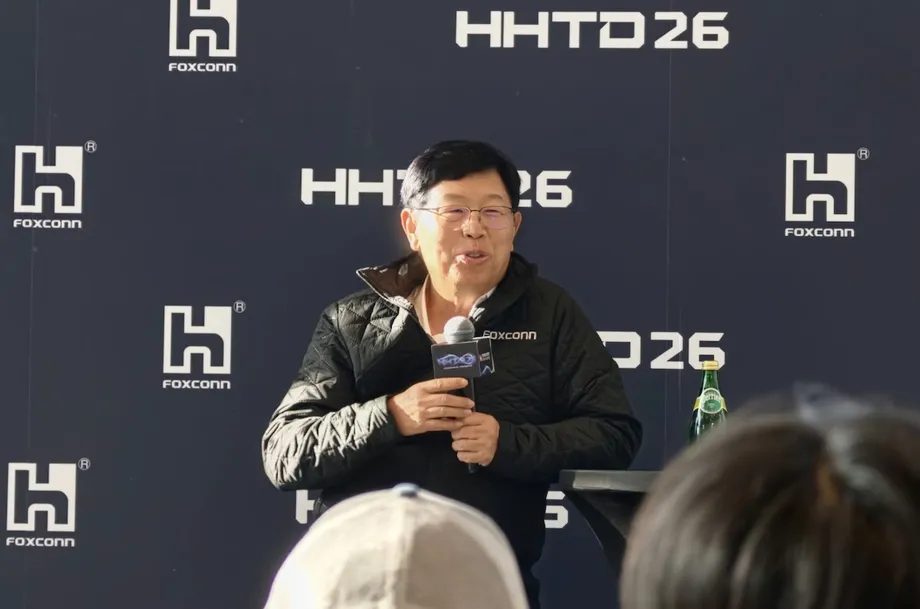
The meeting interrupted Liu's schedule at Foxconn's seventh Technology Day, which he described as its largest yet. A media interview originally set for 12:30 p.m. was pushed back to around 3 p.m., with Liu appearing at approximately 3:15 p.m. He apologized and explained that the meeting with Altman had been arranged at short notice.
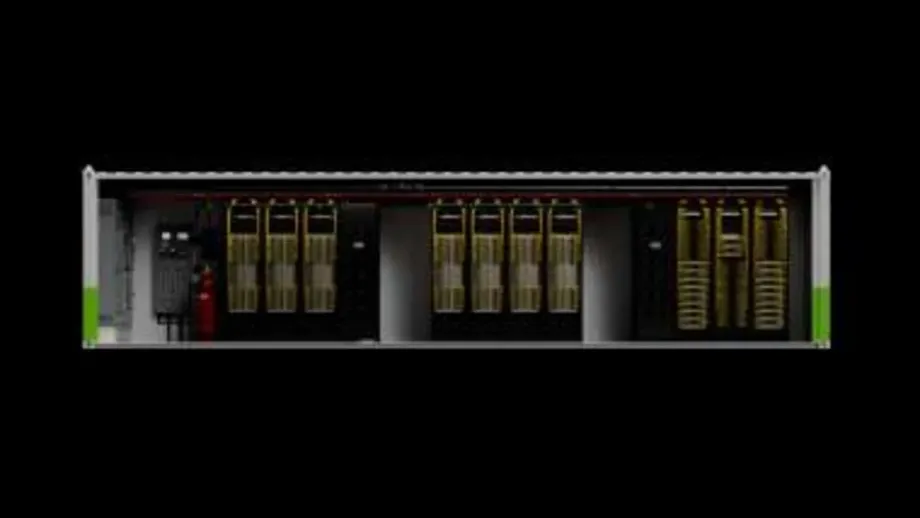
The encounter followed a partnership announced in November 2025 to design the next generation of AI infrastructure and manufacture it in the United States. Its scope extends beyond servers to racks, power and cooling systems, networking equipment and cables, the connected equipment that allows a data center to operate.
Liu said the cooperation would become more concrete as the companies confirmed their plans. He did not disclose the substance of the private discussion, new commercial terms or a date for a further announcement.
What the original agreement covers
Foxconn and OpenAI's November 2025 arrangement established a development process: OpenAI would share information about its future hardware requirements, and Foxconn would use that information to support design and development. OpenAI would then have options to evaluate and purchase the resulting systems.
The initial agreement carried no purchase commitment or financial obligation. Its immediate purpose was to connect OpenAI's expectations about future computing needs with Foxconn's work on physical equipment. Any eventual purchases would require further commercial decisions.
AI infrastructure is the machinery behind services such as chatbots. Servers perform the calculations, racks hold the servers, power equipment supplies electricity, cooling systems remove heat, and networks move information between machines. Designing those parts together matters because each affects how the others operate.
The partnership's breadth gives Foxconn a role across that equipment chain. For OpenAI, sharing requirements earlier gives the manufacturer more information about what future systems may need to handle before their designs are settled.
Why better forecasts matter
Liu linked the latest progress to OpenAI's improving ability to anticipate demand. He said the company had made advances and adjustments over the preceding period, allowing it to forecast future needs more precisely. That, in turn, was making the direction of cooperation increasingly specific.
A hardware forecast translates expectations about AI use into practical requirements. More users, different types of AI tasks or changes in how models operate can affect the amount of computing equipment needed and the demands placed on electricity, cooling and connections between servers.
Foxconn needs those requirements to guide development. A rack is more than a frame filled with computers: its power supply, cooling and networking must work together. Better information about the intended workload helps the companies decide what to build.
The public sequence now stretches across almost a year:
- November 2025: Foxconn and OpenAI announced cooperation on AI infrastructure design and manufacturing in the United States.
- October 30, 2026: Altman met Liu at noon during a visit to Taiwan.
- Later on October 30: Liu told journalists that cooperation was becoming more specific and that confirmed developments would be announced later.
- October 30 and 31, 2026: Foxconn scheduled its annual Technology Day event.
Foxconn expects growth to remain uneven
Liu's outlook for 2027 was optimistic for AI equipment, while allowing for different conditions elsewhere. He described the expected pattern as K-shaped growth and said Foxconn Group's operations could continue growing at a double digit rate.
A K-shaped pattern means different parts of the economy move in different directions, like the two arms of the letter K. In Liu's account, AI and the data centers supporting it sit on the rising arm, while other industries follow different paths.
His forecast puts AI infrastructure at the center of Foxconn's growth expectations. It also explains why the OpenAI relationship matters beyond a single executive meeting: the proposed work falls within the business area Liu expects to keep expanding.
Double digit growth means an increase of at least 10%. Liu presented that as an expectation for the group's operations next year, rather than announcing a specific revenue target or a quantified contribution from the OpenAI partnership.
Why Liu sees shortages as a demand signal
Foxconn's chairman said AI server shortages reflected customers asking for more equipment than an already substantial supply base could deliver. His description was of continuing demand growth overtaking existing capacity.
That account places the pressure on the gap between production and customer requirements. Manufacturers are already producing large quantities, he said, yet customers continue to increase their requests. Liu regarded that as a positive sign for the industry.
For a customer building a data center, however, the practical challenge is obtaining the equipment needed for a working system. Servers depend on power, cooling and networking, which helps explain why Foxconn and OpenAI's development scope covers several categories of hardware rather than servers alone.
Liu did not give quantities or delivery schedules for the shortages he described. His comments nevertheless show why forecasting has become central to the partnership: Foxconn is trying to plan future systems while customers' requirements continue to grow.
The bubble debate turns on two different markets
Liu rejected the idea that AI industry demand was a bubble, while leaving judgments about stock market valuations to financial market specialists. He argued that demand for technology and the prices investors pay for shares need to be considered separately.
A stock market bubble develops when prices rise to levels that depend on expectations investors may struggle to justify. Demand for equipment concerns a different question: whether customers want the machines and systems being produced. Liu's assessment focused on that second question.
He compared AI with the internet. Internet shares experienced a bubble, he said, while internet services continued developing and large technology companies emerged. He expects AI, too, to become a technology that individuals and businesses cannot ignore.
Liu's position is also the view of a manufacturer that expects to benefit from AI spending. His argument rests on growing customer requirements, existing supply constraints and potential demand from organizations still working out how to use the technology. He described the probability of an AI industry bubble as very low.
Two customer groups drive demand, with two more still developing
Liu divided AI demand into four groups: model developers, cloud service providers, governments and ordinary businesses. He said the first two account for most of the current momentum.
Model developers create and operate AI systems. Cloud service providers supply computing resources over the internet, allowing customers to use processing capacity without owning all the underlying equipment. Both groups need data center hardware to support their services.
Governments and businesses are at an earlier stage, according to Liu. Many recognize a need to adopt AI but are still exploring where it can be useful and how to put it into everyday work. He expects their demand to expand as those decisions become more concrete.
His growth case therefore has two parts: continued spending by organizations already building AI services, followed by broader adoption among public agencies and companies. The second part depends on those organizations moving from exploration to regular use, a process for which Liu supplied no timetable or spending forecast.
A wider manufacturing network is also on Liu's agenda
Liu also discussed the TEEMA Technology Park plan, an overseas science park proposal involving Taiwan's electrical and electronics industry. He described an ambition to build a third generation of science parks, following Hsinchu as the first and Tainan as the second.
The proposed park would bring together a complete supply chain. Liu named cable connectors and printed circuit boards among the components that could form its base, with the possibility of developing modules or complete systems around them. Printed circuit boards hold and connect electronic components inside equipment.
His comments pointed to a manufacturing approach built around suppliers operating within a shared industrial network. Having component producers and system manufacturers in the same ecosystem can help organize the many inputs needed to produce complex electronics.
The OpenAI agreement, meanwhile, centers on designing AI infrastructure and manufacturing it in the United States. Taken together, Liu's remarks show the range of Foxconn's current priorities: clarifying customer requirements, developing complete systems and organizing the suppliers needed to build them. The next concrete development in the OpenAI relationship will be the confirmed cooperation Liu said the companies would announce.
Key Points
- Sam Altman met Foxconn Chairman Young Liu in Taiwan on October 30, 2026, delaying Liu's Technology Day media interview.
- Liu said OpenAI's improved forecasts were making their hardware cooperation more specific.
- The November 2025 agreement covers AI infrastructure design and manufacturing in the United States, including racks, power, cooling, networking and cables.
- The initial agreement included no purchase commitment or financial obligation.
- Liu expects AI demand to support further double digit growth in Foxconn's operations in 2027.
- He sees model developers and cloud providers driving current demand, with government and business adoption still developing.
- Further partnership details will be announced after confirmation; no announcement date was given.