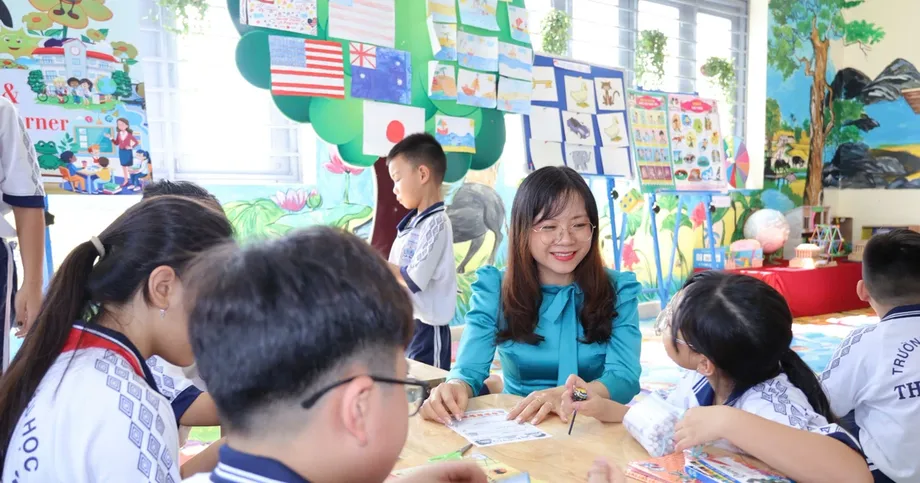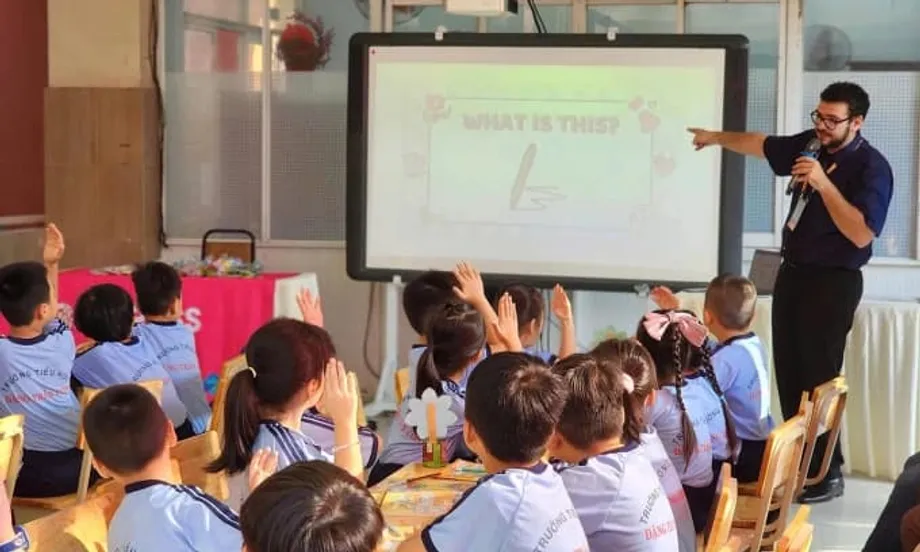
Earlier English Lessons, With a Bigger Goal
Vietnam will make English compulsory from grade 1 by 2030, moving the required starting point forward from grade 3 under a national education program running from 2025 to 2035, with a longer vision to 2045. Approved by November 5, 2025, the change also calls for English exposure in preschools within five years.
Contents
- Earlier English Lessons, With a Bigger Goal
- The Timetable From 2025 to 2045
- How Schools Will Be Assessed
- The Need for About 22,000 More Teachers
- Reaching Rural and Remote Classrooms
- What English Should Look Like in Grade 1
- Parents Welcome Savings and an Earlier Start
- Funding, Materials and Digital Tools
- International Standards and Teacher Training
- What Implementation Will Require
- Key Points
The Ministry of Education and Training wants all general education students to study English as a second language by 2035. Its goal reaches beyond adding lessons to younger children's timetables: schools are expected to develop an environment where students use English in classes, activities and everyday communication on campus.
English is already compulsory from grade 3 through grade 12 and is Vietnam's most widely studied foreign language. It is also the language most often used with visitors, foreign employers and higher education partners. Policymakers connect stronger language skills with economic growth, deeper global integration and workforce competitiveness in trade, tourism, technology and higher education.
Young children can pick up sounds and basic communication more naturally than older learners. Earlier lessons seek to build on that advantage, while giving children time to become comfortable using another language. The program sets expectations for teaching quality, digital learning, teacher capacity and English use throughout school life.
Parents have already been seeking an earlier start, with many paying for lessons outside school when their children are six or younger. Free English instruction in public schools from grade 1 promises to ease that expense and extend access beyond large cities. Delivering those benefits will require more teachers, suitable materials and support for schools whose resources are already stretched.
The Timetable From 2025 to 2045
Primary schools nationwide must introduce English from grade 1 by 2030. Schools with qualified teachers are encouraged to begin sooner, allowing the change to proceed in stages rather than requiring every school to start at once.
Preschools will introduce English exposure within five years. Universities and vocational schools are also expected to expand English use in teaching, research and daily campus activities, creating an environment where students and staff can study and work in both languages.
The program combines these changes with targets for institutions to reach three levels of English use. The main milestones are:
- 2025 to 2035: the national program develops English as a second language across education, with a longer vision to 2045.
- By 2030: all primary schools teach English from grade 1. At least 20 percent of schools are expected to reach Level 1, 5 percent Level 2 and 2 percent Level 3. Preschools have a target of 10 percent reaching Level 1.
- By 2035: all general education students are expected to study English as a second language. Half of universities are expected to reach Level 2 and 35 percent Level 3.
- By 2045: school targets rise to 50 percent at Level 1, 20 percent at Level 2 and 15 percent at Level 3. Half of preschools are expected to reach Level 1.
The targets track two connected tasks: making English lessons available earlier and increasing how widely the language is used within education. The 2030 deadline establishes a common starting point for primary pupils, while the later milestones extend the work into school routines and other learning activities.
How Schools Will Be Assessed
Schools will be evaluated at three levels using criteria that cover teacher qualifications, classroom time, curriculum design, digital learning tools, English use in school life and international collaboration. Detailed thresholds for each level were not given.
Reviews will look at English in other subjects, extracurricular clubs and daily routines, including assemblies and student projects. The aim is to make the language a tool for learning and communication, rather than keeping its use confined to lessons and tests.
The numerical targets show how much wider that environment is expected to become. Between 2030 and 2045, the Level 1 target rises from 20 percent to 50 percent of schools, an increase of 30 percentage points. Over the same period, the Level 2 target moves from 5 percent to 20 percent, and Level 3 from 2 percent to 15 percent.
Preschools have a separate Level 1 target, rising from 10 percent in 2030 to 50 percent in 2045. Together, the assessment criteria and milestones give education planners ways to track classroom provision, staff preparation and opportunities to use English beyond formal instruction.
The Need for About 22,000 More Teachers
Official estimates point to a need for about 12,000 additional English teachers in preschools and 10,000 in primary schools. Separate planning documents put the combined requirement at roughly 22,000 by 2030, matching the total of those two estimates.
Education leaders also plan to retrain or improve the skills of at least 200,000 existing teachers over the coming decade so they can teach other subjects in English. This group has a different task from the additional preschool and primary English teachers: it would help bring the language into learning across the curriculum.
Primary teachers will need both strong English and an understanding of how young children learn. A fluent speaker must also be able to pace a lesson, explain an activity and help a beginner gain confidence without overwhelming them. Expanding instruction from grade 1 will test Vietnam's teacher preparation system on a larger scale.
Universities can expand training for people preparing to become primary English teachers. Provinces can offer scholarships tied to service in public schools, alongside extra incentives for districts where recruitment is difficult. These routes can help connect teacher preparation with places that need staff.
School networks can support teachers through team teaching, mentoring by colleagues and micro credentials, which recognize progress in specific skills. Such credentials can cover both English ability and methods for teaching young learners. Digital platforms can help teachers plan lessons, demonstrate pronunciation and develop classroom routines that give listening and speaking priority.
Reaching Rural and Remote Classrooms
Rural and remote communities face shortages of qualified teachers, limited budgets for materials and equipment, and slow or uneven implementation of national guidance. In some mountainous districts, a single English teacher rotates among several primary schools.
Teachers in these areas report heavy reliance on textbooks, little time for lesson preparation and assessments that reward memorization more than communication. Adding two earlier grades of compulsory English will increase the demand on schools working under those conditions.
Targeted recruitment, housing and incentives for teachers willing to serve in remote areas can support more consistent provision. Mobile teams can cover groups of small schools on a predictable schedule, helping children receive regular instruction instead of occasional exposure.
Equipment plans also need to fit local classrooms. Durable speakers, picture cards and printed readers can support lessons alongside digital resources. Internet connectivity is improving, but many schools still need content that works offline, materials suitable for inexpensive devices and teacher guides for activities requiring no technology.
Multilingual communities bring another consideration. Teachers benefit from training that helps them bridge Vietnamese and local languages while keeping English activities simple and playful. Parent workshops can show families ways to support learning through songs, stories and picture books. With steady instruction and appropriate resources, rural schools can move toward regular English sessions that children enjoy each week.
What English Should Look Like in Grade 1
First graders are still learning to read and write in Vietnamese. English lessons at this age should therefore look different from secondary school classes, giving priority to listening, speaking, familiar routines and repetition that has a clear meaning.
Songs, chants, role play, simple classroom commands and story time help children connect sounds with actions, objects and ideas. These activities build confidence and prepare pupils for more reading and writing in English in later grades.
Heavy grammar drills can discourage beginners. A gentle pace gives children space to enjoy lessons without fear of testing. Games can introduce greetings, colors, numbers, classroom objects and basic actions, while short tasks with achievable goals help sustain attention and energy.
Visuals and puppets provide ways to demonstrate meaning. Total physical response activities connect language with movement, such as listening to an instruction and carrying out an action. Children can then progress from individual words to short phrases and simple conversations.
Teachers can track development through practical goals, such as understanding classroom rules in English or retelling a short story with pictures. This approach gives them evidence of progress without requiring constant formal tests.
Ho Chi Minh City offers experience with an earlier start. English from grade 1 has operated there for more than a decade, with near universal participation. Lessons use songs, games, simple classroom talk and friendly routines. Parents describe a format that helps children become comfortable with English while teachers keep the pace gentle and encouraging.
Parents Welcome Savings and an Earlier Start
Families who already pay for lessons outside school see compulsory English as a chance to reduce costs and make learning more convenient. Others welcome access through public classrooms but want assurance that teachers can deliver lively lessons centered on communication.
Van Quy, a father in Hanoi, pays each month for private lessons so his daughter can speak confidently before starting primary school. He supports beginning early, while acknowledging concern about how she will adjust.
"I think this is extremely necessary. Even though I worry a bit about how she will adapt, I completely support it. I would even like to see it start in kindergarten," he said.
Thu Hue, a Hanoi mother whose child is in grade 1, explained why English lessons at school would matter to her household budget.
"If English becomes mandatory, that means we will save some money. Any savings help, so I am really looking forward to it," she said.
Teo Thi Thanh Mai, principal of Le Quy Don Primary School in Hanoi, welcomed the prospect of children developing language skills from the beginning of primary education.
"Starting English from grade 1 will create a generation trained in foreign languages from an early age," she said.
Thanh Ngan, a mother of three in Ho Chi Minh City, described the practical benefit of learning at school, where English from grade 1 is already widely offered.
"Learning at school makes it easier for parents, and teachers can guide the children closely," she said.
Some parents remain cautious about quality, particularly where schools have difficulty recruiting fluent teachers. Their concerns center on vocabulary lists and grammar worksheets that can discourage beginners from speaking. They want short, lively classes that give children regular opportunities to communicate.
Funding, Materials and Digital Tools
Provinces will need to budget for teachers, training and classroom resources to deliver free English lessons in public schools. The expansion requires steady funding as well as reliable materials, because adding a subject to the timetable also creates continuing costs for staff and instruction.
Resources for young children should include textbooks rich in pictures, readers, flashcards and simple audio that teachers can play in any classroom. Selection and purchasing should follow national standards, with materials suited to children's ages and clear learning goals for each grade.
Digital learning platforms can provide lesson plans, printable activities and short videos demonstrating actions and simple dialogues. These resources can help teachers prepare and give pupils useful models of spoken English.
Artificial intelligence can help generate worksheets and track progress in listening and pronunciation. Its role should be to support live classroom interaction, with teachers continuing to guide children as they listen, speak and respond to one another.
Schools with limited internet access need options that work offline. Simple, inexpensive tools that teachers can adapt to their pupils are more practical for these settings. Printed materials, audio and activities that require no technology remain part of the resource plan alongside digital learning.
International Standards and Teacher Training
Vietnam has aligned teacher and learner proficiency with the Common European Framework of Reference for Languages since 2008. The framework provides shared expectations for listening, speaking, reading and writing, helping guide curriculum design, testing and teacher development.
Continued alignment can help set expectations at each stage of education as English begins earlier and is used more widely. Primary classrooms will still need teaching methods suited to young learners, alongside the language standards used to prepare and assess teachers.
Education officials have opened discussions with international partners, including recent meetings with the United Kingdom on skills and teacher training. Cooperation can include joint teacher education programs, classroom observation exchanges and resources that match local curricula and children's ages.
Partnerships with other countries can also bring training expertise, accredited programs and exchange opportunities for educators. These arrangements form part of the effort to expand the teaching workforce and improve its preparation.
Vietnamese classrooms will need local adaptation of those resources and methods. Materials must fit available equipment, classroom conditions and cultural context. Training that combines international practice with local examples can help teachers put new approaches into everyday use.
What Implementation Will Require
The 2030 deadline brings several connected demands. Schools need enough teachers to cover younger pupils, while those teachers need preparation that makes English accessible and enjoyable. Rural recruitment, classroom resources and provincial budgets will affect how consistently children receive lessons.
Education planners will also need to connect national guidance with provincial plans, school responsibilities and the work of teacher training institutions. Clear roles and steady funding can help keep recruitment, training and classroom delivery moving together.
The main risks identified for the expansion are:
- Teacher supply and quality: recruiting and retaining primary English teachers with strong skills in teaching young children.
- Uneven access: providing rural and remote schools with resources, training and support at the same pace as cities.
- Teaching methods: keeping grade 1 lessons focused on communication rather than heavy testing and grammar drills.
- Materials and equipment: supplying reliable resources suited to children's ages, including options without constant internet access.
- Assessment: tracking children's ability to communicate without excessive testing.
- Budget and governance: connecting national guidance, provincial plans, dependable funding and clear responsibilities.
Parents' hopes for lower tutoring bills and educators' expectations of stronger language skills depend on the same practical outcome: regular lessons taught well. The program's later targets extend that work into clubs, other subjects, research and campus communication, making the quality of the initial classroom experience part of a much longer effort.
Key Points
- English will become compulsory from grade 1 by 2030, replacing the current required start in grade 3.
- The national program runs from 2025 to 2035, with a vision to 2045 and preschool English exposure within five years.
- The ministry expects all general education students to study English as a second language by 2035.
- School assessments will cover teaching capacity, curriculum, digital resources and English use in everyday school life.
- Targets for 2030 include 20 percent of schools at Level 1, 5 percent at Level 2 and 2 percent at Level 3, rising to 50 percent, 20 percent and 15 percent by 2045.
- Teacher estimates include about 12,000 additional preschool English teachers and 10,000 primary English teachers, with at least 200,000 existing teachers to receive training for teaching other subjects in English.
- Parents welcome earlier access and potential savings, while calling for fluent teachers and lessons centered on communication.
- Rural schools will need targeted staffing support, reliable materials and learning options that work offline.
- International cooperation, including discussions with the United Kingdom, supports plans for teacher training and resources.