School pilots face a shortage of teachers ready to use English
Ho Chi Minh City will begin piloting English as a second language in schools in the 2026 to 2027 academic year, asking each professional cluster of educational institutions to select one or two sites before a review at the end of the 2027 to 2028 school year. The city aims for at least 15% of educational institutions to teach subjects in English by that review year, rising to at least 30% in 2029 to 2030.
Contents
- School pilots face a shortage of teachers ready to use English
- What the city has approved
- The timetable from pilots to wider participation
- What the preschool survey reveals
- Confidence matters alongside qualifications
- How teaching and learning would change
- English practice beyond the classroom
- Training and investment will shape access
- Key Points
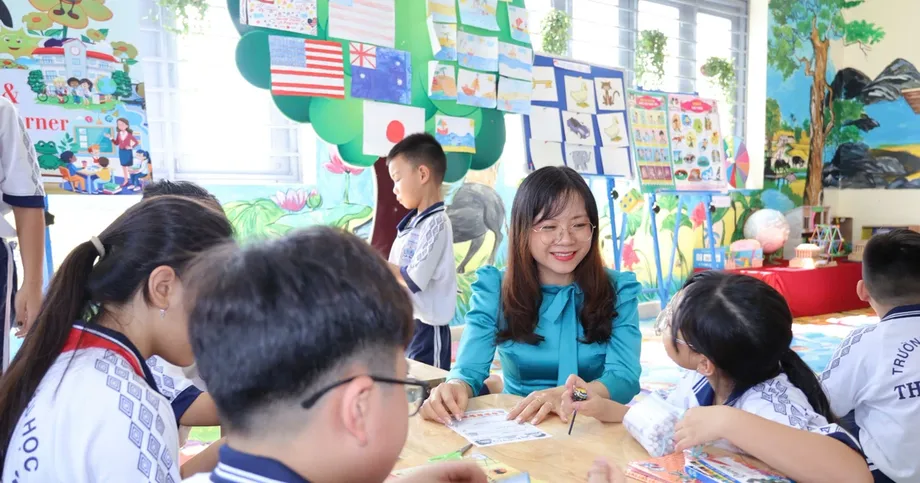
The plan reaches beyond English lessons. It seeks regular use of the language in subject teaching, school activities, communication, management and professional work. Preschool children would encounter English through play supported by digital platforms, while older students would have more opportunities to use it inside and outside classrooms.
A survey by the city Department of Education and Training shows the scale of preparation needed at the earliest stage of education. Of 15,554 preschool teachers assessed, 484, or 3.11%, had English proficiency at B2 level or above. Another 3,090 teachers had not been classified by proficiency.
The city estimates that introducing English as a second language in preschool education between 2026 and 2045 will require more than VND738 billion. Teacher training, learning materials, facilities, equipment and digital infrastructure all form part of that estimate.
For families, the immediate change will depend on which institutions join the pilots and what they offer. Supplementary local programs, including enhanced English, preschool familiarization and modules combining subject content with English, will operate on a voluntary basis for learners.
What the city has approved
The Ho Chi Minh City People's Committee approved the implementation plan through Decision 7307/QD-UBND, dated October 31, 2026, and signed by Vice Chairman Nguyen Manh Cuong. The city program covers 2026 to 2035, with a vision extending to 2045.
The decision cites Decree 222/2025/ND-CP, governing teaching and learning in foreign languages, and the prime minister's Decision 2371/QD-TTg of October 27, 2025, approving the national project to make English a second language in schools. The city plan gives that national ambition a local timetable, staffing requirements and institutional targets.
Schools would work toward three levels under assessment criteria being developed by the Ministry of Education and Training. The ministry was still completing those criteria when the city plan was prepared, making the pilots an opportunity to test assessment standards alongside programs and learning materials.
The city already has substantial English provision. The plan records eight consecutive years leading the country in average English scores in the high school graduation examination, and says more than 90% of general education institutions have implemented enhanced English. A program integrating mathematics, science and English from British and Vietnamese curricula has operated since 2014.
Those existing programs give the city experience to build on. The next task is to extend regular English use across institutions with very different staffing, facilities and access to outside support.
The timetable from pilots to wider participation
The first phase, running from 2026 to 2030, focuses on checking conditions and preparing institutions. Schools will review their programs, assess staff proficiency and test materials before wider expansion.
- 2026 to 2027 school year: Each professional cluster selects one or two pilot institutions, while the city reviews staffing, English proficiency and existing programs.
- 2027 to 2028 school year: At least 15% of educational institutions aim to teach subjects in English, and at least 30% aim to establish an environment supporting English use.
- End of the 2027 to 2028 school year: A preliminary review will guide changes before the pilots expand.
- 2029 to 2030 school year: The targets rise to at least 30% teaching subjects in English and at least 40% supporting an English language environment.
- By 2035: About 50% of general education institutions aim to offer integrated education programs based on voluntary demand.
- By 2045: The share offering integrated programs is intended to reach 60% to 70%.
The subject teaching target doubles from 15% to 30% between the 2027 to 2028 and 2029 to 2030 school years. Over the same period, the target for an English language environment rises by 10 percentage points, from 30% to 40%.
These targets measure different activities. Teaching a subject in English changes the language used for learning its content. Building an English language environment also includes opportunities to speak and listen during clubs, events and everyday school activities.
What the preschool survey reveals
The department's detailed survey breakdown covers 1,484 preschool education institutions, drawing on information from 65 wards and communes and three preschools directly managed by the department. It lists 156 public institutions, 450 institutions outside the public sector and 878 independent childcare groups and classes.
Of those institutions, 741 offered activities introducing kindergarten children to English. The department's figures give that share as 48.9%, although 741 out of 1,484 works out to about 49.9%. The survey was also described as covering 741 institutions offering English familiarization, rather than the broader total of 1,484.
The teacher figures provide a fuller picture than the small B2 group alone. Alongside the 484 teachers at B2 or above, 1,849 were at B1, 10,131 were in other proficiency categories, and 3,090 remained unclassified. B1 and B2 are levels on the Common European Framework of Reference for Languages. B2 describes a more independent command of the language, including the ability to handle more complex communication.
The 1,849 teachers already at B1 form a potential priority group for training toward B2. They outnumber the existing B2 group by almost four to one, giving the department a substantial group on which to focus early training.
Several wards and communes had no preschool teachers at B2 or above. English familiarization was concentrated in preschools and had barely reached independent childcare groups and classes, even though those groups and classes made up 878 of the 1,484 institutions surveyed.
Confidence matters alongside qualifications
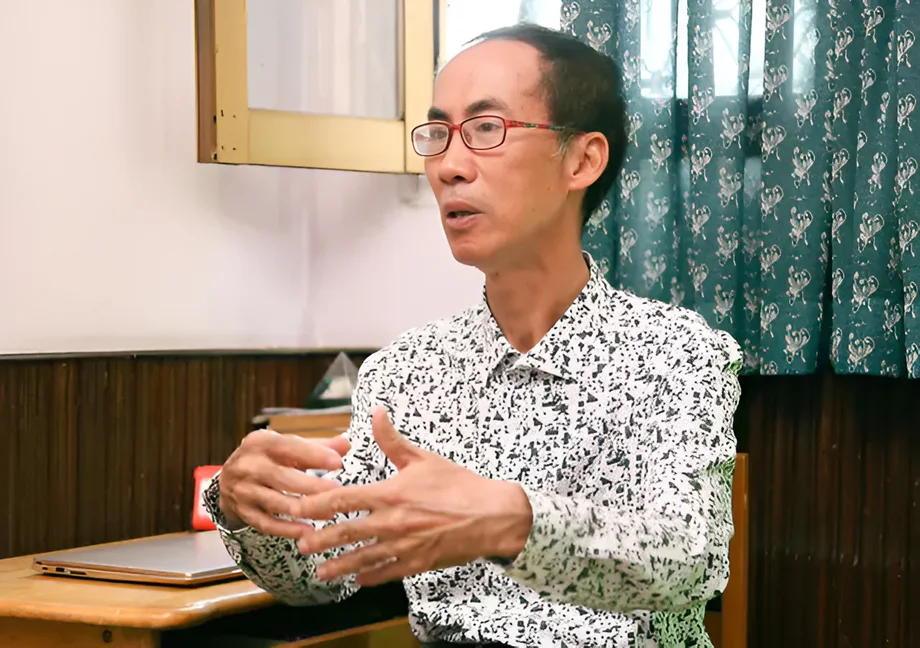
Luong Thi Hong Diep, head of the Preschool Education Division at the city Department of Education and Training, identified difficulty communicating with children as a central staffing problem:
"The biggest obstacle is that preschool teachers lack confidence in communicating with children in English. As a result, English instruction currently relies largely on teachers from foreign language centers," Diep said.
At many institutions, teachers from language centers lead English activities while preschool teachers manage the class and support children. Bringing English into daily routines requires the adults who spend the day with children to become more comfortable using it themselves.
The department has identified practical listening, speaking, pronunciation and teaching methods as training needs. Some teachers with certificates have had little opportunity to practise and remain hesitant when speaking English with children.
Nguyen Thi Minh Thao, a principal specialist in the Ministry of Education and Training's Preschool Education Department, called for rich, safe and friendly language environments where children can hear, see and use English naturally during daily activities. That approach connects the staffing challenge directly to the experience children would have at school.
The department plans training suited to different starting levels, prioritizing teachers at B1 and a core group of teachers. It also intends to provide time and financial support for participation and study ways to attract staff with stronger English skills.
How teaching and learning would change
Preschool pilots will combine English with play through digital technology. A shared collection of digital learning resources will support institutions and help bring greater consistency to learning materials and assessments of what children have learned.
For older pupils, teachers delivering subjects or educational activities in English must complete training in content and language integrated learning, commonly called CLIL. This approach teaches subject knowledge and language together. A science lesson, for example, would help pupils understand the scientific idea while also giving them the English needed to discuss it.
The plan requires attention to all four language skills: listening, speaking, reading and writing. Listening and speaking will receive particular attention from lower secondary school downward, giving younger learners more practice understanding speech and responding aloud.
Teachers assigned to teach subjects and educational activities in English must meet at least Level 4 proficiency at primary and lower secondary levels. The minimum rises to Level 5 for upper secondary education, continuing education at that level and vocational education.
Those requirements connect language ability with teaching preparation. A teacher needs to explain the subject, understand questions and adjust an explanation when a pupil is confused, while helping pupils develop the language needed to participate.
English practice beyond the classroom
Schools are expected to expand English use through clubs, festivals, play activities and learning experiences. The plan also encourages connections with libraries, museums, cultural and sports institutions, tourism organizations, businesses and public spaces.
For pupils, that could create more occasions to use English for a purpose beyond completing an exercise. The plan's approach links classroom learning with places and activities where children can practise speaking and listening.
Vietnam's English communication challenge has already drawn attention to the gap between years of lessons and confidence using the language. Ho Chi Minh City's focus on everyday opportunities responds to that same practical problem: students need repeated chances to understand and be understood.
A related expansion is planned in higher education. Hanoi's National Economics University has set out an English language transition that includes teaching at least 30% of courses in English by 2028 and making English its second language by 2030. Ho Chi Minh City's program extends across a wider range of ages and institutions, beginning with children in preschool.
Training and investment will shape access
The city plan identifies shortages of English teachers and teachers able to deliver other subjects in English, together with uneven teaching quality. Areas far from the center face particular shortages of primary school English teachers, while public preschools have no established staffing allocation for English teachers.
Schools also differ in their buildings, information technology and ability to attract financial or other support from outside government. The plan calls for priority investment in technology, equipment and learning materials for suburban areas and communities with fewer economic resources.
Teachers would receive personalized accounts on platforms using artificial intelligence to support independent study. Regular professional training would continue after teachers reach the required standard, helping them maintain both language proficiency and teaching skills.
The city will research incentives to attract English teachers to disadvantaged areas. The preschool funding estimate of more than VND738 billion covers the period from 2026 to 2045, including training, resources, facilities and technology; it remains an estimate of need, with no detailed allocation or funding schedule given.
The second phase, from 2031 to 2035, sets targets for all managers and teachers to meet the English proficiency standards specified in the plan, and for all institutions to complete preparation in teaching methods, program design and the school English environment. The pilot review at the end of 2027 to 2028 will be the first scheduled opportunity to assess progress and make adjustments before broader expansion.
Key Points
- Ho Chi Minh City will begin pilots in the 2026 to 2027 school year, with one or two institutions selected by each professional cluster.
- A preliminary review is scheduled for the end of the 2027 to 2028 school year.
- The city targets at least 15% of educational institutions teaching subjects in English in 2027 to 2028, rising to 30% in 2029 to 2030.
- A preschool survey found 484 of 15,554 teachers, or 3.11%, at B2 English proficiency or above; 3,090 teachers were unclassified.
- Preschool preparation is expected to require more than VND738 billion between 2026 and 2045.
- Supplementary local English programs will be voluntary, with teacher training and investment in disadvantaged areas central to implementation.