Fewer exams, but the same competition for places
Vietnam is proposing to limit the common Grade 10 entrance examination to mathematics and Vietnamese literature, as figures covering 2015 to 2024 show upper secondary enrolment rose by nearly 30% while the number of schools slipped from 2,399 to 2,378. The proposal has opened a debate about whether fewer tests would ease pressure or concentrate it on just two subjects.
Contents
- Fewer exams, but the same competition for places
- What the draft would change
- Why the ministry expects pressure to fall
- Families are already moving tutoring time
- Schools want to protect the full curriculum
- What students could lose through narrower study
- School capacity explains much of the pressure
- Admission through records brings fairness concerns
- The decisions families are waiting for
- Key Points
The Ministry of Education and Training's draft regulation would let provincial education departments choose admission through school records, examinations, or a combination of both. Where examinations remain necessary, the common papers would cover mathematics and literature. Applicants to specialised upper secondary schools would also take a paper in their chosen specialist subject.
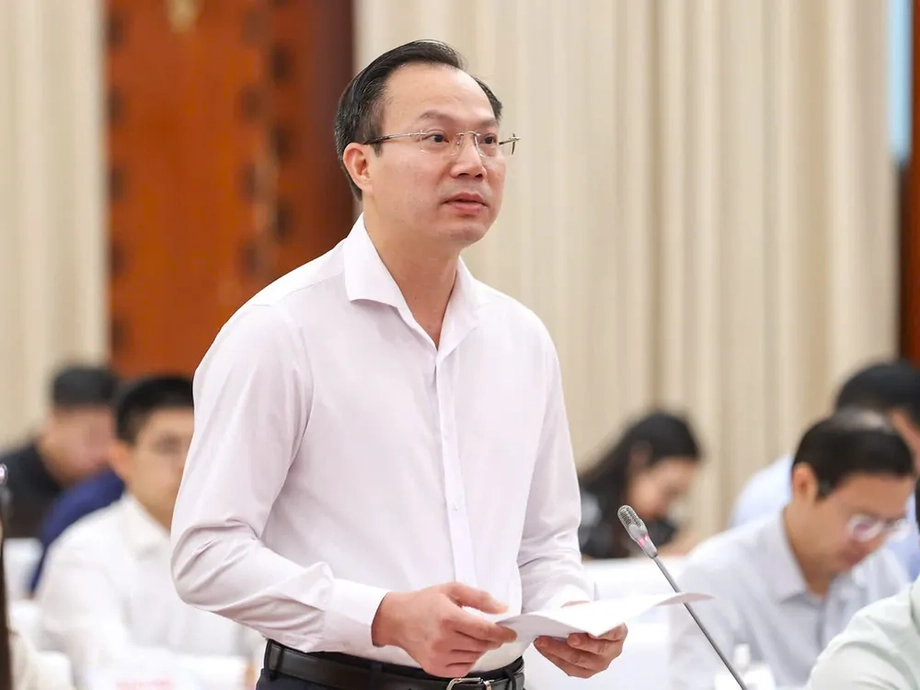
Dinh Duc Hien, executive director of FPT Bac Giang's primary, lower secondary and upper secondary school, supports reducing examination pressure. His concern is that families competing for a limited number of desirable places may simply redirect tutoring money and study time toward the two remaining papers.
His illustration is straightforward: if 10,000 students want 5,000 places, changing the selection method still leaves half unable to secure their preferred place. Fewer examination subjects could save preparation time and reduce the cost of organising tests, while competition for admission continues.
The debate concerns changes that students and families are considering for admissions in the 2027-2028 school year. A final national regulation and Hanoi's detailed admission arrangements were still awaited in the accounts dated November 2026. Some parents had already reduced English tutoring while schools continued teaching the full curriculum.
What the draft would change
The ministry's draft regulation announcement describes a wider shift from selecting entrants toward preparing to receive students. It covers entry to Grades 1, 6 and 10, linking admission decisions to population, demand, school capacity, staffing and facilities.
For Grade 10, provincial education departments would decide the method for individual schools or groups of schools. Examination based admission would be considered when applications exceed capacity and efforts to allocate students across schools still leave insufficient places.
The proposed literature paper would last 120 minutes. Mathematics would last either 90 or 120 minutes. Content would stay within the learning requirements of the lower secondary curriculum. Each specialist subject would have its own paper for applicants to specialised schools.
The draft also proposes greater local discretion over calculating admission scores and adjustments to priority and incentive points. Those details matter because the final ranking depends on both the assessment method and the rules used to turn results into offers.
For younger children, the proposed safeguards are different. Grade 1 admission would involve no testing, assessment, classification or selection. Grade 6 would generally avoid selection, with an exception for institutions authorised to identify and develop students with particular talents or outstanding achievement.
Why the ministry expects pressure to fall
Thai Van Tai, director of the ministry's General Education Department, says the share of students progressing from Grade 9 to Grade 10 rose from about 75% to more than 80% over a year. Some localities reached 95% to 97%. He expects more places to admit students through records rather than examinations as access expands.
The national increase is more than five percentage points, from roughly three students in every four to more than four in every five. These figures describe progression into Grade 10 across localities, while families in Hanoi remain concerned about access to particular public schools.
Resolution 71-NQ/TW sets a goal of universal upper secondary education and equivalent education by 2035. That goal makes preparation for larger intakes part of the admission debate, alongside the immediate question of how to assess applicants.
In the Government News Portal's discussion of examination options, Tai said localities should choose carefully among the available methods. He explained the ministry's intended focus in these words, translated from Vietnamese:
Students should not see the examination as the goal to reach, but should see the learning process as a way to discover their own abilities.
Families are already moving tutoring time
Nguyen Nam, a parent in Hanoi's Ha Dong ward, said he stopped his child's extra English classes at the start of November 2026. The child had attended twice a week, mainly for grammar and practice papers. The family wanted to concentrate resources on subjects expected to determine admission to a sought after public upper secondary school.
Le Thu Huong, a parent in Cua Nam ward, described a similar adjustment. Her child previously attended five extra sessions each week: two in mathematics, two in English and one in literature. The family suspended both English sessions and added one literature session.
Huong's example shows how a lighter timetable can still become more narrowly focused. Weekly tutoring fell from five sessions to four, a reduction of 20%, while mathematics and literature together rose from three sessions to four. She planned to resume English after the entrance examination, with IELTS preparation in mind.
English centre owner Minh Hang was also preparing for a possible change in demand. If Hanoi confirmed two examination subjects, she expected fewer Grade 9 students to seek extra English lessons and planned to reopen upper secondary graduation preparation classes from December 2026.
These decisions illustrate the incentive Hien is concerned about: a subject can remain part of the school curriculum while families reduce the time and money spent on it outside school.
Schools want to protect the full curriculum
Nguyen Thi Van Hong, principal of Chuong Duong Primary and Lower Secondary School in Hanoi, said her school continued teaching every subject in the prescribed programme. She also argued that competition for public school places, particularly in a densely populated city, is the main source of admission pressure.
Bui Thi Hong Yen, a teacher at the same school, favours retaining three examination subjects. She believes a broader examination encourages students to distribute their effort more evenly, especially toward English as Vietnam works toward making it a second language in schools.
Students expressed reasons to continue learning beyond the entrance papers. Pham Ngoc Hai, a Grade 9 student in Thanh Xuan ward, said he enjoyed English and concentrated on vocabulary and grammar during lessons, while using time at home to revise expected examination subjects.
Tran Nhat Anh of Nghia Tan Lower Secondary School and Nguyen Khanh Chi of Ly Thuong Kiet school also supported continuing all subjects. Both saw potential relief from fewer examination papers, alongside the need to retain knowledge useful for upper secondary study. Chi wanted an early decision so families could organise their preparation.
Pham Thi Huong, a teacher at Nghia Tan, advised students to maintain balanced study while giving appropriate attention to mathematics and literature, which have long been common entrance subjects.
What students could lose through narrower study
Hien's concern extends beyond English. He warns that natural sciences, history, geography, computing and technology could receive less attention during the final years of lower secondary school if mathematics and literature alone determine admission year after year.
Vietnam's 2018 general education curriculum is intended to help students choose upper secondary subjects suited to their abilities, interests and career plans. Hien argues that students need broad experience before they can make those choices well. A child has fewer opportunities to discover an interest in science when science receives less time and attention.
Hien also connects the issue to ambitions in artificial intelligence, semiconductors, biotechnology and automation. STEM means science, technology, engineering and mathematics. Mathematics supplies essential tools, while experiments, scientific questions and practical work help students discover what those tools can do.
English presents a similar policy challenge. Hien says strong language learning does not require an entrance examination in English, but removing it should be accompanied by effective ways to sustain motivation and quality.
The ministry and its critics therefore share a stated aim: broad learning. Their disagreement concerns how students respond to examinations. The ministry expects fewer papers to reduce the hold of exam preparation; teachers and parents worry that the remaining papers will command even more attention.
School capacity explains much of the pressure
Education statistics covering 2002 to 2024 show that the current squeeze developed over years. Between 2002 and 2006, upper secondary enrolment rose from 2.45 million to 3.08 million, while schools increased from 1,532 to 2,044. School numbers grew faster than enrolment during that period.
By 2015, enrolment had fallen to about 2.43 million, while the number of schools had risen to 2,399. Demand subsequently recovered to about 3.14 million students in 2024, with 2,378 schools. More students were being accommodated within a slightly smaller network.
The pressure varied sharply by location. Ho Chi Minh City averaged 2,149 upper secondary students per school in 2024, compared with 1,322 nationally. The city's figure was about 63% higher, calculated from those two averages. Kiên Giang, Dong Nai, Binh Duong and Da Nang also recorded substantially higher figures than the national average.
Classrooms and teachers absorbed part of the increase. Between 2015 and 2024, average upper secondary class size rose from 37.83 to 41.04 students, an increase of about 8.5%. Students per teacher rose from 16.07 to 21.04, about 30.9%.
Lower secondary enrolment offers an advance signal of future demand. In 2024, 6.71 million students attended 8,458 lower secondary schools, averaging 39.4 students per class. Those cohorts provide a basis for planning upper secondary capacity during 2025-2028, with eventual demand depending on completion rates and students' choices.
Admission through records brings fairness concerns
Admission based on school records would shift attention from a common entrance paper to marks accumulated at different schools. Parents and educators are concerned about comparing those marks when assessment difficulty and grading practices vary.
Dinh Mai Thanh, deputy principal of Trung Vuong Lower Secondary School in Hanoi, supports a common assessment across the city. She said her school sets demanding work and marks strictly, creating concern that its students could be disadvantaged by a direct comparison of report card scores.
Le Dong Phuong, former director of the Higher Education Research Centre at the Vietnam National Institute of Educational Sciences, suggests clear admission zones if records are used. Local rules would specify which schools receive students from which areas, addressing concerns about unequal conditions between central districts, outer districts and disadvantaged areas.
Nguyen Tung Lam, vice president of the Vietnam Association of Psychological and Educational Sciences, similarly calls for consistent lower secondary assessment. He also argues that improving quality across schools would give families more acceptable choices and spread demand beyond a small group of popular institutions.
Hanoi parent Cao Anh Tuan put the capacity issue in practical terms. His family lives in Long Bien, with schools nearby, yet still worries about whether a suitable place will be available or whether his child will have to travel far. He wants more public upper secondary schools so students can study closer to home.
The decisions families are waiting for
Parents need more than a subject list. Nguyen Tuan Anh, whose child attends Tan Khai Primary and Lower Secondary School in Hanoi, wants early publication of the admission method, score calculation and registration conditions for each school.
The sequence of developments places those requests in context:
- 2015-2024: Upper secondary enrolment rose nearly 30%, while school numbers declined slightly.
- 2024: Lower secondary enrolment reached 6.71 million, providing a planning signal for demand during 2025-2028.
- November 2026: Consultation closed around the beginning of the month, and families began adjusting tutoring plans while awaiting final rules.
- December 2026: English centre owner Minh Hang planned to reopen graduation preparation classes if the two subject arrangement was confirmed.
- 2027-2028 school year: Hanoi students and families were seeking clarity about the admission arrangements that could apply.
- 2035: Resolution 71-NQ/TW targets universal upper secondary education and equivalent education.
Broader assessments are among the suggestions under discussion. Phuong proposes researching integrated natural science and social science papers. Hien suggests that a foundational assessment could examine comprehension, reasoning and the application of knowledge across several fields, but warns that simply combining six or seven subjects could create demand for tutoring in all of them. These remain suggestions for study.
The draft also addresses access through digital registration. Authorities would use verified databases to reduce repeated paperwork, provide support for people who struggle with technology and maintain alternatives during system failures. Allocation between schools would consider residence, distance, travel, staffing and facilities; it could not be used to exclude students already eligible for admission.
For Hien, lasting relief requires accurate forecasts, more suitable places and better quality across schools. Vocational education also needs credible teaching, employment prospects and routes to further study so students choose it according to their interests and abilities. The practical test of the reform will be whether families gain acceptable choices while children retain time to discover what they can do.
Key Points
- Vietnam proposes mathematics and literature as the common Grade 10 entrance papers where examinations are needed.
- Local authorities would choose admission through records, examinations or a combination; specialised schools would require an additional specialist paper.
- Some Hanoi families have already reduced English tutoring and increased attention to the expected entrance subjects.
- Upper secondary enrolment rose nearly 30% between 2015 and 2024, while school numbers fell from 2,399 to 2,378.
- Teachers and researchers want broad learning, fair comparison of students and adequate school places alongside any examination reform.
- Families are awaiting final admission methods, score calculations and school registration conditions.