A proposal with consequences beyond the shrine
Chief Cabinet Secretary Yoshimasa Hayashi has suggested separating the 14 Class A war criminals enshrined at Tokyo's Yasukuni Jinja from the other war dead, reopening a debate that reaches from bereaved families to the Imperial Family and Japan's relations with China and South Korea.
Contents
- A proposal with consequences beyond the shrine
- Who is remembered at Yasukuni?
- How the Class A leaders entered the register
- The dates that shaped the dispute
- Why the Imperial Family's absence matters
- Can the government separate the enshrined spirits?
- Families seeking removal face their own struggle
- The political costs for the LDP
- Why Beijing and Seoul continue to object
- Commemoration outside Yasukuni
- Key Points
Hayashi raised the idea during a television program while seeking support in the Liberal Democratic Party leadership race. The government's top spokesman presented it as a way to make mourning more inclusive at a shrine that honors approximately 2.47 million people but remains deeply contested because of its wartime connections and the people included in its register.
Hayashi said politics had a responsibility to create conditions in which people could pray without discomfort. He specifically included members of the Imperial Family, whose absence from Yasukuni has become an important part of the dispute.
Creating an environment where people, including members of the Imperial Family, can place their hands together in prayer without a sense of discomfort is one of the responsibilities of politics.
Yasukuni's priesthood has consistently rejected proposals to remove or separate the Class A names. Its position is that enshrinement is sacred and permanent. Japan's constitutional separation of government and religion also limits what a political leader can do to change the practices of a private religious institution.
Hayashi's proposal therefore brings two issues together: how national leaders can honor the dead without deepening divisions, and who has the authority to decide how the shrine remembers them. For families, that question concerns relatives. For neighboring countries, it concerns the public treatment of those responsible for Japan's wartime expansion.
Who is remembered at Yasukuni?
Yasukuni stands in Tokyo's Chiyoda Ward and was founded in 1869 to honor people who died in service to the state. Its register covers conflicts from the late nineteenth century through the Pacific War. Before 1945, it was closely connected to the state's wartime mobilization and stood at the center of state Shinto, a system that treated loyalty and sacrifice for the state as sacred.
The approximately 2.47 million people honored there include soldiers, civilian military employees, mobilized nurses and students. Some students died in air raids on factories, while others died serving in uniform. The register also includes conscripts from Korea and Taiwan, territories then under Japanese rule.
Names are entered into a spirit ledger known as the reijibo. Through religious rites, those named are collectively enshrined as eirei, or heroic spirits of the war dead. Enshrinement does not require the consent of the person or the family, a practice that has troubled some bereaved relatives in Japan and abroad.
Many Japanese families visit Yasukuni as a private act of remembrance for relatives in that ledger. Conservative lawmakers defend the freedom of leaders to honor the dead and argue that mourning can be separated from approval of wartime policy.
Critics see the shrine as a symbol of nationalism and the downplaying of Japan's wartime actions. That view is especially strong in countries that suffered under Japanese military expansion. The same visit can therefore carry very different meanings for a bereaved family, a Japanese politician and people elsewhere in Asia.
After the war, Yasukuni became a private religious corporation. The Yushukan War Museum on its grounds adds another source of contention: its displays have drawn criticism for portraying Japan as a liberator of Asia while downplaying atrocities. That portrayal contributes to the anger surrounding political visits.
How the Class A leaders entered the register
Yasukuni honors 14 Class A war criminals from World War II, including wartime prime minister Hideki Tojo, alongside more than 1,000 other people convicted of war crimes by Allied tribunals. The Class A category concerns responsibility for planning and waging war. Their inclusion alongside ordinary soldiers is central to the controversy.
The Health and Welfare Ministry worked with the shrine to provide information about the war dead after the Allied occupation ended in 1952. By 1959, the enshrinement of most people who died in World War II, excluding war criminals, was largely complete.
Yasukuni began enshrining people convicted of Class B and Class C offenses in 1959. That process was handled quietly to avoid backlash over the constitutional separation of state and religion.
The most sensitive decision came in 1978, shortly after a change in the chief priest. All 14 Class A war criminals were enshrined in a private ceremony. The new priest rejected the Tokyo Trials verdicts and decided to include the leaders judged responsible for planning and waging the war.
The decision became public in 1979. Debate intensified after Prime Minister Yasuhiro Nakasone made an official visit in 1985, bringing the shrine's treatment of wartime leaders into a wider diplomatic dispute.
The dates that shaped the dispute
Yasukuni's present controversy developed through a series of religious decisions and political visits over several decades. The dates show how a shrine created in the nineteenth century became a recurring issue in modern Japanese diplomacy.
- 1869: Yasukuni was founded to honor those who died in service to the state.
- 1952: After the Allied occupation ended, the Health and Welfare Ministry worked with the shrine to provide information on the war dead.
- 1959: Most World War II dead, excluding war criminals, had been enshrined. Enshrinement of people convicted of Class B and Class C offenses began.
- November 1975: Emperor Hirohito made his last visit to Yasukuni.
- 1978: The shrine privately enshrined all 14 Class A war criminals.
- 1979: The Class A enshrinement became public.
- 1985: Prime Minister Yasuhiro Nakasone made an official visit, drawing criticism across Asia.
- 2001 to 2006: Prime Minister Junichiro Koizumi paid respects annually, straining relations with Beijing and Seoul.
- 2013: Prime Minister Shinzo Abe visited once, prompting anger in China and South Korea and expressions of disappointment from the United States.
Later prime ministers sought a middle course by sending ritual offerings while avoiding personal visits on sensitive dates. That approach preserved a connection to Yasukuni while attempting to limit the diplomatic costs of appearing there in person.
Why the Imperial Family's absence matters
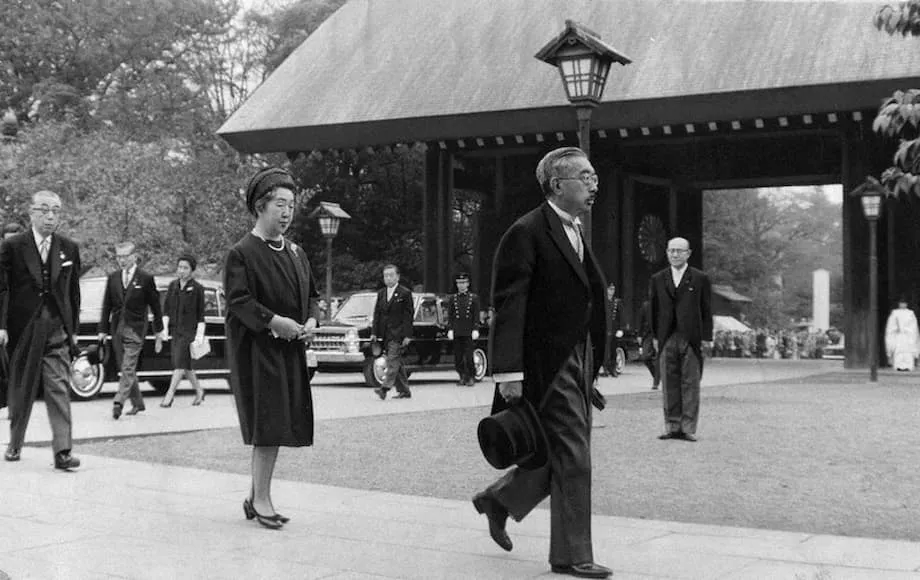
Emperor Hirohito stopped visiting Yasukuni after November 1975. A note left by a former Imperial Household Agency chief indicates that he felt deep discomfort about enshrining those judged most responsible for the war together with the other war dead.
No reigning emperor has returned since. Emperor Akihito did not visit during his reign, and Emperor Naruhito has not visited. Their continued absence gives particular weight to Hayashi's reference to creating a place where members of the Imperial Family could pray without discomfort.
The Imperial Family's distance from Yasukuni also shows why separating the Class A leaders has appeal for some people in Japan. Supporters of the idea hope to make royal prayers possible again while reducing the friction associated with the shrine's current register.
Emperor Naruhito offered a message centered on remembrance and peace at the National Memorial Ceremony for the War Dead on August 15. His remarks called for the hardships of war and its aftermath to be passed down to future generations.
It is my sincere hope that we carry on passing down the stories of the hardships endured during and after the war and continue in unity of spirit to seek peace and the happiness of the people in the future.
The national ceremony provides a setting for imperial remembrance outside Yasukuni. Hayashi's proposal concerns whether the shrine itself could become a place where the Imperial Family and others could mourn with greater ease.
Can the government separate the enshrined spirits?
Yasukuni's leadership says that once a spirit is enshrined, it cannot be removed. Under the shrine's doctrine, enshrinement is a permanent religious act. Decisions about inclusion belong to the priesthood and are treated as internal matters of the religious institution.
The shrine has consequently rejected proposals to remove or separate the Class A names. Changing its register would require cooperation from the religious body that maintains it, while Hayashi's proposal comes from the political sphere.
Japan's Constitution places limits on that political sphere. Article 20 bars the state from engaging in religious activity, and Article 89 forbids public subsidies to religious bodies. Courts have ruled that public spending on rites at Yasukuni breaches those limits.
Lawsuits concerning visits by individual politicians have had mixed outcomes. A recurring issue is whether a visit counts as an official act or a private one. That question affects how constitutional restrictions apply to the conduct of public officeholders.
The government cannot order a private religious corporation to change its doctrine or alter its register. Hayashi can advocate a different arrangement, but carrying it out depends on the shrine's willingness to consider one. The form of any arrangement remains undecided.
Families seeking removal face their own struggle
More than 21,000 Koreans are included in Yasukuni's register. Many were conscripted during colonial rule, and their inclusion often took place without consultation with their families.
Some Korean relatives have brought lawsuits seeking the removal of names. Those suits have been dismissed. A recent Supreme Court decision cited time limits, adding to the distress of descendants who do not want their relatives venerated alongside people convicted of directing the war.
The absence of a consent requirement makes the dispute deeply personal. A family may object to the religious treatment of a relative's memory, yet the shrine regards enshrinement as permanent and places authority over its register with the priesthood.
Hayashi's proposal focuses on the Class A war criminals. The relatives seeking removal of Korean names are dealing with a broader problem: whether families can determine how people drawn into Japan's wartime system are commemorated.
The political costs for the LDP
The Liberal Democratic Party's divisions over Yasukuni reflect wider disagreements about war memory and relations with neighboring countries. Conservative lawmakers have an influential constituency in the Japan War Bereaved Families Association, which defends the shrine's role and opposes removing any names.
Many conservatives argue that changing the register would validate the Tokyo Trials and invite pressure from abroad. Moderates, concerned about ties with China and South Korea, seek a way to honor the dead without reviving old hostilities.
Nakasone's official visit in 1985 and Koizumi's annual visits from 2001 to 2006 illustrate the diplomatic costs. Nakasone faced a storm of criticism across Asia, while Koizumi's repeated visits contributed to years of strained relations with China.
Abe's visit in 2013 drew anger from Beijing and Seoul and statements of disappointment from the United States. More recent leaders have favored ritual offerings over personal appearances, attempting to balance domestic expectations with foreign relations.
Hayashi's idea speaks both to people who want the Imperial Family to return and to those who want to ease regional friction. Within the LDP, however, the proposal touches the convictions of voters and organizations that consider Yasukuni an irreplaceable place of mourning.
Why Beijing and Seoul continue to object
China and South Korea closely monitor activity at Yasukuni, especially around August 15, the anniversary of Japan's surrender. Political gestures there remain sensitive because of the shrine's connections to wartime expansion and the inclusion of convicted leaders.
During the spring festival in 2025, dozens of lawmakers visited Yasukuni and the prime minister sent a ritual offering. Both gestures prompted formal protests.
The Chinese embassy in Tokyo condemned the actions, describing them as an affront to historical justice and criticizing the Japanese government's attitude toward history.
The actions are a blatant affront to historical justice. They underscore the erroneous attitude of the Japanese government on historical issues.
South Korea's Foreign Ministry expressed deep regret over the offerings and group visits by lawmakers, saying such acts undermine trust. For South Korea, the dispute is bound up with grievances rooted in Japanese colonial rule between 1910 and 1945.
Yasukuni has also faced vandalism in recent years, including graffiti and damage to stone pillars. Police arrested a suspect after one incident. The episodes show how anger surrounding the shrine sometimes reaches its grounds, alongside the private acts of devotion that take place there.
Commemoration outside Yasukuni
Proposals for a secular memorial regularly return to Japan's policy debate. Such a place would allow national leaders to mourn without becoming involved in religious rites at Yasukuni.
One idea is to expand the state run Chidorigafuchi National Cemetery near the Imperial Palace, which honors unidentified war dead. Another is to build a new facility without a religious affiliation that could host state ceremonies and foreign dignitaries.
Those plans have struggled to gain momentum. Yasukuni's supporters point to generations of family prayers at the shrine and argue that a substitute would not meet their spiritual needs. Opponents regard a secular site as the most practical way for leaders to pay respects without inflaming regional sensitivities or testing constitutional limits.
Hayashi's proposal faces a firm institutional constraint: the government cannot compel Yasukuni to change its register. Unless the shrine agrees to an internal arrangement, strengthening national forms of commemoration outside it remains the more practical route.
That approach would sit alongside continued education about the war and diplomacy that acknowledges the suffering of victims across Asia. It would also leave families free to continue their own religious remembrance at Yasukuni while giving public leaders another setting in which to mourn.
Key Points
- Yoshimasa Hayashi proposed separating Yasukuni's 14 Class A war criminals to make mourning more comfortable, including for the Imperial Family.
- The shrine honors approximately 2.47 million people, including Hideki Tojo and more than 1,000 others convicted of war crimes.
- The Class A leaders were enshrined privately in 1978, and the decision became public in 1979.
- Emperor Hirohito last visited in November 1975. No reigning emperor has returned.
- Yasukuni regards enshrinement as permanent, and constitutional limits prevent the government from ordering changes to its register.
- More than 21,000 Koreans are enshrined. Lawsuits by relatives seeking removal of names have been dismissed.
- Political visits and offerings continue to draw objections from China and South Korea.
- Proposals involving Chidorigafuchi or a new secular memorial have struggled to advance.