A defence alliance pauses at the final step
Papua New Guinea and Australia have agreed on the wording of a proposed mutual defence treaty, but a cabinet meeting that failed to reach a quorum has delayed its signing. China has since urged Port Moresby to avoid any agreement that restricts cooperation with other countries, adding diplomatic pressure to a debate about sovereignty, military commitments and the practical security needs of Papua New Guinea.
Contents
- A defence alliance pauses at the final step
- What the Pukpuk treaty would commit both countries to do
- Service opportunities and closer military integration
- Why the planned signing did not happen
- China warns against limits on other partnerships
- Opposition figures and former commanders seek safeguards
- Who would have legal authority over foreign troops?
- Patrols, border policing and disaster response
- Military expansion brings questions of oversight
- Australia's Pacific plans face local decisions
- Cabinet reviews, parliament and regional briefings come next
- Key Points
As of September 20, 2025, the agreement known informally as the Pukpuk treaty remains unsigned. The two governments instead signed a communique confirming the treaty text and committing themselves to complete their cabinet processes before a formal signature. A communique records a shared position; the treaty would set out the defence commitments that both governments intend to make.
The proposed pact would mark the most consequential change in security relations between Australia and Papua New Guinea in decades. It would pledge mutual defence if either country faced an armed attack and provide for closer military integration. Papua New Guinea would enter its first alliance of this kind, while Australian leaders describe it as their country's first new alliance in more than 70 years.
Prime Minister James Marape says Australia remains Papua New Guinea's preferred security partner. Chinese officials warn against an exclusive arrangement, while opposition figures and former military commanders in Papua New Guinea want constitutional safeguards and clear limits on the authority of foreign forces.
Port Moresby is balancing substantial trade ties with China against longstanding security support from Australia. Its stated preference to be friends to all and enemies to none now sits alongside negotiations for a binding defence alliance, making the treaty's exact terms central to the domestic debate.
What the Pukpuk treaty would commit both countries to do
Officials in Canberra and Port Moresby say the treaty text is agreed, although its full details are not public. Statements by leaders, explanatory briefings and existing cooperation indicate an agreement intended to turn years of training, joint exercises and maritime surveillance into a formal alliance.
The central commitment would recognise that an armed attack on either country threatens the peace and security of both. Mutual defence means that the two countries would accept responsibilities toward each other's security when an attack occurs. The wording matters because it sets expectations for consultation and action during a crisis.
Australia's existing alliance with the United States under ANZUS provides a comparison in concept. The proposed Papua New Guinea agreement would likewise connect the security of two countries through a treaty. Its detailed requirements, however, depend on the wording that has yet to be made fully public.
Papua New Guinea and Australia already cooperate extensively. The treaty would give that relationship a more formal structure and seek to make their armed forces better able to operate together. This ability, often called interoperability, means that personnel can coordinate plans, communicate and use shared procedures during an operation.
Service opportunities and closer military integration
Papua New Guinea citizens could serve in the Australian Defence Force under the proposed arrangements, while Australians could serve with Papua New Guinea units. The agreement envisages greater integration over time, supported by joint training and expanded exercises across land, sea, air and cyber operations.
Australia faces persistent recruitment shortfalls. Papua New Guinea sees potential benefits for young people through training, skills and income. Cooperation would also seek to improve logistics, communications and planning, including the practical work of moving personnel, maintaining supplies and coordinating activities.
Returning personnel would need opportunities to use their skills at home. Training in engineering, logistics or emergency management could benefit civilian work, but those gains would depend on steady employment being available after service. Planning for that transition is part of making military cooperation useful beyond the armed forces.
Why the planned signing did not happen
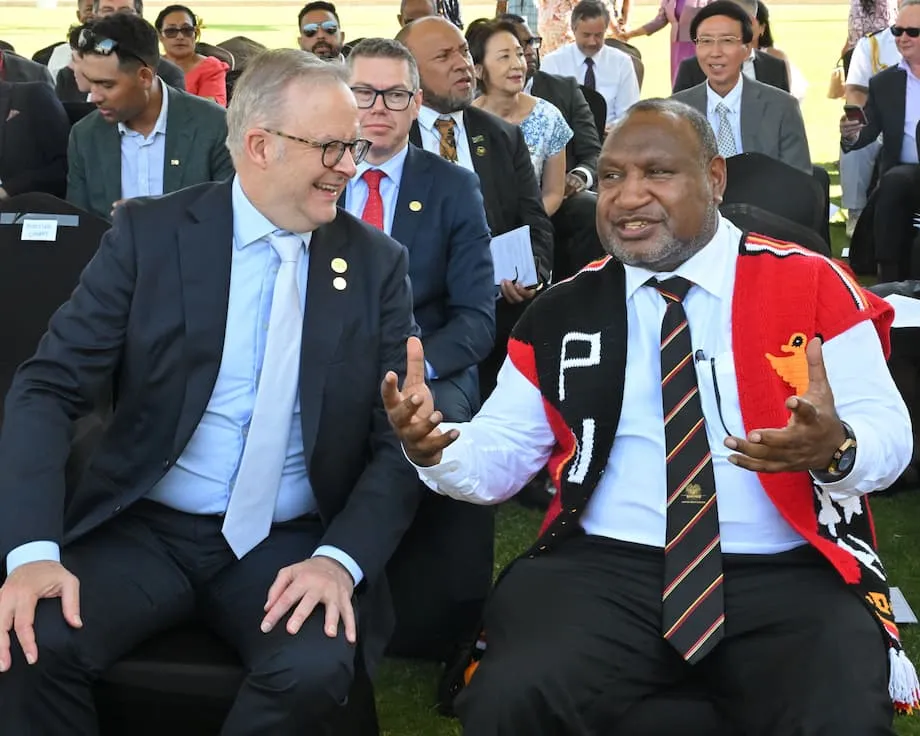
The two prime ministers had intended to sign the treaty during Papua New Guinea's celebrations marking 50 years of independence in Port Moresby. The cabinet meeting needed to endorse the document did not reach a quorum, meaning too few members were present for it to take the required decision.
Leaders described the delay as a procedural issue that could be resolved. Rather than proceed without the necessary approval, they endorsed a communique that confirmed the wording and committed both cabinets to finish their reviews.
Australian Prime Minister Anthony Albanese expressed confidence that the agreement would be signed soon. He said work between the governments would continue in the coming weeks and described the proposed pact as Australia's first new alliance in more than 70 years.
"I am confident the treaty will be signed in coming weeks," Albanese said.
Albanese also said the agreement would lift the partnership to a new level. Marape reaffirmed Australia's place in Papua New Guinea's security policy while maintaining that choosing partners was a sovereign decision. As prime minister, he described Australia in these terms:
security partner of choice
The main developments leading to the present position are:
- In 2022, China reached a security agreement with the Solomon Islands, triggering regional concern.
- In 2023, Papua New Guinea and Australia concluded a broader security agreement that the proposed defence treaty would sit alongside.
- During Papua New Guinea's celebrations marking 50 years of independence, the planned treaty signing was delayed because the cabinet meeting did not reach a quorum.
- The two governments signed a communique confirming the treaty wording and promising to complete their cabinet processes.
- Days after the stalled signing, China urged Papua New Guinea to avoid an exclusive defence arrangement.
China warns against limits on other partnerships
The Chinese embassy in Port Moresby acknowledged Papua New Guinea's right to sign treaties but warned against an agreement that excludes other partners or targets a third party. It framed its message around sovereignty, independent foreign policy and Papua New Guinea's interests over the longer term.
The embassy set out its objection to restrictions on cooperation with other countries in its statement:
should not be exclusive, restrict cooperation with third parties, or undermine the legitimate rights and interests of others.
China's warning reflects its sensitivity to new defence agreements in the Pacific following its own security deal with the Solomon Islands in 2022. That agreement prompted regional concern, and subsequent Chinese security outreach has become part of the setting in which Australia is negotiating closer partnerships.
Marape said Papua New Guinea's defence minister would brief China and Indonesia on the treaty's parameters. The planned discussions are intended to explain the agreement and reassure neighbouring countries that closer security ties with Australia would leave room for other cooperation.
Port Moresby has reasons to maintain both relationships. China is an important trading partner, while Australia provides deep security support. Papua New Guinea's preference for nonalignment means it seeks to avoid taking sides in competition among larger powers while retaining the freedom to choose practical partnerships.
Opposition figures and former commanders seek safeguards
Opposition leader Douglas Tomuriesa has called for strong safeguards and review mechanisms to protect sovereignty and preserve constitutional authority. The domestic debate concerns how binding military commitments would operate within Papua New Guinea's constitution and its principle of friendship with all countries.
Former defence commanders Gilbert Toropo and Peter Ilau have argued that Papua New Guinea should retain freedom to engage with a range of partners. They want clarity about how the treaty would affect cooperation with neighbours and about the conditions under which foreign forces would operate inside the country.
Retired major general Jerry Singirok has been among the most prominent critics. He warned that merging forces could cross constitutional boundaries and conflict with Papua New Guinea's preference to be friends to all and enemies to none. He also rejected the idea that China is an adversary for Papua New Guinea and argued against taking sides in rivalries among larger powers.
The concerns extend to provisions that might constrain other partnerships or reduce domestic jurisdiction over foreign personnel. For Papua New Guinea, jurisdiction means the authority of its laws and courts over people operating within its territory. How that authority would apply is a concrete sovereignty issue, especially when foreign troops are involved.
Who would have legal authority over foreign troops?
Status of Forces Agreements govern the legal standing of military personnel serving in another country. They set rules concerning matters such as privileges, immunities and jurisdiction. Those provisions can determine which country has authority when a legal issue involving a visiting service member arises.
Papua New Guinea has previously limited Australian deployments to advisory roles to avoid friction with domestic law and courts. A new framework involving closer military integration would need clear rules about the status of personnel and the responsibilities of both governments.
Former commanders and opposition figures are seeking detail on precisely those arrangements. Training opportunities and joint operations are one part of the proposed relationship; the rules governing foreign personnel inside Papua New Guinea are another, with direct consequences for constitutional authority and public accountability.
Patrols, border policing and disaster response
Papua New Guinea's immediate security demands often involve illegal fishing, transnational crime, cyber attacks, disasters and humanitarian emergencies. Its vast maritime zone, rugged terrain and long borders stretch the resources available for enforcement and emergency response.
The proposed treaty sits alongside the broader security agreement concluded in 2023 and is expected to streamline cooperation in these areas. Maritime patrols, aerial surveillance, engineering support, logistics and emergency response could address needs experienced by communities in everyday life.
Michael Kabuni, a Papua New Guinean scholar, has questioned whether a mutual defence alliance addresses the country's most pressing needs. He argued for a focus on maritime and border enforcement, policing and disaster response rather than preparation for expeditionary combat, meaning military operations conducted away from home.
Kabuni described the capabilities he believes Papua New Guinea should prioritise:
What PNG needs are coastguard style capabilities: maritime patrols, satellite monitoring, fisheries enforcement, customs and border policing, engineering units and disaster response teams.
His argument places practical state capacity at the centre of the debate. Fisheries enforcement protects maritime resources, border policing supports control over movement across national boundaries, and engineering and disaster teams help authorities respond when communities need urgent assistance.
Military expansion brings questions of oversight
Kabuni cautioned that rapidly increasing military budgets without matching governance and oversight could have unintended consequences. The concern is that spending and training need to be accompanied by institutions capable of supervising how resources and personnel are used.
Fiji's experience with a military possessing substantial resources has been cited as a warning about excessive political influence. In Papua New Guinea, community structures and local obligations can also complicate control over weapons, creating fears that arms intended for national defence could reach tribal conflicts.
Treaty advocates argue that a carefully designed programme could direct resources toward policing, surveillance and civil defence while training the army to support emergency response. This would connect military cooperation with the practical needs identified by critics.
Budget discipline, strong oversight and collaboration between defence and police forces would be necessary for lasting benefits. Skills gained through service could flow into engineering and emergency management, provided returning personnel have employment opportunities and improvements reach the broader security sector rather than the military alone.
Australia's Pacific plans face local decisions
Australia views a formal alliance with Papua New Guinea as part of its response to faster strategic competition in the Pacific. China's security outreach, police training programmes and regular naval presence have changed perceptions of risk in Australia and across island countries.
Pacific partners continue to trade extensively with China while seeking reassurance that no single power will dominate their security choices. Papua New Guinea's treaty debate reflects that tension between accepting practical support and preserving room to work with several countries.
A planned security partnership between Australia and Vanuatu has also been delayed for internal review. That process illustrates how island governments weigh security agreements alongside access to development financing, including financing from China. Australia's other Pacific agreements are likewise at different stages of domestic approval.
Australia is also implementing AUKUS with the United Kingdom and the United States, a plan involving submarines powered by nuclear reactors. American authorities are reviewing that complex undertaking. Together, these developments make timing and diplomatic tone important as Canberra pursues its regional security plans.
For the Papua New Guinea treaty, practical priorities include joint maritime patrols, dependable logistics, compatible communications, cyber defence and transparent consultation about activities involving other countries. Clear public communication would help address concerns in Port Moresby and reassure other Pacific Islands Forum members that the arrangement supports regional stability while allowing cooperation with other partners.
Cabinet reviews, parliament and regional briefings come next
Cabinet processes in both countries must be completed before the planned signature. Papua New Guinea's government has indicated that the treaty will go to parliament and can be amended later if necessary. Leaders expect signing in the coming weeks, but no exact date has been given.
Papua New Guinea's defence minister plans consultations with China and Indonesia to explain the document and reduce misunderstanding. Those discussions will accompany domestic consideration of how the treaty fits the country's constitution, security priorities and other international relationships.
China is hosting a security forum in Beijing attended by military officials from many countries. It has not publicly indicated whether it will press the treaty issue further than the embassy statement. Papua New Guinea is expected to continue engaging its partners in line with its trade relationships and development priorities.
Australia continues to present the proposed agreement as an arrangement within the Pacific family, based on mutual security and respect for sovereignty. The coming weeks will determine whether the agreed wording becomes a formal alliance. For Papua New Guinea, the central task is to combine defence commitments with practical support while preserving independent decisions and constitutional authority.
Key Points
- As of September 20, 2025, the Pukpuk treaty text is agreed but the treaty remains unsigned.
- A cabinet quorum issue delayed the planned signing during Papua New Guinea's celebrations marking 50 years of independence.
- The proposed agreement includes mutual defence, closer military integration and service opportunities across both armed forces.
- China warned against an exclusive pact that restricts cooperation with other countries.
- James Marape identifies Australia as Papua New Guinea's security partner of choice and says choosing partners is a sovereign decision.
- Opposition figures and former commanders want constitutional safeguards and clear legal rules for foreign personnel.
- Michael Kabuni argues that maritime enforcement, border policing and disaster response should be priorities.
- Cabinet reviews, parliamentary consideration and briefings for China and Indonesia are the next steps, with signing expected in the coming weeks.