A human guide on a traveler's shoulder
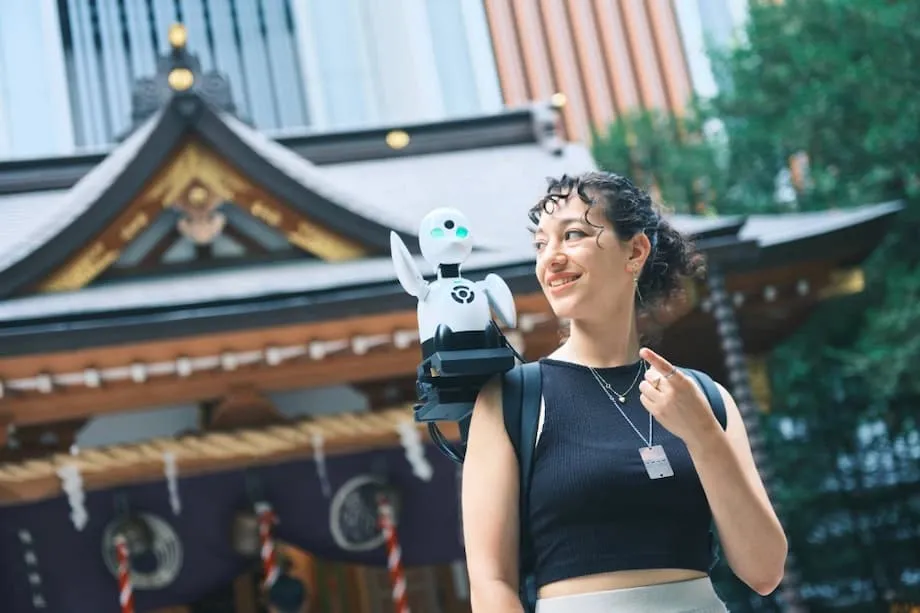
In Tokyo's Nihonbashi business district, visitors are exploring shops, shrines and back lanes with a small white robot perched on a traveler's shoulder. The robot, called OriHime, comes from OryLab. Behind its glowing green eyes is a human guide who may be working from home or a care setting, speaking to the group and watching the walk through a camera.
Contents
- A human guide on a traveler's shoulder
- How OriHime joins the walk
- The cafe that brought pilots into hospitality
- Who operates the robots?
- What visitors encounter in Nihonbashi
- The technology behind the conversation
- Why a simple avatar can feel personal
- Local partners and new work settings
- How visitors are responding
- What makes an outdoor tour harder?
- Japan's wider use of social robots
- What to Know
The arrangement opens a public role to people who cannot easily leave home because of disability, chronic illness or caregiving responsibilities. Known as pilots, the operators control the robot remotely and lead conversations in English or Japanese. Tourists receive a local perspective from someone who knows the city and wants to connect, while pilots gain paid work built around storytelling and hospitality.
OriHime is mounted on a stand attached to a backpack worn by one person in the group. Sitting near head level, it lets the pilot answer questions, react to sights around a corner and chat with visitors as they move through the neighborhood. The experience is closer to meeting a host represented by a small robot with a birdlike shape than hearing a recorded tour.
The tours extend an idea already used at Avatar Robot Cafe DAWN in Nihonbashi: a person can participate in a workplace through a remotely controlled robot even when getting to that workplace is difficult. Taking that model onto city streets gives pilots a new setting for social, creative work and brings visitors into contact with the person behind the device.
How OriHime joins the walk
OriHime weighs about four kilograms and has small arms shaped like wings that gesture as the pilot speaks. A camera, microphone and speaker allow the operator to see, listen and talk in real time. At a shrine, the robot can fold its arms together in a posture resembling prayer, joining the group's pause through a movement directed from elsewhere.
The pilot connects from home or a care setting and guides the group through the shoulder unit. Narration, questions and casual conversation pass through the microphone and speaker with minimal delay. Because the robot sits close to the wearer's ear and mouth, its voice feels nearby, while surrounding street sounds remain part of the city walk.
English and Japanese support allows both international visitors and local residents to take part. The conversation can move between a site's history, a practical question and a personal observation, much as it would with a guide walking beside the group.
OriHime's simple physical design keeps attention on the pilot's voice and stories. Its movements provide expression, but the person operating it supplies the knowledge, timing and responses that make each walk a live encounter.
The cafe that brought pilots into hospitality
Avatar Robot Cafe DAWN provided the starting point for the walking tours. Inside the Nihonbashi cafe, pilots operate robots from home to serve customers, host tables and prepare drinks through a tele-barista system, a setup that lets an operator work on drink preparation remotely.
The cafe model showed that remote work could be energizing for staff and enjoyable for guests. Its workforce already includes dozens of pilots who log in from homes and hospitals for shifts across different roles. The tours carry that social connection beyond the cafe counter and into the surrounding neighborhood.
OryLab presents the cafe and its avatar robots as ways for people who are housebound or bedridden to participate in society, work and connect with others. The company describes the purpose in its official materials:
We aim to achieve a new form of social participation through the use of technology.
The move from cafe service to guiding creates a different kind of workday. Instead of hosting someone at a table, a pilot can introduce a shop, explain a local custom or follow a conversation as visitors encounter something along the route. The job remains rooted in hospitality, with the robot carrying the operator's presence into a public place.
Who operates the robots?
Many pilots have conditions such as amyotrophic lateral sclerosis, spinal muscular atrophy, muscular dystrophy, multiple sclerosis or severe mobility impairments. Some live far from Tokyo. Others are local residents who cannot commute or stand for long periods. Disability, illness and caregiving responsibilities can each make travel to a conventional workplace difficult.
Pilots can control OriHime with a mouse, tablet or gaze tracking interface. Gaze tracking allows a person to use eye movements to operate the system. They can speak naturally through the robot or use text to speech when needed, allowing written words to be delivered as spoken audio.
The operator sees the surroundings through OriHime's camera. When a group is outside, a support team can assist with logistics and safety checks. The arrangement brings together the pilot's remote view, the person carrying the robot and the people helping the outing run smoothly.
Training covers the route, local history, communication across cultures and the varied accessibility needs of people in a group. Organizers aim to match each pilot's strengths to suitable tasks, keep shifts flexible and build teamwork without requiring everyone to be physically present in one workplace.
For a person who cannot make a daily journey to work, the tour creates a paid role centered on conversation rather than commuting. It also adds a mobile, dialogue driven category of employment to the roles already offered through the cafe.
What visitors encounter in Nihonbashi
The walk typically begins at DAWN before winding through streets known for long established stores, artisan goods and venerable shrines. Nihonbashi combines traditional businesses with modern commerce, giving pilots a route that connects cultural sites, neighborhood shops and everyday street life.
Pilots introduce places that regular tours often overlook, including specialty shops with centuries of history and quiet corners with their own stories. The route allows them to guide both the conversation and the group's direction, drawing visitors toward details they might otherwise pass.
At a shrine, a pilot can explain etiquette, from rinsing hands to approaching the main hall. OriHime's small arms can fold together while visitors pause, adding a human touch to a moment of reflection even though the operator is elsewhere.
Personal stories are part of the experience. A pilot may weave family recipes, seasonal rituals or the roots of a neighborhood shop into the walk. Those details suit a district where old traditions sit alongside contemporary business, and they give the guide room to bring an individual perspective to familiar streets.
Many participants have described the experience with the Japanese phrase ichi go ichi e, meaning a once in a lifetime encounter. The route may overlap from one outing to the next, but the pilot's perspective, the group's interests and the mood of the day shape the conversation each time.
The technology behind the conversation
OriHime is a telepresence system designed for social conversation. Telepresence means that a person can see, hear and interact in a place without being physically there. Its compact body has a head, two arms and expressive eyes that brighten or dim as the pilot speaks.
The camera gives the pilot a view of what is happening around the group. The microphone captures nearby voices, and the speaker projects the operator's voice to visitors. Internal batteries can cover a walking tour schedule, while the backpack mount keeps the robot steady, including when the group moves through a crowd.
The setup balances durability, comfort for the wearer and clarity for the pilot. A stable position matters to both sides of the conversation: visitors need to hear the guide, and the guide needs a useful view and clear sound from the street.
Mobile data is essential to the connection. The system needs a stable network to keep audio responsive and the camera feed smooth. Engineers adjust compression and buffering, which control how information is reduced for transmission and briefly held before playback, so the pilot can respond quickly when someone points to a sign or asks about a side street.
OryLab also treats privacy as part of the system's operation. Pilots and support teams follow rules covering recording, consent and data handling. Before a tour, groups are briefed on what the camera captures and what falls outside its view or recording arrangements. The robot is used as a communications tool, allowing a remote guide to take part in the outing.
Why a simple avatar can feel personal
OriHime does not try to look like a human. Designers of social robots often choose abstract shapes deliberately, and here the simple face directs attention toward the voice, timing and warmth of the person operating it.
Tour members respond to what the pilot says, the tone of a comment and the choices made during conversation. The robot gives that exchange a visible presence without requiring the operator to reproduce human facial expressions.
The abstract design also avoids biases that can arise with models that look human. Pilots can express themselves through their voice, wit and knowledge rather than through a robotic imitation of their face. Its small gestures support the interaction, while the guide's personality supplies its substance.
That approach helps explain why a simple device can carry a personal encounter. A visitor asking about a shop receives an answer from a person who is following the walk and listening to the question. The pilot's ability to react makes the exchange responsive to the people taking part.
Local partners and new work settings
The tour program brings OryLab together with local partners focused on Nihonbashi's streetscape and businesses. Starting at the cafe provides a place to check equipment, meet the group and set expectations before going outside.
The route includes stops where merchants welcome tour groups, and service in English is available. Local businesses benefit from the flow of visitors, while pilots gain paid work organized around storytelling and cultural exchange. The neighborhood itself becomes part of the workplace.
Organizers plan to expand the concept as training and logistics develop. They see possible roles for avatar guided experiences in museums, airports and office complexes, where people who cannot commute or stand for long periods could greet, guide and assist guests. No date is given for that expansion.
The cafe's official website provides accessibility features and program details for people interested in learning more or visiting. Those details are available through Avatar Robot Cafe DAWN.
How visitors are responding
Early participants describe the walks as friendly, surprising and easy to follow. Foreign visitors appreciate that a bilingual pilot can explain history and answer practical questions without the formality of a large group tour.
The shoulder position helps the guide's voice remain close and present on busy streets. Conversation can feel like a chat with a local rather than a broadcast to a crowd. Some travelers have included the cafe in itineraries focused on accessibility because it shows how remote work can become hospitality experienced in person by customers.
Tokyo residents tend to greet social robots with curiosity rather than skepticism. Japan has years of experience with robots in shops, stations and care homes, making a small avatar that introduces a confectionery founded generations ago a familiar kind of presence in a new role.
For many guests, the technology recedes as the walk continues. Their attention shifts toward the person telling the stories, answering questions and choosing what to point out. The device enables that relationship, while the pilot gives it character.
What makes an outdoor tour harder?
Mobile coverage can change from block to block, and even a short connection loss can interrupt the pilot's view or voice. Organizers plan routes with signal strength in mind. Support staff can help the pilot reposition the group when the connection weakens.
Rain, heat and wind also affect the outing. Weather changes how people move and how clearly a speaker can be heard. Equipment must cope with those conditions without increasing the weight or discomfort for the person wearing it.
The backpack mount needs to distribute OriHime's weight so the wearer can walk comfortably for the length of the tour. Street noise can mask the pilot's voice in busy areas, making audio processing and careful route choices part of keeping the conversation understandable.
Training includes managing group safety at crossings and using the robot's gestures to direct attention. Feedback from pilots and guests guides continuing changes to the equipment and the way tours are run.
Japan's wider use of social robots
Japan's demographic profile and labor market have encouraged companies and communities to adopt robots in service roles for years. Care facilities use companion robots and mobility aids to support residents and ease pressure on staff. Shops and transport hubs use guidance robots to direct visitors and provide information.
Government programs have funded research and trials of caregiving technologies to address worker shortages and improve quality of life. Popular culture has also long presented robots as helpers, contributing to public comfort with seeing them in daily settings.
OriHime's guiding role fits within that wider familiarity, while putting a human worker at the center of the service. The model extends the reach of people who want to guide but cannot be at the destination themselves. Visitors receive an introduction to a real neighborhood, and pilots gain a way to show the city without leaving home.
The practical demands remain concrete: a reliable connection, a comfortable mount, clear sound and coordinated support. When those elements work together, a person separated from Nihonbashi by distance or limited mobility can still host a conversation on its streets.
What to Know
- OryLab's OriHime tours in Nihonbashi are led remotely by human pilots.
- The robot weighs about four kilograms and sits on a backpack stand near a traveler's shoulder.
- A camera, microphone and speaker support live conversation in English or Japanese.
- Pilots include people unable to leave home easily because of disability, illness or caregiving responsibilities.
- Operators can use a mouse, tablet or gaze tracking, with text to speech available when needed.
- Tours typically begin at Avatar Robot Cafe DAWN and visit historic shops, shrines and neighborhood landmarks.
- The cafe already employs dozens of pilots working from homes and hospitals.
- Mobile coverage, weather, audio clarity and wearer comfort are central to running the walks.
- Organizers see potential for similar roles in museums, airports and office complexes.