Amazon puts conversational AI inside the Japanese home
Amazon began early access to Alexa+ in Japan on October 29, 2026, bringing an assistant built from more than 70 AI models to a market where users have already made more than 2.6 billion smart home requests through Alexa in a single year. The preview is free. Afterward, Alexa+ will cost 3,000 yen a month as a standalone service, while Amazon Prime members will receive it at no extra charge.
Contents
- Amazon puts conversational AI inside the Japanese home
- What changes when the commands become a conversation?
- Why Japanese language support took longer
- How invitations, devices and prices work
- Turning a notice into a calendar entry
- Shopping becomes a spoken comparison
- Finding entertainment and adding local services
- New Echo hardware arrives alongside the service
- Personal memory brings privacy and reliability decisions
- Key Points
The launch pairs a new way of speaking to household technology with a striking price comparison. Prime costs 600 yen a month or 5,900 yen a year in Japan. Its monthly membership therefore costs one fifth of the proposed standalone Alexa+ subscription, while including the assistant alongside existing membership benefits.
Amazon's central promise is that people can describe what they need instead of memorizing commands. A comment about feeling hot can prompt an air conditioner adjustment. A photograph of a local government notice can become a spoken explanation of relevant deadlines, followed by an entry in a connected calendar.
The move extends the Japanese Alexa+ launch into everyday decisions about devices, personal information and spending. Some functions are available during early access, while restaurant reservations, delivery orders and ticket purchases are scheduled for later introduction.
Alexa first arrived in Japan in 2017. Amazon says Japanese users have interacted with it about 30 billion times over the past three years, and music listening on Echo devices has reached 520 million hours. Alexa+ builds on those established habits by connecting conversation to more complicated tasks.
What changes when the commands become a conversation?
Traditional Alexa interactions often required a device name and a clear instruction, followed by another call of Alexa's name for the next request. Alexa+ is designed to interpret ordinary language, keep track of the conversation and accept follow up questions without repeatedly hearing the wake word.
Amazon gives examples involving room lighting and temperature. Instead of specifying a light and asking for it to be switched on, someone can say the room is dark. The assistant then uses the connected home setup and the context of the request to decide which action to take.
Compatible equipment and configuration remain part of that process. SwitchBot and Panasonic are among the brands identified for smart home connections. Appliances without direct Alexa support may need a compatible smart remote control. A more conversational assistant still needs a working connection to the appliance it is expected to operate.
Alexa+ can also retain useful context over longer periods. Someone who discussed a recipe the previous day can ask about its ingredients the next day. A conversation begun on an Echo Show can continue through the Alexa smartphone app or a computer browser at alexa.jp.
For a person cooking or caring for a child, the practical change is fewer interruptions to pick up a phone, search for an app or repeat an instruction. Amazon also describes creating routines by voice, combining actions such as switching lights, playing music and reading the weather.
Why Japanese language support took longer
Amazon announced Alexa+ in February 2025, and early access in the United States began in March that year. The Japanese introduction followed about 19 months after that American preview, after work on language, local services and household devices.
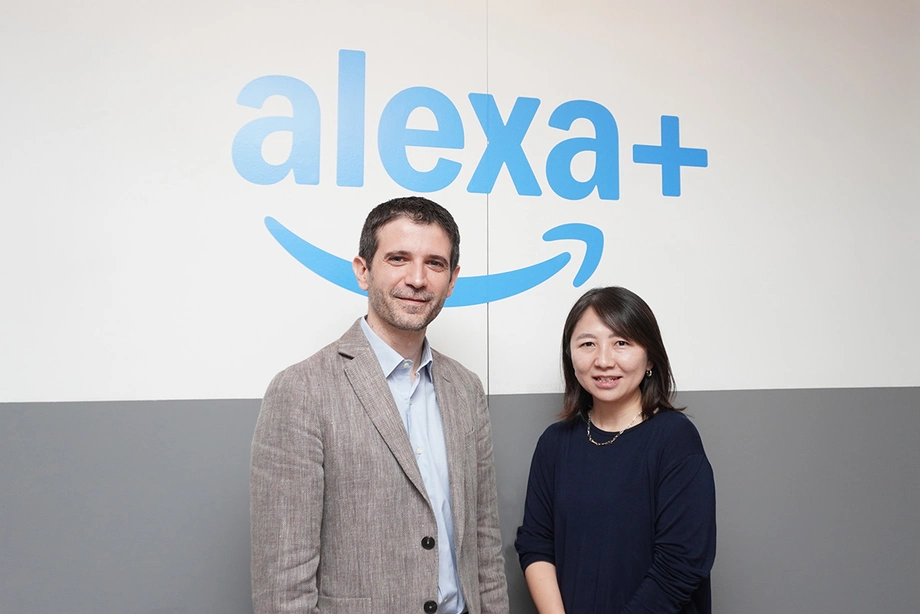
Japanese speech often leaves the subject or intended action unstated because the listener is expected to understand the situation. Gianmaria Visconti, an Amazon Alexa International regional manager involved in the rollout, explained that continuing a conversation and correcting an interpretation can help the assistant handle that ambiguity.
Mai Maruyama, who leads Amazon Japan's Echo, Ring and smart home business, described another development challenge: finding a balance between friendly and polite speech without making the assistant sound overly familiar. The team also spent time connecting and testing devices used in Japanese homes.
Amazon says the Japanese version combines more than 70 models suited to different household tasks. Its foundation is Amazon Bedrock, a service for building and running AI applications, with models including Amazon Nova and Anthropic's Claude.
A language model is an AI system trained to recognize patterns in language and produce responses. Alexa+ selects models for different requests and connects their output to services or devices. In plain terms, understanding a request is one stage; sending the right instruction to a calendar, television or appliance is another.
How invitations, devices and prices work
Amazon is introducing Alexa+ through invitations rather than opening access to everyone at once. Owners and buyers of eligible Echo devices, Fire TV devices and televisions with Fire TV built in can receive invitations. Panasonic and JVC televisions are among the supported categories.
People can also request an invitation through Amazon.co.jp/newalexa. Selected new compatible devices are described as offering a route into early access without waiting on the general registration list, while invitations for existing owners and other applicants are being sent in stages. Purchase and activation instructions therefore matter for the particular device involved.
Most existing Echo devices are expected to support Alexa+, with some older products excluded, including the first generation Echo Dot and first generation Echo Show. After activation, access extends to the Alexa app and browser, allowing conversations to continue away from the home speaker.
The financial comparison is straightforward. Twelve months of standalone Alexa+ at 3,000 yen a month would cost 36,000 yen. Prime paid monthly would cost 7,200 yen over the same period, while annual Prime costs 5,900 yen. At the stated prices, annual Prime is 30,100 yen cheaper than a year of standalone Alexa+.
Amazon has not given an end date for Japanese early access or launch dates for the planned restaurant, delivery and ticket connections. The main milestones are:
- 2017: Amazon introduced Alexa in Japan.
- February 2025: Amazon announced Alexa+.
- March 2025: Early access began in the United States.
- October 24, 2025: Amazon Japan said a Japanese release date had not been decided.
- February 2026: Alexa+ entered general service in the United States.
- October 29, 2026: Japanese early access began alongside new Echo devices.
Turning a notice into a calendar entry
One launch demonstration showed how Alexa+ could connect reading and action. A user photographed a sample municipal notice, uploaded it and asked which items were relevant. The assistant identified information including influenza vaccination guidance, tax payment deadlines and health examination application deadlines.
The document was a mock notice prepared for the demonstration. After the assistant extracted the relevant information, a request to add a vaccination appointment for 10 a.m. that Saturday created an entry in the connected calendar. Google Calendar is among the supported calendar services.
Alexa+ accepts documents and images through the Alexa app or a designated email address. Examples include appliance manuals in PDF format, handwritten recipes and photographs of printed notices. Users can ask questions about the uploaded information instead of searching through the document themselves.
Calendar functions also include identifying overlapping appointments. Email tools can help compose and send messages by voice, including drafting a response declining an invitation. These functions move the assistant beyond retrieving information toward carrying out several connected steps.
Personalization adds another layer. Amazon says Alexa+ can remember anniversaries, favorite restaurants, books, food preferences and dietary restrictions. Voice ID and Visual ID can distinguish family members on supported devices so that a request for favorite music receives a response suited to the person asking.
Shopping becomes a spoken comparison
Amazon's shopping demonstrations showed Alexa+ comparing product sizes and prices, summarizing reviews and setting price alerts. The assistant can also help create shopping lists and check delivery progress, bringing several parts of the purchasing process into a single conversation.
In one demonstration, Alexa+ compared two protein products containing 1,800 grams and 1,000 grams. It described their unit prices as 5 yen and 7 yen per gram. Comparing the cost of the same quantity helps a shopper judge value when package sizes differ.
The user then asked for an alert if the first product fell to 9,500 yen or less. Alexa+ set a notification. Amazon's descriptions also include ordering when a target price is reached, with confirmation requested before purchases.
The pricing structure gives Amazon a direct commercial advantage. Including Alexa+ in Prime makes membership the cheaper stated route to continued access, while the assistant itself makes it easier to search Amazon's store, compare products and follow deliveries.
For existing Prime members, the immediate financial change is an extra benefit without a separate Alexa+ charge. For households considering the assistant alone, the difference between 3,000 yen and 600 yen a month gives Prime a strong price advantage. Purchases and subscriptions to connected services remain separate household expenses.
Finding entertainment and adding local services
Alexa+ is designed to find entertainment from partial memories rather than exact titles. At the launch, a request for suspense dramas featuring actor Hidetoshi Nishijima brought up candidate programs without naming a particular series.
A Fire TV demonstration used a description of an anime featuring a girl knowledgeable about medicine to find The Apothecary Diaries. The conversation then continued toward identifying and playing a song. Amazon Music, Spotify and Prime Video are among the services named for music and video connections.
Ring integration was also demonstrated through a request to review a pet's activity. Alexa+ located relevant camera recordings and presented highlights, reducing the amount of footage a user would otherwise need to watch.
Restaurant and delivery connections belong to the next stage of the rollout. Amazon plans restaurant reservations through Tabelog, deliveries through Uber Eats and Demae-can, and ticket purchases through Ticket Pia. A demonstration showed a restaurant search in Tokyo's Ueno district progressing through the choice of a venue, party size and time, then adding the reservation to a calendar.
Amazon has also identified Delish Kitchen for recipe recommendations and plans a Smart Home AI Toolkit for appliance manufacturers. The toolkit is intended to help manufacturers connect functions specific to their products with Alexa+, widening the range of actions available through conversation.
New Echo hardware arrives alongside the service
Amazon introduced Echo Time and the sixth generation Echo Dot alongside Japanese early access. Echo Time costs 35,980 yen including tax, while the new Echo Dot costs 17,980 yen including tax.
Echo Time is a smart clock with a circular touchscreen measuring 3.2 inches. It includes Amazon's Omnisense sensing system, with capabilities such as detecting whether someone is present. The new Echo Dot uses an AZ3 chip with AI acceleration and supports Voice ID.
The hardware follows an earlier Japanese device announcement in October 2025 covering Echo Dot Max, Echo Studio, Echo Show 8 and Echo Show 11. At that stage, Amazon was discussing how to adapt Alexa+ to Japanese culture and habits without committing to a local service date.
Existing device support makes this launch different from an upgrade that requires every household to replace its equipment. Many owners can try the service on eligible hardware they already have, while the app and browser provide additional ways to use it after activation.
Personal memory brings privacy and reliability decisions
Alexa+ draws usefulness from knowing more about the household, including preferences, schedules and uploaded documents. Amazon says users can inspect interactions and shared attachments through the Alexa privacy dashboard, with controls available in the app and online.
Those controls include reviewing and deleting voice recordings and changing how long recordings are stored. Amazon also describes options for ongoing deletion or avoiding storage of voice recordings. Families using child profiles must provide parental consent, and some services are restricted for those profiles.
Early overseas user experiences have included slower replies, interruptions during speech, difficulties with existing routines and unintended appliance actions. Other demonstrations and reviews described smoother conversations. For households trying the Japanese preview, response speed, correct device selection and the handling of existing routines are concrete things to check.
Amazon's figures show why dependable execution matters. More than 2.6 billion smart home actions in 12 months amounts to an average of over 7 million a day in Japan. Many of those requests concern simple, repeated tasks such as lighting and temperature control.
The Japanese launch therefore brings two changes together: a more capable conversational system and greater responsibility for acting correctly on household instructions. Free early access gives eligible users a period to assess those functions before the published subscription pricing takes effect.
Key Points
- Alexa+ early access began in Japan on October 29, 2026, with invitations being introduced in stages.
- The preview is free. Afterward, standalone access will cost 3,000 yen a month, while Prime members pay no extra Alexa+ fee.
- Prime costs 600 yen a month or 5,900 yen a year in Japan.
- Alexa+ combines more than 70 AI models for conversation, document questions, scheduling, shopping and connected home controls.
- Most existing Echo devices are supported, with some older models excluded; app and browser access follow activation.
- Tabelog reservations, Uber Eats and Demae-can deliveries, and Ticket Pia purchases are planned for later introduction.
- New Echo Time and Echo Dot devices cost 35,980 yen and 17,980 yen respectively, including tax.
- Users can manage interactions, attachments and voice recording settings through Alexa privacy controls.