A 1979 design returns to an eager market
Sony's revival of its original Walkman headphones is already facing a supply squeeze in Japan. Orders for the silver MDR-3R opened on November 6, 2026, and by November 11 the company had warned that demand had exceeded expectations and deliveries could take time. Reservations for a limited Stranger Things edition had also closed after reaching the sales limit.
Contents
- A 1979 design returns to an eager market
- What Sony kept from the original
- What USB-C changes
- Why the Walkman warning matters
- New drivers, familiar sound priorities
- Open headphones work best in quieter places
- The microphone has limits too
- Prices, reservations and the launch timeline
- What the price buys
- Key Points
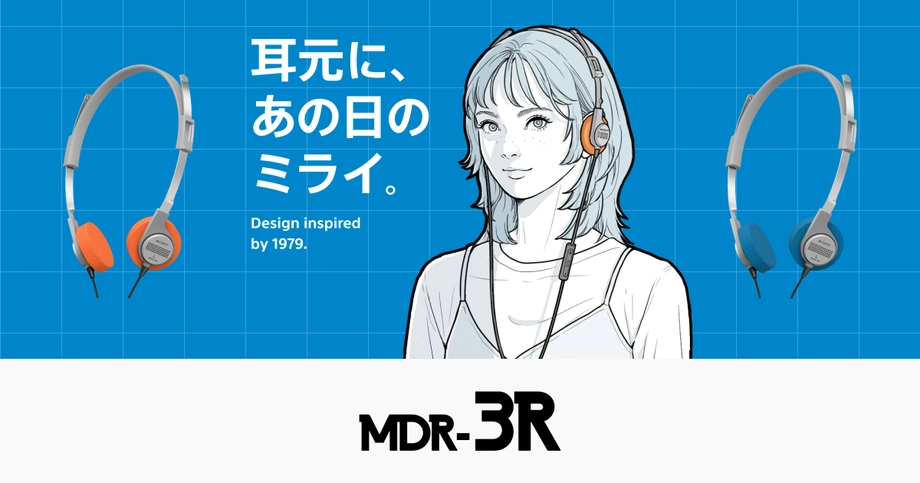
The standard headphones cost $59.99 in the United States and 7,700 yen including tax at Sony Store in Japan. Sony's Japanese launch is scheduled for November 20. The product brings back the thin adjustable headband, small circular earpieces and removable orange and blue foam pads associated with the first Walkman, but replaces the old 3.5 mm plug with USB-C.
The most surprising restriction concerns the product whose history inspired it. Sony says the MDR-3R is intended for compatible phones, tablets and computers, and does not recommend connecting it to Walkman players.
Sony's Japanese launch announcement, dated November 6, describes a redesign built around the experience of taking music outdoors. The original MDR-3L2 accompanied the TPS-L2 cassette Walkman in 1979. Sony uses MDR-3 as the collective name for that headphone family, which also included the MDR-3 and MDR-3L1.
The new model arrives amid renewed interest in wired headphones and older audio formats. Its appeal rests on a specific combination: familiar styling, very little weight and a direct cable connection. Reviews broadly praise its comfort and clear vocals, while pointing to modest bass, substantial sound leakage and inconsistent microphone performance in noisy places.
What Sony kept from the original
The MDR-3R retains the original's narrow gray plastic headband and sliding metal adjusters. Small earpieces rest against the ears rather than surrounding them with large padded cups. Both orange and blue foam pads are included, and owners can remove and exchange them.
Sony also recreated details that are easy to overlook in photographs: the sound holes, the Dynamic Stereo Headphones marking and the finish of the Sony logo. The packaging and instruction manual borrow their appearance from the earlier product, extending the revival beyond the headphones themselves.
The listed weight is approximately 38 grams without the cable. A specialist retail test measured 35.8 grams without the cable and 49.0 grams with it; another retail review described the 38 gram figure as including the cable. Buyers comparing weights should use the stated 38 grams without the cable as the reference specification.
John Higgins, a reviewer who used the revived headphones, described them as 2 grams lighter than the original MDR-3L2. That comparison puts the earlier model at about 40 grams, making the reduction roughly 5%. The larger practical attraction is the continued use of a very light design.
Several reviews found the headphones comfortable over long periods, with softer foam than reviewers remembered from the originals. The headband has no substantial padding at the top, however, and the earpieces still touch the ears. Comfort will depend partly on whether that contact suits the wearer.
What USB-C changes
The fixed cable is approximately 1.2 meters long and now carries a microphone and a remote with three buttons. The controls handle playback and volume, with additional actions for music and calls depending on the connected device. Sony says fine grooves along the cable surface help reduce tangling.
The USB-C plug also changes how audio reaches the headphones. The MDR-3R contains a digital to analog converter, usually shortened to DAC. It turns the digital audio sent by a phone or computer into the electrical signal that moves the headphone speakers.
The connected device supplies power, so the headphones need neither separate charging nor Bluetooth pairing. For someone moving between music, videos and online meetings, the attraction is straightforward: one cable handles listening and speaking.
Sony's connection and controls guide says compatibility requires USB Audio Class 1.0. This is a standard that lets a device send audio to a USB accessory. A USB-C socket describes the physical connector; the device and its software must also support the required audio functions.
Sony warns that settings may be necessary and that some features may not work with every device, operating system or application. One reviewer successfully used the headphones with an iPhone, a computer and Android phones. Another could not get them working with a Samsung Galaxy S24 during a test lasting three days using a unit supplied by the company.
Why the Walkman warning matters
Sony repeats its Walkman warning on the MDR-3R concept page, which places the new headphones alongside images of the original portable player. The company says the USB-C connection is neither intended nor recommended for use with Walkman products.
Modern Walkman players are digital music devices, including models running Android. Their connection options differ from those of the cassette player that inspired the MDR-3R. A reviewer described possible unexpected volume or operating behavior when using the headphones' own digital audio electronics with modern Walkman players.
Sony's practical recommendation is to use a compatible phone, tablet or computer. Owners buying the MDR-3R to complete a modern Walkman setup need to account for that restriction before ordering.
The original cassette Walkman used an analog headphone connection. The MDR-3R has no native 3.5 mm plug and no wireless connection, so it is primarily a revival of the original wearing experience and appearance for today's USB devices.
New drivers, familiar sound priorities
Sony says it newly designed the MDR-3R's 23 mm drivers using the original design documents. A driver is the small speaker inside each earpiece. The diameter matches the earlier model, while the engineering has been updated.
A Japanese retail examination describes a change from samarium cobalt magnets to neodymium magnets, a material commonly used in modern headphone drivers. That review also heard a broader frequency range and more bass than the original, while still describing the sound as relatively light compared with many current headphones.
Sony promotes natural vocals, extended high frequencies and rich bass, and says the tuning has evolved for contemporary music. Listening tests were more restrained about the low end. Several found clear voices, good separation between instruments and an open presentation, but limited impact from bass drums and deep bass lines.
Higgins heard an upper midrange peak that gave snare drums extra snap. Another review described strong treble emphasis near 5 kHz, a frequency region that can make percussion and other sharp sounds stand out. These observations help explain why some listeners heard crisp detail while others found the balance too bright.
Reviews reached different judgments about value and musical enjoyment. One awarded the headphones 8.0 and described clean, balanced sound. Another reported an MDAQS audio quality score of 3.2 out of 5. Those ratings use different assessment methods, so their accompanying listening observations are more useful for comparison.
Across the tests, the clearest shared finding was that vocals and higher notes were stronger attractions than deep bass. Listeners seeking a forceful beat from electronic music or hip hop may find the presentation too light. Others may enjoy its clarity for acoustic instruments, singing and tracks where following individual parts matters more than physical bass impact.
Open headphones work best in quieter places
The MDR-3R's open construction lets surrounding sound reach the listener and allows music to escape. The foam pads rest on the ears without forming the seal provided by many larger headphones or earphones with fitted tips. There is no active noise cancellation.
Reviewers repeatedly found that traffic and train noise competed with music. One could use the headphones on New York streets but found them much less suitable on the subway. Another reported hearing more surrounding sound than with several modern open listening products and Sony's WH-CH530 headphones.
For someone who wants to hear a conversation or remain aware of activity nearby, that openness can be useful. In a shared room, however, sound leakage may disturb another person. In a noisy carriage, outside sound can cover quieter musical details and make the already modest bass harder to hear.
The design therefore makes more sense for a relatively quiet home, desk or walk than for someone whose main priority is shutting out travel noise. Its low weight remains available in every setting; its sound balance is much easier to appreciate when the surroundings are calm.
The microphone has limits too
Sony presents the microphone as suitable for calls and online meetings, extending the product beyond music. Reviews found it usable, but its ability to keep the speaker's voice clear varied with the environment.
Higgins said callers understood him indoors. Outdoors, his voice could sound muffled or distorted, especially with passing traffic. Holding the microphone closer to his mouth improved intelligibility, although some distortion remained.
Another test gave calling performance a B, with callers hearing more background noise than through wireless earbuds that use processing to separate speech from surrounding sound. A test lasting 15 minutes also found that keyboard taps and music playing in the room reached the person at the other end.
The remote is a convenient addition for occasional calls, and reviewers generally found its buttons functional. Some thought the controller and thin construction felt inexpensive. The cable is not detachable, and a review reported no ingress protection rating, leaving durability and exposure to rain as practical considerations for everyday use.
Prices, reservations and the launch timeline
Sony estimates a Japanese market price of around 8,000 yen including tax for the standard model and around 10,000 yen for the Stranger Things edition. Sony Store lists the standard model at 7,700 yen. The estimated figures describe expected retail pricing, while individual shops set their actual prices.
The US price is $59.99, with the Stranger Things version costing $20 more. The special edition adds an engraved series logo and dedicated packaging. In Japan, it is sold in limited quantities through Sony Store, and reservations had reached their limit by November 11.
Sony gives November 20 as the Japanese release date; English language product coverage lists November 5, including a review's product release field. The November 20 date applies to Sony's announced Japanese launch.
- 1979: The TPS-L2 Walkman and its MDR-3L2 headphones introduce the design being revived.
- November 5, 2026: English language reviews and launch coverage appear.
- November 6: Sony announces the Japanese launch, opens orders and begins advance displays at five Sony Store locations.
- November 11: Sony's supply warning is reported, and reservations for the limited collaboration model have closed.
- November 20: The MDR-3R is scheduled to go on sale in Japan.
The advance displays are at Sony Store locations in Ginza, Sapporo, Nagoya, Osaka and Fukuoka Tenjin. Sony says it is working to meet demand, but has given no firm timetable for clearing the supply delay.
What the price buys
The MDR-3R sits above several inexpensive wired alternatives. Apple's USB-C EarPods cost $19, while the Moondrop Old Fashioned and Panasonic USB-C wired earbuds cited in reviews cost about $25. Koss's Porta Pro Utility costs $50, with a USB-C cable accessory adding $20.
These products offer different fits as well as different prices. In a direct comparison, Higgins found the Sony more comfortable than the Moondrop model and heard crisper high frequencies, despite the Moondrop having larger 40 mm drivers. Driver diameter alone gives buyers little guidance about comfort or the sound they will prefer.
Sony also adds environmental changes to the recreation. Approximately 25% of the plastic used in the product is recycled plastic, measured by weight. The individual packaging uses no plastic within Sony's stated scope, which excludes coating and adhesive materials. The 25% figure applies to the plastic content rather than the complete product's weight.
The strongest case for spending $59.99 is the combination of an authentic Sony design, replaceable colored pads, very low weight and convenient USB-C listening. Buyers prioritizing strong bass, noise isolation or consistently clear calls in busy places have different needs from the ones this revival serves.
Key Points
- Sony's MDR-3R revives the headphones supplied with the first Walkman in 1979, adding USB-C, a microphone and playback controls.
- The standard model costs $59.99 in the US and 7,700 yen at Sony Store in Japan, with a Japanese release scheduled for November 20, 2026.
- Orders exceeded Sony's expectations, causing possible supply delays. Japanese reservations for the limited Stranger Things edition reached their sales limit.
- The headphones weigh approximately 38 grams without the cable and include orange and blue foam pads.
- Compatible devices must support USB Audio Class 1.0. Sony does not recommend using the headphones with Walkman players.
- Reviews praise comfort and vocal clarity, while identifying limited bass, sound leakage, weak isolation and background noise during calls.