A Shared Response to Advancing Sand
China and Mongolia are exploring an expansion of China's Great Green Wall across their shared border, seeking to restore damaged land and reduce sandstorms that affect communities across East Asia. With nearly 80 percent of Mongolia's territory already degraded and northern China facing persistent ecological pressures, the proposed cooperation brings together two countries confronting the same moving sand.
Contents
- A Shared Response to Advancing Sand
- What China's Great Green Wall Covers
- Why Mongolia Is Central to the Effort
- How the Programs Developed
- How Vegetation Holds Back Moving Sand
- China's Gains Reach Beyond Tree Numbers
- What Desertification Means for Daily Life
- Water and Planting Choices Can Limit Success
- Pastoral Livelihoods Shape the Choices
- Environmental Cooperation Also Carries Political Weight
- Families Face the Limits of Restoration
- A Regional Project With Global Connections
- Key Points
As of August 27, 2025, the cross border expansion remains a possibility under discussion. Scientific cooperation is already growing, supported by the China–Mongolia Desertification Prevention and Control Cooperation Centre, but no timetable has been given for extending the Chinese program into Mongolia.
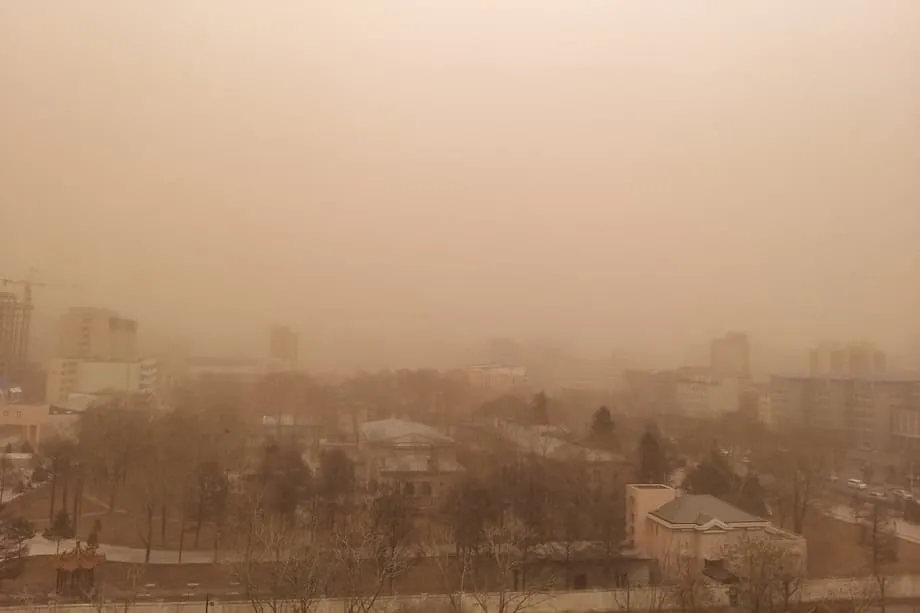
The Gobi Desert stretches across both countries and is a major source of dust storms that carry yellow haze into Beijing and other cities. Restoring vegetation can help hold soil in place, protect farmland and reduce the amount of loose material available for strong winds to lift.
China brings decades of experience through its Three-North Shelter Forest Program, commonly called the Great Green Wall. Mongolia brings an urgent need to protect its grasslands and its One Billion Tree movement, launched in 2021 with a target of planting a billion trees by 2030.
The challenge reaches beyond planting. Trees need water, grasslands support livestock, and people depend on access to land. Cooperation will have to account for those competing needs while addressing climate change, overgrazing and unsustainable land use, all of which contribute to Mongolia's deteriorating soil and vegetation.
What China's Great Green Wall Covers
China launched the Three-North Shelter Forest Program in 1978 to establish a vast belt of planted vegetation across its north. Its purpose is to slow the expansion of the Gobi Desert, protect agricultural land and shield cities from sandstorms.
The program aims by 2050 to cover more than 400 million hectares, about 42 percent of China's land area, with forests, grasslands and shelterbelts. Shelterbelts are lines or areas of vegetation that reduce wind speed and help protect the ground behind them.
China's forest coverage has grown from less than 10 percent of its territory in 1949 to nearly a quarter today, with the Great Green Wall contributing to that change. The scale of the program has also inspired efforts elsewhere, including Africa's Great Green Wall across the Sahel.
The Chinese project combines tree and shrub planting with windbreak construction and grassland restoration. Its name suggests a single continuous forest, but the work involves several ways of protecting land, including stabilizing dunes where growing a dense forest would be difficult.
Why Mongolia Is Central to the Effort
Mongolia's degraded land covers nearly four fifths of its territory. Overgrazing removes protective vegetation, while climate change and unsustainable land use make it harder for damaged ground to recover. The resulting exposure leaves soil more vulnerable to wind erosion.
The Gobi connects these pressures to conditions beyond Mongolia. Dust lifted from its surface can cross the border into China and travel much farther, making land restoration a concern for countries that share neither a border nor a grazing area with the source.
The China–Mongolia Desertification Prevention and Control Cooperation Centre provides a structure for joint research and the transfer of technology. Cooperation also includes exploring coordinated afforestation, meaning the establishment of trees on land where forest cover is absent.
Chinese expertise and resources support Mongolia's One Billion Tree movement. Linking that initiative with the Great Green Wall could create a shared ecological barrier, intended to reduce the frequency and intensity of sandstorms while protecting livelihoods and supporting regional stability.
Mongolia's pastoral traditions make the design of that effort especially important. Land used to raise livestock cannot be treated simply as an empty space for planting. Decisions about vegetation, grazing and access will affect the people whose incomes depend on those areas.
How the Programs Developed
The proposed expansion brings together a Chinese restoration program that began decades ago and a newer Mongolian planting campaign. Their different histories help explain both the experience available and the work still being considered.
- 1949: Forests covered less than 10 percent of China's territory, the historical baseline used to describe the country's subsequent increase in forest cover.
- 1978: China launched the Three-North Shelter Forest Program to protect northern land from desert expansion and sandstorms.
- 2021: Mongolia launched its One Billion Tree movement.
- August 27, 2025: China and Mongolia are exploring closer coordination and a possible expansion of the Great Green Wall across their border.
- 2030: Mongolia aims to reach its target of planting one billion trees.
- 2050: China's program aims to cover more than 400 million hectares with forests, grasslands and shelterbelts.
The two targets operate on different measures: Mongolia counts trees, while the Chinese program describes an area covered by several kinds of vegetation. For communities, the practical results depend on whether that vegetation survives and protects the land.
How Vegetation Holds Back Moving Sand
China uses trees, hardy shrubs and restored grasslands to reduce wind erosion. Vegetation slows wind near the surface and helps keep soil from being carried away. Different conditions require different planting and restoration methods.
Straw checkerboards provide another tool. Straw is arranged in a grid on dunes to stabilize the sand and reduce its movement. The method helps protect the surface while other restoration work takes place.
Newer approaches include robots driven by artificial intelligence, drone seeding and mechanized planting. These technologies have increased planting efficiency and the survival rates of new forests. China has also combined solar power with afforestation, linking renewable energy production with efforts to restore damaged land.
Several places illustrate the range of work. Saihanba, once a barren wasteland, has become the world's largest forest planted by people. Parts of the Kubuqi Desert have been made productive through approaches that support agriculture and renewable energy.
A green belt stretching 3,046 kilometers now encircles the Taklamakan, China's largest desert. The belt is intended to stabilize dunes and protect nearby communities, showing the scale at which China has applied its sand control methods.
China's Gains Reach Beyond Tree Numbers
China has rehabilitated more than 53 percent of its treatable desertified land. Its desertification drive has achieved zero net growth in land degradation and a net reduction of 4.33 million hectares of degraded land.
The country's forest coverage and stock volume have risen for 40 consecutive years, making China the world leader in afforestation and forest resource growth. Stock volume describes the amount of wood contained in standing trees, providing another measure of forest growth alongside the area forests cover.
Millions of hectares of damaged land have been rehabilitated, and sandstorms in northern China have become less frequent and less severe. Tree planting has contributed to that improvement, although changes in rainfall and controls on grazing have played an even larger role, according to recent studies.
Restoration has also been linked with rural economic activity. Desert tourism, medicinal herb cultivation and agrivoltaics have created income sources. Agrivoltaics combines solar power generation with agriculture, allowing energy production and farming to share land.
Saihanba provides timber, recreation and carbon sequestration, the storage of carbon that trees absorb as they grow. Kubuqi connects restoration with farming and renewable energy. These examples reflect an approach that pairs environmental repair with opportunities for local development.
China has also enacted the world's first law on sand control and placed desertification prevention within its legal framework. The work therefore combines engineering, land management, economic activity and government policy.
What Desertification Means for Daily Life
Desertification is the process through which fertile land becomes desert. As soil loses vegetation and productivity, farming becomes harder, livestock have less to eat and communities face greater pressure on the resources that support them.
The United Nations Convention to Combat Desertification, known as the UNCCD, says up to 40 percent of the world's land is already degraded, affecting half the global population. Every second, an area equivalent to four football fields degrades into desert.
Several pressures contribute to the damage, often acting together:
- Climate change raises temperatures and prolongs droughts, reducing soil moisture and vegetation cover.
- Overgrazing strips grasslands bare when livestock consume more vegetation than the land can replace.
- Deforestation removes trees used for fuel or cleared for agriculture, taking away natural windbreaks and destabilizing soil.
- Unsustainable agriculture depletes soil nutrients and accelerates erosion.
- Urbanization spreads onto arable land and disrupts natural ecosystems.
The consequences include declining agricultural productivity, loss of biodiversity, water scarcity and poverty. Food insecurity can force people to leave their communities, while competition for dwindling resources increases the risk of conflict and regional instability.
Dust carries some of those costs far beyond the damaged land itself. Storms originating in the Gobi and Taklamakan deserts can travel thousands of kilometers, harming air quality and public health as far away as Japan and Korea.
Water and Planting Choices Can Limit Success
Water scarcity remains a persistent problem for the Great Green Wall. Planting large areas of trees can deplete groundwater and increase competition with agriculture for limited supplies. A planting campaign therefore has to consider how much water the landscape can provide over time.
Scientific reviews also identify weaknesses in monoculture plantations, where a single tree species covers a large area. Such plantations can have low survival rates and reduced biodiversity, while shared vulnerability to pests or disease can put many trees at risk together.
China's experience shows why the number of trees planted is only part of the work. Restoring grasslands, managing grazing and choosing vegetation suited to local conditions all affect whether land becomes more stable and productive.
Rainfall remains central. Studies linking reduced sandstorms to both wetter conditions and grazing controls show that planting operates alongside other environmental changes. Afforestation alone cannot offset the effects of climate change.
A broader approach based on natural processes would combine vegetation restoration with attention to water, soil and land use. For Mongolia, adapting Chinese methods to local conditions will be essential to the durability of any shared project.
Pastoral Livelihoods Shape the Choices
Some restoration policies have harmed local communities, particularly pastoralists whose traditional grazing areas have been enclosed or converted to forests. Restrictions intended to help vegetation recover can also reduce access to land needed for livestock.
Competition over land has produced conflicts in some regions. Critics argue that planting programs have not fully addressed the social and economic drivers of desertification, including overgrazing and unsustainable farming. The durability of artificial forests remains uncertain in some places.
China's approach relies heavily on centralized planning and technical intervention. Mongolia's pastoral traditions present a different setting, where restoration measures must fit the way communities use and move across grazing land.
One proposed alternative is to support sustainable livestock management alongside increased Mongolian meat exports to China. The aim would be to reduce overgrazing while providing benefits for rural communities, giving households an economic reason and the means to ease pressure on the land.
Community involvement will matter in deciding how these measures work. Protecting soil while preserving livelihoods requires attention to both ecological limits and the practical needs of people raising animals or cultivating crops.
Environmental Cooperation Also Carries Political Weight
Dust storms have become an important part of Mongolia's relations with its neighbors, especially China. Official language presents cooperation as an expression of friendship and a shared response to environmental damage.
Popular narratives in China sometimes blame Mongolia for dust storms, drawing attention to degraded Mongolian land while giving less attention to China's consumption of Mongolian resources. That tension sits alongside the expanding scientific relationship.
China presents its desertification work as evidence of global leadership and a basis for sharing expertise. The cooperation centre with Mongolia formalizes research and technology transfer, while support for Mongolia's planting campaign gives the relationship a practical environmental focus.
A shared barrier could help protect settlements and livelihoods on both sides of the border. Its success will depend on translating diplomatic commitments into land management that suits Mongolia's water supplies, pastoral economy and local traditions.
Families Face the Limits of Restoration
In China's Gansu province, farmer Wang Tianchang and his family have spent decades planting hardy bushes and trees along the edge of the Gobi Desert. Wang, 78, has helped transform barren dunes into green oases.
The family's work has inspired volunteers and become a symbol of determination in the campaign against desertification. It also illustrates how much sustained labor can be involved in protecting a small part of a much larger landscape.
Other farmers remain skeptical after years of effort. Sand continues to move, while declining rainfall has left pastures in worse condition. A local farmer described the dependence of planting on rain:
Without rain, tree planting cannot succeed, and the struggle against the desert continues.
For households living beside dunes or relying on damaged grasslands, the results are measured in usable pasture, surviving vegetation and protection from blowing sand. Those immediate needs connect the larger programs to everyday life.
A Regional Project With Global Connections
The United Nations and international leaders have commended China's leadership, innovation and willingness to share knowledge on desertification. China has established research centers, hosted international forums and supplied technology and training to countries in Africa, the Middle East and Central Asia.
At the 16th session of the Conference of the Parties to the UNCCD, known as COP16, China showcased achievements including tree planting robots driven by artificial intelligence and extensive ecological restoration projects. Its efforts have also been aligned with Africa's Great Green Wall and the Middle East Green Initiative.
Nearly half the planet's land is at risk, making restoration a concern for food security, resilience to climate change and sustainable development. The proposed China–Mongolia effort puts a particular focus on a problem that moves across borders through wind and dust.
Successful cooperation would require Chinese experience to be adapted to Mongolian conditions, with community participation, economic incentives and respect for local traditions. The shared task is to protect land and livelihoods together, while sustaining vegetation in places where water and usable soil are already under pressure.
Key Points
- China and Mongolia are exploring a possible expansion of the Great Green Wall across their shared border.
- Nearly 80 percent of Mongolia's territory is degraded, with climate change, overgrazing and unsustainable land use contributing to the damage.
- China launched the Three-North Shelter Forest Program in 1978 and aims to cover more than 400 million hectares with forests, grasslands and shelterbelts by 2050.
- Mongolia's One Billion Tree movement began in 2021 and targets one billion trees by 2030.
- China has rehabilitated more than 53 percent of its treatable desertified land and completed a green belt of 3,046 kilometers around the Taklamakan Desert.
- Water scarcity, plantation survival and access to grazing land are central challenges for restoration.
- Joint research, suitable planting methods and sustainable livestock management will shape the benefits for communities and the wider region.