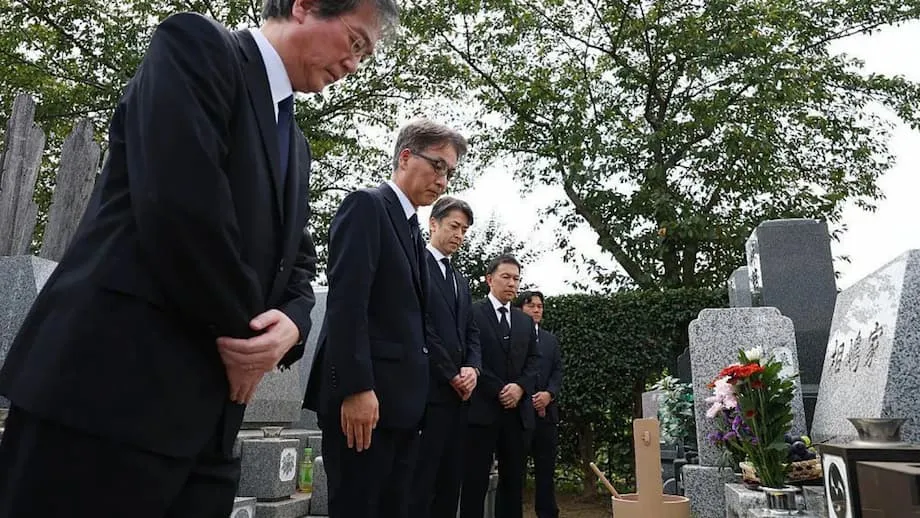
A Graveside Apology After an Illegal Prosecution
Senior Japanese police and prosecutors bowed and laid flowers at the grave of Shizuo Aishima in Yokohama, following a Tokyo High Court ruling that found the investigation, arrest and prosecution of the machinery company adviser and two colleagues illegal. The court ordered the Japanese government and Tokyo Metropolitan Police to pay 166 million yen, about $1.12 million, in compensation.
Contents
- A Graveside Apology After an Illegal Prosecution
- How Spray Dryer Exports Became a Criminal Case
- The Evidence That Should Have Stopped the Case
- Illness, Eight Bail Refusals and a Final Release
- Why the Case Is Called Hostage Justice
- What Police and Prosecutors Acknowledged
- The Family Accepts an Apology, Not Forgiveness
- Compensation and the Dispute Over Medical Care
- Pressure for Changes Beyond This Case
- Key Points
Aishima, a respected engineer and adviser to Ohkawara Kakohki, was arrested in March 2020 over exports of spray dryers to China. He maintained his innocence, faced eight rejected bail requests and died of stomach cancer in February 2021, aged 72, while still under indictment. Prosecutors dropped the charges five months after his death, admitting doubts about the case.
His widow and sons attended the ceremony. The apology was a rare public acknowledgment of the harm caused by the prosecution, reflecting both the gravity of the injustice and mounting pressure for accountability. For the family, however, an apology and compensation have not ended their demands for answers.
The case has become a focus of criticism of Japan's so-called "hostage justice" practices, in which prolonged detention can put pressure on suspects to confess. It also exposes failures at several stages of the legal process: the handling of technical evidence, decisions to prosecute, repeated refusals of bail and the treatment of a seriously ill defendant.
As of August 27, 2025, legal disputes and demands for further investigation continued. Aishima's family accepted the authorities' apology while making clear that accepting their words did not mean forgiving what happened.
How Spray Dryer Exports Became a Criminal Case
Ohkawara Kakohki's spray dryers turn liquids into powder. Authorities alleged that machines exported to China could be used to produce biological weapons and that their export violated Japan's Foreign Exchange and Foreign Trade Law.
The dispute concerned whether the company's equipment fell within export restrictions. Such restrictions control the sale abroad of certain goods because of the uses they might have. In this case, authorities focused on the possible use of the machinery for military or biological weapons purposes.
The company maintained that its exports were legal and that the machines were outside the restrictions. The Ministry of Economy, Trade and Industry initially agreed. Police and prosecutors nevertheless pressed ahead and reportedly encouraged the ministry to reinterpret the rules in a way that would support their case.
Aishima cooperated with investigators before his arrest. He attended 20 voluntary interviews and traveled long distances despite his age and health. His cooperation did not prevent authorities from arresting him alongside company president Masaaki Okawara and director Junji Shimada in March 2020.
The Evidence That Should Have Stopped the Case
A May 2019 report on the spray dryers deliberately left out data unfavorable to the prosecution's case, according to findings described in court proceedings and subsequent investigations. That omission became one example of how information that could have helped the defendants was disregarded.
Court findings and later investigations described fabricated evidence, ignored information that could have cleared the men, falsified documents and pressure on witnesses. Evidence that supports a suspect's innocence is often called exculpatory evidence. Here, its handling was central to the collapse of the case.
Some police officers later testified in court that the case was "fabricated" and that arrests were made at the will of people with authority rather than on the facts. Those accounts raised concerns about how decisions moved through the police hierarchy and whether investigators could challenge the direction of the inquiry.
Prosecutors eventually abandoned the charges against Aishima and his colleagues. By then, Aishima had died, and the other two men had spent months in detention.
Illness, Eight Bail Refusals and a Final Release
Aishima developed anemia while detained and was later diagnosed with advanced stomach cancer. His lawyers and family repeatedly sought bail so that he could receive proper medical treatment. Eight applications were denied.
Prosecutors argued that he might destroy evidence if released. The possibility of evidence being destroyed is a common reason given for opposing release in Japan's detention system. For Aishima, that argument kept him detained despite his worsening health and repeated pleas for treatment outside detention.
Authorities granted temporary release only when his condition had become critical. He died three days later, in February 2021, at the age of 72. He was still facing prosecution.
Okawara and Shimada also spent months in detention. When they were eventually released, a condition barred them from meeting Aishima. They were therefore unable to see their colleague before he died. The detention and separation placed an emotional and physical burden on the three men and their families.
The key events unfolded over more than two years:
- May 2019: A report on the spray dryers excluded data unfavorable to the prosecution's case.
- March 2020: Aishima, Okawara and Shimada were arrested over alleged illegal exports.
- During Aishima's detention: He developed anemia, was diagnosed with advanced stomach cancer and had eight bail requests rejected.
- February 2021: Aishima died three days after receiving temporary release.
- Five months after his death: Prosecutors dropped the charges, acknowledging doubts about the case.
Why the Case Is Called Hostage Justice
Japan allows suspects to be held for up to 23 days before indictment. Critics say detention can be extended by dividing a case into multiple alleged offenses, allowing authorities to seek further periods of custody.
The expression "hostage justice" describes the pressure critics say this creates: a person remains detained while investigators seek a confession, and continued denial can make release harder. Aishima's case brought particular attention to the treatment of defendants who insist they are innocent and become seriously ill while detained.
Human rights organizations, legal scholars and international observers have long criticized these practices. Their concerns include confessions obtained under pressure, the absence of access to legal counsel during interrogation and refusals of bail even when a defendant has a serious illness.
The United Nations Human Rights Committee has repeatedly called on Japan to reform its system. The concerns reach beyond the length of detention to the fairness of questioning and the safeguards available to people trying to contest an accusation.
Tsuyoshi Takada, the family's lawyer, said responsibility for the men's detention extended beyond any individual judge. He called for the courts to learn from the case:
The men's detention was not the mistake of a single judge. The court must learn from this case to prevent more victims of 'hostage justice' in the future.
What Police and Prosecutors Acknowledged
The Tokyo Metropolitan Police Department's internal review concluded that dysfunction in the investigative chain of command led to the wrongful arrests. In practical terms, the system for supervising investigators and checking their decisions failed to stop the case.
The Supreme Public Prosecutors Office acknowledged that prosecutors had failed to give proper weight to evidence that could have helped clear the defendants. It also admitted that the process lacked basic fairness.
Those admissions placed responsibility on both police investigation and prosecutorial judgment. Police assembled the case, while prosecutors had to assess whether the evidence justified bringing and maintaining charges. The failures described in the reviews affected both stages.
The families have continued to seek a deeper investigation and stronger disciplinary action. They regard the existing admissions as insufficient to account for how the prosecution continued despite evidence in the defendants' favor.
The Family Accepts an Apology, Not Forgiveness
Aishima's widow accepted the words spoken at his grave but rejected the idea that the ceremony could resolve the family's anger and loss. She expressed that position directly:
I accept the apology, but I will never forgive,
Aishima's eldest son also acknowledged the apology as a step forward while demanding a reinvestigation and reconsideration of disciplinary measures against those responsible.
The family's position separates the public gesture from the accountability they still seek. Flowers and bows acknowledged the harm, but relatives want a fuller examination of the decisions that kept Aishima under prosecution and in detention as his health deteriorated.
Compensation and the Dispute Over Medical Care
The Tokyo High Court's finding that the investigation, arrests and prosecution were illegal led to the order for 166 million yen in compensation. Both sides have appealed aspects of the compensation rulings, leaving further legal disputes after the authorities' apology.
Criminal complaints have also been filed against police officers accused of falsifying documents and destroying evidence. Ohkawara Kakohki continues to seek full accountability and a proper investigation by prosecutors.
A separate lawsuit addressed Aishima's death. His family sought damages on the grounds that he had been denied proper medical care while detained. The Tokyo District Court rejected that claim, finding that doctors at the detention house had acted appropriately.
The family maintains that earlier intervention could have saved his life and continues to seek recognition of his suffering. The medical care claim and the wrongful prosecution litigation therefore produced different outcomes: the courts found the investigation and prosecution illegal, while the district court rejected the claim concerning the detention doctors' care.
No dates for the next hearings or decisions were given. The continuing disputes concern compensation, individual responsibility and the family's challenge to how Aishima was treated.
Pressure for Changes Beyond This Case
Leading Japanese newspaper editorials have called for a thorough investigation of the institutional culture that allowed the violations to occur. The Tokyo High Court decision drew attention to the poor quality of the investigation and the danger of placing confessions and quick results ahead of establishing the truth.
The case has also prompted comparisons with Iwao Hakamada, who spent nearly six decades on death row before a retrial exposed fabricated evidence and forced confessions and ended in his acquittal. Critics cite the two cases in arguing that wrongful prosecutions require changes across the justice system, not simply responses to individual mistakes.
International human rights campaigners and organizations have renewed calls for Japan to end practices described as hostage justice and bring its legal system into line with international standards. The United Nations and foreign governments have urged protection of suspects' rights to fair treatment, legal counsel and medical care.
Japanese officials have acknowledged some concerns, expressed "deep regret" and pledged to review procedures. Concrete reforms have been slow, leaving families and advocates skeptical that meaningful change will follow without sustained pressure from the public and international community.
Aishima's case brings those demands back to specific decisions: whether investigators considered evidence fairly, whether prosecutors challenged a weak case, whether courts should have granted bail and whether a seriously ill defendant received timely care. The apology recognizes a grave injustice. The family's continuing legal action seeks answers about how it happened and who should be held responsible.
Key Points
- Shizuo Aishima and two Ohkawara Kakohki colleagues were arrested in March 2020 over spray dryer exports to China.
- Aishima maintained his innocence, had eight bail requests denied and died of stomach cancer in February 2021, three days after temporary release.
- Prosecutors dropped the charges five months after his death.
- The Tokyo High Court found the investigation, arrests and prosecution illegal and ordered 166 million yen in compensation.
- Police and prosecutors acknowledged failures in supervision, evidence assessment and fairness.
- A separate claim over Aishima's medical care was rejected by the Tokyo District Court.
- His family accepted the graveside apology but continues to demand further investigation and stronger accountability.
- The case has renewed pressure to reform Japan's detention, interrogation and bail practices.