Eighty Incidents in Six Months Put Busy Shipping Routes Under Pressure
Piracy and armed robbery incidents in the straits of Malacca and Singapore rose to 80 between January and June 2025, compared with 21 during the same period in 2024, according to the Regional Cooperation Agreement on Combating Piracy and Armed Robbery against Ships in Asia (ReCAAP) Information Sharing Centre (ISC). The increase has drawn concern across the shipping industry because these narrow waterways carry vessels connecting the Indian and Pacific oceans.
Contents
- Eighty Incidents in Six Months Put Busy Shipping Routes Under Pressure
- Why These Straits Matter to Trade
- What the Incident Figures Show
- How Intruders Reach Ships
- What Is Driving the Increase?
- A Regional Concentration Within a Global Rise
- What the Surge Means for Crews and Cargo
- Patrols, Surveillance and Arrests
- What Ships Are Being Advised to Do
- Key Points
Most incidents involved opportunistic theft rather than the seizure of ships or demands for ransom. Even so, repeated boardings, occasional weapons and confrontations with crew members have made security a more pressing concern along some of the world's busiest maritime routes.
The International Maritime Bureau (IMB) recorded 57 incidents in the Singapore Strait alone during the first half of 2025, representing about 63% of the 90 cases it counted worldwide. Its figures also show how frequently intruders reached their targets: boardings in the Singapore Strait had a success rate of 95%.
By August 27, 2025, regional authorities and shipping organisations had responded with patrols, information sharing, surveillance technology and updated security guidance. Indonesian police also arrested 11 suspects in July following a failed attempt to board a tanker in the Singapore Strait.
For seafarers, the central concern is immediate and personal. A theft aimed at engine parts or ropes can still bring crew members face to face with intruders carrying knives or objects resembling guns. For shipping companies and governments, the challenge is to protect those crews while keeping a heavily used trade corridor moving.
Why These Straits Matter to Trade
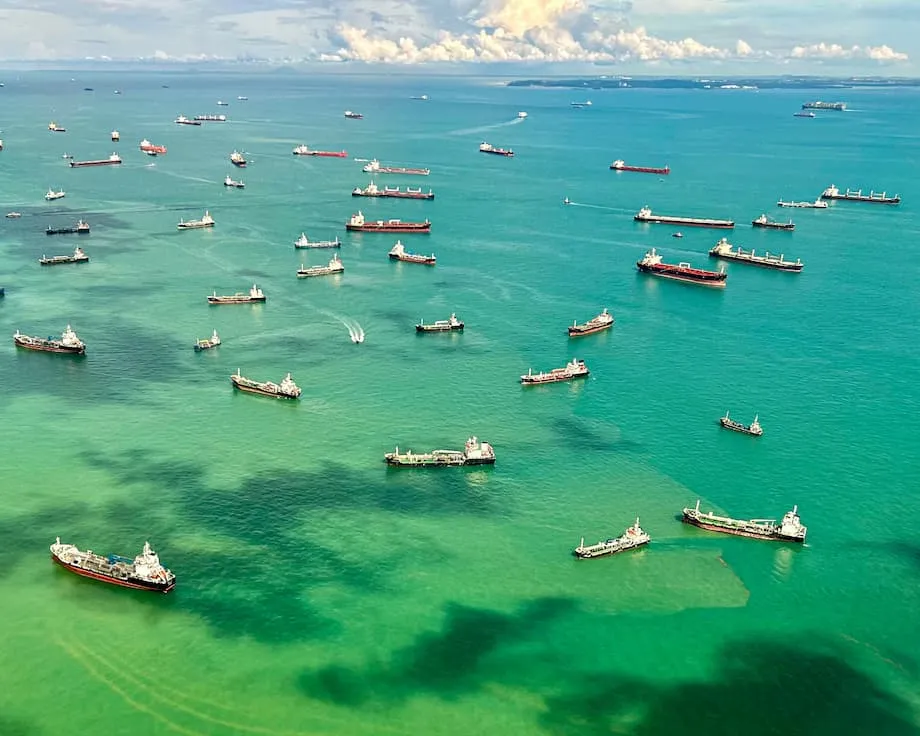
The Malacca and Singapore straits form a narrow passage between the Malay Peninsula and the Indonesian island of Sumatra. They connect the Indian Ocean to the South China Sea and onward to the Pacific, placing them on a key route for international commerce.
An estimated 90,000 merchant vessels pass through these waters each year. They include bulk carriers, tankers and container ships, carrying the raw materials, energy supplies and manufactured goods that businesses and households depend on.
The two straits carry up to 60% of global maritime commerce, while the Singapore Strait alone handles about 30% of global trade. Their importance extends well beyond the countries along their shores: disruption can affect supply chains serving distant markets.
Heavy traffic also creates opportunities for criminals. Ships must navigate narrow stretches and reduce speed in some locations, particularly the Phillip Channel. Slower movement makes it easier for small, fast boats to approach a vessel and for intruders to attempt a boarding.
Michael Howlett, director of the IMB, described the connection between the route's commercial importance and the risks to those working aboard ships:
The Singapore Strait is a critical shipping route, with ships carrying roughly 30% of global trade. The rise in incidents is deeply concerning as it puts the safety of seafarers and the security of international commerce at risk.
What the Incident Figures Show
ReCAAP and the IMB describe most of the recent incidents as opportunistic armed robberies rather than major acts of piracy. Intruders generally seek property and often flee when they are detected. Many encounters involve little direct confrontation, although weapons have appeared in some cases.
None of the 80 incidents recorded by ReCAAP in the first half of 2025 fell into Category 1, its most serious classification, involving firearms or hostage taking. About 90% resulted in no injuries. Seven confrontations involved knives or replica weapons, and one crew member sustained a minor injury.
The IMB's Singapore Strait figures recorded 13 crew members held hostage, five threatened, three injured and one assaulted during the first half of 2025. Those figures sit alongside ReCAAP's broader count for the Malacca and Singapore straits, which recorded one minor injury.
Bulk carriers were the most frequently targeted vessels in the ReCAAP figures, accounting for 52% of incidents. Tankers represented 24%, followed by container vessels at 11%. The IMB also noted that criminals were increasingly targeting large ships exceeding 150,000 deadweight tons (DWT), a measure of how much weight a ship can carry.
The figures reveal two problems that require attention together: the sharp increase in the number of incidents and the danger during individual encounters. Even when property theft is the aim, a crew member who discovers an intruder may face threats, injury or temporary captivity.
How Intruders Reach Ships
Criminals operating in these waters are often linked to loosely organised groups based on remote Indonesian islands, including Riau and Cula. Their equipment can be simple: small wooden boats, poles, hooks and ropes.
The groups typically approach under cover of darkness in flat bottomed wooden boats known as sampans. Long poles fitted with hooks and ropes allow them to climb aboard larger vessels. Once on deck, they look for items that can be taken away, including engine spare parts, ropes and crew members' belongings.
Most intruders are unarmed or carry only knives, and they generally try to avoid confrontation. Their tendency to flee when discovered helps explain why many incidents end without injuries. The occasional presence of knives, replica weapons or objects resembling guns nevertheless creates a risk for anyone who encounters them.
Daniel Ng of the Asian Shipowners' Association linked the activity to economic hardship, including unemployment and poverty. Some people turn to maritime theft to supplement their income, while loosely organised groups take advantage of the ships passing nearby.
Groups are also exploiting technological gaps. Automatic Identification System (AIS) data, which provides information about ship movements, can help them track vessels and identify vulnerable targets. The combination of simple boarding equipment and access to movement data allows criminals to plan approaches to much larger ships.
What Is Driving the Increase?
The causes of the 2025 surge remain disputed. One widely cited explanation is the diversion of shipping from the Red Sea, where attacks by Yemen's Houthi rebels have disrupted traditional trade routes. Vessels rerouting through the Malacca and Singapore straits add to congestion and create more opportunities for criminals.
Economic pressure in coastal communities is another factor. Declining fish stocks and severe monsoon weather can reduce earnings, adding to the hardship associated with unemployment and poverty. Maritime theft offers some people a way to supplement lost or inadequate income.
Technology and the likelihood of escape also influence criminal activity. Access to ship movement information can help groups choose targets, while incidents that involve little confrontation may allow intruders to leave before authorities can respond.
- Additional shipping traffic increases the number of vessels exposed to possible boarding attempts.
- Economic hardship, declining fish stocks and severe monsoon weather put pressure on coastal livelihoods.
- AIS data can help criminals track ships and identify opportunities.
- The perceived low risk of severe punishment or confrontation can encourage theft, especially when perpetrators escape detection.
These pressures meet in the same confined waters. A large flow of ships, stretches where vessels must slow down and criminal groups able to approach at night create repeated opportunities for boarding attempts.
A Regional Concentration Within a Global Rise
The IMB recorded 90 piracy and armed robbery incidents worldwide in the first half of 2025, a 50% increase from the same period a year earlier. The Singapore Strait's 57 cases accounted for about 63% of that total, concentrating much of the recorded global activity in a single shipping corridor.
ReCAAP's count of 80 incidents across the Malacca and Singapore straits was nearly four times the 21 recorded during the first half of 2024. The comparison shows how quickly the local security situation changed within a year.
Asia's pattern differs from that of the Gulf of Guinea, where violent kidnappings and ransom demands are more common. Most incidents in Asian waters involve petty theft and rarely develop into serious violence. The repeated threat of boarding can still place a heavy psychological burden on seafarers.
Vijay Chafekar, executive director of ReCAAP ISC, described both the geographic concentration of the problem and its effect on crews:
Most Asian waters have become safe, but concerns remain in a small area of the straits of Malacca and Singapore. The intention is usually petty theft, but the presence of armed perpetrators can have a significant psychological impact on crew members.
What the Surge Means for Crews and Cargo
Seafarers face the most direct consequences of the increase. A watchkeeper or engineer may encounter intruders while carrying out routine duties, and the presence of a weapon can turn a theft into a frightening confrontation.
Shipping companies, insurers and governments are concerned about crew safety and the security of cargo. The waterways carry energy supplies, bulk commodities and consumer goods, so disruption can spread through international supply chains.
The immediate pattern is one of frequent thefts rather than widespread violent seizures. The scale of the increase still requires attention because more boardings mean more encounters between intruders and crews, each carrying the possibility of escalation.
Protecting vessels therefore involves more than securing valuable equipment. Crews need procedures for spotting suspicious activity, raising an alarm, communicating with authorities and responding to an intrusion. The industry response has focused on those practical tasks alongside stronger regional surveillance.
Patrols, Surveillance and Arrests
Indonesia, Malaysia and Singapore have intensified joint patrols and intelligence sharing. Their cooperation builds on the Malacca Strait Patrols initiative, launched in 2004, which includes coordinated activity at sea and in the air.
Information exchange is another part of the response. Platforms such as Singapore's Information Fusion Centre allow maritime agencies to share information in real time, helping authorities connect reports of suspicious activity with the ships and locations involved.
Singapore has deployed surveillance tools including the Diodon drone and the Spyder robot, which can climb ship hulls. The Republic of Singapore Navy has also introduced the Maritime Security Unmanned Surface Vessel, an autonomous patrol craft equipped with advanced navigation and communications systems.
Indonesian police arrested 11 suspects in July 2025 after a failed tanker boarding in the Singapore Strait. The arrests provided an example of law enforcement action supported by cooperation across borders.
The main developments span several years and months:
- 2004: The Malacca Strait Patrols initiative began, providing a basis for coordinated regional security activity.
- January to June 2024: ReCAAP recorded 21 incidents in the Malacca and Singapore straits.
- March 2025: Maritime organisations released updated Best Management Practices for maritime security.
- January to June 2025: ReCAAP recorded 80 incidents across the two straits, while the IMB counted 57 in the Singapore Strait.
- July 2025: Indonesian police arrested 11 suspects following a failed attempt to board a tanker.
What Ships Are Being Advised to Do
BIMCO, the International Chamber of Shipping (ICS), INTERCARGO, INTERTANKO and the Oil Companies International Marine Forum (OCIMF) released updated Best Management Practices, known as BMP Maritime Security, in March 2025. The guide brings regional advice into a global framework for assessing risks, planning voyages and responding to incidents.
The recommendations focus on steps that ship operators and crews can take before and during a passage. They include maintaining a sharp lookout, especially at night and in areas where attacks are more likely, using physical barriers and carrying out security patrols aboard vessels.
- Maintain an alert lookout, particularly during darkness and in locations with repeated incidents.
- Use physical barriers and patrols aboard ships to reduce opportunities for intruders.
- Report incidents immediately to coastal authorities and information centres.
- Share warnings about suspicious activity with nearby ships and maritime agencies.
Shipping companies are also encouraged to train crews in security procedures and use technology, including AIS management and alerts delivered in real time, to reduce vulnerability. Industry forums have highlighted practical examples of vessels warning one another about suspicious small boats and activating Singapore's Vessel Traffic Information System to help prevent unauthorised boardings.
Regional authorities still face difficult operating conditions. The size and complexity of the waterways make it hard to monitor every ship, particularly at night. Economic pressures in coastal communities persist, while criminal groups can adapt their methods as security measures change.
The response therefore combines action aboard ships with patrols, arrests and information sharing ashore. Continued coordination is needed to reduce the number of successful boardings and protect crews from the fear and physical danger associated with intrusions.
Key Points
- ReCAAP recorded 80 incidents in the Malacca and Singapore straits during the first half of 2025, compared with 21 a year earlier.
- The IMB counted 57 incidents in the Singapore Strait, about 63% of its global total of 90.
- Most incidents involved opportunistic theft, but weapons, threats, hostage taking and injuries increased concern for crews.
- Bulk carriers accounted for 52% of vessels targeted in ReCAAP's figures, followed by tankers at 24% and container vessels at 11%.
- Economic hardship, shipping congestion, access to ship movement data and opportunities to escape detection are among the factors linked to the surge.
- Regional governments have intensified patrols and information sharing, while shipping organisations issued updated security guidance in March 2025.
- Indonesian police arrested 11 suspects in July after a failed tanker boarding in the Singapore Strait.