Japan Stays Near the Top as Global Peace Declines
Japan ranks 12th among 163 countries and third in the Asia-Pacific in the 2025 Global Peace Index, maintaining its position among the world's most peaceful nations while international security deteriorates. New Zealand and Singapore are the only countries in the region placed above it, at third and sixth globally.
Contents
- Japan Stays Near the Top as Global Peace Declines
- What Does the Index Measure?
- Where Japan Stands in Asia and the Pacific
- Low Crime, Weapon Controls and Public Trust
- A Safe Society in a Tense Neighbourhood
- Why Regional Results Vary So Widely
- Conflict Deaths and Displacement Rise Worldwide
- The Economic Cost of Violence and the Global Leaders
- Safety Is Part of Japan's Tourism Appeal
- What Peace Means Beyond Personal Safety
- Key Points
The annual index, produced by the Institute for Economics and Peace (IEP), assesses countries through 23 indicators covering crime, violence, political stability, military activity and relations with neighbouring countries. Japan's position reflects its strong performance in public safety, low crime and political stability.
The wider picture is less reassuring. Average global peacefulness fell by 0.36% compared with the previous year, marking a ninth consecutive annual decline. Conditions worsened in 94 countries and improved in 66. Against that backdrop, Japan continues a record of placing among the index's leading performers for more than a decade.
Japan's standing also draws attention because of its location. The Korean Peninsula, the East China Sea and tensions between China and Taiwan create a difficult regional security environment. The country's position combines a peaceful domestic setting with exposure to disputes and military activity beyond its borders.
What Does the Index Measure?
The Global Peace Index is widely regarded as a leading measure of national peacefulness. Its approach reaches beyond whether a country is fighting a war: it also considers how safe people feel, the violence they face and the military resources a state maintains.
An expert panel selects the indicators, which are organised into three main areas:
- Societal safety and security covers crime rates, perceptions of criminality and the likelihood of violent demonstrations.
- Ongoing domestic and international conflict examines deaths from conflict, relations with neighbouring countries and involvement in conflicts abroad.
- Militarization considers military expenditure, access to weapons and the presence of nuclear or heavy weaponry.
Policymakers, researchers and members of the public use the results to follow changes in peace and security. Bringing these measures together allows the index to describe both everyday safety inside a country and its position in a wider security environment.
Where Japan Stands in Asia and the Pacific
New Zealand is the most peaceful country in the Asia-Pacific and third worldwide. Celebrated for its natural beauty and social cohesion, it leads a region that remains the world's second most peaceful despite setbacks in some countries.
Singapore leads Asia at sixth globally, supported by strict law enforcement, low crime and high levels of public order. Its urban safety and efficient public services also contribute to its strong standing. Japan follows at 12th worldwide, with Malaysia immediately behind at 13th.
The geographical labels matter when comparing those positions. New Zealand leads the Asia-Pacific grouping, which includes countries in both Asia and the Pacific. Singapore leads Asia, while Japan is third in the broader regional grouping.
Japan's sustained performance reflects cultural values of harmony and respect for the law, alongside a strong social contract between citizens and the state. In everyday terms, that describes a relationship in which people follow shared rules and expect public institutions to maintain order and security.
Malaysia continues to improve its security environment, particularly in tourist areas. South Korea and Indonesia have also made progress. Indonesia has recorded gains against terrorist organisations, with no major attacks outside West Papua in recent years.
Low Crime, Weapon Controls and Public Trust
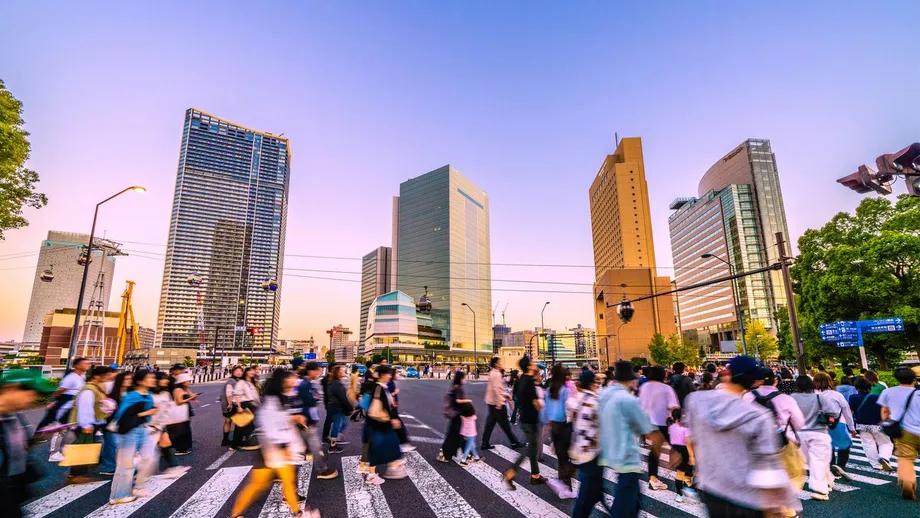
Japan's low level of violent crime is central to its reputation for safety. Homicide and robbery are rare, and its cities are considered among the safest in the world for residents and visitors.
Strict controls on firearms and other weapons help limit gun violence. Japan has some of the world's strictest weapons regulations, making access to weapons an important part of the explanation for its peaceful domestic environment.
Police also play a visible role. Japan's police force is highly trusted and proactive in maintaining public order. Community policing and neighbourhood patrols support a sense of safety and trust by keeping officers present in the places where people live.
Political stability provides another foundation. Japan has low levels of corruption and a robust democratic system, supporting social cohesion and confidence in institutions. Those conditions sit alongside the practical work of policing and weapons regulation.
Social expectations reinforce that framework. Respect, harmony and group consensus help discourage antisocial behaviour and support peaceful coexistence. Japan's record therefore reflects a combination of laws, institutions and shared habits, rather than a single policy.
A Safe Society in a Tense Neighbourhood
Japan lies close to North Korea, which continues to conduct missile tests and maintain a large military arsenal. Territorial disputes in the East China Sea and tensions between China and Taiwan add to uncertainty across the region.
Japan has maintained a peaceful society through diplomatic engagement, strong alliances, particularly with the United States, and a constitution that renounces war as a way of settling international disputes.
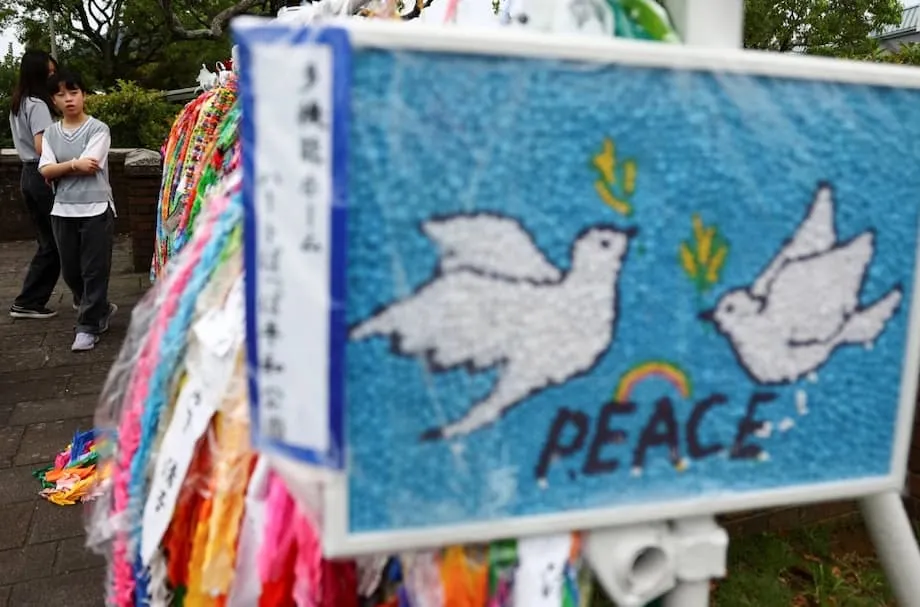
Article 9 of the Japanese Constitution, often called the peace clause, has played a central role in shaping the country's postwar identity as a pacifist nation. It places the rejection of war at the centre of that identity, while diplomacy and alliances form part of Japan's approach to external security.
Japan's Self-Defense Forces are among the world's most advanced, but their role is strictly defensive. The country also invests heavily in disaster preparedness and civil protection, supporting its reputation for safety and resilience.
These features help explain the combination visible in the ranking: a country with a highly secure domestic environment that also devotes attention and resources to threats in its surrounding region.
Why Regional Results Vary So Widely
Myanmar remains the least peaceful country in the Asia-Pacific because of the continuing civil conflict following the military coup in 2021. Its position shows how violence inside a country can pull its peace ranking far below those of regional neighbours.
Taiwan ranks 40th globally. It remains relatively stable, while its position reflects the complex security environment in East Asia. Japan's own proximity to regional flashpoints makes that wider setting relevant to understanding its result.
The contrast between Myanmar and the region's leading countries is substantial. New Zealand, Singapore, Japan and Malaysia all place near the top of the global table, while civil conflict continues to shape conditions in Myanmar.
Asia-Pacific's standing as the second most peaceful region therefore sits alongside very different national experiences. Progress in countries such as South Korea and Indonesia, high rankings elsewhere and continuing conflict in Myanmar all form part of the regional picture.
Conflict Deaths and Displacement Rise Worldwide
More than 152,000 people died in conflicts during 2024, with Ukraine, Palestine and Russia accounting for the majority of those deaths. The toll forms part of a global security picture marked by worsening peace and persistent armed conflict.
The number of refugees and internally displaced people reached 122 million. Refugees have left their countries, while internally displaced people have been forced from their homes but remain inside their own country. In 17 countries, at least 5% of the population was displaced, equivalent to at least one person in every 20.
Political instability and militarization, both indicators that can precede major conflict, are at their highest levels since World War II. Alongside the ninth consecutive annual decline in peacefulness, those pressures show how deterioration extends beyond countries already experiencing the heaviest fighting.
Power is also spread across more countries. The number of influential states has nearly tripled since the end of the Cold War, contributing to a more fragmented and unpredictable international order. With more influential actors shaping events, the global balance of power has become less concentrated.
The main developments span several periods:
- Since the end of the Cold War, the number of influential countries has nearly tripled.
- In 2021, Myanmar's military coup was followed by the civil conflict that continues to affect its peace ranking.
- In 2024, conflict deaths exceeded 152,000 and the economic cost of violence approached $20 trillion.
- The 2025 index records Japan in 12th place globally and a ninth consecutive annual decline in global peacefulness.
- In the second quarter of 2025, Japan welcomed nearly 11 million tourists.
The Economic Cost of Violence and the Global Leaders
Violence cost the global economy nearly $20 trillion in 2024, representing more than 11% of global gross domestic product (GDP). GDP measures the value of goods and services produced, providing a way to compare that cost with the size of the world economy.
Military spending accounts for almost half of the estimated economic impact. The scale of the total underlines why conflict resolution, social cohesion and effective governance matter economically as well as for people's immediate safety.
Europe remains the world's most peaceful region and contains eight of the top ten countries. The Middle East and North Africa remain the least peaceful region. The ten leading countries in the 2025 index, in order, are:
- Iceland
- Ireland
- New Zealand
- Austria
- Switzerland
- Singapore
- Portugal
- Denmark
- Slovenia
- Finland
Low crime, political stability, strong institutions and high levels of social trust are common features among these countries. Japan shares many of those characteristics, although its 12th place puts it just outside the top ten.
Safety Is Part of Japan's Tourism Appeal
Japan welcomed nearly 11 million tourists in the second quarter of 2025. Many cited safety as a key reason for visiting, connecting the country's reputation for public order with its appeal as a travel destination.
Solo travellers and women travelling alone are among those drawn by that reputation. Efficient public transport, clean streets and a courteous society also make Japan attractive to visitors seeking peace of mind while experiencing a different culture.
Travel industry surveys consistently place Japan among the leading choices for safe travel in Asia. In some surveys, it ranks second only to New Zealand. Visitors frequently cite being able to walk alone at night, the absence of aggressive street crime and the helpfulness of local people as reasons for positive experiences.
For residents and tourists alike, the practical value of safety appears in ordinary activities: moving around a city, using public transport or spending time outside after dark. Low crime, visible policing and social norms combine to support that sense of security.
What Peace Means Beyond Personal Safety
Peaceful societies enjoy benefits that extend beyond the absence of violence. Research links peaceful countries with greater economic prosperity, better health outcomes and higher levels of happiness. Japan's experience illustrates how stability can support social progress and national wellbeing.
Countries with peaceful conditions are more likely to attract foreign investment, support innovation and provide opportunities for education and personal development. Security gives people and organisations a more stable setting in which to study, work and plan.
Japan's experience reflects deliberate choices as well as its geography and history. Investment in education, strong institutions, the rule of law and a culture of respect and mutual understanding all contribute to its peaceful society.
The 2025 ranking brings those domestic strengths into focus during a period of worsening global security. Japan remains highly placed because of the safety and stability people experience at home, while diplomacy, defensive security and its pacifist constitution shape its response to regional pressures.
Key Points
- Japan ranks 12th globally and third in the Asia-Pacific in the 2025 Global Peace Index.
- The Institute for Economics and Peace assesses 163 countries using 23 indicators covering safety, conflict and militarization.
- New Zealand ranks third worldwide, Singapore sixth and Malaysia 13th.
- Japan's strengths include low violent crime, strict weapons controls, trusted policing, political stability and shared social norms.
- Global peacefulness declined for a ninth consecutive year, with 94 countries worsening and 66 improving.
- Conflict deaths exceeded 152,000 in 2024, while refugees and internally displaced people reached 122 million.
- Violence cost the global economy nearly $20 trillion in 2024, more than 11% of global GDP.
- Japan welcomed nearly 11 million tourists in the second quarter of 2025, with safety among its attractions.
- Diplomacy, the United States alliance and Article 9 remain central to Japan's approach amid regional tensions.