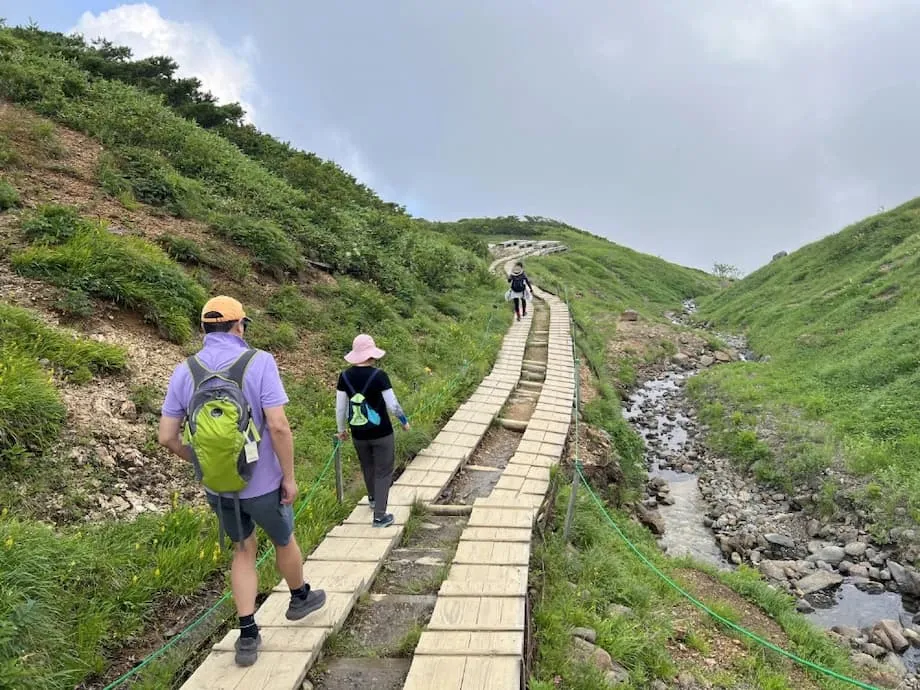
Cooler Destinations Gain Ground in a Hotter Japan
Washikura in Fukushima has an August high of 23.1°C, Sukayu in Aomori 23.4°C and Kusatsu in Gunma 25.2°C. Those figures have become selling points in a summer travel campaign by railway operator JR East and weather company Weathernews, whose posters in Tokyo stations advertise destinations with August highs a full 10°C below the capital.
Contents
- Cooler Destinations Gain Ground in a Hotter Japan
- Why Summer Heat Is Changing Travel Plans
- A Familiar Escape Gets a New Marketing Push
- Hakuba Turns Winter Infrastructure Toward Summer
- Heat Reaches the Places Selling Relief
- Why Some Travelers Still Choose to Stay Home
- International Visitors Matter to Mountain Resorts
- Cities Abroad Find Other Ways to Cool a Visit
- Comfort, Health and Environmental Costs
- Key Points
As of August 25, 2025, Japan's tourism industry is responding to another summer of record heat and humidity by selling relief from the weather itself. Mountain resorts, northern cities and hotels at higher elevations are competing for travelers who want to spend their holidays somewhere cooler. The trend is known as a coolcation, a blend of the words cool and vacation.
Japan has long attracted visitors with cherry blossoms and powdery ski slopes. Now, businesses are turning summer temperatures into another reason to travel. Resorts associated with winter sports are expanding hiking, cycling and water activities, while railway and hotel companies are making cooler locations more visible to people living in hot cities.
The opportunity comes with a difficult contradiction. Heat can encourage people to leave Tokyo or Osaka for the mountains, but it can also persuade them to stay home. A survey by Tokyo research firm Intage found that 38% of respondents planned to stay home this summer, with many identifying heat as a major reason.
Even Japan's familiar summer refuges are getting hotter. Hakuba, Nasu and Hokkaido have experienced temperatures in the middle to upper 30s°C during recent heatwaves. Tourism businesses therefore face two connected tasks: making travel comfortable enough to attract visitors and building activities that remain appealing when a destination is warmer than expected.
Why Summer Heat Is Changing Travel Plans
Tokyo and Osaka routinely record temperatures above 35°C, or 95°F, during summer. High humidity adds to the discomfort and can make outdoor sightseeing dangerous. Humidity means there is a great deal of moisture in the air, making hot conditions feel especially oppressive.
The Japan Meteorological Agency has reported a steady rise in average summer temperatures and a sharp increase in the frequency of heatwaves. Heatstroke deaths have also risen, and government warnings regularly urge people to stay indoors during the hottest parts of the day.
For travelers, those conditions change the practical shape of a holiday. An afternoon spent walking between attractions, waiting outdoors or visiting a theme park becomes harder to manage. Families with children and older people have particular reasons to seek less exhausting surroundings.
Japan's experience fits a wider change in tourism. Extreme heat, wildfires and humidity are disrupting trips around the world. The Acropolis in Athens and the Eiffel Tower in Paris have been forced to close during extreme heat. Theme parks, including Tokyo Disney Resort and Six Flags in the United States, have seen visitor numbers fall sharply as temperatures climb.
Coolcations respond to this problem by directing travelers toward places with milder climates, often farther north or higher above sea level. In Japan, the new label describes a travel habit that existed long before the current marketing campaigns.
A Familiar Escape Gets a New Marketing Push
Japanese travelers have practiced hisho, or travel to escape the heat, for generations. Karuizawa, Yatsugatake and Kamikochi are among the mountain destinations associated with these summer retreats. Wealthy families and foreign residents traditionally made up much of their clientele, but their appeal has broadened in recent years.
Climate change has added urgency to that familiar custom. Businesses are promoting cooler destinations more aggressively as urban summers become harder to tolerate. A mountain location that once offered a pleasant seasonal retreat is increasingly being marketed as a practical answer to difficult city weather.
JR East, one of Japan's largest railway operators, has partnered with Weathernews on a hisho tabi campaign, meaning travel to escape the heat. Its station posters give travelers specific temperature comparisons rather than simply promising fresh air or mountain scenery.
Washikura, Sukayu and Kusatsu illustrate how the campaign works. Their advertised August highs of 23.1°C, 23.4°C and 25.2°C put a number on the relief travelers are being offered. The campaign highlights destinations where August highs are a full 10°C cooler than Tokyo.
Hoshino Resort is taking a similar approach through its hotels. The group is promoting coolcation stays at properties at least 800 meters above sea level, where daytime temperatures in July and August rarely exceed 25°C. Elevation and temperature have become central parts of the sales pitch, alongside accommodation and activities.
Hakuba Turns Winter Infrastructure Toward Summer
Hakuba in Nagano Prefecture shows how ski destinations are trying to earn more outside winter. At Happo-One ski resort, summer visitors come for hiking, mountain biking and paddleboarding. Mountaintop restaurant staff serve guests drawn by crisp air and panoramic views, even while many ski lifts remain idle.
Resorts that once depended heavily on skiing are developing a broader summer schedule. Mountain biking, hiking, standup paddleboarding on alpine lakes and yoga retreats give visitors reasons to stay beyond a short sightseeing stop. Some travelers who previously chose beaches are switching to mountain lakes and rivers for cooler temperatures and quieter surroundings.
The business need extends beyond this summer's heat. Japan's ski resorts have experienced a substantial decline in visitor numbers since the 1990s. International tourism has helped some destinations, while others continue to struggle with aging infrastructure and labor shortages.
Shorter and less predictable snow seasons add pressure. When winter business becomes harder to rely on, summer visitors can help resorts keep accommodation, restaurants and other services active for more of the year. Expanding beyond skiing is becoming increasingly necessary for operators trying to survive.
A visitor from New Zealand hiking in Hakuba described the area's beauty and relative comfort as attractive, while also expressing concern about unpredictable weather. That combination captures the appeal and the uncertainty of a mountain holiday: the setting offers relief, but visitors still have to plan around changing conditions.
Heat Reaches the Places Selling Relief
Hakuba, Nasu and Hokkaido have all experienced recent heatwaves that pushed temperatures into the middle to upper 30s°C. Locations traditionally regarded as cool summer refuges are themselves feeling the effects of climate change.
Nasushiobara, another established hisho destination, is experimenting with campaigns to attract visitors. Its commercial areas nevertheless face high temperatures and falling foot traffic during heatwaves. Promoting the wider destination as an escape does not remove the heat experienced by shoppers and businesses in its busiest areas.
Kyoto tour operators are adjusting the timing of sightseeing to cope with stifling summer humidity. Guides recommend early morning or evening tours, shifting outdoor activity away from the hottest part of the day. This approach changes the daily schedule rather than asking visitors to change destinations.
Sapporo, on the northern island of Hokkaido, is using its reputation for cooler summers while developing ways to bring winter resources into warmer months. The city stores snow collected in winter and uses it to cool public buildings in summer. Its famous Ice Festival has also been adapted for warmer months, allowing visitors to experience winter attractions throughout the year.
These efforts show the different choices facing tourism operators. Some can promote a mountain climate, some can move activities to cooler hours, and others can use cooling systems or winter attractions to make summer visits more comfortable. Across Japan, cities and resorts are adding activities and amenities to compete for travelers tired of the heat.
Why Some Travelers Still Choose to Stay Home
Intage's finding that 38% of respondents planned to stay home this summer points to a limit on the coolcation opportunity. Heat may create demand for cooler holidays, yet it also discourages travel altogether. Outdoor camping, barbecuing and theme park visits have declined.
The weak yen and inflation are also weighing on travel plans. Weather is part of the decision, alongside the cost of a trip. A cooler destination still needs to be affordable and attractive enough for someone to leave home.
Surveys suggest that more people would visit theme parks or attend major events such as the Osaka Expo in the absence of extreme heat. For the tourism industry, this represents spending and attendance that uncomfortable weather can keep away.
Mountain resorts are trying to capture some of that demand, but a temperature advantage alone has limits. Travelers also look for enjoyable activities, good accommodation and opportunities to experience nature and local culture. A destination needs reasons to visit even when the weather is less severe.
An industry insider discussing the challenge said that promotion needs to be backed by something visitors value:
Marketing alone is not enough to attract visitors; offering extra value is necessary to draw people to these destinations.
Hakuba's outdoor sports, Hoshino Resort's accommodation and Sapporo's seasonal attractions reflect different ways of building that value. Cooler air brings attention, while the rest of the visit helps determine whether travelers book a trip.
International Visitors Matter to Mountain Resorts
International tourists are seen as a key source of demand for Japan's cooler destinations. Compared with domestic travelers, who often take short trips, overseas visitors tend to stay longer and spend more. That makes them attractive to resorts seeking business across more of the year.
The Japanese government and local tourism boards are working to bring foreign visitors to coolcation destinations. Their promotion highlights cultural and natural experiences as well as temperature, giving travelers reasons to choose a place beyond escaping the heat.
Japan faces competition from destinations already associated with cooler conditions. Norway and Iceland are marketing themselves as coolcation locations. Northern European countries, including Norway, Denmark and Sweden, are seeing a rise in tourist activity, while southern regions face declines. Alaska and Canada are also gaining popularity among travelers seeking relief from heat.
A European Commission study projects that northern coastal regions in Europe could see tourism increase by more than 5% during summer and early autumn, while southern regions could lose nearly 10% of their summer tourists. The figures describe a shift in where seasonal demand may go, with cooler regions gaining business as hotter places become less comfortable.
Japan's long tradition of hisho gives its cooler destinations an established identity. The present challenge is to combine that heritage with experiences that appeal to overseas visitors and make longer stays worthwhile.
Cities Abroad Find Other Ways to Cool a Visit
Harbin in northern China is promoting itself as a coolcation destination and using technology to make artificial snow parks in summer. Its approach brings a winter experience into the warm season, offering visitors an attraction built around relief from the heat.
Abu Dhabi's Masdar City combines ancient wind towers with solar energy to create cooler microclimates. A microclimate is the set of weather conditions in a small area, which can feel different from the surrounding city. The aim is to make individual spaces more comfortable rather than change the weather across an entire region.
Copenhagen rewards tourists who make choices that are better for the climate through its CopenPay program. The city has also developed parks and public spaces as cooling hubs. These measures connect visitor activity with efforts to make urban spaces more comfortable in hot weather.
Paris has created more than 800 cool islands and reopened swimming in the Seine. Singapore's Supertrees serve as vertical gardens and cooling towers. Phoenix, Arizona, has coated streets with reflective materials to lower temperatures and offers nighttime activities so people can avoid the worst daytime heat.
These approaches sit alongside Sapporo's use of stored winter snow. Some cities rely on vegetation, some on building design or street materials, and others on changing when people take part in activities. Their shared aim is to preserve usable public space and visitor experiences as temperatures rise.
Comfort, Health and Environmental Costs
The World Economic Forum has linked rising global temperatures with a substantial increase in heatstroke deaths in Japan. Cooling strategies therefore serve residents as well as tourists. For people who must spend time outdoors, relief from extreme heat is a health issue, not simply a holiday preference.
New technologies are being developed to reduce the effects of heat on people and crops. They include clothing designed to release heat and parasols that block ultraviolet radiation. Such measures join changes in travel schedules and urban cooling as practical responses to hotter conditions.
Coolcations also connect with interest in wellness and sustainability. Travelers increasingly regard cooler destinations as healthier, more comfortable and less tiring, especially when traveling with children or older people. Copenhagen's CopenPay program and the use of renewable energy in Masdar City are becoming attractions for tourists concerned about their environmental impact.
Japan faces a balance between helping tourism businesses recover economically and reducing carbon emissions while protecting fragile mountain environments. As more visitors head to highland resorts, concerns about too many visitors, waste management and natural habitats become more pressing.
Resorts need summer business as snow seasons become less dependable, yet the landscapes drawing visitors also need protection. Japan's coolcation trend brings together a longstanding tradition of escaping the heat and a more urgent need to adapt. Its success depends on comfortable conditions, worthwhile experiences and care for the places people are traveling to enjoy.
Key Points
- Japan's record summer heat and humidity are increasing interest in coolcations, building on the traditional practice of hisho, or travel to escape the heat.
- JR East and Weathernews promote cooler destinations including Washikura, Sukayu and Kusatsu; Hoshino Resort markets hotels at least 800 meters above sea level.
- Hakuba and other ski destinations are expanding hiking, cycling, paddleboarding and other summer activities as visitor declines and less predictable snow seasons pressure winter business.
- An Intage survey found that 38% of respondents planned to stay home this summer, with heat, inflation and the weak yen weighing on travel decisions.
- Hakuba, Nasu and Hokkaido have experienced temperatures in the middle to upper 30s°C, while Kyoto guides are shifting tours toward mornings and evenings.
- International visitors are important to resorts because they tend to stay longer and spend more, but Japan faces competition from other cooler destinations.
- Sapporo and cities abroad are using stored snow, greener public spaces, cooling technology and changes in activity times to make hot weather more manageable.
- Tourism businesses must combine cooler conditions with appealing experiences while managing waste, carbon emissions and pressure on mountain habitats.