A 790,000 Yen T-Shirt Captures Japan's Vintage Boom
A T-shirt from the 1990s featuring the anime film Akira recently sold for 790,000 yen at Awesome by Bring Harajuku in Tokyo, more than 250 times its original price. The sale captures how far Japan's appetite for vintage clothing has moved beyond finding something cheap to wear. For some shoppers, a rare shirt is now a prized possession that can be worn, displayed and eventually sold.
Contents
- A 790,000 Yen T-Shirt Captures Japan's Vintage Boom
- Why Young Buyers See More Than Clothing
- How Rarity and Wear Become Part of the Price
- Four Tokyo Districts Anchor the Shopping Scene
- Chains and Flea Markets Serve Different Budgets
- Social Media Keeps Clothes Moving Between Owners
- Reuse Connects Fashion With Concerns About Waste
- India, London and Singapore Show the Wider Reach
- High Prices and Sizing Limit Access
- Key Points
Japan's secondhand goods market reached approximately 3.13 trillion yen, about $21.3 billion, in 2023, according to the Reuse Economic Journal. It was the market's 14th consecutive year of growth. That figure covers secondhand goods broadly, with clothing providing some of the most visible examples of the buying enthusiasm.
Young Japanese consumers are visiting vintage stores and flea markets in search of rare T-shirts, retro jackets and distinctive accessories. Their purchases combine several motives: expressing their personality, avoiding disposable fashion and owning something that might retain or gain value.
Tokyo's vintage districts bring those motives together. A shopper can browse inexpensive used clothing, search for a designer label or spend far more on an item prized for its age, scarcity and cultural connections. Social media then gives the purchase another audience, while resale platforms offer a route to the next find.
The Akira sale sits at the expensive end of this activity. Across the wider market, the same basic appeal connects a faded band shirt, a jacket with visible wear and a collectible anime design: each offers something different from a newly manufactured garment. For buyers facing uncertainty about their finances, the possibility of selling it later adds another reason to buy.
Why Young Buyers See More Than Clothing
Economic uncertainty, concern about sustainability and a desire for individuality are helping drive Japan's vintage apparel boom. A garment can serve as a form of personal expression while also being viewed as something with lasting financial value.
Arisa Tanii, a digital planner at advertising company Dentsu Inc. who studies youth consumer behavior, links the attraction of vintage fashion to both identity and worries about the future.
While fashion is a tool for self-expression, young people may also be drawn to the investment benefits of vintage clothes given anxiety about their economic prospects,
Job security and inflation are among the concerns behind that outlook. Spending on an item that could later be resold can feel more attractive than buying fast fashion that quickly loses its appeal. Traditional saving and investment options may also seem less accessible or reliable to some young buyers.
Vintage clothing offers another attraction that has little to do with a price chart. A faded band T-shirt from the 1980s or a denim jacket with a distinctive patina, the surface appearance created through age and wear, gives its owner something that mass production cannot easily reproduce.
Susumu Takahashi, a collector aged 38, describes a garment's history and its potential resale value as parts of the same appeal.
The vintage item has a story, and even if I wear it or it tears, it has value. If I stop using it, I might sell it.
How Rarity and Wear Become Part of the Price
Rare vintage T-shirts can command hundreds of thousands of yen. Their prices depend on a combination of scarcity, condition, cultural significance and the story associated with the garment. A design linked to a classic anime film or a legendary band can attract buyers who value its connection to a particular period.
Yuki Shimizu, the manager of Awesome by Bring Harajuku, aged 25, says that signs of age can themselves become desirable.
Individual differences in items such as faded or cracked prints can even increase their value,
A cracked print or an unusual fade gives one shirt an appearance that differs from another originally made with the same design. Vintage buyers can value that variation, while newly manufactured clothing generally aims for a consistent appearance.
The 790,000 yen Akira shirt illustrates how strongly some buyers value a rare cultural item. Other purchases are smaller, but the investment idea is similar: an owner can wear and enjoy a garment before reselling it, sometimes at a profit. The potential selling price of any particular purchase remains uncertain.
Clothing therefore occupies two roles for these shoppers. It is something useful and expressive in daily life, and it is also an asset, a possession they hope will keep financial value. The opportunity to combine those roles helps explain the appeal of vintage apparel during a period of economic anxiety.
Four Tokyo Districts Anchor the Shopping Scene
Tokyo is the center of Japan's vintage fashion scene. Shimokitazawa, Koenji, Harajuku and Kichijoji are known for combinations of independent boutiques, thrift stores and flea markets, with different surroundings shaping the experience in each area.
Shimokitazawa's cafes and independent shops sit alongside businesses selling secondhand goods ranging from clothing to vinyl records. Koenji combines vintage shopping with an alternative music scene and streets of distinctive stores.
- Shimokitazawa: A district of cafes and independent shops where secondhand clothing and records are part of the local shopping culture.
- Koenji: An arts district associated with alternative music, vintage stores and shotengai, or covered shopping streets.
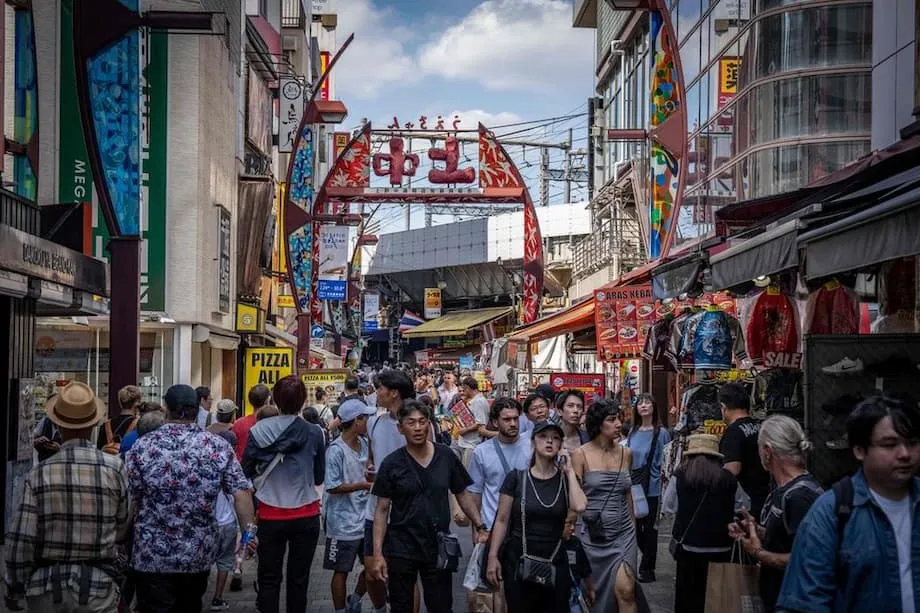
- Harajuku: A center of youth fashion and cosplay culture, with secondhand shops and unusual boutiques along Takeshita Street.
- Kichijoji: A neighborhood combining urban activity and access to nature, with vintage stores, shopping streets, bars and cafes.
Harajuku's connection to youth fashion makes it a natural setting for a shop such as Awesome by Bring Harajuku. Kichijoji offers a different mix, placing vintage shopping among the everyday attractions of its streets and nearby natural surroundings.
These districts give shoppers more than one way into the market. Some visit to search for a particular collectible; others browse among clothing, music and neighborhood businesses. The concentration of stores makes the search for a distinctive item part of the experience.
Chains and Flea Markets Serve Different Budgets
Tanpopo House, MODE-OFF, BAZZSTORE, KINJI and 2nd STREET serve a range of budgets and tastes. Some retailers specialize in American and European vintage clothing, while others focus on Japanese brands from the 1980s and 1990s.
RagTag and KOMEHYO offer carefully selected secondhand designer fashion for buyers seeking luxury labels at a discount. Their place in the market differs from that of a bargain clothing stall, but both extend the circulation of garments beyond their first owners.
Tokyo's flea markets provide another important shopping route. The Ohi Racecourse Flea Market, also known as the Tokyo City Flea Market, is one of the largest, with up to 600 vendors. Its merchandise extends beyond clothes to electronics, antiques and fossils.
The Machida Tenmangu Antique Fair, Hanazono Shrine Antique Market and Oedo Antique Market also attract collectors and bargain hunters. These markets offer opportunities to find unusual items at affordable prices, alongside the more expensive purchases associated with specialist boutiques.
A shopper's budget therefore shapes where and how they search. The vintage economy includes premium collectibles and designer garments, but it also includes ordinary used clothing and inexpensive discoveries. The high price of a celebrated T-shirt is only one part of this wider shopping network.
Social Media Keeps Clothes Moving Between Owners
Instagram, TikTok and Twitter give young shoppers places to share their latest discoveries. A rare jacket or T-shirt can become widely discussed online, drawing attention to the item and encouraging other people to search for similar pieces.
Sharing purchases also builds a community around vintage fashion. Buyers can show how they wear an item, celebrate a find and take part in conversations about designs, periods and styles. Digital word of mouth helps turn individual purchases into a broader youth culture.
Staygold Inc., a company in Tokyo that operates multiple vintage retailers, observes that many young people spend income from part time jobs on luxury vintage items, then sell those purchases to finance the next one.
Buying, showing and reselling creates a repeating cycle. A shopper may act as a wearer, collector and seller at different moments, keeping garments in circulation while changing their wardrobe.
Online platforms and apps make those transactions easier and extend the market beyond Tokyo. Curated online marketplaces sell streetwear and designer pieces, while major brands are launching their own secondhand initiatives. Young people across Japan can participate without visiting the capital's best known shopping districts.
For a buyer outside Tokyo, digital access changes the practical reach of the market. A vintage garment can be discovered online, become part of a personal wardrobe and later return to sale through the same broad network of buyers and sellers.
Reuse Connects Fashion With Concerns About Waste
Japan's interest in vintage fashion sits within a wider movement toward more sustainable consumption. Buying secondhand clothing extends the use of garments already in circulation, reducing waste and conserving resources while challenging the fast fashion habit of quickly replacing clothes.
Young consumers can be drawn to that environmental appeal alongside price and style. A used garment may be affordable, durable and distinctive at the same time, giving a buyer several reasons to choose it.
Japan's concept of mottainai expresses regret over waste and encourages careful use of resources. It provides a cultural connection to the idea that an object should receive further consideration before being discarded.
The Mottainai Flea Market reflects that approach by offering affordable goods and promoting reuse. Its appeal links the search for a bargain with the idea that possessions can remain useful after their first owner no longer needs them.
Vintage shopping also offers a connection to the past. For young Japanese consumers in a society that often values conformity, choosing a garment with an unusual history or appearance can become a way to express individuality. Searching a crowded market or a small boutique is part of that creative process.
India, London and Singapore Show the Wider Reach
India's secondhand apparel market was valued at around $3.5 billion in 2024 and is expected to grow by more than 13% annually. Young consumers are attracted by affordability, durability and environmental benefits, with online platforms and social media helping drive the trend.
London's vintage shop Twos provides another example of secondhand fashion as a social space. It has become a gathering place for creative communities, combining rare finds with pieces by independent designers.
Japan's vintage culture also reaches buyers abroad through retailers such as Takara House in Singapore. The store sources much of its inventory from Japan and sells distinctive apparel and collectibles to an international audience.
These examples show different parts of the same movement: online activity expanding access in India, a shop bringing a creative community together in London, and Japanese inventory reaching customers in Singapore. Japan's stores and collectors are participating in a fashion market that extends beyond national borders.
High Prices and Sizing Limit Access
Popular Tokyo vintage stores can be expensive, putting sought after items beyond the reach of shoppers with limited budgets. Competition among collectors and resellers can push prices higher, especially when demand for rare garments grows in Japan and abroad.
Sizing creates another practical difficulty. Many vintage clothes were made for smaller frames, reflecting body types of earlier generations. Finding an appealing item does not always mean finding one that fits.
The growing market has prompted debate about accessibility and sustainability. A garment may stay in use for longer, while the most desirable examples become increasingly costly. Buyers seeking affordable clothes and collectors seeking scarce pieces can therefore experience the same boom very differently.
The culture of reuse still gives clothing another period of useful life. Japan's young shoppers are challenging disposable fashion through buying and selling garments that remain desirable, while also bringing creativity and personal storytelling to their choices.
An unnamed fashion enthusiast based in Tokyo describes the appeal of searching for clothing whose history continues with its next wearer.
You never know what you'll find. Each piece has its own history, and wearing it lets you become part of that story.
That attraction helps connect the market's affordable stalls and premium boutiques. Whether the purchase is a bargain jacket or a collectible shirt, the buyer is choosing an existing object with its own appearance and past, rather than another newly made copy.
Key Points
- Japan's secondhand goods market reached approximately 3.13 trillion yen, about $21.3 billion, in 2023, its 14th consecutive year of growth.
- A T-shirt from the 1990s featuring Akira sold for 790,000 yen at Awesome by Bring Harajuku, more than 250 times its original price.
- Young buyers combine interest in individual style, sustainability and potential resale value.
- Shimokitazawa, Koenji, Harajuku and Kichijoji are major Tokyo destinations for vintage shopping.
- Retail chains, designer resale stores, flea markets and online platforms serve different budgets and tastes.
- Social media helps shoppers share discoveries, while resale lets some fund their next purchase.
- India, London's Twos and Singapore's Takara House illustrate the international reach of secondhand fashion.
- High prices, competition for rare items and limited sizing remain practical challenges.