A High Peace Ranking in a More Troubled World
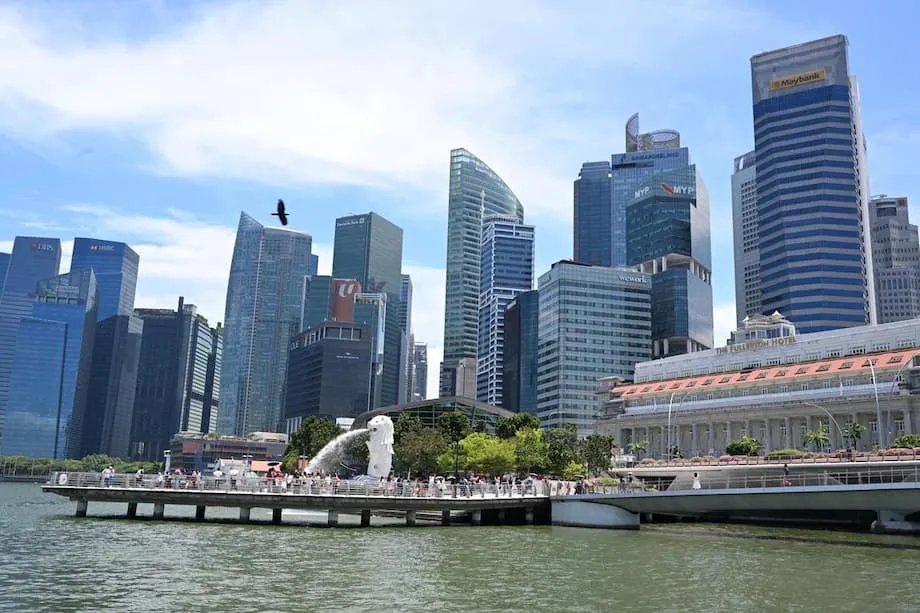
Singapore ranks sixth globally and first in Asia in the 2025 Global Peace Index, standing near the top of a table that records worsening conditions across much of the world. Published by the Institute for Economics and Peace (IEP), the index finds that 97 countries became less peaceful, the largest number since the index began.
Contents
- A High Peace Ranking in a More Troubled World
- What the Index Measures
- Why Laws and Institutions Matter
- How Safety Shapes Daily Life and Travel
- Singapore's Position Among Asian Neighbours
- Who Leads the World, and Who Falls Behind?
- The Dates Behind the 2025 Picture
- Peace Has an Economic Value
- Sustainability and the Work of Maintaining Peace
- Key Points
The city-state is the only Asian country in the global top 10. Iceland, Ireland, New Zealand, Austria and Switzerland occupy the first five places, while Singapore sits ahead of Portugal, Denmark, Slovenia and Finland.
As of August 25, 2025, the results place Singapore's everyday security against a difficult international backdrop: rising conflicts, tightening borders, economic uncertainty and increased militarisation. The number of conflicts involving states has reached its highest level since World War II, according to the report.
Singapore performs particularly well in societal safety and security and in the measures covering ongoing conflict. It has virtually no recent deaths from conflict or external military involvement. Strict laws, effective enforcement, stable institutions and community trust help explain why residents and visitors experience such a strong sense of personal safety.
The ranking also carries practical importance. A predictable environment makes daily journeys easier, supports tourism and helps attract companies, investment and skilled workers. Singapore's result brings those benefits into focus at a time when the distance between the world's most peaceful and least peaceful countries is widening.
What the Index Measures
The 2025 Global Peace Index is the 19th edition of the annual assessment produced by the Australia-based IEP. It evaluates 163 countries and territories, covering 99.7% of the world's population, using 23 qualitative and quantitative indicators. The index is developed in consultation with international peace experts and draws on data from the Economist Intelligence Unit.
The indicators are organised into three areas, allowing the assessment to look beyond whether a country is currently fighting a war:
- Societal safety and security covers crime, perceptions of criminality, homicide and the impact of terrorism.
- Ongoing domestic and international conflict considers internal and external conflicts, deaths from conflict and relations with neighbouring countries.
- Militarisation examines military expenditure, weapons imports and the presence of armed services.
Each indicator is normalised on a scale from 1 to 5 and weighted by an expert panel. Weighting means that the indicators contribute different amounts to the final assessment, rather than every measure counting equally.
The report also distinguishes between two ideas. Negative Peace means the absence of violence or fear of violence. Positive Peace describes the attitudes, institutions and structures that help create and sustain a peaceful society. Put simply, one concerns how little violence people face, while the other concerns the conditions that help keep violence low.
Singapore's position reflects strong results across important parts of that assessment, particularly public safety and the absence of ongoing conflict. The broader explanation for its stability also includes how institutions function and how people live alongside one another.
Why Laws and Institutions Matter
Singapore's strict laws and rigorous enforcement are central to explanations of its low crime and public order. Rules carry consequences, and residents understand that breaking them can bring punishment.
Ricky Ignatius Morier, a senior engineer, described how that affects behaviour:
Singapore has very low crime rates because of strict laws that people follow and adhere to. There are consequences for crimes, making people mindful of their actions.
Singapore's government is also known for efficiency, transparency and low levels of corruption. These qualities contribute to political stability and help people trust the institutions responsible for public services, security and the legal system.
Social cohesion is another part of the picture. Singapore's multicultural society is supported by policies promoting harmony and mutual respect. Community trust helps prevent internal conflict and supports a shared commitment to maintaining peace.
Some residents acknowledge that certain freedoms are limited, while valuing the high degree of personal safety and public order. That tension is part of the discussion about Singapore's model: the security people experience exists alongside a strict approach to rules and public behaviour.
How Safety Shapes Daily Life and Travel
Singapore's sense of security is reinforced by its physical surroundings. Streets are well lit, and security cameras are widespread. These conditions make crimes such as robbery and pickpocketing difficult and help residents feel comfortable moving around the city.
Dr. Ed Araral of the National University of Singapore illustrated that confidence through his daughter's use of public transport:
My daughter can take public transport past midnight without worry, something I would not feel safe about in Manila.
His comparison describes a concrete benefit of public safety: a family can feel comfortable about a journey late at night. For residents, peace is experienced through ordinary decisions about when to leave home, how to travel and whether to worry about someone returning after dark.
Singapore's reputation also makes it attractive to people travelling alone, including women. Very low crime, strict enforcement and a clean environment contribute to its standing as a comfortable destination for visitors. Public transport is considered safe at all hours, and emergency response systems are efficient and reliable.
Singapore is regularly regarded as one of the world's safest travel destinations, alongside New Zealand and Japan. Its orderly environment also appeals to expatriates seeking somewhere secure to live and work.
Singapore's Position Among Asian Neighbours
Japan ranks 12th globally and Malaysia 13th, placing both close to the leading group, though behind Singapore in sixth place. Vietnam ranks 38th, Indonesia 49th and Thailand 86th. Those positions reflect different conditions of internal stability and security across the region.
Malaysia's Chief Secretary to the Government, Shamsul Azri Abu Bakar, expressed pride in his country's ranking and credited both government and citizens with maintaining peace and stability. Singapore's continued lead in Asia places its performance alongside those efforts elsewhere in the region.
Asia and the Asia-Pacific are different geographical groupings in the discussion of the index. Singapore leads Asia, while New Zealand is the most peaceful country in the wider Asia-Pacific region. Japan, Malaysia and Singapore are among the region's leading performers.
The Asia-Pacific remains the world's second most peaceful region, despite a slight deterioration in 2025. Strong social systems, effective law enforcement and attention to community wellbeing support its relatively high standing.
Myanmar is the region's least peaceful country, ranking 153rd globally. Its civil war, ongoing since 2021, has brought a dramatic deterioration in peacefulness. That experience sits far from the stability enjoyed by the region's highest ranked countries.
Indonesia recorded the region's largest improvement. Its progress included gains against terrorist organisations and the absence of major attacks outside West Papua during the preceding three years.
Who Leads the World, and Who Falls Behind?
Iceland remains the world's most peaceful country, a position it has held since 2008. Residents describe a strong sense of community and safety in everyday life. Ireland and New Zealand have improved their rankings, supported by reductions in militarisation and strong social systems.
The global top 10, in order, are Iceland, Ireland, New Zealand, Austria, Switzerland, Singapore, Portugal, Denmark, Slovenia and Finland. Singapore's presence makes it the sole Asian country in that group.
The leading countries share several features: strong institutions, low corruption, equitable distribution of resources and high levels of human capital, meaning the skills, knowledge and abilities of their populations. They also tend to avoid external military entanglements, maintain stable internal conditions and keep military spending in check while directing resources towards social development.
Trust matters too. Confidence in government and in other people contributes to a sense of safety and community. Singapore's effective governance, low crime and robust legal system fit several of those characteristics.
Russia ranks last for the first time. Other countries among the least peaceful include Ukraine, Sudan, the Democratic Republic of Congo, Yemen, Afghanistan, Syria, South Sudan, Israel and Mali.
The United States ranks 128th despite its global influence. Its position reflects ongoing internal and external conflicts, high crime rates and political polarisation. Economic or diplomatic power and peacefulness can therefore occupy very different positions in a country's international standing.
The Dates Behind the 2025 Picture
The index brings together conditions shaped over several years. Iceland's long period at the top, Myanmar's war and the latest economic estimate of violence each help explain the setting for Singapore's result.
- 2008: Iceland began the uninterrupted period in which it has held first place in the Global Peace Index.
- 2021: Myanmar's ongoing civil war began, contributing to its sharp deterioration in peacefulness.
- 2024: Violence cost the global economy nearly $20 trillion, according to the estimate in the 2025 report.
- 2025: The 19th edition of the index places Singapore sixth globally and first in Asia, while 97 countries record worsening peacefulness.
Global peacefulness has declined in 13 of the past 17 years. The 2025 findings also describe more conflicts, increased militarisation and record numbers of refugees and people displaced within their own countries.
Refugees have crossed a national border after fleeing their country, while internally displaced people have been forced from home but remain within their country's borders. Both forms of displacement show how violence can disrupt lives far beyond the immediate location of fighting.
Singapore has maintained its peaceful environment during this wider deterioration. Its strong position is especially striking when placed beside the growing pressures affecting countries with war, displacement and insecurity.
Peace Has an Economic Value
Violence cost the global economy nearly $20 trillion in 2024, equivalent to 11.6% of global gross domestic product, according to the 2025 index. Gross domestic product, or GDP, measures the value of goods and services produced. The percentage puts the estimated economic burden of violence at more than one tenth of that worldwide total.
Peaceful societies benefit from higher income growth, stronger currencies, more foreign investment and greater happiness. They also face lower costs associated with violence and tend to have higher productivity and better education outcomes.
Singapore's economic success is closely connected to its stable environment. International businesses, investors and skilled workers are attracted by predictability and security. Those qualities make the city-state appealing as a place to establish operations, commit money and build a career.
Peace and prosperity can reinforce each other. Stability supports economic activity, while the resources generated by a successful economy can support the institutions and services that help sustain a secure society.
For Singapore, the benefits therefore reach beyond the ranking itself. The same conditions that reassure a passenger travelling home late at night also contribute to the confidence of people deciding where to work, invest or visit.
Sustainability and the Work of Maintaining Peace
The 2025 report also connects peace with sustainability. More peaceful countries are better positioned to carry out social and environmental policies, manage resources effectively and pursue inclusive governance.
Singapore's green urban planning and social equity initiatives form part of its commitment to sustainability. A stable society supports those efforts by providing conditions in which policies and services can continue to operate predictably.
Singapore still faces an increasingly volatile international environment. New conflicts, rising militarisation and economic uncertainty create continuing challenges, even for countries that currently score well. The growing gap between the most peaceful and least peaceful countries adds to that difficult setting.
Maintaining Singapore's position depends on adapting to changing circumstances, responding to emerging threats and sustaining social cohesion and good governance. The qualities that help deliver safety today require continuing attention.
The 2025 result offers a clear picture of Singapore's strengths: low crime, effective institutions, community trust and little exposure to ongoing conflict. Preserving those conditions is the practical task behind retaining a place near the top of the global rankings.
Key Points
- Singapore ranks sixth globally and first in Asia in the 2025 Global Peace Index.
- The index assesses 163 countries and territories using 23 indicators covering safety, conflict and militarisation.
- Iceland leads the world, followed by Ireland, New Zealand, Austria and Switzerland.
- Singapore is the only Asian country in the top 10; Japan ranks 12th and Malaysia 13th.
- The Asia-Pacific remains the second most peaceful region, while Myanmar ranks 153rd globally.
- Peacefulness deteriorated in 97 countries, the largest number since the index began.
- Violence cost the global economy nearly $20 trillion in 2024, or 11.6% of global GDP.
- Singapore's security supports daily life, tourism and investment, while maintaining it requires continuing attention to institutions and social cohesion.