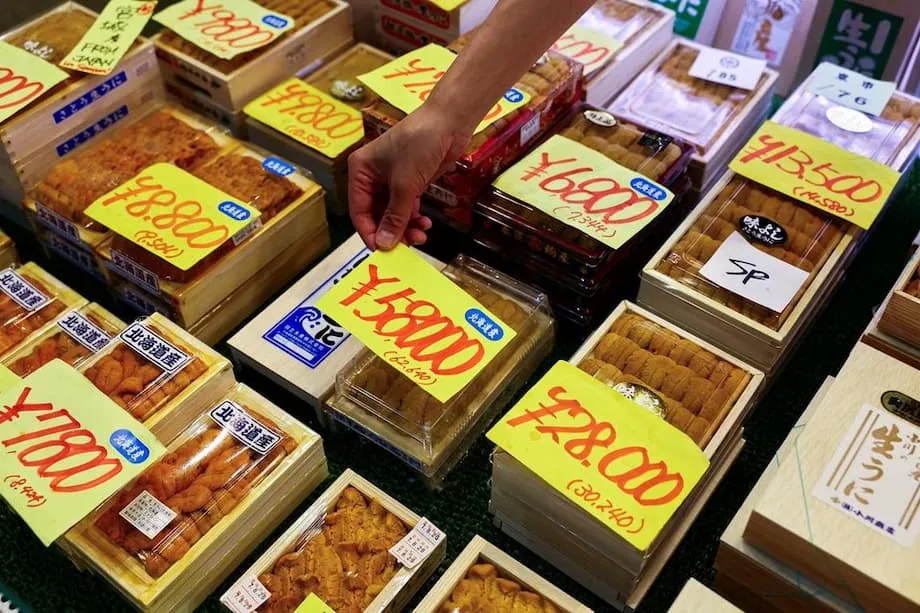
A 100 Gram Serving Now Costs Up to 18,000 Yen
On Hokkaido's Rishiri Island, a rice bowl topped with just 100 grams of bafun sea urchin now costs 15,000 to 18,000 yen, roughly $100 to $120. The price is about twice what diners paid only a few years ago. Some groups share a single bowl and fill out their meal with cheaper dishes such as ramen.
Contents
- A 100 Gram Serving Now Costs Up to 18,000 Yen
- Warmer Waters Are Changing Northern Fisheries
- The Red Tide Disaster That Destroyed Future Harvests
- How the Damage Reaches the Dinner Table
- A Timeline of Losses and Rising Prices
- Why Kelp and Sea Urchins Must Be Considered Together
- Some Species Are Moving North
- Protecting Food Supply Requires Several Responses
- Different Coastlines Need Different Solutions
- Key Points
Sea urchin, known as uni in Japan, has long been a luxury food associated with culinary excellence. Its latest price surge is pushing it beyond the reach of many Japanese households, even for special occasions. Behind the restaurant bill are shrinking catches, warming waters and harmful algal blooms that can destroy years of growth in coastal fisheries.
Rishiri's sea urchin catch has fallen to half the previous year's level, continuing a decline over several years. The price of 10 kilograms of the island's bafun sea urchin has reached 90,000 yen, more than double its level two years earlier. These changes are detailed in a sea urchin price report published on August 26, 2025.
Japan's broader food inflation is often explained through the weak yen and higher import costs. Scientists and seafood industry specialists also point to changes in the sea itself. For fishing communities, fewer animals available to catch mean less produce to sell. For restaurants and customers, the result is an increasingly expensive delicacy.
Hokkaido's experience connects several problems that unfold at different speeds: sudden marine die-offs, declining harvests over successive years and longer changes in the species that northern waters can support. Together, they are putting pressure on a food culture and the livelihoods behind it.
Warmer Waters Are Changing Northern Fisheries
Hokkaido has historically benefited from cold waters rich in nutrients, supporting salmon, squid, saury and sea urchins. Rising temperatures are making those conditions less dependable. Cold water species are struggling to survive, reducing their numbers and their availability in markets and restaurants.
Research described in the account published in August 2025 puts the rise in average sea temperatures around Japan at about 5 degrees Celsius in recent years, with warming particularly pronounced in northern areas such as Hokkaido. The precise period and geographical coverage behind that figure were not specified.
Seafood prices reflect the pressure. Prices for other seafood associated with cold waters have risen nearly fivefold over the past two decades. Rishiri's recent decline is especially sharp: a catch reduced by half leaves only about one unit available for every two landed the previous year.
A weak yen can make imported food more expensive, while a poor domestic harvest reduces what sellers can offer at home. Japan's sea urchin market is being squeezed by environmental disruption alongside the wider economic pressures affecting food. Fishing businesses also face labor shortages and rising utility costs, making a smaller catch harder to absorb.
The Red Tide Disaster That Destroyed Future Harvests
Hokkaido suffered mass deaths of salmon and sea urchins during a series of red tides in 2021. The prefectural government estimated damage to the local seafood industry at 7.6 billion yen, about €58 million. Losses involving 2,300 tonnes of sea urchins accounted for 6.84 billion yen, about €52 million.
Sea urchins therefore represented 90 percent of the estimated financial damage, calculated from 6.84 billion yen out of 7.6 billion yen. The figures show how heavily the disaster fell on one valuable part of the fishery.
Red tides are harmful algal blooms, episodes in which tiny organisms in the water multiply rapidly and can devastate marine life. Researchers have been examining the role of phytoplankton such as Karenia selliformis, which can be deadly to marine animals. Warmer water can create favorable conditions for these organisms to proliferate.
Hokkaido was once considered too cold for such blooms. Their appearance there signals a change in conditions. Researchers from Hokkaido University and other institutions are still investigating the precise mechanisms, while the scientific assessment described in the account links climate driven changes to more frequent and destructive red tides.
The 2021 disaster killed adult sea urchins and likely devastated juvenile populations too. Losing young animals can reduce later harvests, extending the damage beyond the season in which the bloom occurred.
Hokkaido Governor Naomichi Suzuki used the following words to describe the scale of the red tide crisis:
unprecedented in scale
Suzuki warned that the effects could last four to five years and urged the national government to provide urgent aid to protect fishing livelihoods. His warning described a recovery measured in years rather than a single fishing season.
How the Damage Reaches the Dinner Table
Japan's seafood squeeze is unfolding during a broader rise in food costs. Food prices increased 7.6 percent in July 2025 compared with a year earlier, the fastest pace in decades. Food accounted for nearly 30 percent of household expenditure, the highest share in 43 years.
Fish and seafood make up less than 10 percent of the average Japanese food basket. Their rising prices are nevertheless a visible part of the pressure on household budgets, particularly when familiar foods become occasional purchases or disappear from shopping lists.
Salaries have not kept pace with inflation. Older people and others living on fixed incomes have less room to absorb higher bills. Uni, already expensive, is becoming prohibitive for many consumers who might once have bought it for a celebration.
Tourists are adjusting their spending too. At Tokyo's Tsukiji seafood market, some visitors are choosing cheaper street foods instead of expensive seafood bowls. On Rishiri, sharing one serving allows diners to taste the local specialty while spending less than they would on individual bowls.
Fishing communities face the same squeeze from the other side of the counter. Lower catches undermine the income of fishermen, wholesalers and restaurant owners, while utilities and other operating expenses continue to demand payment. In Hokkaido, seafood is both a major source of economic activity and part of regional identity.
A Timeline of Losses and Rising Prices
Japan's sea urchin difficulties have accumulated over several years. The red tide disaster and the later price increases are connected by the time marine populations need to recover and reach harvestable size.
- 2021: Red tides off Hokkaido caused mass deaths of salmon and sea urchins. The prefectural government estimated seafood industry losses at 7.6 billion yen, including 6.84 billion yen involving sea urchins.
- The two years leading to August 2025: The price of 10 kilograms of Rishiri bafun sea urchin more than doubled, reaching 90,000 yen.
- July 2025: Japanese food prices rose 7.6 percent compared with a year earlier, while food spending accounted for nearly 30 percent of household expenditure.
- August 2025: Rishiri's sea urchin catch was reported to have halved from the previous year, and a rice bowl containing 100 grams of bafun uni cost 15,000 to 18,000 yen.
Suzuki's warning of effects lasting four to five years helps explain why the 2021 losses remained relevant in 2025. A fishery depends on successive generations of animals. Damage to both adults and juveniles can leave gaps in supply long after the water clears.
Why Kelp and Sea Urchins Must Be Considered Together
Sea urchins are part of the marine environment as well as a source of food. They feed on seaweed, and their numbers help shape kelp forests, which provide habitat for many other marine species. Large increases or sudden crashes in sea urchin populations can change that balance.
Australia and New Zealand show what can happen when sea urchins become too abundant. In some areas, warming seas have allowed invasive urchin species to thrive. Their grazing has stripped rocky reefs of kelp and other seaweeds, creating areas known as urchin barrens, with fewer species and lower biological productivity.
Harvesting urchins for food can become a restoration tool in those places because it reduces grazing pressure and gives seaweed a chance to recover. Japan's declining sea urchin populations present a different immediate problem: fewer animals available for fishing and changes within marine communities.
Studies conducted over long periods in southern Japan have identified rising water temperatures and red tides as major influences on sea urchin abundance and the number of species present. Losing sea urchins can allow algae to grow more freely or change which species occupy a coastal habitat.
Local conditions determine the practical response. Removing urchins can help a reef where too many are consuming the kelp, while a depleted fishery may need measures that allow its population to recover. Both situations require attention to the animals and the seaweed they eat.
Some Species Are Moving North
Mesocentrotus nudus, a commercially valuable sea urchin, illustrates how different species can respond differently to warming. Scientific studies have documented its expansion northward into new areas of Hokkaido as water temperatures rise.
Field surveys in Akkeshi Bay found that surviving urchins were older animals that had lived through recent harmful algal blooms. Warming trends could make conditions more favorable for their future growth, but population densities remain low.
Researchers have not established whether those populations sustain themselves through local reproduction or depend on larvae arriving from other regions. Larvae are the young stage of the animal, so that distinction matters when judging how reliably a local population can replace its losses.
Other seaweed eaters are changing their behavior too. The top shell Turbo sazae is increasing its feeding pressure on kelp as temperatures rise. Seaweed beds therefore face changes involving several herbivores, rather than sea urchins alone.
Hokkaido's fisheries can experience losses from harmful blooms while some species also gain access to warmer northern habitats. A species expanding its range and a fishing community losing valuable catches can occur within the same changing marine environment.
Protecting Food Supply Requires Several Responses
Japan's sea urchin crisis is part of a wider challenge to food security. Extreme weather, rising average temperatures and shifting ocean currents are disrupting established food systems and threatening the country's stated goal of raising its food self-sufficiency ratio to 69 percent by 2030.
Scientists warn that further warming is inevitable even with aggressive efforts to reduce greenhouse gas emissions. Fishing communities therefore face the task of adjusting to changing conditions while trying to preserve the resources on which they depend.
Responses proposed by specialists address both supply and the health of coastal habitats:
- Regulate fishing to prevent excessive harvesting and give depleted populations time to recover.
- Diversify diets to include more resilient species, such as sardines, which are thriving in warmer waters.
- Invest in aquaculture and regenerative technologies to supplement wild catches.
- Restore kelp forests and manage the populations of animals that feed on them.
Japanese companies are also exploring sea urchin farming in Tasmania, Australia, to secure more dependable supplies of uni for export and domestic consumption. Farming could supplement wild harvests, while research into feeding behavior and sea urchin gut microbiomes, the communities of microorganisms in their digestive systems, could help guide aquaculture and ecosystem management.
Different Coastlines Need Different Solutions
Japan and Australia face contrasting sea urchin problems. Japanese fishing communities are dealing with scarcity and expensive uni, while parts of Australia are trying to control expanding urchin populations that destroy kelp forests. Encouraging consumption can support restoration where too many urchins are the problem.
Climate change is the underlying driver in both situations, but the local effects differ. Management needs to account for species, population size, seaweed conditions and the way each coastline is changing. A successful response in one place may be unsuitable in another.
Rishiri's costly rice bowls bring those changes into everyday view. A smaller catch raises pressure on businesses and consumers, while red tides and damage to young animals can prolong the shortage. Regulation, farming, dietary changes and habitat restoration address different parts of that problem.
For Hokkaido, recovery involves more than bringing one luxury food back within reach. Salmon, squid, saury and sea urchins belong to a fishing economy shaped by cold northern waters. As those waters change, the region's workers, businesses and diners are already adjusting.
Key Points
- A Rishiri rice bowl containing 100 grams of bafun sea urchin costs 15,000 to 18,000 yen, about $100 to $120.
- Rishiri's sea urchin catch has halved from the previous year, while the price of 10 kilograms has more than doubled in two years to 90,000 yen.
- Hokkaido's 2021 red tides caused estimated seafood losses of 7.6 billion yen. Sea urchins accounted for 6.84 billion yen, or 90 percent.
- Japan's food prices rose 7.6 percent in July 2025 compared with a year earlier, adding pressure on households whose salaries have lagged behind inflation.
- Warming, harmful algal blooms and changing grazing patterns are reshaping fisheries and kelp habitats, with different effects across species and regions.
- Proposed responses include fishing controls, more varied diets, aquaculture, kelp restoration and management based on local ecological conditions.