A 500 Baht Entry Into a New Wildlife Business
Thailand has approved commercial breeding of the Asian water monitor, opening a new business around a reptile familiar to visitors to Bangkok's Lumpini Park. Breeding animals will cost 500 baht each, including a 100 baht microchip fee, under a programme intended to supply legal farms while keeping wild populations protected.
Contents
- A 500 Baht Entry Into a New Wildlife Business
- Why Bangkok's Familiar Lizards Became a Policy Issue
- What Changed, and What Remains Protected
- Who Can Breed Water Monitors?
- How Microchips and Trade Permits Fit Together
- Why the Leather Industry Is Interested
- Export Rules Vary Across Markets
- The Environmental Case for Monitor Farming
- A City Symbol With an Ecological Role
- Population Data Will Shape Wider Controls
- Key Points
The Department of National Parks, Wildlife and Plant Conservation (DNP) will begin the programme at Khao Son Wildlife Breeding Station in Ratchaburi Province. Nearly 300 water monitors are housed there after being removed from urban areas following nuisance complaints. Advance orders for farmed animals have already exceeded 200.
The commercial opening follows a ministerial regulation issued in late 2024 by the Ministry of Natural Resources and Environment, acting on recommendations from the Wildlife Preservation and Protection Committee. As of August 11, 2025, the policy offers entrepreneurs a route into breeding a protected animal, with luxury leather among the main markets in view.
The Asian water monitor, whose scientific name is Varanus salvator, remains protected under the Wild Animal Reservation and Protection Act. Capturing animals from the wild is still strictly illegal. Violators face up to 10 years in prison and fines of up to 1 million baht, about $30,000.
Thailand's approach brings together three aims: responding to complaints about reptiles in urban areas, reducing illegal trade and creating economic value from a species already abundant in urban Thailand. Whether those aims can work together will depend on the controls connecting breeding stations, licensed farms and eventual buyers.
Why Bangkok's Familiar Lizards Became a Policy Issue
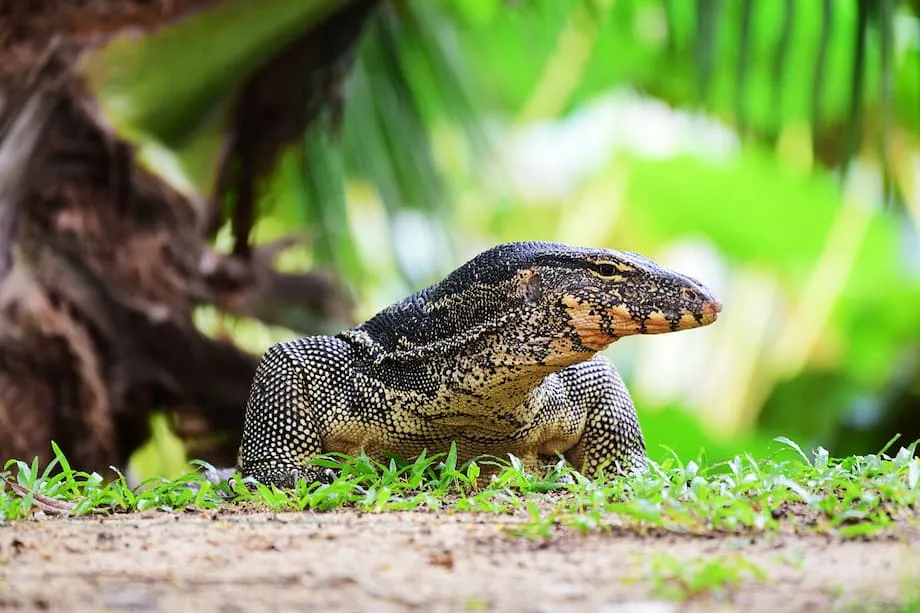
Bangkok's water monitors are often seen basking beside lakes in Lumpini Park or moving through canals and other urban waterways. Known locally as the Bangkok Dragon or hia, they have become a distinctive part of a city where parks, wetlands and built areas sit close together.
Bangkok's expansion has been accompanied by a growing water monitor population and frequent complaints from residents and businesses. Authorities regularly receive requests to remove the reptiles from private property. Hundreds have been captured in public spaces and relocated to wildlife breeding centres.
Wildlife researcher Rujira Mahaprom describes water monitors as generally harmless to people, although their size and appearance can inspire fear or suspicion. For fish farmers, the concern is more practical: a predator entering a fish pond can become a nuisance.
The reptiles also perform useful work. As predators, they help control pest populations. As scavengers, they eat carrion, the remains of dead animals, helping to clean up their surroundings. Their role in Bangkok's urban ecosystems is therefore broader than the complaints they sometimes generate.
The breeding policy seeks to give some animals already removed from urban settings a place in a regulated commercial system. It also creates a new relationship between wildlife management and business, with government agencies responsible for protecting wild animals while overseeing the supply of legal breeding stock.
What Changed, and What Remains Protected
The Ministry of Natural Resources and Environment granted special permission for commercial breeding, following the Wildlife Preservation and Protection Committee's recommendation. The change allows a licensed activity involving a species that continues to receive legal protection.
Wild water monitors remain covered by the Wild Animal Reservation and Protection Act. The potential prison term of 10 years and fine of 1 million baht underline the continuing restrictions on taking animals from the wild. Entrepreneurs must obtain stock through authorised channels.
The policy's sequence helps explain how the commercial opening connects to existing wildlife management:
- Before the commercial programme, authorities were already removing water monitors following urban nuisance complaints and moving hundreds to wildlife breeding centres.
- In late 2024, the ministry issued the regulation granting special permission for commercial breeding.
- By August 11, 2025, Khao Son Wildlife Breeding Station held nearly 300 water monitors, and advance orders for farmed animals exceeded 200.
The DNP has pledged to survey wild populations, oversee breeding operations and adjust regulations as needed. No date was given for those surveys or for a wider expansion of population controls.
Who Can Breed Water Monitors?
The DNP has set the price of breeding stock at 500 baht per animal, about $15.50. The price includes 100 baht for a microchip, an identification device intended to connect an animal to its recorded origin.
Khao Son Wildlife Breeding Station will serve as the initial base for the programme. Its animals provide a starting supply drawn from reptiles already held by wildlife authorities following removals from urban environments.
Applicants must meet several conditions before entering the programme:
- Hold a valid licence to breed protected wildlife or operate a zoo.
- Own the land used for breeding or have written permission from its owner.
- Have no criminal record under the Wild Animal Reservation and Protection Act.
- Obtain breeding stock only from authorised DNP stations or licensed farms.
The stock supply begins with licensed wildlife stations, while the rules also recognise authorised purchases through licensed farms. These channels are intended to keep the commercial population traceable as breeding and sales develop.
Farms must report offspring, and the regulatory framework requires records of births, deaths and sales. The DNP will conduct regular inspections and oversee transactions as well as breeding operations. For a breeder, buying an animal is therefore the start of an ongoing reporting obligation.
How Microchips and Trade Permits Fit Together
Every farmed water monitor is to be microchipped so authorities can verify its origin. The purpose is to prevent animals captured illegally in the wild from being passed off as animals produced through licensed breeding, a practice often described as laundering wildlife.
Licensing, identification and reporting are intended to work together. A licence identifies the approved operator, a microchip identifies an animal, and records of births, deaths and sales track changes in the farm's stock. Inspections give the DNP a way to check those records against the operation itself.
International sales bring another layer of regulation. The Asian water monitor is listed in Appendix II of the Convention on International Trade in Endangered Species of Wild Fauna and Flora, known as CITES. That listing allows international trade under regulation.
The DNP plans to survey wild populations and monitor breeding operations to meet CITES requirements while allowing legal exports. The government has designed the framework to balance commercial development with conservation and to prevent the overexploitation seen in other wildlife industries.
For the new industry, the practical task is to keep a documented connection between the animals entering farms, the offspring produced there and the animals or products eventually sold. The controls are intended to make breeding transparent and protect the wild population as commercial activity grows.
Why the Leather Industry Is Interested
Water monitor hides are valued for a distinctive pattern combining features associated with crocodile and snake skins. International fashion brands use this type of leather for bags, shoes and accessories, making the luxury market a major economic driver behind the policy.
According to the Kasikorn Research Centre, water monitor skins can sell for between 4,200 and 14,000 baht per square metre, about $115 to $385. Those values far exceed the value of traditional cow or buffalo leather.
Thailand already exports about $200 million in processed exotic leather annually, with Europe, China and Japan among the major markets. Cowhide exports are worth about $600 million. On those figures, processed exotic leather exports are worth roughly one third as much as cowhide exports.
The Philippines is currently the only major exporter of Asian water monitors for the global leather trade. Thailand wants its breeding programme to secure a larger share of that market, increase exports and create jobs in both rural and urban areas.
The Thai Tanning Industry Association has welcomed the move because of its potential to expand exports and employment. Advance orders exceeding 200 animals also show interest from entrepreneurs seeking to enter the new market.
The economic attraction rests on turning a legally bred animal into a valuable product within a regulated supply chain. The 500 baht price for breeding stock and the quoted prices for skins describe different stages of that business: the first is the price of an animal entering a breeding operation, while the second is a value per square metre of hide.
Export Rules Vary Across Markets
Thailand's commercial ambitions must operate within different national rules for monitor lizards and their products. Permission to breed animals domestically is one part of the process; exporters must also meet the rules governing the destination market.
Thailand and Malaysia allow breeding and production under licence. Indonesia uses a quota system for capture and export, setting a limit on the number of animals that can enter that trade.
The United States and European Union permit imports with a valid CITES permit. China and Australia prohibit trade in monitor lizard products. Those restrictions sit alongside China's role as a major destination for Thailand's broader processed exotic leather exports, which cover more than monitor lizard products.
The mix of licensing systems, quotas, permit requirements and prohibitions makes tracking and compliance central to Thailand's plans. A business seeking to export must know both where its animals came from and whether its intended market permits the product.
The Environmental Case for Monitor Farming
Water monitor farming is also being promoted as an environmentally friendly alternative to traditional livestock. The argument centres on digestion: unlike cattle and buffalo, monitor lizards do not produce methane gas during that process.
Methane is a greenhouse gas, so the absence of that digestive source is presented as a potential advantage for reptile farming. Some estimates suggest that switching to monitor lizard leather could reduce the leather industry's carbon footprint by millions of tonnes a year.
The environmental pitch is part of the industry's appeal to global consumers and luxury brands increasingly concerned about sustainability and ethical sourcing. For those buyers, how an animal was obtained and raised can matter alongside the appearance of the finished leather.
Thailand's programme links that commercial pitch to legal sourcing, microchips and oversight. Its stated approach is to build economic activity around managed breeding while maintaining protection for animals living in parks, wetlands and other wild settings.
A City Symbol With an Ecological Role
Bangkok residents encounter water monitors as more than a possible source of leather. The animals have inspired public sculptures and social media memes, reflecting their place in everyday city life.
The informal Thai name tua ngern tua thong translates as silver-gold lizard. The name reflects both the animal's distinctive appearance and its mixed place in local folklore, where it can be revered as well as feared.
Parks and waterways provide spaces where this cultural familiarity meets the reptiles' ecological role. Water monitors act as predators and scavengers within the city, helping control pests and remove animal remains. Their presence reflects Bangkok's combination of urban development and biodiversity.
Commercial breeding adds a new economic purpose to those existing relationships. Residents may want an animal removed from a property, fish farmers may want to protect their stock, and park visitors may see the same species as a familiar part of Bangkok. The policy must operate among all of those interests while retaining legal protection for wild animals.
Population Data Will Shape Wider Controls
The announcement has attracted public interest and debate, with conservationists and industry groups watching how the programme develops. Industry supporters point to jobs and exports, while wildlife specialists stress the need for accurate population figures and continued monitoring.
Chalerm Poommai, director of the Wildlife Conservation Office, explained the relationship between breeding and any broader population management:
Commercial breeding could help manage populations, but accurate population data is needed before introducing wider controls.
The DNP has pledged regular surveys of wild populations and adjustments to regulations as needed to maintain a balance between economic development and conservation. Those commitments place population data alongside farm records as a central part of the programme.
Thailand's approach could provide a model for other countries dealing with similar tensions between abundant urban wildlife, public complaints and demand for animal products. It combines continued protection in the wild with permission for carefully managed commercial breeding.
The programme's success will depend on enforcement, transparent reporting and cooperation among government agencies, businesses and conservation groups. For Bangkok's familiar water monitor, the change creates a possible route from relocated urban reptile to licensed breeding stock, while leaving its protected status intact.
Key Points
- Thailand approved commercial breeding of Asian water monitors through a ministerial regulation issued in late 2024.
- Breeding stock costs 500 baht per animal, including a 100 baht microchip fee.
- Khao Son Wildlife Breeding Station in Ratchaburi holds nearly 300 animals, and advance orders have exceeded 200.
- Wild capture remains illegal, with penalties of up to 10 years in prison and fines of up to 1 million baht.
- Licensed breeders must use authorised stock, keep records and submit to DNP oversight.
- Luxury leather is a major target market, with water monitor skins valued at 4,200 to 14,000 baht per square metre.
- International trade is regulated under CITES Appendix II and is subject to destination countries' rules.
- Wild population surveys, farm inspections and traceable records are central to the government's conservation commitments.