A night landing at Dongfeng, and a first for the site
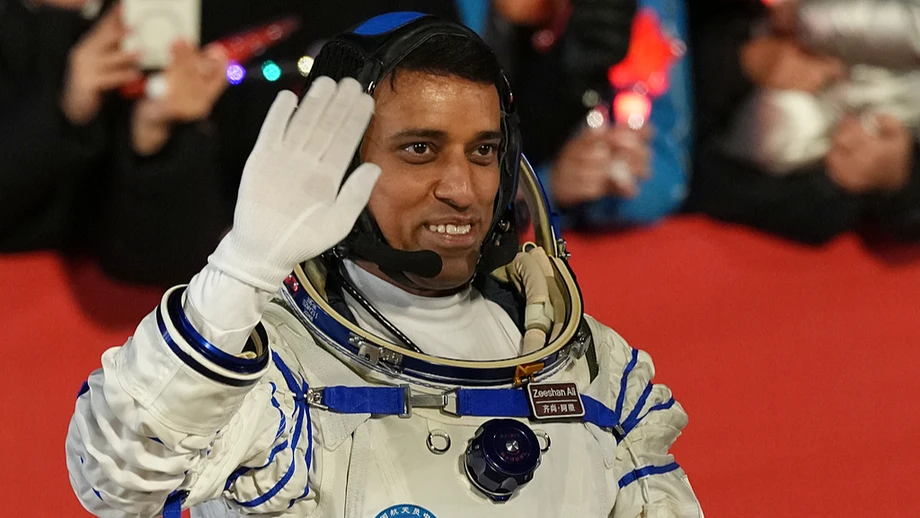
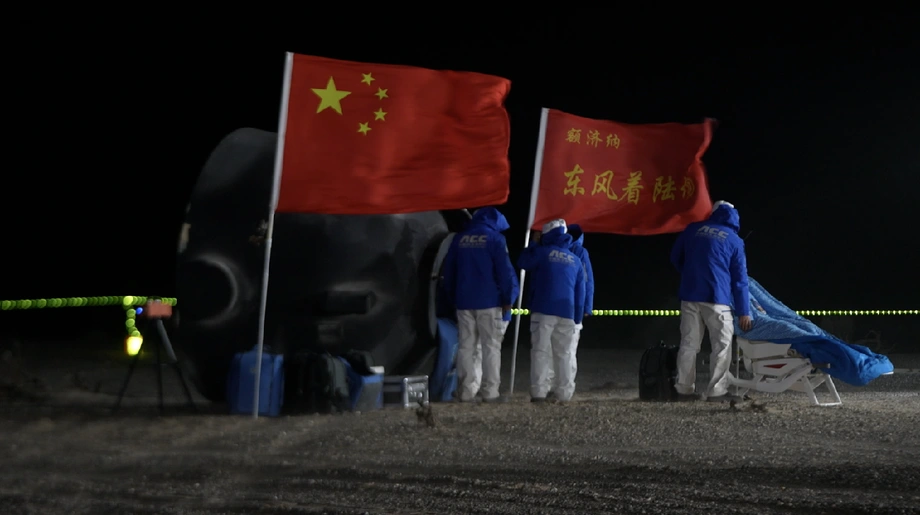
The Shenzhou-23 return capsule landed at the Dongfeng Landing Site on Nov 30, bringing Zhang Zhiyuan, Li Jiaying and Muhammad Zeeshan Ali back from China's space station. The site sits in the Inner Mongolia Autonomous Region in north China, open country where recovery teams have room to work and few landmarks to steer by.
Contents
- A night landing at Dongfeng, and a first for the site
- Who came home, and who stayed behind
- Why darkness and cold shaped the recovery
- The rescue force spread across the grassland
- Fifty minutes from orbit to grassland
- A split rotation, tried for the first time
- Five days on the station, one year in orbit
- The final week, step by step
- What the announcements left open
- Key Points
The touchdown was a first for Dongfeng. No foreign astronaut had come down there before. Ali, a Pakistani, is the first foreign national to enter the station, and his return made Dongfeng the first Chinese landing site to bring one home.
Word that the three were on their way came from the Jiuquan Satellite Launch Center, which runs the landing site. On Nov 29 the centre said every preparation at Dongfeng was finished and the ground teams were ready to welcome the astronauts back. At 23:42 Beijing time that night the spacecraft separated from the station, according to the China Manned Space Agency, leaving the three in independent flight for about four and a half hours before the return sequence began.
Behind that timetable sat days of rehearsals run after dark, on ground where temperatures at the end of November are low, and a recovery plan built around the night.
Who came home, and who stayed behind
Zhang Zhiyuan served as commander of the return flight, the role the mission plan gave him for the trip down. Li Jiaying and Ali flew back with him, a manifest that mixed members of the outgoing station crew with a visitor whose stay was measured in days.
Before separating from the station, the three worked with controllers on the ground to set its operating configuration, download and sort experiment data, clear out and transfer supplies meant to stay in orbit, and pass on what they had learned about living and working aboard to the crew taking over.
The China Manned Space Agency said the two crews held a handover ceremony on Nov 28, when the symbolic keys of the station passed from the Shenzhou-23 crew to the Shenzhou-24 crew. The space agency's statement described the outgoing crew leaving aboard Shenzhou-22, while the return plan set out by the Jiuquan centre put the three astronauts on Shenzhou-23.
Why darkness and cold shaped the recovery
A landing in the small hours in late November means two problems at once: no daylight to see by, and air cold enough to matter for anyone pulled from a capsule after months in a temperature controlled laboratory in orbit. Mao Yongjun of the Jiuquan Satellite Launch Center set out what the teams had prepared for.
This search and rescue work is carried out mainly in dark, low temperature conditions, and the priority at the site is lighting and keeping warm.
Dongfeng's answer was a support scheme the centre calls combined air and ground, unified lighting. Positions for lamps and the light sources themselves were laid out together so that brightness across the landing zone stays high and the field of view stays clear, enough for crews to work without a break once night falls. Medical teams at the site packed sleeping bags and blankets to keep the astronauts warm in the first minutes on the ground.
The rescue force spread across the grassland
Recovery at Dongfeng runs on layers. Two main detachments, one in the air and one on the ground, carry the core search and rescue job and are staffed and equipped for it. Two more units stand by for trouble: an air mobile rescue detachment and a Dunhuang rescue detachment, both built to move fast if a capsule comes down away from the planned point.
A militia detachment covers the rest of the ground, dividing the area into a grid by administrative boundary so that each cell has a defined duty, and feeding local resources into the professional teams. Mao described the training that tied the parts together.
The mission command post has organised and completed several rounds of communications pairing drills for the search teams, combined air and ground rescue training and a full system, full process integrated exercise, so that command runs smoothly, the sequence is sound and handling is efficient.
On Nov 26 the site put all of its rescue forces through the full rehearsal for this return, the last check before the real thing.
Fifty minutes from orbit to grassland
Shenzhou-23 flew a fast return covering three orbits. It spent about 4.5 hours flying on its own after leaving the station, then began the return sequence, with the whole business of coming back and touching down taking about 50 minutes.
Three orbits is a way of measuring time as much as distance. A spacecraft in low orbit circles Earth roughly every 90 minutes, so three loops come to about four and a half hours. The extra loops give the capsule time to line up with the landing site, because it can only begin its dive when it passes over the right patch of ground at the right moment. Fewer loops mean less time strapped into a seat, and the agency described the route home as quicker and more comfortable for the crew.
Those final 50 minutes are the crowded part. The capsule fires its engines to drop out of orbit, sheds the modules it no longer needs, takes the heat of reentry behind a shield, then slows under parachutes for the last stretch to the ground.
A split rotation, tried for the first time
Shenzhou-24 lifted off on Nov 25 at 08:18:52.460 Beijing time from the Jiuquan Satellite Launch Center on a Long March 2F Y24 rocket, carrying three astronauts and the supplies for the next stretch of work in orbit. It docked at the forward port of the Tianhe core module at 11:56, about 3.5 hours after launch, and at 14:35 the Shenzhou-23 crew opened the hatch to greet the newcomers. It was the ninth time two Chinese crews have met in orbit.
This rotation used a split model for the first time. Instead of one crew replacing another in full, the ship heading home carried down a member of the crew that had just arrived, Ali, while an astronaut already aboard stayed on rather than leaving with the ship that brought him up.
The Chinese launches in the morning and the returns come in the middle of the night, a schedule that shapes the work on both ends. Shenzhou-24 left Jiuquan just after eight in the morning, and Shenzhou-23 came down under lamps and stars.
Five days on the station, one year in orbit
Ali's stay on the station was a short joint flight, running from the docking on Nov 25 to the separation on Nov 29. His mission was to fly alongside the station crew for a few days, then ride home with Zhang and Li.
Zhu Yangzhu stayed behind. He is working through an in orbit residency test lasting one year, and he joins Shenzhou-24 commander Tang Hongbo and astronaut Wu Yi on that mission. After the handover the station is home to those three, with a crew member who has been aboard long enough to see the seasons turn below him.
For the station, a split rotation means less disruption than a full swap. Some of the people who know how the laboratories and equipment are running stay put, while the rest of the crew changes over, and the ship that brought the new crew up can carry people down while it is still fresh.
The final week, step by step
- Nov 25, 08:18:52.460 Beijing time: Shenzhou-24 lifts off from Jiuquan on a Long March 2F Y24 rocket with three astronauts aboard.
- Nov 25, 11:56: Shenzhou-24 docks at the forward port of the Tianhe core module after about 3.5 hours.
- Nov 25, 14:35: The Shenzhou-23 crew opens the hatch for the newcomers, the ninth such meeting in orbit for China's crewed programme.
- Nov 26: All rescue forces at Dongfeng run the full rehearsal for the return.
- Nov 28: The two crews hold a handover ceremony and the station's keys pass to the Shenzhou-24 crew.
- Nov 29: The Jiuquan Satellite Launch Center says the landing site is ready.
- Nov 29, 23:42: Shenzhou-23 separates from the station with Zhang, Li and Ali aboard.
- Nov 30: The return capsule lands at Dongfeng after a return sequence of about 50 minutes.
What the announcements left open
The announcements did not give the exact minute the capsule touched down, nor details of how the three astronauts came through the landing itself. The medical teams waiting in the cold had their sleeping bags and blankets ready for the moment the hatch opened.
No date has been given for the return of the Shenzhou-24 crew, or for the end of Zhu Yangzhu's year aboard. His mission and the residency test that goes with it are the next milestones for the station, and they run on a longer clock than the five days Ali spent in orbit.
Key Points
- The Shenzhou-23 return capsule landed at the Dongfeng Landing Site in the Inner Mongolia Autonomous Region on Nov 30, carrying Zhang Zhiyuan, Li Jiaying and Muhammad Zeeshan Ali.
- Dongfeng received a foreign astronaut for the first time; Ali of Pakistan is the first foreign national to enter China's space station.
- Zhang Zhiyuan commanded the return flight.
- The spacecraft separated from the station at 23:42 Beijing time on Nov 29, flew about 4.5 hours on its own and completed the return and landing in about 50 minutes over three orbits.
- Recovery ran in darkness and low temperatures, with a combined air and ground lighting scheme and medical teams carrying sleeping bags and blankets.
- Search and rescue relied on air and ground detachments, air mobile and Dunhuang emergency units, and a militia force organised in a grid.
- Shenzhou-24 launched on Nov 25 at 08:18:52.460 on a Long March 2F Y24 rocket and docked at the Tianhe core module's forward port about 3.5 hours later.
- The crews handed over the station's keys on Nov 28 in a rotation that used the split model for the first time.
- Zhu Yangzhu stayed in orbit for a one year residency test with commander Tang Hongbo and astronaut Wu Yi.