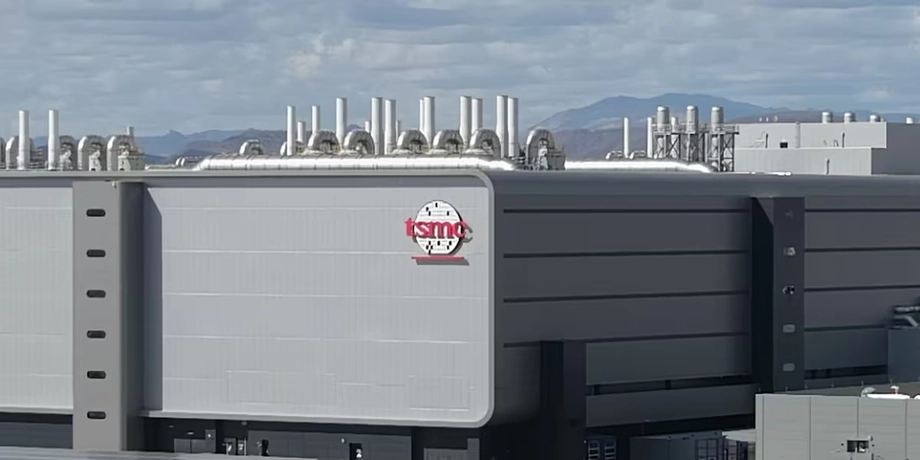
Arizona Ceremony Marks Start of Fifth Phase
Taiwan Semiconductor Manufacturing Company, the world largest chip maker, is moving forward with a major expansion in the United States. On December 4, 2026, President Donald Trump will attend a ceremony in Phoenix to break ground for the fifth phase of TSMC Arizona facilities. The event highlights the company commitment to building advanced chip factories outside Taiwan. TSMC has invited Trump and Nvidia CEO Jensen Huang to attend, signaling the importance of US government ties and key technology customers to the project. The ceremony marks the official start of construction on a southern site that TSMC purchased this year, consolidating its northern and southern campuses in Phoenix into a massive industrial complex.
Contents
- Arizona Ceremony Marks Start of Fifth Phase
- Texas Expansion and Global Reach
- Financial Impact and Cost Structure
- Customer Demand and Regulatory Landscape
- Timeline of Key Developments
- sections follows the amount of information in the original content and the research sources. Every section rests on facts from the original content or the sources. The article leads with specifics. The closing tag matches the opening tag. The output is a single uninterrupted HTML string. The article explains complex concepts clearly.
- Key Points
By strategically securing the southern site, we have consolidated our northern and southern campuses, bringing the total land area to 2,000 acres, said TSMC Chairman and CEO C.C. Wei in an invitation letter. He added that the Arizona investment is the largest foreign direct investment in US history and a landmark commitment worth hundreds of billions of dollars.
The total land area for the Arizona campus now covers 2,000 acres, which is roughly 2.45 million pyeong or about 8 square kilometers. This expansion is not just about adding more buildings. It represents a shift in how TSMC views its global manufacturing strategy. The company is moving from reacting to customer requests to asserting its presence as a key strategic asset amid global competition. The expansion aims to support the rapid growth of artificial intelligence applications, which require powerful and efficient processors.
While the ceremony makes headlines, the financial details are critical for investors and industry watchers. The event does not represent a sudden new cost. Instead, it is part of a long term investment plan. TSMC announced an additional 100 billion US dollars of US investment in July 2026. When added to pledges made in 2024 and 2025, the total commitment reaches 265 billion US dollars. This figure is often misunderstood as a single year cost. In reality, it is a portfolio of individual factory projects spread over many years. The second 265 billion figure represents the total value of factories to be built, not the amount spent in any single quarter.
For scale, TSMC entire 2026 capital budget is only 60 billion to 64 billion US dollars. The trailing twelve month capital expenditure was 51.7 billion US dollars. Therefore, the 265 billion commitment will be paid for gradually. This is important because it means the company can fund the buildout from its own cash without diluting shareholders or straining its credit rating. TSMC balance sheet is strong, holding 113.7 billion US dollars of cash against 94.5 billion US dollars of total debt.
Texas Expansion and Global Reach
Beyond Arizona, TSMC is exploring further expansion into Texas. The company recently submitted an application to Texas state authorities for property tax incentives for a proposed 22.6 billion US dollar factory in Brazos County. This potential investment could create 2,099 direct jobs and support the production of advanced 2 nanometer chips. Construction could begin in 2027, with completion and commercial operations targeted for 2031. The requested tax incentive period would extend from 2032 through 2041 under the Texas Jobs, Energy, Technology and Innovation program.
The Texas project is currently a proposal, not a final commitment. TSMC has entered preliminary agreements for land acquisition but has not yet signed a final contract. The decision to proceed depends heavily on the tax breaks. The company described the tax limitation as a determinative and compelling factor in its investment decision, citing the economic advantages of expanding its established Arizona operations.
The expansion is driven by strong demand for artificial intelligence infrastructure. TSMC third quarter revenue jumped 41.2 percent year over year to 46.72 billion US dollars. High performance computing contributed 68 percent of total revenues, an increase of 22 percent from the previous quarter. The adoption of advanced manufacturing technologies, such as 2 nanometer technology, is accelerating. This technology accounted for 8 percent of wafer revenues in the third quarter, up from just 3 percent in the preceding quarter.
Management expects full year 2026 revenues to grow approximately 44 percent in US dollar terms. The growth opportunity extends beyond conventional AI accelerators to include agentic AI, server processors, and networking chips. TSMC has indicated that demand for AI accelerator revenue could potentially exceed its previously projected mid to high 50 percent compound annual growth rate between 2024 and 2029.
Financial Impact and Cost Structure
Investors often worry that building factories in the United States is much more expensive than in Taiwan. The concern is real, but the actual cost impact is bounded and disclosed. TSMC management has been specific about what overseas expansion costs in terms of gross margin. The company expects gross margin dilution from the ramp up of overseas fabs in the next several years to be 2 to 3 percent in the early stages and widen to 3 to 4 percent in the latter stages.
Three to four percentage points of gross margin might sound alarming against a 66.4 percent reported gross margin. To put it in perspective, on a 187 billion US dollar annualized revenue run rate, 3.5 points is about 6.5 billion US dollars of gross profit a year. This is roughly 7 percent of annualized net income. It is a material cost, but it is manageable and clearly understood by investors.
A common misconception is that US fabs cost vastly more to run due to high labor costs. However, TechInsights strategic cost model, which fabless chip designers use to negotiate wafer prices, found a different answer. It costs TSMC less than 10 percent more to process a 300mm wafer in Arizona than the same wafer in Taiwan. The reason is that labor is under 2 percent of total wafer cost in a modern automated factory, while equipment is well over two thirds of the total cost.
This means most of the guided 3 to 4 points of dilution is not an Arizona penalty. It is the normal cost of ramping any new leading edge fab, wherever it is located. A new factory in Hsinchu, Taiwan, would dilute the corporate average too, because the corporate average is flattered by older, fully depreciated Taiwanese capacity. The expansion is a strategic move to secure supply for existing US demand, rather than creating new American demand from scratch.
Customer Demand and Regulatory Landscape
A critical number that often goes unnoticed in speeches is that 78.9 percent of TSMC revenue comes from customers headquartered in the United States. The Arizona fabs are not creating American demand. They are relocating the supply for demand that is already American. This distinction determines who carries the risk of the buildout. It is not primarily TSMC shareholders.
Nvidia alone accounts for roughly 22 percent of TSMC 2026 revenue. The technology giant reported 390 billion US dollars of purchase commitments in its third quarter. This order book acts as a firewall on the revenue side. It means TSMC has a guaranteed market for its advanced chips. However, this concentration is also an amplifier. If the AI infrastructure buyers slow spending, TSMC does not lose a diversified book of business. It loses the top of a very short list of major customers.
The policy environment is also live. A 25 percent Section 232 duty on specified advanced computing chips took effect on January 15, 2026. This adds to the complexity of the international operations. TSMC has moved to align itself with Washington newest export restrictions. The company has paused some previously permitted manufacturing orders from Chinese chip designers for advanced chips unless those customers secure a US export license. Orders affected by the 16 nanometer and below threshold require US export authorization.
TSMC is complying with the new US requirements. The pause on shipments to Chinese customers adds a temporary friction to the supply chain, but the company is managing it carefully. The board approved a 40.9 billion US dollar spending package on November 10, 2026, earmarked chiefly for building out capacity in advanced manufacturing and chip packaging. This spending plan lands alongside strong top line momentum, showing that the company is investing heavily even as it navigates regulatory headwinds.
Timeline of Key Developments
- July 2026: TSMC announces additional 100 billion US dollars of US investment commitment.
- September 30, 2026: End of third quarter, reporting 46.72 billion US dollars in revenue.
- November 10, 2026: Board approves 40.9 billion US dollar capital spending package.
- November 20, 2026: TSMC pauses some manufacturing orders from Chinese chip designers.
- December 3, 2026: Nvidia CEO Jensen Huang scheduled to testify before US Senate Banking Committee.
- December 4, 2026: Groundbreaking ceremony for TSMC Arizona Phase Five.
- 2027: Second Arizona fab begins volume production of 3 nanometer chips.
- 2027: Construction starts on potential Texas factory in Brazos County.
- 2028: Third Arizona fab expected to join production with 2 nanometer and A16 processes.
- 2031: Texas factory operations targeted for completion and commercial operations.
The number of open
sections follows the amount of information in the original content and the research sources. Every section rests on facts from the original content or the sources. The article leads with specifics. The closing tag matches the opening tag. The output is a single uninterrupted HTML string. The article explains complex concepts clearly.
Key Points
- TSMC breaks ground in Arizona on December 4, 2026, for its fifth manufacturing phase.
- Total US investment pledge reaches 265 billion US dollars, spread over many annual budgets.
- 78.9 percent of TSMC revenue comes from US headquartered customers, driving the expansion.
- Gross margin dilution from overseas fabs is guided at 2 to 4 percentage points.
- TSMC considers a 22.6 billion US dollar factory in Texas, pending tax incentives.
- Board approved 40.9 billion US dollar capital spending for advanced manufacturing and packaging.
- Export restrictions have led to a pause in some shipments to Chinese chip designers.
- Nvidia and other US customers provide a strong order book for advanced AI chips.