A Foreign Astronaut Enters Tiangong for the First Time
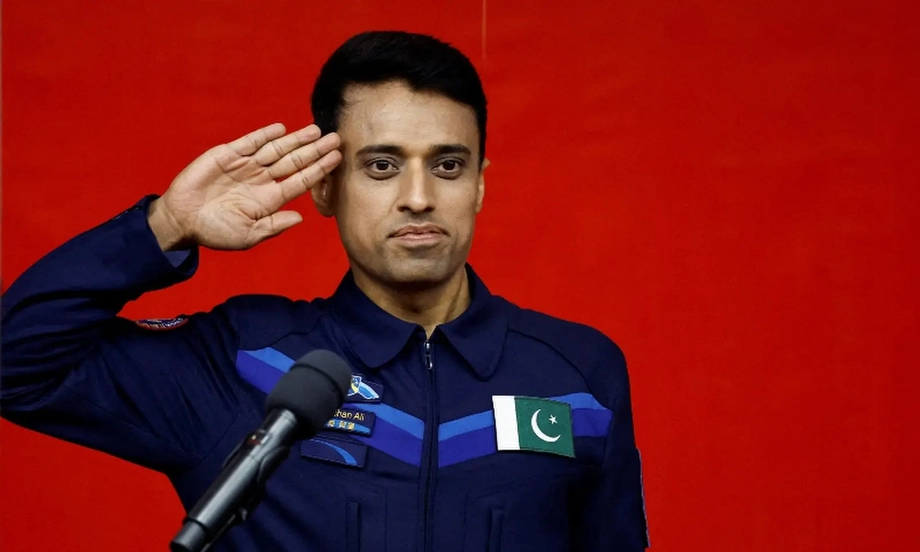
On Wednesday, November 25, at 8:18 a.m. Beijing time, a Long March 2F rocket lifted the Shenzhou-24 spacecraft off from the Jiuquan Satellite Launch Center in the Gobi desert of northwest China. On board were three astronauts, including Muhammad Zeeshan Ali, a former Pakistan Air Force pilot aged 40 who became the first foreign astronaut to enter China's Tiangong space station.
Contents
- A Foreign Astronaut Enters Tiangong for the First Time
- What Does the Ride Up Feel Like?
- Why Pakistan's First Trip Into Orbit Matters
- How Did Ali Learn Enough Mandarin to Fly?
- What Experiments Will Ali Run in Orbit?
- Why Is One Crew Member Staying a Full Year?
- Who Are the Shenzhou-23 Crew Members Coming Home?
- When Do the Crews Switch and When Does the Return Begin?
- Why Is China Opening Tiangong to Foreigners?
- What Officials and Scientists Are Saying
- Key Points
Ali floated through a hatch and was embraced by the crew already living on board, in what China's space agency called the country's first foreign "space handshake". Chinese authorities estimated that the trip from launch to docking would take about three and a half hours, although other reporting put the arrival a little over six hours after liftoff.
Tiangong, which was completed in 2022, had never before hosted a foreign astronaut. The China Manned Space Agency (CMSA) wrote in an update that "China's 'Tiangong' welcomes partners from all over the world to visit!" The visit is a test of whether the station can become a shared research platform rather than an exclusively Chinese facility.
What Does the Ride Up Feel Like?
Shenzhou spacecraft are small capsules that carry crews into orbit, the path a spacecraft follows around Earth. The name means "divine vessel" in Chinese. To reach that path, the rocket must push the capsule to orbital velocity, the speed that has to be kept to stay in orbit. About 10 minutes after launch, Shenzhou-24 separated from its rocket and entered its planned orbit, and the mission was declared a complete success.
From there, the capsule flies itself toward the station. The mission plan describes an autonomous rapid rendezvous and docking, meaning the spacecraft manages its approach on its own according to a set procedure. Live footage showed the crew removing their face masks soon after reaching orbit, a sign that pressure and air quality inside the capsule were steady.
The trip home follows a similar path. The Shenzhou-23 return capsule is expected to take about 5.5 hours from undocking to landing, using a route that completes three orbits and runs on automatic flight control before it comes back through the atmosphere to the ground.
Why Pakistan's First Trip Into Orbit Matters
Pakistan has no spacecraft of its own that can carry people to space, so Ali's seat came through a deal with Beijing. China and Pakistan signed a space cooperation agreement in Islamabad in February 2025, and Ali was selected in April 2026 as one of the first foreign astronauts in China's crewed program. As a payload specialist, he runs science experiments rather than flying the spacecraft.
Pakistan's Prime Minister, Shehbaz Sharif, marked the flight in a post on X, calling it a shared achievement with China.
This is not just one astronaut's journey, but the journey of 240 million Pakistanis. It is the journey of our younger generation, our scientists and our dreams.
Ali put the moment in personal terms. He told reporters the day before liftoff, "I'm not flying for myself. I carry the name of Pakistan on my shoulder," and he framed that burden as the hopes of 250 million Pakistanis, a larger figure than the 240 million Sharif used. Pakistan's Planning Minister, Ahsan Iqbal Chaudhary, called the flight a fitting gift for 75 years of diplomatic ties. Asked whether Pakistan could one day send its own astronauts into space, he replied, "Certainly that day will come."
Ali is not Pakistan's first person in space, though he is its first in orbit. Namira Salim, a Monaco-based polar adventurer, flew on Virgin Galactic's Galactic 04 flight in October 2023. That was a suborbital flight, which reaches space but at a speed below orbital velocity, so the craft does not circle Earth. Salim paid $200,000 for her ticket, which she bought in 2006.
How Did Ali Learn Enough Mandarin to Fly?
Ali spent seven months in Beijing preparing for the mission, and his hardest lesson was not physical. Every switch, software program and voice announcement on the spacecraft is in Mandarin, so he had to learn everyday conversation along with technical terms. He also took intensive Chinese language classes, learned Chinese songs and poems, took up calligraphy, and played table tennis.
Ali described the physical training first. He went through centrifuge training, which spins a crew member to simulate the strong forces of launch, along with rescue, survival and emergency procedure drills. He then named the hardest challenge of all.
"I have gone through various stages including centrifuge training, rescue and survival training and emergency procedure training, but to be honest, the biggest challenge was mastering the Chinese language," he said.
The language test continued at the launch site. At a press conference the day before liftoff, Ali recited a line from a classical Chinese poem. Mission commander Tang Hongbo told reporters that differences in language and culture made learning to work together more challenging, but that the effort had paid off. Khurram Dawood, the other candidate who reached the final stage of selection, also trained in China.
What Experiments Will Ali Run in Orbit?
Ali's main job is to help with four joint projects in biotechnology and materials research, according to the CMSA. He will help install experiment samples and equipment, operate them in space and carry out scheduled research activities.
One key assignment is the study of photosynthetic cyanobacteria. These tiny living organisms use sunlight to make energy, much as plants do. Researchers want to know how they behave in weightlessness, where conditions can change biological processes. Ali will also test how space radiation and microgravity affect quinoa seeds, and he will grow microalgae, tiny water organisms that could one day serve as a food source.
The wider Shenzhou-24 mission includes more than 90 experiments and technology tests. Tang Hongbo and Wu Yi will spend about six months aboard. Their research includes how the space environment affects vascular aging, the wearing down of blood vessels over time, with the hope of developing new ways to prevent and treat it.
Why Is One Crew Member Staying a Full Year?
Zhu Yangzhu, the commander of the Shenzhou-23 crew, will stay on the station after Ali leaves. He will complete a stay lasting a full year, which would make him the first Chinese astronaut to live in low Earth orbit for that long. Zhu will remain until Shenzhou-24 comes home.
Zhang Jingbo, spokesperson of the CMSA, explained that the choice is not simply a longer trip.
"Assigning an astronaut to a one-year in-orbit stay is not simply doubling the duration of two six-month missions," the spokesperson said, adding that the extended mission will test health support capabilities for astronauts on long duration missions.
The mission will follow one astronaut across a year to build what officials call a multi-system, multi-omics atlas of the human body in space, which is a detailed map of many body systems and biological layers such as genes and proteins. The Shenzhou-21 crew has already spent 203 days in orbit, and a full year would be about 1.8 times that length. Even so, a full year would still fall short of the global record of 437 days, set by cosmonaut Valeri Polyakov aboard the Mir space station from January 1994 to March 1995.
Who Are the Shenzhou-23 Crew Members Coming Home?
The Shenzhou-23 crew is made up of Zhu Yangzhu, Zhang Zhiyuan and Li Jiaying, who is also known as Lai Ka-ying in Cantonese. Zhu is China's first flight engineer to serve as a commander. Zhang was an air force pilot before being selected, and Li worked in the Hong Kong Police Force. Li is the first astronaut selected from Hong Kong, and she is the fourth Chinese woman to enter space.
Zhu described his crew as three different pieces of a puzzle that fit perfectly together, and he said that they think as one.
"We think with one mind and pull in the same direction," Zhu said.
Li expressed deep gratitude for her place on the mission.
"As an ordinary person from Hong Kong, being able to join the astronaut team and be selected for this mission is an opportunity I never dared to dream of. My heart is full of gratitude and honor," Li noted.
The Shenzhou-23 crew will run more than 100 new science and application projects. These include experiments using zebrafish embryos, mouse embryos and stem cell based artificial embryos to study early development. The crew will also produce high performance rare earth permanent magnets and lightweight alloys made from several main metals, and will test a new type of space energy storage battery. Their work includes spacewalks, which are walks outside the station, along with cargo transfers, the installation and retrieval of external equipment, and science education activities.
When Do the Crews Switch and When Does the Return Begin?
On Saturday, November 28, the two crews held a handover ceremony in which the Shenzhou-23 team passed the station's keys to the Shenzhou-24 team. That same day, Prime Minister Shehbaz Sharif and Field Marshal Syed Asim Munir, Pakistan's Chief of Defence Forces and Chief of Army Staff, joined a live call with Ali from the headquarters of the Pakistan Space and Upper Atmosphere Research Commission (SUPARCO).
The key dates so far are these.
- February 2025: China and Pakistan sign a space cooperation agreement in Islamabad.
- April 2026: Ali is selected as one of China's first foreign astronauts.
- May 24, 2026: Shenzhou-23 launches at 11:08 p.m. Beijing time from Jiuquan with Zhu Yangzhu, Zhang Zhiyuan and Li Jiaying.
- November 25, 2026: Shenzhou-24 launches at 8:18 a.m. Beijing time and reaches Tiangong.
- November 28, 2026: The crews complete the handover, and Pakistan's leaders hold a call with Ali.
- November 29, 2026: Shenzhou-23 undocks at 11:42 p.m. Beijing time (1542 GMT) with Ali aboard.
- Early November 30, 2026 (expected): Landing at the Dongfeng landing site, about 5.5 hours after undocking.
Ali's stay is about five days, within the five to 10 days planned before the flight. He will return with Zhang Zhiyuan, who will command the return flight, and Li Jiaying. The landing site is the Dongfeng landing site in Ejin Banner, Alxa League, in the Inner Mongolia Autonomous Region. The crew will also bring back what officials described as a "mysterious gift" from the station. No exact landing time has been announced yet, so the early hours of November 30 are an estimate based on the expected trip length.
Why Is China Opening Tiangong to Foreigners?
The International Space Station, the US-led station run with partners including Russia, Europe, Japan and Canada, has been continuously occupied for 25 years. According to NASA, it is set to end operations from 2030. Tiangong is much smaller, about 20% as massive as the ISS, but China is preparing to expand it. Andrew Jones, a journalist who specialises in China's space programme, said that expansion is likely shaped by the ISS ending.
These developments could allow China to expand its international engagement, and potentially space tourism. With the ISS nearing the end of its life and the future of western commercial space stations uncertain, China could for a time have the only permanently crewed outpost in low Earth orbit.
The US has kept China out of the ISS since 2011, banning NASA from working with Beijing. In 2025, NASA went further by blocking Chinese citizens from its facilities altogether. US lawmakers have moved to extend the ISS's life, citing China's permanent human presence through Tiangong, but progress has been slow. NASA has said that after the ISS it will be "one of many customers in a robust commercial marketplace in low Earth orbit."
Blaine Curcio, managing director at Orbital Gateway Consulting, said that an international astronaut brings prestige and technical skill, and signals that China is "open for business" with international partners. He warned about the trust involved.
Pakistan is putting a lot of trust into Beijing by having him fly into space on a Chinese-built rocket.
Curcio expects countries such as Brazil and Egypt to seek chances to send astronauts on Chinese missions. Jones noted that European and Chinese astronauts once trained together with a view to a visit to Tiangong, but that cooperation ended for political and budgetary reasons.
What Officials and Scientists Are Saying
Amitabha Ghosh, a scientist who has worked on NASA's Mars missions, said in a live interview that an international astronaut was a logical next step for a station that already hosts experiments from many countries.
I think China is aspiring to make this a global space station, which is open internationally to many countries. The next step perhaps was to have an international astronaut.
James Head of Brown University said cooperation "can only help things." Roberto Battiston, chair of the European Space Sciences Committee, called the joint crew a significant advance for international cooperation, saying space remains a powerful draw for peaceful collaboration.
Humbulani Mudau, chief executive of the South African National Space Agency, said South Africa hopes to expand space cooperation with China. His aim is to inspire young people in South Africa through space exploration and discovery to take STEM, and to one day place a South African on Tiangong to run health and microgravity experiments. At the United Nations, Stephane Dujarric, spokesman for the UN Secretary-General, welcomed Ali's participation and said China has a "big role" in making sure peaceful uses of outer space benefit all countries.
Beijing and Washington both insist their space work is peaceful, yet the moon race adds pressure. China brought back the first samples from the far side of the Moon in 2024 and aims to land astronauts on the Moon by 2030. The US aims to do the same in 2028, its first crewed landing since the 1972 Apollo 17 flight. China also plans a research base on the Moon by 2035 with Russia. A rover built in Pakistan is due to fly on a Chinese lunar mission around 2028, which links Pakistan's role to the wider lunar plan.
Key Points
- Pakistan's Muhammad Zeeshan Ali became the first foreign astronaut to enter China's Tiangong space station on November 25, aboard Shenzhou-24.
- Ali, aged 40, is a former Pakistan Air Force pilot, the first Pakistani in orbit, and he trained for seven months in Beijing.
- Ali is working on four joint projects in biotechnology and materials, including photosynthetic cyanobacteria and quinoa seeds.
- Zhu Yangzhu will stay in orbit for a full year, aiming for a record for a Chinese astronaut.
- Shenzhou-23 is set to undock on November 29 with Ali, Zhang Zhiyuan and Li Jiaying, heading for the Dongfeng landing site in Inner Mongolia.
- China plans to land astronauts on the Moon by 2030 and wants Tiangong to host partners from other countries.